Saturday, December 31, 2005

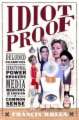
Idiot Proof, by Francis Wheen

This book is subtitled ‘Deluded Celebrities, Irrational Power Brokers, Media Morons and the Erosion of Common Sense’. Actually, I think the copy I have must be an American edition, as the page of publishing details says it was first published in Great Britain under the title of How Mumbo Jumbo Conquered the World: A Short History of Modern Delusions.
I heard Francis Wheen interviewed on ABC radio, and he was talking about how much he loved the classic by Charles Mackay Extraordinary Popular Delusions and the Madness of Crowds. I got the impression that he wanted to write up his own contemporary version, hence the use of the word delusions in his original title (I wonder why it was changed for the Americans?)

Francis Wheen is one of those writers who is just a tad supercilious; he reminds me of those preternaturally smart kids at school, who knew every subject off hand before even being taught it. When interviewed on ABC radio he was asked if he was just a bit of a snob, going after all these popular fads, and the poor guy was a bit lost for words, and didn’t really answer the question. While there is a faint whiff of snobbery about Francis Wheen (not that I mind, I like a good dose of snobbery myself), this book is more serious than that.

Wheen starts his survey of the delusions of modern civilisation with the rise of Margaret Thatcher in England and the return of the Ayatollah Khomeini to Iran. In short, a criticism of free market ideology and fundamentalist religious creeds. That is one of the good things about this book, he takes pot shots at not just one side of politics and cultural thought, in this case the right, but goes right after the fundamentalist beliefs and philosophies of the left. No one is left out. Wheen even has a go at the likes of John Pilger and Noam Chomsky.

The aim of the book is an attempt to restore common sense in a world where we are being by the nose by the likes of Deepak Chopra and other spin merchants. Fat chance I say. (The part of the book which describes Tony and Cherie Blair’s re-birthing ceremony will blow your mind! The fact that Ronald Reagan’s travel plans had to get clearance from Nancy’s astrologer will – well, I don’t know what effect it will have on you. I can’t even digest information like this myself. It won’t go down).

This is a book for that minority of the public who prefer rational to magical thinking.

Web Experience Links by Francis Wheen:

Hoo-Hahs and Passing Frenzies

Who Was Dr. Charlotte Bach?

Wednesday, December 28, 2005

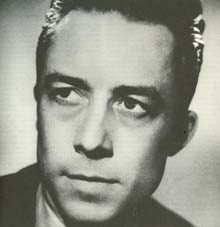
The Plague, by Albert Camus

This is one of those books I was supposed to read in high school. I think I may have been assigned it for either year 11 or 12, I can’t remember. My Penguin copy was printed in 1984, when I was in year 11. Right throughout my copy it has passages underlined in black pen, sections obviously singled out by my English teacher at the time.

While this is a finely written book, in a straight forward style, I can’t imagine a 16 year old being able to master its themes. No wonder I never read it back when I was a teenager. Even more daunting, I can’t imagine being a teacher and having to teach it. You’d have to closely read it three or four times. If I was assigning books for school kids to read in this day and age, it wouldn’t be the works of French existentialists. I’d look more to English classics like Dickens’ Oliver Twist. Or even Oscar Wilde’s Importance of Being Earnest. At least they’re more fun.

The Plague was an absolute joy to read. I loved the neat, fastidious prose. Every sentence I found gripped my attention. The story basically tells of how a large French port on the Algerian coast, Oran, succumbs to the plague. Firstly the doctor, Rieux, walks out one morning and steps on a dead rat. (All the references to rats made me thing of Orwell’s Nineteen Eighty-Four, published a few years after The Plague.)

This is a bad omen. Suddenly more and more rats are dieing, until it hits plague proportions. From the rats it goes to humans. (It is worth remembering that at the time of the great plagues they didn’t realise that it was through rats that the plague was passed to humans, only much later was this discovery made.)

The book then sets out all the psychological stages that the people go through with regards to the plague. Firstly people don’t pay enough attention, and just go on like nothing has really happened. Then it hits the newspapers. Then there are the thousands of cases that begin to be reported, the daily tallies of death. How people cope etc.

As I was reading I wondered how much Camus relied (if at all) on Daniel Defoe’s Journal of the Plague years, in my opinion a superior novel on the subject of the plague. Interestingly, Camus prefaces the novel with a quote from the preface to the third volume of Defoe’s Robinson Crusoe. Defoe’s novel brilliantly catalogues all the manias of the day in eighteenth century England when coping with plague.

This is a fine and absorbing psychological study of coping with rampant sickness, disease and death. There was not a page that didn’t keep my complete attention. The writing style is much to be admired as well; the book could have been written yesterday. It is one of those books that, after having read it, you feel like you have not absorbed properly all it had to say, and will need to read again. Bravo!

Wednesday, December 21, 2005

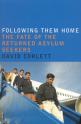
Sending Them Home, by David Corlett

Of the handful of books on asylum seekers I've read, this one for me is undoubtedly the best. Frequently I find these books get caught up in a lot of complexity, which is only to be expected of course, seeing immigration is such a complex portfolio. Trawling through department rules and regulations, the immigration act, refugee tribunals and our international obligations tend to make tiresome reading for me. Excuse my shallowness, but its true.

As the title of the book says, this is mostly about individual stories. The stories depict three stages really: fleeing country of origin, seeking asylum, and rejection of asylum claims and repatriation (forced in some circumstances).

By going through all the detail of these human stories, and what they’ve had to deal with through our immigration system, David Corlett highlights much human suffering and departmental failure. The book is not written in an hysterical, hectoring style, but rather in a very calm and controlled manner. The author does not try to cover up some of the sins of the asylum seekers themselves or of some of their supporters.

For example, with the case of the Bakhtiyari family, Corlett shows how the family was used politically by certain left wing groups. Most notably, when Bob Ellis interviewed the Bakhtiyari boys. The two boys made a condition that they would speak to Ellis as long as the interview was not published. Unbelievably, Ellis went ahead and published the interview material, a most disgusting breach of trust. Here’s what Ellis wrote in the Canberra Times:

‘I am releasting this transcript of things said by the Baktiari boys against their wishes…because I believe moer harm will come to them and others if I do not.’

The chapter on the complex Bakhtiyari issue is excellent, going through all the details in a balanced way. In the end, the author says he can’t be sure either whether the family really was from Afghanistan, but is willing to give them the benefit of the doubt. All of that aside, whether they were from Afghanistan or Pakistan, the utter cruelty of our immigration department boggles the mind. One wonders, why? To what end? And then there is the money, taxpayers money, enforcing all of this. Two to three million dollars on the Bakhtiyari family alone.

There are of course plenty of other stories of human misery, especially the description of one family that was sent back to Iraq. There are stories of people returned to torture and murder. This is coupled with the responses of Amanda Vanstone, basically saying its not our problem if murder happens in another country. Nice.

When I got to the end of the book I thought, my god, what a horrible and mean world for some people. And Australia is trying to push a lot of people back into that world. What would it cost Australia to be a bit more liberal in its attitude to asylum seekers? Nothing. If anything, we might make something out of it. Just think if the Bakhtiyari family had been allowed into the community from day one and allowed to work. I’m sure it would have been better all around. We could have had tax payers instead of a 3 million dollar bill.

One final note. I liked Colett’s treatment of the Asian tsunami at the end of the book, saying it was sentimental politics and that we could only sympathise with passive victims, with people who’d been killed, whereas active victims, trying to save themselves, we are hostile to.
Here is the author’s description of what a politics of common humanity should be, a theme he fleshes out a bit in the last chapter:

"Such a politics cannot be sentimental. It must be historically and politically engaged. It must take humanity as it is, in all its beauty and ugliness and all that lies inbetween. A politics of common humanity is not a feel-good politics that grows from a cross channel entertainment telecast or from a fund-raising cricket match at the MCG."

Read this moving book, written with great level headedness and common sense, and wonder: why the cruelty?

Goya, by Robert Hughes

It has been yonks since I’ve read a Robert Hughes book. When I was studying photography, it was virtually mandatory to read The Shock of the New. To keep up to date with all of my photography student friends I bought a hardback copy of Nothing If Not Critical. I didn’t read it all, only assorted essays out of that collection. To top off my photography studying days there was his Culture Of Complaint, which everyone cheered on as marvellous.

I’m sure I would have agreed wholeheartedly with my fellow students about Hughes' celebrated broadside at the contemporary culture, but would not have known what I was really agreeing with. In the early nineties, the so called culture wars were something I hardly had a grasp on.

A few years later, when I was working at the ABC Shop, I bought myself a copy of The Fatal Shore, Hughes’ history of Australia’s convict days. Since then, I probably haven’t read a Robert Hughes book in a decade. To be honest, as I have outlined above, I would have read Robert Hughes more out of a sense of intellectual duty, than for any sort of pleasure.

Recently I picked up a copy of Hughes’ latest book on Goya. I read the first three pages and was quite taken away. I ended up reading most of the Goya book over two days while listening to Miles Davis’ Bag’s Groove album from 1954. It’s been a while since I’ve read a book with such sheer aesthetic pleasure.

The book is a mix of history, religion, politics, aesthetic appreciation, biography and gossip and tittle tattle from the period, written in Hughes’ bracing style. With Hughes, there is never a dull moment. His absolute absorbtion and obsession with the material he writes about rubs off on the reader, and you can’t help but become obsessed too.

I wrote in an earlier post that descriptions of paintings make me go to sleep, and I feared that the sections in the Goya book might have the same effect. Happily, this was not the case. I was amazed at how much detail I missed in the paintings that Hughes alerted the reader to. For example, in one of the paintings of the lunatic asylums, in the corner you see a man on his knees giving another inmate a head job!

There were so many paintings in this book that I just wanted to rip out of the pages and stick them to my wall. For example, the three floating male witches all wearing those conical hats (remember that Pet Shop Boys album, I think it was called Very, where for most of the clips they were those same hats). I’d love to get a poster size reproduction of that painting.
I really didn’t want this book to end. Hughes muscular, assertive, urgent prose is an absolute joy to read. His penchant for gossip and titbits of historical trivia make the book all that more real and human.

This is not a dull, academic treatise, but a book that throbs with real life – paint, sex, the sufferings of war and old age. A splendid book.

Thursday, December 15, 2005

The Collapse of Globalism, by John Ralston Saul

Subtitled ‘the reinvention of the world’, Canadian author John Ralston Saul takes us through a history of globalism, its guiding ideology, its failures and successes, leading us up to what he considers its current falling away as a potent force.

Saul cites the starting date of globalism as 1971. We’ve had it for 30 odd years now. Amongst it many promises, it was supposed to bring us more democracies, lift poor nations out of poverty and lift living standards all round. Instead, we have widening gulfs between rich and poor, entrenched poverty and more and more wars and less democracies

Anyone who has read Saul’s other books will know that globalisation has been one of the author’s main themes for the past 10 years, since his ‘big’ book, Voltaire’s Bastards. Saul is one smart cookie and knows heaps about this subject. However, for someone who doesn’t understand with great proficiency how international markets and interest rates etc. etc. work, you can find yourself grasping to understand some of what he is saying. Also, because the author is making judgements himself after digesting much information, you find yourself in the position of having to trust that what he is saying is right, without coming to a complete understanding of it yourself. (Or maybe I’m a complete dummy.)

When Camille Paglia’s reviewed his book Voltaire’s Bastards, she said his writing style was a bit dull and lacked vitality. That’s what I tend to think. Salutary, yet his prose twirls around in somewhat self-referential circles. Despite that, I did read Voltaire’s Bastards twice, and got much more out of it the second time.

Saul makes some big claims, which I’m sure many will dispute. Whilst not stating outright that globalism is responsible for wars and massacres (Rwanda), he does in a round about way link them up. When discussing Rwanda, he says that one of the reasons it took so long for the West to address the problem was that our thinking had become addled by free market ideology, of globalism as a system that is inevitable. Therefore it was impossible for our elites to think imaginitely in terms of choices and options of what could be done. Saul applies this principle of addled thinking to other military crisises.

There was much in the book I totally agreed with. Like when he described our managerial elites as being completely passive, despite their titles as ‘leaders’. They are all slaves to an ideology and can’t think independently or imaginitevely. Also, this managerial class think they are capitalists, whereas they are the oppossite, highly fearful of risk and thinking outside of the box.

Another point I totally agreed with was when Saul described himself always asking at whatever university campus he is visiting whether they teach Islamic culture and the Koran. The answer is invariably no. This is a question I’ve always had. Why aren’t our so called elites doing more to learn about Islamic culture, and not in a superficial way. For example, it drives me nuts whenever I hear our political leaders - John Howard does this quite a bit – say what a great religion Islam is. They’re talking a lot of rubbish, because it seems obvious they’ve hardly paid any attention to the religion, its history and cultural contributions. The next time Howard says he respects and admires Islam as a great religion, he should be asked if he’s read the Koran, and if so, what’s his favourite teaching from the Koran.

I find Saul’s books a bit hard to penetrate. That’s a minor negative against him for me, although I have read practically all of his books, ironically enough. Maybe I need to re-read this one.

I hope that doesn’t sound all bad! John Ralston Saul is a much needed author in these times of madness. Many passages in the book were quite amusing, as you could see the author shaking his head at all the silliness that goes on in our culture. His message is that the only hope for the future of our civilisation is for citizens to get involved in how our countries are run, using common sense to prise the elites’ grasp off our culture and institutions.

Wednesday, December 14, 2005

Relaxed and Comfortable, by Judith Brett

Another Quarterly Essay, this time from Judith Brett, who has written extensively on the Liberals and Liberal Party culture. Reading the author blurb on the back, I’ve just realised that I’ve actually read all her books (she’s only written two). Robert Menzies’ Forgotten People was the first Brett book I read, which I really enjoyed. The other book is Australian Liberals and the Moral Middle Class, which is a must read, as the book covers Liberal Parties (not just Robert Menzies’ Liberals) from federation to today.

This Quarterly Essay aims to show us how Howard’s detractors, mostly those from what we would call the left, have failed to understand why Howard is so successful. She claims their criticisms of Howard have missed the mark. Howard is not, as many would argue, some new insidious form of right wing politics. Rather, he is a continuation of Liberal Party philosophy.

To convince us that her argument is true, Brett gives us quite a few quotes from Bob Menzies, then quotes Howard’s more recent utterances. The similarities are striking. From my own recent readings of Robert Menzies, from Jenny Hocking’s books on counter terrorism and communist author Frank Hardy, Howard seems to me more and more like a re-emergence of Pig Iron Bob.

(I’m betting at the moment that Howard will not quit in 2006, and will go on to win another election in 2007. The IR laws he will have bedded down by then. The sky won’t fall in for the majority of Australians. With the new Welfare to Work changes, heaps of people will be taken off pensions and put on the dole. Now, I ask you, will people have a problem if 'dole bludgers' are asked to take on jobs with new contracts that reduce conditions? No. Also, there will be every year lots of new people entering the work force, and they will take up the new conditions. Will they know any different? No. By then Howard will have been in power for about 12 years. Can anyone see Peter Costello, a complete wimp and loser, challenging? Sorry for the digression here!)

This is a pretty bland and depressing essay. Not bland because of the author, but because of what is described. The most fascinating, and depressing, part of the book is where she summarised four of your typical Howard voters. All of them are pretty uninteresting, unimpressive people. None see much of the world beyond their own front fence. The last typical voter was a twenty-five year old man living with his mother in Keilor. He only worked casual jobs, was relatively uneducated, and spent most of his time at nightclubs. The main thing he had against Howard, he said, was ‘his looks’. ‘But people look past that and say and say well it doesn’t matter if he’s attractive, or if he’s sucking up to all the big people around the world, we’re still voting for him because he’s a true Australian, not matter what.’

Ironically, all of Howard’s ‘typical’ voters have next to zero interest in politics. So, is Howard’s chief victory in seeming like a non-politician? It would be like a pop star becoming the number one artist by attracting a fan base of people who are barely interested in music.

Chris recommends this book. Not particularly tasty fare, but nonetheless it’s probably good for you.

Tuesday, December 13, 2005

February House, Sherril Tippins

February House purports to be a slice of literary and artistic history, detailing the goings on at a Brooklyn share house in the early forties. Plenty of famous people lived at the Middagh Street house, from poet Auden to stripper Gypsy Rose Lee. Yet reading this book I didn’t really get the vibe of a shared house. The book reads more like a series of biographical sketches of each person whilst staying in the house.

Some characters predominate more than others. Auden we get a lot of, including all of his political, emotional and intellectual woes. I’ll never understand why he hooked up with Chester Kallman, a man, or boy if you will, some twenty years younger than Auden (Kallman was 18 or 19 when he met the poet). It seemed to me that Auden was asking for trouble, and was purposely deluding himself that he was in love with the young pup Kallman. Call me cynical, but all I can see is an older man thinking all of his lucky stars have come at once by getting a teenager for a lover.

Nor can I say that I’m really a fan of Auden’s poetry. I’m no judge of poetry, but is he really the genius everyone claims him to be? At least he was intellectually honest enough to think that the pacifism of his friends was not an option.

The sections on Carson McCullers were enjoyable. I’ve long been a fan of The Member of The Wedding. I read it in one night years and years ago, and should really dust it off and give it another go. What a shame that her health went so bad, so young and so fast. It reminds me of another southern writer, Flannery O’Connor, who suffered poor health early in life.

Gypsy Rose Lee shines out as a regular character. I loved it when her Hollywood career went belly up and she announced, "I’m a Hollywood floppo, that’s what I am". Her novel The G-String Murders, which she commenced work on whilst living in the share house, I’d love to track down.

I also loved the descriptions of the Dalis coming to visit. What a horrible couple! And Dali’s wife, Gala. What a monster. The photo of her in the book reminds me of Leni Riefenstahl, the Nazi film maker. Not a hair seems out of place on the woman. Apparently she just glared at everyone, doing her damned best to make everyone feel positively intimidated. No wonder the two of them supported Franco’s fascist dictatorship.

This book is a pretty pleasant summer holiday type book. It was nice to go back into that artistic millieu of the early 1940’s. The author, Sherill Tippins, while giving us these portraits of misfits and eccentrics, also skilfully provided a background of looming war, and the serious choices that had to be confronted.

I also marvelled at how she tactfully wrote about explicit homosexual experience. It was quite ironic, seeing this book’s target audience would be middle class women. Such a book 65 years ago could not be written, with a view to selling it to middle class women of that era. Remember how shocked America was by the Kinsey report?

One last point. Why did the author not remark upon Reeves McCullers' (Carson’s husband) homosexual proclivities? Everyone knows about it. In the book Tippins remarks about Reeves’ cruising bars for partners, but that’s it. Obviously she meant gay bars, but did not make this point explicit. I wonder why? Odd.

Friday, December 9, 2005

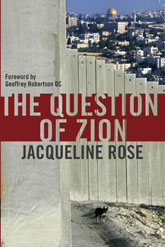
The Question of Zion, by Jacqueline Rose

In this book Jacqueline Rose puts the nation of Israel on the psychoanalytical couch – literally. I saw Ms Rose on the ABC’s Lateline program and found her an interesting and eloquent speaker. The idea of treating the problem of Israel in this way – she comes from a literary and psychoanalytical background – seemed pretty interesting.

The book goes into a lot of the thought of the early Zionists. To be honest, I found the book hard to concentrate on. If you’re not familiar with a lot of the early Zionist writers that she discusses, and I’m not, you may find the book a bit obscure, as I did. Disappointingly, Rose’s writing style doesn’t help much either. There were too many dashes and colons and sentences overloaded with quotations from differing writers.

Yet I must admit to having failed to read the book with due attention. Perhaps a second reading would have made her thesis clearer to me.

From what I could follow, she seemed to be saying that Zionism had a flawed internal logic. The nation of Israel had been created in an entirely unusual and unprecedented way: as a moral imperative. The holocaust made necessary the state of Israel. The world agreed that the Jews had suffered terribly, and that they needed their own state so that they could protect themselves. Mix in with this a belief in a religious pre-destination, and you have some serious problems. (One of the chapter’s titles is Zionism as Messianism.)

Jacqueline Rose, as I understand it, is saying that Israel needs to step back from this view of itself as a nation pre-destined by God, otherwise it will only destroy itself. Instead it needs to look at the urgent human rights issues that have been created by the dispossesion of so many Palestinians. It needs to start behaving like any regular secular democracy.

I wish I had done a better job of reading this book, but frankly, with so many references to ‘theorists’ like Lacan, and occasional post modern jargon, I became frequently irritated with the language employed.

If you’re interested in this subject, I’d recommend giving the book a whirl. It’s only 155 pages, and has a good introduction by Geoffrey Robertson.

Conquest, by David Day

David Day has written quite a bit about Australian history and politics, with two biographies of major Labor party figures under his belt. His latest book, published this year, is subtitled ‘A new history of the modern world.’

In essence, it tells of how ‘supplanting societies’ legitimise their occupation and take over of foreign lands. It goes through all the rituals and means by which the militarily and technologically stronger delude themselves into thinking what they are doing is the right, even moral, thing.

Thus, the white man comes along, usurps the land of the natives, and then pats himself on the back for ‘civilising’ the brutish savages. David Day is a splendid writer, and he brilliantly navigates us through various occupations and land grabs that have happened throughout history, skilfully marshalling quotes and source material to paint a picture of grand self-delusion.

What I have described might sound like your usual bitchy thumbs down on the last five hundred years of western culture. Not at all. Rather, it’s a fascinating look at how supplanting cultures (like Australia’s white settlers) actually see themselves.

David Day finishes on an optimistic note, saying that because we now have a more globalised world, and are more aware of other cultures, we are less likely to trample all over indigenous peoples.

As mentioned above, this is a splendid book, thoroughly enjoyable. Highly recommended!

War on Iraq, by William Rivers Pitt and Scott Ritter

This is a short pamphlet (75 pages), written in 2002 by William Rivers Pitt. Mr Pitt is an expert on the Middle East, an activist and a Democrat. Scott Ritter gets equal billing as there are some fifty pages of interview material with him, done by phone.

There are two little intro chapters. One basically going over Ritter’s military career, and another which gives a wonderfully concise history of Iraq. We forget that Iraq can’t really be considered a construction of Middle East politics. It was ‘created’ by the British after the first world war, when they defeated the Ottoman Empire. The British ordained an Iraqi royal government for the country. Trouble ensued.

The interview part makes for compelling reading, as Ritter has lots of inside information. His knowledge of weapons technology sure is an eye opener.

This little book is probably a little dated now, with all we now know. But it’s worth a read, to compare Ritter’s claims with what’s happening today in Iraq.

Thursday, December 8, 2005

Lionel Murphy, A Political Biography, by Jenny Hocking

As luck would have it, I heard Jenny Hocking being interviewed today on the ABC by John Faine. Her books are so intricately written and fine on detail that I found her speaking voice a bit of a surprise; she has a flat, broad Australian accent, one that doesn’t seem fussy or particular. Professor Hocking was talking about her Frank Hardy bio. Most interestingly, she said there were many parallels between the Latham Diaries and Power Without Glory. Exactly what I thought when I was reading Power Without Glory (I’m sure I made a reference to Latham in that post.)

Anyhoo, Jenny Hocking published this biography back in 1997. I barely recall Lionel Murphy. I would have been 18 when he died of cancer, months after all of his legal problems had been dealt with. Back in the early eighties, The Age ran a series of stories, alleging to have tape transcripts of conversations conducted by the Chief Justice, in which he blabbed about various shady dealings and crime involvements. The tapes could not be authenticated, nor could the transcripts. The whole campaign was pretty shoddy, and Murphy was pronounced innocent. What a tragedy that only months after having survived this apparent witch hunt, that Murphy came down with a virulent dose of bowel cancer.

As mentioned above, this book does not depart from Hocking’s involved and detailed writing style. Much of our court, political and democratic workings are pulled apart and examined in fine detail. One of the joys of reading Hocking’s work is how she puts all these aspects of our national life under a magnifying glass, giving us a clearer picture of how important it is to note that big democratic principles and questions can hinge on small details.

Hocking celebrates Lionel Murphy as an advocate of human rights and expanded democracy, as someone willing to stand up for their principles, even if it goes against the grain of his own political party.

Here’s a quote from Lionel Murphy that is apt for today:

‘Those not affected tend to assume that they will never be affected by the erosion of civil liberties. History shows otherwise.’

This biography reads almost like a tragedy. Well, actually, it is a tragedy. How can someone who spends so much of their life trying to do good – politically and legislatively – end up the victim of such a dreadful media campaign, only to be felled by disease months after clearing his name.

This is a good biography to read for small ‘l’ liberals wanting to look back to 30 years ago when like minded people were working for the public good. What such figures are there around today? In the Liberal Party one thinks of Petro Giorgiou and Judi Moylan. Can’t think of anyone in the Labor Party.

Tuesday, December 6, 2005

Terror Laws, by Jenny Hocking

For the most part, this book (published 2004) is mostly made up of the author’s original 1993 book Beyond Terrorism. She’s junked the first chapter of Beyond Terrorism, which dealt with the actual term of terrorism, and how frustratingly vague it was. I’m glad, because I found that first chapter of Beyond Terrorism quite difficult to follow. It’s full of that sort of post-modern language about ‘constructions’ etc. etc, and was a chore to read. The new chapter she’s written for Terror Laws is far more accessible.

That’s a good thing, because it’s such an important point. It’s also worth noting that the term ‘terrorism’ has become ridiculously malleable. For example, recall Liberal MP Sophie Pannopolous (sorry for wrong spelling) called her fellow back benchers ‘political terrorists’ for dissenting from the party line on mandatory detention, calling for a softening of the policy. She did not apologise for her comments, nor did it appear that they were uttered in jest. John Howard didn’t pull her up for these offensive and silly comments either.

As mentioned, the main body of this book reproduces Beyond Terrorism, which I wrote about below.

Professor Hocking has added a couple of extra chapters that deal with the terror laws that were introduced in 2002, lingering on some of the more draconian details. It is worth remembering that the original Bill had provisions for the detaining of children, without age limit.

Hocking opines that the best way to strengthen the security of the state is not by a reduction in the rights of its citizens, and by extentsion, democratic rights, but by enlarging our democracy to bring in groups that feel left out in the cold:

‘If we consider that acts of extreme political violence, labelled ‘terrorism’, may reflect a local but systemic failure in participatory democratic practice, then the narrowing of acceptable political discourse and legitimate political activity may well be one of the precipitating factors of terrorist activity. If so, then what is needed as part of the struggle against terrorism are not further constraints on effective political participation, but a more inclusive politics; not less democracy, but more.’