Thursday, January 26, 2006

The Road To Serfdom, by F. A Hayek

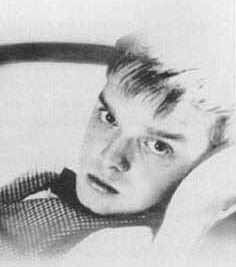
Margaret Thatcher cites F. A. Hayek as her major influence. He received a doctorate of law and political science from the University of Vienna. Not knowing much about his work, I think The Road to Serfdom is considered to be his most influential book. He wrote it, he writes in the introduction, in bits and pieces over a couple of years. It’s a short book, 178 pages long.

It should be noted that the book was published in 1944, during the middle of World War II, during the rise of fascism and communism. He wrote the book with the express intention of warning people that centrally planned economies could only lead to totalitarian government. Hayek positions himself as a classic liberal, and quotes liberals like John Stuart Mill. Central to his ethos is freedom of the individual, with minimal government meddling.

Margaret Thatcher must have been in her early to mid twenties when she first read The Road to Serfdom. She would have had relatives fighting fascism as soldiers (yes I know, she later defended Pinochet to the hilt). So you can see on the one hand how she came to hold the arguments in this book so dearly. The back of the book even has a blurb by George Orwell. I looked up the full review of the book in my complete George Orwell: he agreed with the book’s thesis, but said he found it depressing that we would all be controlled by money and capitalists.

Having said that the book was written as part of the fight against communism and fascism, the book has not really dated that much. The central thesis of the book – freedom of the individual, and how free markets are intergral to this – stand up pretty well. I found a lot of Hayek’s arguments pretty compelling. He even notes, a la George Orwell, how the language of dictatorships is corrupted.

It was also fascinating to see exactly where Margaret Thatcher got so much of her ‘script’ from. So much that I read in this book you would have heard Thatcher spouting over the years. It just shows if someone finds a philosophy they totally believe in, and if they have a demonic energy, how they can impose it on the rest of us. That alone makes the book worth reading: it made me feel like I was inside Thatcher’s head, and could see why she was so much in agreeance with Hayek’s whole programme.

While agreeing with the need for individuals to be free to pursue their own interests unfettered, that planned equality cannot work, and that we must accept that life is not always fair, even though we should always strive for fairness, I found the book’s insistence on money, money, money as the only way individuals could be free akin to being fed entirely on a diet of sweets. Sure, we all love lollies (like we do money). And at first we enjoy eating those lollies, but eating them solely as a part of our diet soon would make us sick. I feel the same way about a society based purely on money.

All this argument is about really is balance. Yes, we want free markets. But do we want them to be totally unfettered? What limits should we set? Are there other values besides money which are equally important? Why does it all have to be so extreme?

This book is well worth a read. Actually, it should be mandatory reading for anyone interested in politics. It will give you all the basics of the free market philosophy. Hayek also makes many compelling arguments for his case, bolstering his arguments with his knowledge of Britain’s history of liberal thinkers and philosophers. Read this book and have your values challenged by a very fine mind.

Tuesday, January 17, 2006

The Minimal Self, by Christopher Lasch

I thought I would do better with this book. A couple of months ago I read Christopher Lasch’s last book, The Revolt of the Elites, and really got a lot out of it. The Minimal Self I was pretty much assigned as reading when I was studying photography. The last time I read it was probably about 18 years ago. Interestingly, there were lots of passages I’d underlined in the book. Today, reading those same underlined passages, I didn’t even understand what they meant!

The title of the book makes it sound like a self help book. The subtitle is ‘psychic survival in troubled times’. This only confuses things more. The book is actually a critique, in many ways, of self-help culture. Today’s western civilisation has all become about ‘survival’, rather than living life.

There are interesting chapters on art and literature, and how it has degenerated into dead ends and nothingness. There are also salutary passages on corporate and management culture. An interesting series of chapters also on the Holocaust and totalitarianism (my god, what a word that is.)

The first two hundred pages were quite absorbing, but the last 50 or so goes into all this psychoanalytical stuff, weaving it into a political and personal discourse. There was so much discussion of different psychoanalytical (another mind boggling word, do I even know what it means?) schools and controversies that in the end I completely lost track. My reading of Freud is limited. This is the kind of writing that you really need to know a bit of the subject to get an intellectual foot in the door.

By the end of the book, I was completely at a loss as to what the whole point of The Minimal Self was. The book is actually supposed to be an update of, or sequel to, The Culture of Narcissism, a book he published previous to The Minimal Self. I read The Culture of Narcissism many years ago. Maybe I should give it another go to try and figure out what the author is on about.

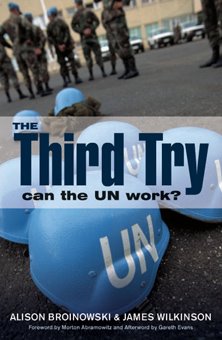
The Third Try: Can the UN work?, by Alison Broinowski and James Wilkinson

It may surprise the reader to know that a majority of Americans support a stronger United Nations, believe in international co-operation, favour spending money to help out poorer nations and even support the International Criminal Court (ICC). All this despite the current Bush administration’s pronounced displeasure with the UN.
In an effort to undermine the legitimacy of the UN, US Congress has withheld UN dues, rejected multi-lateral treaties and under funded foreign-aid programs. To state the Bush administration’s case most clearly, there was the nomination of John (‘There is no such thing as the United Nations’) Bolton as US permanent representative to the UN, whose antipathy to the organisation is well known.

At home, the UN is in bad odour with the Australian Government. After receiving a bad report card on our treatment of migrants, Muslims, asylum-seekers, refugees and Aborigines, John Howard reminded all that ‘Australian laws are made by Australian parliaments elected by the Australian people, not by UN committees.’ Alexander Downer (http://www.abc.net.au/7.30/stories/s115193.htm) went one step further: ‘If a United Nations committee wants to play domestic politics here in Australia, then it will end up with a bloody nose.’

Alison Broinowski and James Wilkinson are both experienced diplomats, bringing their respective Australian and American perspectives to a broad and complex subject. The authors claim the UN has been through two ‘tries’, or stages, already.

The first try at a world order was the League of Nations, established after World War I in Geneva, Switzerland in 1920. The second was the United Nations, which was given birth on 24 October 1945, when the UN Charter was ratified by a majority of signatory nations. The third try, where we are now, the authors argue is the post-Cold War era. After September 11, can the UN work?

The Third Try doesn’t flinch when discussing the UN’s many failures, some of them horrific. On Rwanda, the authors write ‘There was no excuse for the council’s failure to intervene over a period of about three months while the killings continued apace.’

Then there was the scandals involving peacekeepers in the Democratic Republic of the Congo, including sexual abuse of people the UN was supposed to be protecting:

‘The secretary-general in November 2004 publicly acknowledged gross sexual misconduct by MONUC staff and vowed a ‘zero tolerance’ policy with punishment for all found guilty. Over 150 cases of alleged rape and exploitation, involving both military and civilian staff and including abuse of girls as young as 12, were under investigation at the end of 2004.’

Darfur is the latest example of the UN’s inability to respond adequately to an urgent crisis. By the end of 2005 some 1.7 million people were homeless and 70,000 people were estimated to have died from the conflict. The authors write:

‘The Security-Council’s inquiry on Darfur took three months and then delivered an ambivalent report, calling what was happening crimes against humanity and the equal of genocide, but not describing it as genocide in the narrow, post-World War II definition that required proof of intent to destroy a population or group.’

Despite the above, and other examples cited, the authors maintain the UN will continue on. Simply put, it does too much. There are the peacekeeping operations, work to reduce poverty, counter terrorism initiatives, bolstering of international law through the ICC, human rights advocacy, help for refugees and so on and so forth.

It is also worth remembering that, despite the Bush administration’s contempt for the UN, it did not stop them asking the organisation for help to rebuild post-war Iraq.

As the authors state:

‘No serious argument can be made for doing away with the UN entirely. As our review has shown, it serves too many purposes, practical as well as noble. The neo-cons’ black prince, Richard Perle, even while thanking God for the death of the UN, conceded that its ‘good works’ part will continue to endure.’

The problem then is how to improve it and make it work. Broinowski and Wilkinson devote some 40 pages to analysing problems in the UN machinery and bureaucracy, recommending repairs and reforms. At the top of the list is a need for the US to play a more supportive role, rather than that of a wrecking ball.

‘The perpetual disdain of American conservatives for the UN casts a dark shadow over all parts of the UN, and Washington’s aggressive disputation with the UN over policy, resources, and decision-making has become progressively more imperious since the 1980s.’

The Third Try is written for the lay reader and is set out in a clear, straightforward style. The book doesn’t cover everything that the UN does, but rather works as a digest of its key roles. Its accessible manner makes welcome reading when facing such a daunting subject.

For citizens interested in working towards an international system to solve world problems, The Third Try is an excellent primer on the UN. Bonus features include a forward by Morton Abramowitz, a former president of the Carnegie Endowment for International Peace, and an afterword by Gareth Evans, who now works as the president and chief executive officer of the Brussels-based global conflict prevention organisation International Crisis Group.

Saturday, January 14, 2006

Volpone and The Alchemist, by Ben Jonson

Everyone of course knows that Ben Jonson was a contemporary of Shakespeare. Some have it that Shakespeare died after having gone on a drinking binge with Ben Jonson. Perhaps Jonson’s most famous words with regards to the bard are the following:

And though thou hadst small Latin and less Greek,
From thence to honour thee I would not seek
For names; but call forth thund’ring Aeschylus,
Euripidies, and Sophocles to us…

We also know that Jonson killed the actor Gabriel Spencer in a duel. He escaped the gallows (if memory serves me right) by ‘pleading the cloth’. What this meant was they could not hang you if you were of the clergy. Jonson was not of the clergy, but because he could read, he could claim the same, and did. It is also believed that he killed another man in a hand to hand fight whilst soldiering.

Despite his plays being often hailed as masterpieces, especially Volpone, for some reason or other we never come across his name that much. He comes across more as an aquired taste, someone often talked about but little read. In all the books I have read about literature where his name pops up, but he never seems to be discussed in any substantial way. I wonder why this is?

I read Volpone for the first time probably about 12 years ago. Reading it again it comes across as quite cold and calculating. While Shakespeare and Marlowe wrote lovable villians and rogues, Volpone seems a real misanthrope, someone who exhalts in how bad humanity is, and becomes corrupted himself in the process. I think what I’m trying to say here is that his plays are too moralistic. Too didactic. There’s not enough playfulness in them. Instead we get a litany of mean tricks and grasping money grubbers who all get their comeuppance.

In Marlowe’s great black comedy The Jew of Malta, you can’t help but love Barabas as he goes about outraging everyone. Despite yourself, you secretly identify with the wealthy Jew and exult in his destructiveness.

I found even less joy in The Alchemist. I enjoyed parts, then my concentration would switch off, and I’d come back to the play. It has the same type of rogue’s gallery, con men and a con woman trying to gull vain victims who only want to line their pockets or further themselves socially. Yet there’s something strangely inhuman about his characters, something decidedly one dimensional.

Maybe this is why he’s not as eagerly read as Shakespeare or Marlowe. That’s just my guess though.

I’m sure I’ll give Jonson’s plays another whirl in the future. Dickens loved Jonson after all, and went to lengths to get some of his favourite Jonson plays staged.

Other Rooms, Other Voices, by Truman Capote

This is in many ways the most extraordinary novel. The blurb on the back by Norman Mailer, of all people, claims Truman Capote to be ‘the most perfect writer of my generation’. High praise indeed. I remember Dorothy Parker writing with great admiration of Truman Capote, saying ‘boy can he write’. His style seems to be that of the ‘born’ writer.

What is most amazing is that this novel was published when Capote was only 23. It reminds one of other young gifted southern writers, who specialised in gothic novels. Flannery O’Connor’s Wise Blood and Carson McCullers’ Member of the Wedding come to mind, both written when the authors were in their mid twenties. What on earth was in the air in the American South you wonder, that produced these rich and strange authors?

Other Rooms, Other Voices tells the story of young Joel Knox, who has come to a small town in search of his father. He meets an array of weird characters, most notably, his queer cousin Randolph. The novel seems to make sense for the first 120 pages or so, then becomes dreamlike and hallucinatory for the rest of the novel. Even Joel himself, listening to Randolph’s long monologues, says that nothing that is said makes sense. For example, we are led to believe that Randolph shot Joel’s father, and that is why he is bedridden, but this is never really verified.

In short, the novel is incomprehensible, but written in the most extraordinary style. Some of the passages are breathtaking. I think it was either Plato or Aristotle who said that poets sometimes write things of which they do not know the meaning. Capote himself said the novel was dictated by the clouds, or descended from the clouds, something like anyway. Personally, I don’t think Capote really knows what this novel means either. His other great novel, In Cold Blood, is totally different to this novel, being written in a straight forward, journalistic style.

This is a really strange, yet rewarding novel. Follow Norman Mailer’s advice and read Truman Capote. There is no more perfect prose writer.

Friday, January 6, 2006

Barcelona, by Robert Hughes

After having enjoyed Hughes’ Goya so much I decided to give Barcelona a whirl. This book is a mixture of history, art, culture and politics, spaning some 2000 years. I can’t say I enjoyed Barcelona as much as Goya, although I did get a lot out of the book. Sprawling histories for me can lack focus, and I think you just go from one event to the next, one key personality to the next key personality, and it’s hard to get attached to any one theme in particular. Whereas with the Goya book, it had this marvellous intimacy, and you felt like you were travelling through Goya’s fascinating psyche.

I hope the above doesn’t sound like a negative review. It’s not meant to be. This is a fine, excellent book, written in Hughes’ great style. The sections on the Catalan poets I especially enjoyed. The parts on the rise of the anarchist movement were fascinating. Plus the final chapter on Gaudi – that strange, eccentric, ultra-conservative catholic figure – was a real eye opener.

If you are a student of Catalan or Spanish history, I’d say you’ll find this book to be a must. However, if like me, you don’t know much at all about Catalan history or culture, you may feel like a bit of a stranger at times travelling through this rich, dense book.