Thursday, February 28, 2013

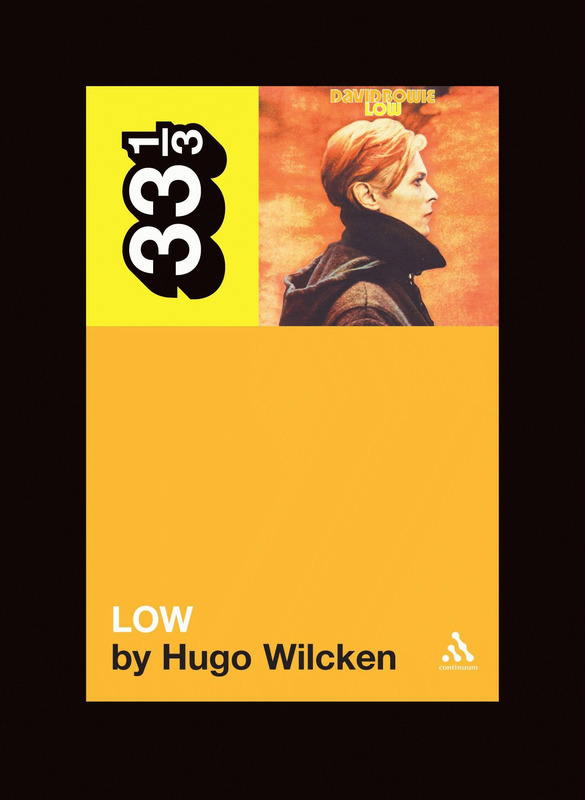
David Bowie Low (33 1/3), by Hugo Wilcken

Staff Review by Chris Saliba
David Bowie Bowie’s classic album Low gets a fascinating treatment in this short book of pop scholarship.

David Bowie’s moody and introspective 1977 album Low has long been one of my favourites in the Bowie canon. Recently this short book was recommended to me. It’s part of a series that covers various influential albums. Another reason I’m very fond of Low is because it is the first collaboration between Brian Eno (creator of wonderful ambient records and an innovative producer) and David Bowie. They wrote together the very moving instrumental that opens side two, “Warsawa”.

Enough of me. What about David Bowie Low? Books about a particular film or album (or even book, for that matter) are a mixture of fan rave, criticism and contemporary history. As a fan, you get to soak up every little detail of trivia about your favourite album, enabling you to piece together musical influences and the gestation of new musical styles.

Hugo Wilcken has written for the most part a history of Bowie’s drug drenched and paranoid late 70s period, interspersed with some perceptive commentary and musical appreciation.  We get lots of fascinating info on Bowie’s reading habits and obsessions of the time, his friendships and collaborators. Wilcken tries to get close to the mystery of musical genius, and does a pretty good job by describing the musical influences swirling around Bowie at the time (most notably the German electronic music scene) and his responsiveness to it. The miracle is that Bowie managed to create such extraordinary music while on the verge of nervous collapse.

This is a thoroughly enjoyable little book that accomplishes its brief with intelligence and sensitivity. The book is not too academic, nor is it dumbed down. Perhaps you could describe this type of writing as pop scholarship. Bowie fans should find much to enjoy in David Bowie Low.

David Bowie Low (33 1/3), by Hugo Wilcken. Published by Continuum Trade. ISBN: 9780826416841  RRP: $19.99

Wednesday, February 27, 2013

Quartet in Autumn, by Barbara Pym

Staff Review by Chris Saliba

Barbara Pym’s 1977 comeback novel is a gentle and funny hymn to ordinary lives.

Barbara Pym had a successful run as a published novelist from 1950 -1961, with such titles as Excellent Women (1952) and Jane and Prudence (1953). Then publishers dropped her and she didn’t appear in print again until 1977, after supporters David Cecil and Philip Larkin wrote glowingly of her work. Pym’s comeback novel, Quartet in Autumn (1977) was subsequently nominated for the Booker Prize.

Quartet in Autumn centres around four aging office workers, Norman, Edwin, Letty and Marcia. The two women of the group are about to retire, and are making tentative arrangements for life after work. Rather hilariously, no one at their office knows what exactly it is that these workers do. It is presumed that once all four retire that their work stations will be mothballed and closed forever.

There is not much plot in Quartet in Autumn. Pym concentrates on the minutiae of daily life for those of an advance age in 1970s Britain. The four office workers go to the library to kill time, share family size coffee supplies to save money and eat the most boring food imaginable. There’s a lot of gentle humour and sympathy in Pym’s descriptions of drab English life. The characters obsess over the smallest details, like Marcia’s collecting of empty milk bottles. If there is any drama in the novel, it’s Marcia’s crabby descent into malnutrition and near starvation. Ironically, she collects plenty of tinned food while existing on old bread.

The overall tone of Quartet in Autumn, besides the humourous flashes, is deeply sad and melancholic. The novel is a hymn to the ordinary and downright dull. Pym borders on being defiant in giving us every prosaic detail of everyday life for the elderly, the lonely and the slightly mad.

This is my first Barbara Pym novel and it reminded me very much of Australian novelist Madeleine St John, an author who also concentrates on quiet lives and internal dramas. Words can’t express how much I enjoyed this funny-sad story about office workers trying to get on whilst confronting retirement and the end of their usefulness as workers. This is a story of people struggling half-heartedly for a few scraps of meaning in their humdrum lives, despite all the evidence indicating  that their existence is most probably meaningless.

Quartet in Autumn, by Barbara Pym. Published by Penguin. ISBN: 9780452269347  $19.95

Monday, February 25, 2013

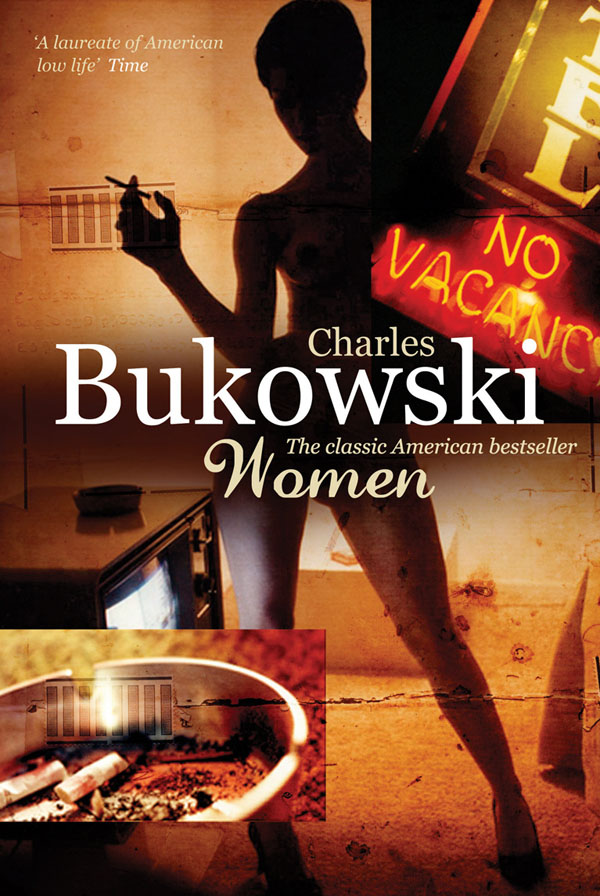
Women, by Charles Bukowski

Staff Review by Chris Saliba

Charles Bukowski's third novel is a sexual banquet of over indulgence and fleeting gratification. Women is also a deeply existential novel.

The starkly titled Women is Charles Bukowski’s third novel, published in 1978. It’s pretty much identical in format and style to its predecessors Post Office (1971) and Factotum (1975). The main differences are that it’s twice as long and even grittier in tone than the first two. Post Office, Factotum and Women can almost be read as a single continuous work, all featuring the same anti-hero, Henry Chinaski, transparently Charles Bukowski himself.

As the title suggests, most of the novel is about Bukowski’s relationships with women, some quickies, some more enduring, but all sure to end one way or another. That’s a polite explanation. Perhaps more accurately it’s a psycho-sexual extravaganza, a marathon sexual confession. There is a lot of sex in Women, an almost grotesque feast of excess.

Bukowski is self-effacing enough to call himself a down market Marquis de Sade. He’s not really trying to be Sade, however. The Marquis de Sade wrote outrageous comedies about sex. He was like Mae West, who also liked to poke fun at sex. Bukoswki is rather an existential writer, in the manner of Sartre’s Nausea, Dostoyevsky’s Notes From The Underground and Knut Hamsun’s Hunger. The existential crisis at the centre of Women is perhaps Henry Chinaski’s inability to find any solace, comfort or even enduring relationship with a woman. Henry Chinaski has a lot of sex in Women, but it doesn’t seem to make him very happy or fulfilled. As in Sade, an excess of sexual gratification turns into its opposite, boredom and, if not outright abuse, then shabby treatment of partners.

Having read and enjoyed these first three novels, I’ve been trying to put my finger on his enormous appeal. I’ve come to the conclusion that it is the deeply existential aspect of his writing. Henry Chinaski seems to live in a  permanent existential funk. He just wants to avoid people and be left alone to type away at his stories. Everything in the world is meaningless and time wasting. In one passage in Women he talks about how life is all about waiting:

“You waited and you waited – for the hospital, the doctor, the plumber, the madhouse, the jail, papa death himself. First the signal was red, then the signal was green. The citizens of the world ate food and watched t.v. and worried about their jobs or their lack of the same, while they waited.”

In his treatment of women, Henry Chinaski certainly lacks gallantry, to put it mildly.  But if he treats women poorly, he is also willing to confess all these faults to the reader. In many passages he makes a point of showing himself as weak and cowardly. There seems to be a moralising strategy behind all of these confessions. It’s like Bukowski is saying: look at how terrible and pathetic I am, no one knows it more than I do, please forgive me.

In a final plead that he’s a nice guy, the novel ends with Henry Chinaski feeding a stray cat and noting that animals can instinctively pick out who is a ‘good guy’. Henry Chinaski cheerfully makes clear that he is at heart a good man, despite his misanthropy, appalling relationships, drinking problems and general irascibility. And despite all that Chinaski has told us about himself, you can’t help but agree.

Women, by Charles Bukowski. Published by Virgin Books. ISBN: 9780753518144  RRP: $19.95

Sunday, February 24, 2013

The Great Disruption, by Paul Gilding

Staff Review by Chris Saliba 

Paul Gilding’s superb The Great Disruption sums up a lifetime of thought on sustainability and environmental issues. With his first-hand experience as an activist and businessman, he brings many important insights into the most pressing questions of our day.

The basic premise of The Great Disruption can be summed up fairly simply: the global economy is now bigger than the planet. We must shrink the world’s economy to a size that can safely fit within the planet’s ecology. Science, mathematics and simple common sense tell us that a day of reckoning will come when the planet bites back and we will have to act. The dire effects of global warming will tell us our time is up and that we must immediately reduce our carbon emissions to zero. Paul Gilding sees this all as completely logical, and maps out with quite a bit of certainty how the future will look. He repeatedly uses the analogy of Britain preparing for World War Two, and is fond of quoting Churchill.

This is perhaps weakest part of The Great Disruption, depending on your attitude to the art of prediction. Gilding is bold enough in his optimism to make forecasts 100 years out. While there is a lot of logic in what he says, in the end only time will tell. I hope that Gilding’s future scenarios do come to pass. I hope that the world bands together to confront the common enemy that is global warming. (For a more pessimistic view of the future, see military historian Gwynne Dyer’s Climate Wars.)

That’s about as far as my reservations go. The rest of the book is brilliant. Paul Gilding has experience on both side of the fence, as an activist and as a business owner working with some of the biggest names in business. Immersion in real life business problems and meeting eminent CEOs has made him think hard about his intellectual and moral positions. The result is an honest book that tackles the major economic re-structuring that de-carbonising the atmosphere will cause.

There are two attitudes that can be adopted when confronting this ‘great disruption’ to our economy. (The book should really be called ‘the great re-structuring’, or something similar, as disruption indicates a temporary change.) The first is to grieve over the end of the consumerist life as we know it, to dolefully accept that we are going to have to reduce our high standard of living. Or we can see this economic re-structuring as a blessing in disguise. We can all reduce our hours of work, consume less and have more time for the things that matter: friends, family and community involvement.

The best parts of the book (for me anyway) is the critique of the growth economy. Gilding marshals a lot of evidence to show that the presumption that the economy can continue to grow ad infinitum is simply impossible. As surely as day follows night, eventually we will reach the limits of economic expansion. Gilding shows that the fathers of economic thought, Adam Smith and John Stuart Mill, both thought that eventually the economy would reach a point beyond which it could not grow. John Maynard Keynes also felt that economic growth had a limit.

More fascinating, however, is Gilding’s argument that the growth economy is not making us any happier. There are a lot of people working in this area of research to be sure, but Gilding makes a really convincing argument. Basically, once our material wants are satisfied, we’re pretty content. Extra money and material goods beyond this don’t add much satisfaction to our lives. We’re all on a treadmill, working longer and longer for stuff we don’t need. This lifestyle with over consumption as its basic tenet is making us sick (look at obesity rates). Furthermore, research also shows that a society with ever widening gaps between rich and poor makes both groups unhappy.

Overall, The Great Disruption makes a cogent and reasoned argument. It’s clear from the text that Gilding has given everything he writes about much personal thought. That over consumption is bad for us makes clear sense. Perhaps more surprising to a lot of people is the argument that reducing consumption (hence also reducing our standard of living) may actually improve our lifestyle. What remains in great doubt is how countries will respond to the collective threat of global warming in the years to come. Will the world lean towards Gwynne Dyer’s predictions, or Gilding’s sunnier outlook? Perhaps a bit of both.

What is certain is that the science on climate change remains unassailed. It’s just a matter of when we decide to face the facts of the matter. Now that President Obama is talking about it, perhaps a shift is on the way. Green energy, if it was scalable, would surely relieve America of one of its greatest headaches, reliance on Middle Eastern oil.

The Great Disruption, by Paul Gilding. Published by Bloomsbury. ISBN: 9781408822180  RRP: $19.99

Wednesday, February 20, 2013

Hunger, by Knut Hamsun

Staff Review by Chris Saliba

Hunger is an early existential novel about a writer trying to make a living by his pen, and failing miserably.

Knut Hamsun (1859-1952) was a Norwegian novelist. His name had not crossed my path until customers in our shop started bringing his novels to the counter and praising his work. Charles Bukowski also mentions Hamsun as one of his favourite writers. Having read Hunger, I now know why.

Hunger, published in 1890, was one of Hamsun’s early novels. Despite its Victorian publishing date, it is distinctly modern and looks forward to writers like Kafka, Sartre and Beckett. While Dostoyevsky’s Notes from the Underground (1864) is considered the first existential novel, Hunger is perhaps the second.

The story is a pretty simple one. The narrator, a young, struggling writer, tries to live by his pen. His publishing successes are few and far between. Consequently, he doesn’t have much money, if any, for lodgings and food. Things get worse and worse until his clothes are ragged, he has nowhere to stay and he suffers great hunger.

It’s hard to be completely sympathetic with the narrator. He should get a real job and work like everyone else, rather than pursue his self-deluded dreams of literary grandeur. But herein lies much of the novel’s appeal. Hunger explores the mind isolated and unhinged from reality and society, hence its status as existential novel. The narrator, who is never named, vacillates between self-loathing and a ridiculously inflated sense of self-worth. He often imagines he is being persecuted, then fantasises about insulting people who he feels are belittling him. There is a great friction between the narrator’s very low social status and his lofty aspirations. This gives the novel a great hallucinatory feel.

Hunger, it can only be surmised, was written from personal experience. It’s hard not to feel that Hamsun went nearly mad in similar circumstances as a struggling writer. Many of the scenarios, situations and personal confrontations have the ring of truth. Anyone who has lived on the dole and struggled to eke out the barest existence will vouch for the novel’s psychological truth. When you live this low on the social scale, without money, work, or any level of self-esteem, mental illness is only a step away. The narrator dances on this dizzy precipice until the novel’s final page when he takes a radical and unexpected direction.

The chief achievement of the novel is its psychological authenticity and intensity, the bouncing around between an exalted self-worth and a chronic inferiority complex. The narrator must constantly try to figure out what reality is and where he fits into it, if at all. Again, Hamsun must have experienced these turbulent mental states to write about them so truthfully. The novel’s genius lies in its eschewing of a typical 19th century story-telling mode to take a stripped down, existential style that is decades ahead of itself.

Hunger, by Knut Hamsun. Published by Text Publishing. ISBN: 9781921145544  RRP: $23.95

Tuesday, February 19, 2013

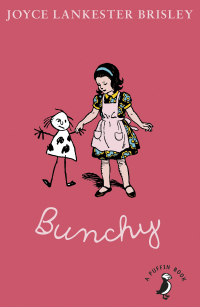
Bunchy, by Joyce Lankester Brisley

Staff Review by Chris Saliba 

Fans of Milly Molly Mandy will find much to enjoy in Joyce Lankester Brisley's Bunchy stories. They are more surreal than Milly Molly Mandy's adventures as they explore childhood imagination.  

Joyce Lankester Brisley is best known for her Milly Molly Mandy stories, but she also created other characters besides this perennial favourite. Bunchy is a little girl who lives with her grandmother and uses her imagination to transport herself into magical worlds of make-believe. Unlike Milly Molly Mandy, who spends much of her time adventuring outside of her cottage with the white thatched roof, Bunchy spends her time inside. She leads a solitary life with her adored grandmother, but manages to find escape and company through a rich fantasy life.

There are ten stories in this collection. In each one, Bunchy’s grandmother gives her some simple toy, game or object from around the house, and Bunchy then works it up into a rich adventure. There is a mild touch of Alice In Wonderland surrealness in these stories.

In the opening story ‘Bunchy and the Pastry Dough’ a piece of pastry dough that is given to Bunchy is flattened with a rolling pin and turned into a pastry-girl that comes to life. Bunchy then shrinks to the pastry-girl’s size and enters her pastry house. Many other similar things happen in the other stories. Bunchy shrinks or grows, effortlessly walks into other worlds and makes friendships with formerly inanimate objects. The difference from Alice in Wonderland is that it's all a pleasing afternoon daydream. No Queen of Hearts here.

All the stories are exquisitely illustrated by Joyce Lankester Brisley. The book is almost worth the price just for the beautiful drawings.

Recommended age: 6  upwards

Bunchy, by Joyce Lankester Brisley. Published by Puffin. ISBN: 9780141368672  $19.99

Monday, February 18, 2013

Catwings, by Ursula K. Le Guin

Staff Review by Chris Saliba

Ursula Le Guin's story about four 'flying tabbies' is a great fun from the first page to the last. A story about flying kittens, how could it be otherwise? 

Mrs Jane Tabby has four kittens –Thelma, Roger, James and Harriet. She can’t explain why they all have wings. One neighbourhood cat jokes that their father was a ‘fly-by-night’. They all live near a dumpster in a run down inner city neighbourhood. When Mr Tom Jones proposes to Mrs Tabby, she tells her children that they must fly away from the terrible squalor of the neighbourhood and find somewhere better to live. At first they are upset, but then realise that this is always the way in cat families.

The flying tabbies then get up to all sorts of adventures. They settle down in some woods and meet all sorts of new creatures. They also make friends with some humans who help them out in their new life of independence. 

Ursula K. Le Guin is best known for her science fiction novels. This charming little story is just under fifty pages long and is nicely illustrated by S. D. Schindler. There are three other Catwings adventures in the series, this one being the first.

I’ve never read any Ursula K. Le Guin before, but aim to read some of her novels when I get the chance. She is obviously a great cat lover, as she dedicates the story to all the cats she’s loved before! This is a really fun story that I enjoyed very much, and it does makes you wonder, why weren’t cats created with wings? Perhaps because they’d only get up to greater mischief.

Recommended age: 7 upwards

Catwings, by Ursula K. Le Guin. Published by Orchard. ISBN: 9780439551892  $12.95

Thursday, February 14, 2013

Factotum, by Charles Bukowski

Staff Review by Chris Saliba

Factotum exhibits Bukowski’s trademark Rabelaisian humour and brutal honesty.

Factotum follows on from Charles Bukowski’s debut novel Post Office (1971), and features the same protagonist, Henry Chinaski, a thinly veiled self-portrait or alter ego of the author. In style the novel is a bit looser (if that’s possible) and more episodic than Post Office. There are many short chapters, as Henry Chinaski skips through a dizzying number of menial jobs.

The novel is set in America during the Second World War as Chinaski / Bukowski travels the country’s underbelly in search of work, love and sex. Bukowski describes in extraordinary detail the flip side of the sunny American lifestyle promoted on breakfast cereal boxes and the like. Quite often you find yourself shocked and amazed at the scenes Henry Chinaski relates: Did such bizarre things really happen during the 1940s? I guess they did.

How would I describe the essence of Bukowski’s writing, as evidenced in Post Office and Factotum? I’d say he has a Rabelaisian humour and sense of humanity. He is grotesque, funny, humane and truthful. His writing has a great sense of irony. Here is someone to tell you the world is not as it was promised to us, and why we’re all going mad because of it. 

Factotum, by Charles Bukowski. Published by Virgin Books. ISBN: 9780753518151  RRP: $19.95

Wednesday, February 13, 2013

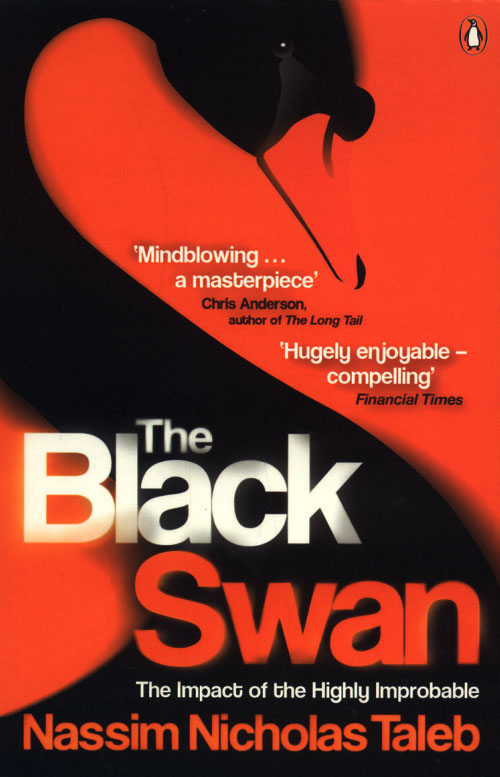
The Black Swan, by Nassim Nicholas Taleb


Staff Review by Chris Saliba

In Nassim Nicholas Taleb’s modern classic the philosopher-trader warns that the world is full of unpredictability, despite so called experts and their inclination to distil life into easily managed statistical models and optimistic bell curves. 

Perhaps the quickest way to summarise the basic premise behind The Black Swan is the well-known saying attributed to Socrates: I know one thing, and that’s that I know nothing. The term ‘black swan’ actually refers to the once common belief that black swans didn’t exist, until of course they were discovered in Australia. Prior to that, a common expression for something that was deemed impossible was to call it a ‘black swan’. The lesson to be drawn is not so much to expect the unexpected, but rather to not categorically rule it out.

Taleb’s book is of course more nuanced than that, and he teases out the notion of outliers or unexpected events in fine detail. He warns that complicated societies are more prone to black swans, that is, completely unpredictable events. This would be fine if as a society we were prepared to accept uncertainty, but the opposite is the case. We rely on too many experts and professionals (both in business and government) that think they have the power to model the future upon predictable lines. Taleb is at his most trenchant when criticising these technocrats and heroes of the business world.

The reason we slip into this mode of thinking is because it is appealing to create statistically cheerful models based on positive events that happened in the past. We believe that if the economy has been good in the last six months, it will continue to be good indefinitely. No one ever sees a crash coming during the good times. Hence what happened yesterday is not necessarily a good predictor of what will happen tomorrow. Writ large, this means societies are planned with blinkers on, not taking into account outliers or unknown events. We think inside a cosy bubble, fooling ourselves that we are omniscient, blinding ourselves to the very notion of surprise events. When these ‘black swans’ do hit, no one is prepared for them.

On the flipside, there are also positive black swans, like a bestseller book that was rejected by all major publishers then published by the author at their own expense. My own example came to me when watching (briefly, I’m no big fan) a documentary on the English band Queen. The song ‘Another One Bites the Dust’ barely made it onto their album Play the Game. The band’s drummer even hated the song and didn’t want it released as a single. No one ever thought it would be a single, let alone a hit. But at the urging of Michael Jackson (a friend of Freddie Mercury) it was released and went on to become a monster hit. No one saw it coming (except of course for Michael Jackson): a positive black swan!

Another main theme of the book is how we like to create a narrative out of random events. For example, we think the CEO got to his or her position through hard work and intelligence. Taleb begs to differ, and says luck has a lot more to do with it. We like to read history as following a rational, straight line. Taleb says history is messy, with major events happening in fits and starts. Our brains are hard wired to search out meaningful stories in the randomness that is everyday life.

What’s the take-away? Taleb styles himself part philosopher and part real world practitioner (he worked as a trader). His book calls on us to accept that the world is full of unpredictability. The experts and technocrats with all their models, statistics and bell curves think they can safely map out the future and eliminate risk. Taleb says Baloney! The truly brave person is the one who can admit that they don’t know.

The Black Swan: The Impact of the Highly Improbably, by Nassim Nicholas Taleb. Published by Penguin. ISBN: 9780141034591 RRP: $26.95

Monday, February 11, 2013

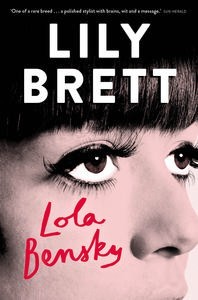
Lola Bensky, by Lilly Brett

Staff Review by Chris Saliba

This charming autobiographical novel by Lilly Brett balances humour and a light tough against the dark background of the Auschwitz death camps, and how Holocaust survivors cannot help but pass these traumas onto their children.

Lola Bensky is a 20-year-old Jewish-Australian music journalist roaming the world and securing some of the biggest names in rock and pop for interviews. Page one opens with Lola interviewing Jimi Hendrix, and then moving through a series of very big names: Jim Morrison, Mama Cass, Janis Joplin, Mick Jagger. The names go on and on.

In between the conversations about music, style and pop-world concerns, Lola’s many personal anxieties slip in. Superficially, she is always obsessing over her diet and weight. On a far more serious level, her parents were survivors of Auschwitz. While speaking to Mick Jagger or Mama Cass she almost unconsciously starts talking about the Holocaust. It’s such an essential part of her being (Lola often calls herself ‘very Jewish’) that she can’t help it.

A large part of Lola’s fragility and confusion about life derives from her parents experiences in Auschwitz. Renia and Edek clearly love their daughter, but they don’t communicate well. Nor are they at all demonstrative. Lola never gets any physical contact from them. What she does get are horrible bits and pieces of information about what happened in the death camps. Lilly Brett does an amazing job of balancing these intermittent descriptions of Nazi hell with the often charmingly goofy aspects of Lola’s personality. Lola is a delicate flower, sensitive and intelligent. The weight of the Holocaust sits heavily on her psyche while she tries to understand the world she lives in.

Lola Bensky is an autobiographical novel. Lilly Brett did work as a music journalist during the 60s. In 1967 she covered the Monterery International Pop Festival, where she interviewed many of the big names that appear in the novel. The dialogues with famous people have a surreal and fascinating quality. On one level, you know they are based on personal encounters, so they have their interest on that basis alone. As fiction, the dialogues read as touching exchanges between young people in a time of change just starting out in life. Stars like Janis Joplin, Cher, Jimi Hendrix and Paul McCartney are portrayed as sweet, innocent, intelligent, inquisitive and enthusiastic. Lola is a faintly sad and unconsciously funny interviewer. In fact, there’s plenty of well delivered humour throughout: when Lola is discussing sexuality with Janis Joplin, she thinks to herself how she only cares for her Olivetti typewriter and tape recorder.

Most of the novel’s time frame is set in the 1960s, but on two occasions we are taken forward to when Lola Bensky is 30 and 63 years of age. Then we are again taken back to the 60s. Finally the novel ends in contemporary New York. The different eras are nicely brought together when at a New York fundraiser a 63-year-old Lola runs into Mick Jagger, although he doesn’t recognise her.

On the surface Lola Bensky is a sweet story about a young woman first discovering the world, asking famous rock stars for their opinions on love, life and what the best breakfast cereal is. At a deeper level it’s about how parents traumatised by war, torture and murder pass these traumas onto their children. It is also about how such experiences are so terrible that they are often beyond the  power of language to express.

Lola Bensky, by Lilly Brett. Published by Hamish Hamilton. ISBN: 9781926428475  RRP: $29.99

Thursday, February 7, 2013

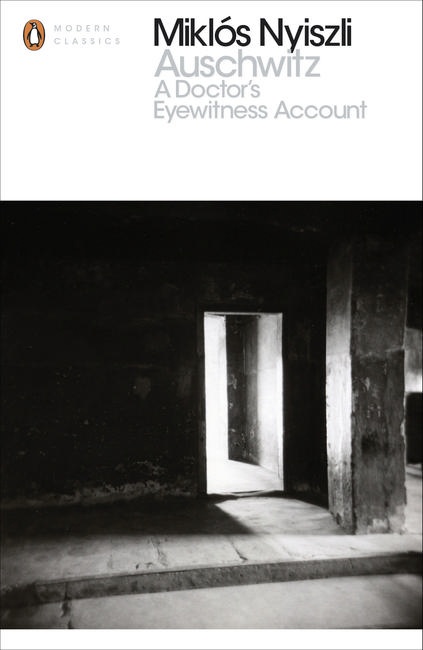
Auschwitz: A Doctor's Eyewitness Account, by Miklós Nyiszli

Staff Review by Chris Saliba

Miklós Nyiszli survived Auschwitz by volunteering as a doctor. He vowed if he survived he would write down his experiences so the whole world would know what the Nazis did in the death camps. In 1947 this memoir was published in Hungarian. It was translated into English in 1960.

Miklós Nyiszli, a Jewish doctor born in Austria-Hungary, was transported to Auschwitz concentration camp along with his wife and teenage daughter in June 1944. On the notorious ramp where prisoners were divided off to the left (certain death) or the right (prolonged life, but a high probability of death as well), Nyiszli  volunteered that he was skilled as a doctor.

The Nazis, despite their madness, had use for the highly qualified. He was separated from his wife and daughter, and soon found himself working under the notorious Doctor Josef Mengele. Mengele was your typical Nazi crackpot racist whose ‘scientific’ work was centred around attempts to find out how twins were created genetically. If he could crack that code, then German women could populate like crazy, grinding out twins.

Nyiszli in his civilian life was trained in autopsy and often used his skills to discover how victims of violent crime met their end. Working under Mengele he found himself performing autopsies in an effort to support the Nazi’s pseudo-scientific race theories. He often confesses to coming close to madness when performing this ghastly work.

For example, one day Mengele returned cheerfully to the autopsy room after inspecting a new arrival of Jewish prisoners to announce he’d found a man with a hunchback. The man had a son with a deformed foot. Mengele believed he had found evidence of Jewish genetic deformity, proof that the Jews were an inferior race. In one of the many awful scenes in the book, Nyiszli interviewed the man and his son, who had just come off the deporting train and little realised what was to be their fate. It was at this moment that Nyiszli had to steel his nerves, for he knew Megele would order their murder and demand he perform an autopsy on them. Sure enough, father and son were taken outside and then shot in the back of the head. Once Nyiszli had performed the autopsy, Mengele wanted the bodies reduced to skeletons and sent to an eminent German museum. Nyiszli had to perform this grisly task as well.

Other shocking ironies abound. When the Jewish prisoners tasked with clearing up bodies from the gas chambers found a young girl with signs of life at the bottom of a pile of corpses, Nyiszli was brought in. He gave her a few injections and managed to revive her. But once she had been ‘saved’, what to do with her? Of course it was just a matter of time before the incident was reported and the girl killed. Nyiszli was always finding himself in this terrible position, and no wonder that he often feared he would go mad.  

The whole time Nyiszli was in Auschwitz he vowed if he ever got the chance he would write down his experiences so the whole world would know what happened in the death camps. Unlike other Holocaust memoirs (If This is a Man by Primo Levi and Man’s Search for Meaning by Viktor E. Frankl), this account is a more clinical and direct one. These memoirs weren’t written to be treated as literature, but as a faithful document. Nyiszli’s prose is neat and clean. In the manner and style he writes, it’s quite obvious that he is anxious to catch exact detail. Never have I read something that so urgently sets its task as faithful communication.

By some extraordinary luck, Nyiszli managed to be reunited with both his wife and daughter after he was liberated from Auschwitz. There was a close call, however. He once built up the courage to ask Mengele if he could search for his wife. He was given a day pass and found them in a women’s camp. He next learnt that, under Mengele’s orders, the camp was to be ‘liquidated’. By bribing an SS guard with cigarettes he was able to get them sent off to a labour camp. Miraculously, they both survived.

This is such a moving and shocking book that words simply can’t do it justice. It’s surreal and unbelievable that people can be so ruthlessly murderous, killing people in an industrial operation, and the whole time thinking they were indisputably superior beings.

Auschwitz: A Doctor's Eyewitness Account, by Miklós Nyiszli. Published by Penguin Classics.  ISBN: 9780141392219  RRP: $19.99

Wednesday, February 6, 2013

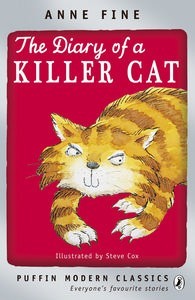
Diary of a Killer Cat, by Anne Fine

Staff Review by Chris Saliba

Diary of a Killer Cat is an often hilarious story told from the cat’s point of view.

Tuffy is your typical house cat. He likes chasing mice, birds and dragging rather unsavoury things into the house. All hell breaks loose when Tuffy hauls a dead white rabbit through his cat flap.

The rabbit belonged to the neighbours.  Tuffy’s owner, Ellie, and her keeping-up-appearances parents are justifiably mortified. Comic scenes ensue when the parents try to restore the rabbit to his hutch and pretend they know nothing about it. Tuffy himself adopts an insouciant attitude. These humans can be so over the top in their reactions to normal cat behaviour. They’re so precious!

Diary of a Killer Cat, as the title suggests, is Tuffy’s own story. The reader is entertained to a cat’s eye perspective on the world. We go deep into the feline mind to find out what it thinks of humans and their shock-horror attitude to normal, healthy recreational kitty pursuits.

Tuffy himself is an amusing and often blasé narrator. He’s certainly seen the world in his time and can’t see what all the hullabaloo is about when he brings dead mice and birds into the house. But all is not as it appears (especially the business with the dead rabbit) and Tuffy has been judged a little too harshly.

Anne Fine cleverly begins Diary of a Killer Cat with this mystery of the dead rabbit and hooks the reader into finding out what actually happened to the poor creature. Along the way there are plenty of laughs, especially the passages where Tuffy chats to his cat pals Bella, Tiger and Pusskins.

This is an often hilarious book. Reading it put me in a very cheery mood.

Recommended age: 7 upwards

Diary of a Killer Cat, by Anne Fine. Published by Puffin Modern Classics. ISBN: 9780141335773  RRP: $16.95

Sunday, February 3, 2013

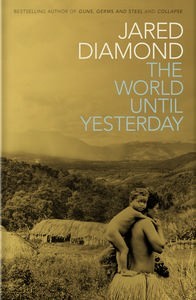
The World Until Yesterday, by Jared Diamond

Staff Review by Chris Saliba

The World Until Yesterday contrasts modern societies against traditional ones, and tries to sift out the benefits and limitations of both. The book is full of harsh realities, and demonstrates how fragile life is when lived close to nature.

For this latest book, scientist and ornithologist Jared Diamond has moved away from the more speculative themes of Guns, Germs and Steel and Collapse, to concentrate more directly on natural history and anthropology. The World Until Yesterday is a distillation of a lifetime’s work in the field, especially Diamond’s regular trips to New Guinea. (Apparently he spends about 7% of his time there, by his own estimation.)

The main theme of The World Until Yesterday is: what positives can we learn from traditional societies that can be incorporated into our modern Western lifestyles? The book isn’t particularly prescriptive on this front. In fact, the whole notion of adopting aspects of the traditional lifestyle isn’t really pursued with any vigour. If anything, the book offers a thoughtful study and contrast of human evolution from the traditional to the modern, from hunter-gatherers to the nation state.

In the opening section, Diamond reminds us that agriculture is a fairly recent phenomenon. Humans have been around for approximately 100,000 years, living as hunter gatherers, while agriculture was invented 11,000 years ago. For most of human history we have not farmed or been protected by central governments. We lived much closer to nature, and were subject to its whims. Our currently evolved state is really an anomaly in human history.

The World Until Yesterday concentrates on a range of traditional behaviours and cultural practices: warfare, treatment of the elderly, diet, approaches to danger, religion and so on. Diamond certainly doesn’t romanticise traditional societies and their way of life. He has had enough first-hand experience to know the harsh realities. In fact, at the end of the book he states that he’s never wanted to relocate permanently from his Los Angeles home to New Guinea. His time spent in New Guinea he refers to as his ‘career’.

What sort of picture does Diamond paint of traditional life? On the whole, I must admit, not a particularly attractive one. In many, many instances, his descriptions fitted Thomas Hobbes’s famous account of life before central government as nasty, brutish and short. Warfare in traditional societies in chronic, everyday life is full of life threatening risks, disease can easily fell its victims when there are no antibiotics or hospitals, infanticide and sometimes euthanasia of the old are necessitated by the scarcity of resources.

The chapters on traditional warfare are very sobering indeed. When Diamond crunches the numbers, he finds that there are far more deaths, per capita, in traditional societies. This is even when numbers are compared with the world wars of the twentieth century. Basically, when there is no central government, everyone outside your traditional band is an enemy. Central government brings order, no central government brings perpetual disorder.

Overall, The World Until Yesterday highlights just how fragile life is, and how protected we are from nature’s harsh realities. The global trend is towards a Westernized lifestyle. Traditional peoples everywhere are finding the benefits of regular food, modern medicine and protection from war very attractive. On a sliding scale, however, Diamond shows that in many areas Western society has somewhat been a victim of its own success. Too much food has led to obesity, busy lifestyles leave no room for one-on-one human communication, commercialisation has sapped us of our creativity, the world is leaning toward a monoculture with diversity quickly evaporating (thousands of the world's unique languages face extinction). We don’t exercise or play. Another hidden trap: we also take our many blessings for granted.

Traditional societies, by contrast, enjoy the benefits of close communication, a deeply collaborative approach to solving life’s problems and an absence of competition.

The World Until Yesterday, in the final analysis, shows how fragile life has been for many people for thousands of years. This is a book of reality, describing life when it is lived close to nature without a protective central government and surplus food production.

The World Until Yesterday, by Jared Diamond. Published by Allen Lane. ISBN: 9781846147586  RRP: $29.99