Tuesday, April 30, 2013

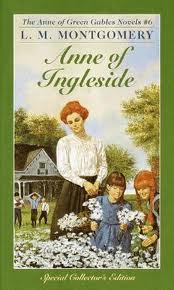
Anne of Ingleside, by L. M. Montgomery

Staff Review by Chris Saliba

The sixth in the series of Anne of Green Gables books, Anne of Ingleside,  chronicles the mishaps and adventures of the adult Anne’s six children. Married life with her husband Gilbert Blythe is generally good, but some stresses do unexpectedly rear their head, leading Anne to make some misjudgements.

Canadian children’s writer L. M. Montgomery published Anne of Green Gables in 1908 and went on to write another seven Anne novels during her lifetime. Most of the novels were written sequentially, chronicling Anne’s life from girlhood to motherhood and mature age. Anne of Ingleside was the sixth novel of the eight Anne novels, but was actually written last, in 1939. (A short story and poetry collection, The Blythes are Quoted, forms the last book in the series and was published in 2009.)

Anne of Ingleside sees Anne now living comfortably at Glen St Mary with her doctor husband, Gilbert Blythe. Anne now has a brood of six children: Jem, Walter, twins Nan and Di, Shirley and Rilla. Helping out with the management of the house is Susan Baker, an elderly, no nonsense helpmeet and virtual last member of the Blythe family.

Comic Scenes of Childhood


The novel, for the most part, centres on the childhood scrapes and adventures of the children. There’s a lot of warm comedy in these scenes, which often concentrates on the rich and often irrational imagination of childhood. L. M. Montgomery is a natural at reviving these scenes of childhood where we believe witches live in old, dilapidated houses, or trust completely in the made up stories told by our contemporaries in the play yard. She weaves a whole range of unusual and fanciful incident’s for Anne’s children, highlighting how vulnerable an overactive imagination can make a child to various horrors and nightmares. At one point in the novel Anne tells one of her children that it is fine to have an imagination, as long as we control it and it doesn’t control us. Very sage advice indeed.

In many ways, Anne of Ingleside’s strong focus on childhood experience and the travails of sorting out fact from fantasy, and the comedy that can ensue from these trials, makes this novel closest in spirit to the first Anne novel, Anne of Green Gables. The only difference is the comic incidents that Anne was the subject of at Green Gables are now re-told through the next generation. In one hilarious scene, the young Rilla is asked to deliver a cake to a charity, but she gets the ridiculous idea in her head that to carry a cake is undignified and highly embarrassing, so she tosses the lovely home made cake in a ditch. Just the sort of wild, zany thing Anne Shirley in her Green Gables days would have done.

There’s plenty of good comedy centring on the adults too. Montgomery can write with swift timing in these scenes. A favourite example is when the eccentric Miss Cornelia is described from the view point of Mr Chase:

“As for Cousin Cornelia, twice removed, she was a bit too solidly built and had about as much intellect as a grasshopper, but she wasn’t a bad cat at all if you always rubbed her the right way.”


Adult Themes and Fevered Imaginations

It’s hard to say what the theme of Anne of Ingleside is. The novel has a very episodic nature, and much of it reminded me of Montgomery's two short story collections Chronicles of Avonlea and Further Chronicles of Avonlea. For readers like myself, who love L. M. Montgomery’s naturalistic prose, her moving descriptions of the seasons in bloom and decline, and the general tone of delight in the simple act of being, Anne of Ingleside has many wonderful things to offer. By volume six in the Anne series, I thought I should be wearying of Anne’s story, but I found this novel brilliantly engaging, funny and at times moving.

If Anne of Ingleside does have a lesson, it’s how, even as adults the imagination has the power to skewer our perception of reality. The novel finishes with Anne totally and utterly misinterpreting a social situation, so fevered has her imagination become with regards to her husband. We later learn that the strains of raising children and running a house have had their effect on Anne, perhaps almost pushing her over the edge. Hardly a theme for a children's book, so you would think, but there you go.

Anne of Ingleside, by L. M. Montgomery. Published by Bantam Dell. ISBN: 9780553213157 RRP: $7.95

Thursday, April 25, 2013

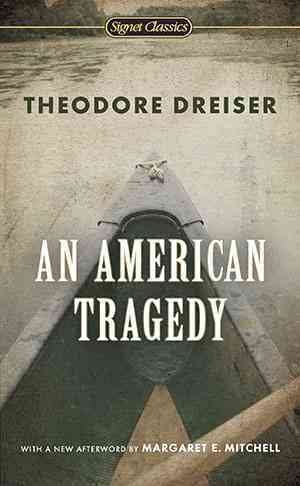
An American Tragedy, by Theodore Dreiser

Staff Review by Chris Saliba

In this dark portrait of American society and its values, Theodore Dreiser shows how putting the pursuit of money and status on a pedestal as the ultimate goal of a people leads inevitably to its moral collapse. An American Tragedy raises endless questions about the pernicious effects of a society based on money, greed, social climbing and envy.

Theodore Dreiser’s 1925 novel, the grandiloquently titled An American Tragedy, was a huge success in its day. It further made its cultural mark when it was filmed by George Stevens in 1951 as A Place in the Sun, starring Montgomery Clift and Elizabeth Taylor. It’s worth noting that Clift does a superb job portraying the handsome and morally weak Clyde Griffiths (renamed George Eastman for the film).

It’s intriguing that An American Tragedy was such a smash with the American public. The novel is a long, merciless 900 page critique of American capitalism and its aspirational, or rather covetous, consumer culture. Dreiser’s tome is almost the antidote to Ayn Rand’s somewhat agonised defence of capitalism, Atlas Shrugged (1957).

Dreiser based his story on a 1906 real life murder case which had obsessed him for years. Chester Gillette was convicted of killing his 20-year-old girlfriend Grace Brown, who was pregnant at the time. Gillette was executed in the electric chair in 1908. For years Dreiser collected clippings on the case before working the story into his magnum opus.

The genius of An American Tragedy is that Dreiser takes the tawdry basic details of the 1906 murder case and fleshes them out into a fully realised novel. The curtains on the public spectacle of a murder case are drawn back to show in exhaustive detail the social, psychological and economic conditions that prompted a morally weak Clyde Griffiths into murdering his girlfriend Roberta Arlen. American success, a quality to be deeply envied, is epitomised in the character of Sondra Finchley. She is pretty, rich and without a care. She belongs to a world of endless parties, shopping and pleasure seeking. When Clyde starts getting drawn into her circle (he works for his successful uncle, a shirt collar manufacturer, which allows him entre into this social milieu), he tries to hide his poor background and vague social status. When he gets the working class Roberta Arlen pregnant, he has already started running with this new rich crowd. Roberta puts pressure on him to marry her and take responsibility. Thus the weak minded Clyde must make the decision: commit to Roberta, step down on the class ladder and remain in a poorly paid job. Or he could pursue his relationship with Sondra and consolidate his aspirations for a life of wealth, ease and luxury. But what to do with Roberta, threatening to go public with everything? A recent murder case in the newspapers provides a gruesome answer. After much agonising, the cowardly Clyde plots to go through with drowning Roberta, but things don’t turn out as planned.

The most compelling aspect of Dreiser’s An American Tragedy is the persuasive way he takes the reader right through Clyde Griffith’s short, failed life. From a poor family of Christian preachers, to a naïve participant in the American economy working as a bellhop, to aspiring social climber, to his slow motion decline and fall. Dreiser worked as a journalist, and his penchant for extraordinary detail permeates the text. Every single tremor and movement in Clyde’s thinking and psyche is described convincingly. Indeed, it’s very easy to walk in Clyde’s shoes. This uncanny realism gives the impression that Clyde is part self-portrait of the author. The scenes of 1920s American life, the popular pursuits and public places, are also drawn very well. You feel like you’ve stepped back in time to experience the luxuriant American hotel lobbies and cars.

This may sound like a far-fetched claim, but in many ways An American Tragedy reminded me of Dostoyevsky’s Crime and Punishment and Shakespeare’s Hamlet. Of course Dreiser cannot match Dostoyevsky’s wit and relentless inventiveness, his nimble prose and idiosyncratic characters, but the psychology of a moral weakling trying to hide a crime but subconsciously knowing that he cannot erase his guilt approaches Dostoyevsky’s brilliance. Clyde Griffiths also has echoes of Hamlet, in his indecisiveness and inability to set a moral compass. We read 900 pages of him floundering about American society’s different classes, unable to decide on what he really values, and what decisions he should take to set a future course. Clyde Griffiths doesn’t have any of Hamlet’s intelligence or philosophical insights, but he suffers the same inertia. American society offers many temptations, but Clyde struggles to discover their true value.

An American Tragedy is a gloomy, critical and pessimistic novel, yet strangely enough it makes for compelling reading. Dreiser ensures his story moves at a cracking pace, even if it is at times freighted down with a lot of detail. For the most he part refrains from openly moralising, but the cumulative effect is one of evoking endless questions about the pernicious effects of a society based on money, greed, social climbing and a deep seated envy. Clyde Griffiths is morally weak and vacillating, yet we also feel sympathy for him. He’s trying to get ahead in an aggressively commercial society that looks down on those without money and position as losers deserving of contempt. Dreiser doesn’t suggest we show sympathy for Clyde, but he does insist on understanding. Clyde Griffiths is weak and possibly a murderer, but the reader also feels sure that if he had received the right guidance at the right time, he would have turned out a fairly decent fellow.

An American Tragedy is a huge and absorbing work, one that is at times quite demanding. I felt shaken to my core after having read it, but also hugely rewarded.

An American Tragedy
, by Theodore Dreiser. Published by Signet Classics. ISBN: 9780451531551 RRP: $14.95

Friday, April 19, 2013

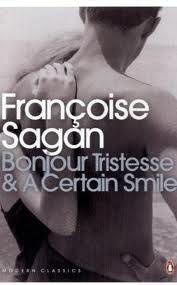
Bonjour Tristesse, by Francois Sagan

Staff Review by Chris Saliba

Francois Sagan’s extraordinary 1954 debut novel Bonjour Tristesse is a brilliant psycho-sexual chess game that plays with ideas of sex, freedom, pleasure, power and responsibility in a three way relationship between a father, his daughter and fiancé. It’s written with wit and a withering sense of irony, with some brilliantly executed comic scenes.

It’s irrelevant to discuss an author’s age in regards to their literary output, but it’s hard to ignore the fact that Francois Sagan published the extraordinary Bonjour Tristesse when she was only 18. It seems an impossible feat, so accomplished is this small, polished gem. The novel is basically a witty yet tense psychological stand-off between a young 17-year-old teenager and her father’s fiancé.

Celeste, the novel’s narrator, lives on the French Riviera with her father and his mistress, Elsa Mackenbourg. They live in a kind of carefree, idyllic, almost irresponsible existence. Celeste and her father, Raymond, are like conspirators in their quest to live only for pleasure, rather than as typical head-of-the-house father and dutiful daughter. They both take lovers more for kicks and excitement than to satisfy any sort of deep emotional need. Elsa, Raymond’s mistress, is seen as a frivolous but fun diversion, while Celeste takes on the 26-year-old student Cyril as a lover. She doesn’t love him, but savours the physical aspects of the relationship. As in Oscar Wilde, it’s all about surfaces and sensations. In one delicious passage, Celeste describes how she likes to drink coffee for breakfast, followed by a piece of orange, then followed again by coffee. Both Celeste and Raymond are clearly, to use Lady Bracknell’s disapproving phrase, living entirely for pleasure.

Enter Anne Larsen. She is a friend of Celeste’s late mother, and is temperamentally the opposite of the Dionysian Raymond and Celeste. Anne is entirely Apollonian. She likes order, control and is morally upright. Her irresistible nature soon overpowers Raymond and the two are engaged to be married. Celeste is not wholly against Anne. She admires certain of her qualities, but nonetheless sets herself the task of breaking up her father’s new serious relationship. (Carelessly he has abandoned Elsa.) Her strategy to achieve this break-up is to make Anne jealous. She dragoons Cyril and Elsa to play a few little set pieces as lovers, this in the hope that it will make Raymond impossibly jealous. (Anne had previously told Celeste she was not to see Cyril anymore, so to all intents and purposes the relationship was on hold.)

This game of trying to manufacture jealousy, destroy a relationship and hopefully restore earlier idyllic days of pleasure, comes to a tragic end, but without compromising the novel’s sophisticated, witty and ironic tone. Celeste ends her story by reflecting on the sad events that she was the main protagonist for by wistfully saying to herself ‘ bonjour tristesse’, or hello sadness in English.

This is a brilliant and original psycho-sexual chess game of fascinating dimensions. It plays with ideas of sex, freedom, pleasure, power, responsibility and the three way relationship between a daughter, her father and her father’s lover. A fourth main character is perhaps Celeste’s dead mother. She’s never present, but we are constantly reminded of her by the presence of her interloper, the compelling and perhaps too powerful Anne Larsen. Something is clearly wrong in Celeste’s world, where morality, order and a proper father-daughter relationship are on hold. What the novel is trying to tell say is anyone’s guess, but its colour, wit, playfulness and sexual power plays make it irresistible.

Bonjour Tristesse and A Certain Smile
, by Francois Sagan. Published by Penguin. ISBN: 9780141442303 RRP: $24.95

Monday, April 15, 2013

Chitty Chitty Bang Bang, by Ian Fleming

Staff Review by Chris Saliba

Ian Fleming’s only novel for children is a fun adventure with lots of humour thrown in for good measure. Enjoy the Potts family’s adventures in their magical car and their triumph over baddies like Joe the Monster.

So many famous novels, it seems, start out as bedtime stories that their authors originally told their children. Think of classics like The Wind in the Willows and The Wonderful Wizard of Oz. Ian Fleming, best known for James Bond, told his son Caspar the story of Chitty Chitty Bang Bang every night before bed. While recovering from a heart attack a friend suggested Fleming write up the bedtime story into a novel. He set to his task with vigour, but unfortunately did not live to see his book into publication.

Chitty Chitty Bang Bang the Magical Car

Everyone, it’s safe to say, pretty much knows the story of Chitty Chitty Bang Bang. A dilapidated car in a junk yard is bought by mad inventor Commander Caractacus Pott, known somewhat affectionately by the locals as ‘Crackpot’. He is married to Mimsie and has two children, Jeremy and Jemima. Commander Pott immediately starts making the necessary repairs to the car, but also notices that the car is making intriguing changes itself. It seems that the car, which Pott names Chitty Chitty Bang Bang because of the sounds it makes, has a mind of her own. Chitty Chitty Bang Bang is a magical car that can fly and also sail, delighting the family with its extraordinary versatility. The car is soon leading the Pott family into some magnificent adventures, culminating in the busting of a gang involved in all sorts of illegal underground exploits.

Lots of Villainous Fun with Joe the Monster

Ian Fleming’s only children’s novel doesn’t pretend to be anything other than a lighthearted caper. The only moral is that the good end happily and the bad unhappily, fulfilling Oscar Wilde’s ironic prerequisite for fiction. While Fleming’s novel is not ironic, its pantomime-villains are certainly delicious fun, as are the novel’s crime set pieces. The leader of the gangsters is Joe the Monster, built like an ape but with a mincing turn of phrase. When he cleverly abducts Jeremy and Jemima (bundling them up in their bed sheets as they sleep and holding them aloft as though they were bags of lollies), he addresses them as ‘duckies’ and ‘kiddies’. The scenes where Joe the Monster forces the children into helping him rob Monsieur Bon Bon’s famous Parisian chocolate shop are hilarious. Again, another nice touch for Joe the Monster and his cronies Soapy Sam, Bloody-Money Banks and Man-Mountain Fink: you don’t think of toughened thugs wanting to rob a fancy chocolate shop.

I’ve not read any of the James Bond novels, so this is my first Ian Fleming book. If I didn’t know anything of the Bond novels, I’d say he was first and foremost a natural children’s story teller. Chitty Chitty Bang Bang is full of adventure, fun and humour. Fleming doesn’t stray too much from the English values of derring-do and basic uprightness of character, but that in no way makes Chitty Chitty Bang Bang anachronistic or chauvinistic. It’s all good fun, with a wink and a nudge thrown in for adult readers. It put me in a very cheerful mood indeed.

Chitty Chitty Bang Bang, by Ian Fleming. Published by Macmillan. ISBN: 9781447213758 RRP: $14.99

Wednesday, April 10, 2013

Pinky Pye, by Eleanor Estes

Staff Review by Chris Saliba

Pinky Pye is Eleanor Estes’s sequel to her 1951 novel, Ginger Pye. In this delightful story, the Pye family discover an intrepid little kitten named Pinky and adopt her as their own. Amongst several notable talents, Pinky is a gifted typist who appears to be able to write her own fascinating ‘meditations’.

Do you ever read books purchased as gifts before presenting them? I am guilty of this vice. A warning, however: you run a high risk of getting caught. If the book turns out to be an irresistible page-turner, you’re sure to want to start blabbing about how wonderful it is. Before you know it you’ve confessed to reading what was supposed to be a present!

Recently I purchased a first edition copy of Eleanor Este’s Pinky Pye as a present for my co-proprietor and our chief children’s book buyer, Chris Hubbard. It’s a book he’s very fond of, so I thought a first edition copy with illustrations by Edward Ardizzone would be just the ticket. Of course once I had the book in my hands I couldn’t resist trying out the first few pages. Soon enough I’d lost control completely, bewitched by the adventures of the novel’s star attraction, a little black kitten called Pinky.

Eleanor Estes – Librarian and Children’s Writer

Eleanor Estes (1906 – 1988) was an American children’s author. Besides being an author she was also a librarian and was married to another librarian, Rice Estes. Pinky Pye (1958) is actually the sequel to another children’s novel, Ginger Pye (1951). Both novels concern the Pye family and their various pets.

There is not much of a plot in Pinky Pye, although Pinky, the little black kitten after whom the novel is named, would surely disagree. The Pye family, consisting of Papa, Mama, Jerry, Rachel and their dog Ginger and cat Gracie, travel to Fire Island because Mr Pye, an ornithologist or ‘bird man’, has to conduct a professional study of the island’s birds. Uncle Bennie, the three year old younger brother of Mama Pye, also accompanies the family on this trip. Amongst other interesting incidents on Fire Island, the family discover a little black kitten caught in a crab net with a tag around her neck. On the tag the name ‘Pinky’ is written. The family become instantly enamoured of the charming little kitten and adopt her as a Pye.

Pinky’s Fascinating Inner Life

Pinky is a thoughtful and sometimes opinionated kitten. When Papa Pye sits at his typewriter, Pinky takes to sitting on his lap and tapping at the keys. Soon both Mr Pye and Pinky are working the keys together to write Pinky’s ‘Meditations’, fascinating literary sketches that reveal Pinky’s inner life, her opinions and alas, there is no way around it, her sometimes prickly attitudes. That’s Pinky’s inner life. Eleanor Estes does a wonderful job of describing Pinky’s outward feline personality as well. Every flick of the tail, questioning meow (pronounced in the novel as ‘woe’), licking of the paw and other signature moves gets related in fine detail. When Pinky does something particularly cute or endearing, the family chorus in unison ‘Awww – ‘. These are wonderfully funny moments, almost poking fun at the writer and reader for being such clucky kitten fans.

Mr Pye has a friend, the fellow ornithologist Mr H. Hiram Bish, who, while sailing on the S. S. Pennsylvania with his wife, loses his rare pet owl in a storm.  By a miraculous turn of events, the Pye family (led by the cats Gracie and Pinky) discover the whereabouts of the owl.

The Pleasure of Summer Holidays by the Sea

Pinky Pye is an utter joy and delight to read. Estes’s naturalistic prose is light and breezy, capturing her story’s many humourous and uncanny events with a cheerful and infectious tone. Her novel very much reminded me of Gerald Durrell’s classic My Family and Other Animals, published in 1956, two years before Pinky Pye. Both novels are about a family that travels to an island for a holiday and experience many of the wonders of the natural world. Durell’s family travel to the Greek island of Corfu and stay in a small cottage, while the Pyes travel to Fire Island and stay in a cottage called The Eyrie. Both stories are full of humour and contain a palpable atmosphere of the pleasures of summer holidays by the sea.

It’s a tribute to Estes’s qualities as a writer that I was absolutely sure while reading Pinky Pye that her father must also have been an ornithologist, so convincingly does she capture the life of the Pye family, especially Papa Pye, but a quick reading of Wikipedia (if it is correct), reveals that Estes’s father was actually a bookkeeper. It’s a mystery to me how she created such a realistic family. I was sure the novel must be autobiographical.

Reading Pinky Pye was an absolute pleasure. I laughed at little Pinky’s escapades and experienced the childlike wonder of visiting new places for the first time. Absolutely brilliant.

Pinky Pye, by Eleanor Estes. Published by Odyssey Classics. ISBN: 978152025656.  $14.95

Sunday, April 7, 2013

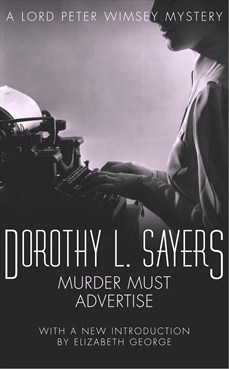
Murder Must Advertise, by Dorothy L. Sayers

Staff Review by Chris Saliba

Set in the world of advertising, where Sayers herself worked as a copywriter for close to a decade, Murder Must Advertise is a quick paced ride that is expertly organised and highly entertaining.

Detective fiction has never really been my cup of tea, but I read a synopsis of Murder Must Advertise in 1000 Books You Must Read Before You Die and I found it quite appealing. In a rather desultory fashion, I’ve been looking for novels that are set in the workplace, so this seemed worth a look into. Sayers worked as a copywriter between 1922 – 1931 for the firm S. H. Benson in London and chose to set this 1933 novel in an advertising agency. A wealth of first-hand knowledge of the industry informs the text.

The star of the novel is detective Lord Peter Wimsey, a mix of Fred Astaire and Bertie Wooster according to Sayers herself. This is quite true. The aptly named Wimsey is rather like something out of P. G. Wodehouse. He has a lightness and boyishness – everything is a bit of a cheerful game and nothing much disturbs him. During Wimsey’s detective work, he adopts several disguises, one of them as a fully masked harlequin. This is a nice effect that gives these sections of the novel a shimmering effect, portraying Wimsey as an almost transcendental, magical figure, like something out of A Midsummer Night’s Dream. 

The plot, naturally enough, involves a murder. Copywriter Victor Dean has been found dead at the base of a spiral, iron staircase. Did he fall, or was he pushed? Lord Peter Wimsey goes undercover as Death Bredon (unbelievable name, yes; it’s actually his two middle names) and works as a copywriter. After a bit of snooping and liaising with his brother-in-law Chief Inspector Parker, Wimsey uncovers a drug ring operating within the advertising agency, responsible for a series of murders.

Sayers herself was not overly fond of Murder Must Advertise. She dashed it off quickly to fulfil some contractual obligations and felt the bits dealing explicitly with the dope ring were unconvincing. This is fairly true for these seedy parts of the story. But the rest of it goes at a cracking pace and is very well constructed. The pacing and unfolding of events happens in a remarkably smooth manner. The sections that deal with contemporary London life in the 1930s are highly enjoyable, with lots of chatty dialogue between office boys and girls of the time. You feel like you’ve been transported back in time.

My favourite parts involved Sayers’s somewhat jaded looking back on her nine year career as a professional copywriter. She gives a real insider’s account of what it was like to work as a copywriter in 1930s London, with plenty of uncanny details. For example, she notes that copywriters never use the products they so fervently write copy for. In a brisk analysis Sayers writes that the modern economy is quite mad, as it is propped up by these busy copywriters making up jingles and catchy lines to sell products they don’t really believe in.

She also notes that the whole advertising industry in really just a machine to create mass anxieties in the public, anxieties that can then only be soothed by buying the commercial products that provoked all the worry in the first place. In one detailed section a cigarette campaign is described as almost legalising drug pushing – interesting, considering the novel deals with the illegal trade in drugs.

I did enjoy this quick paced whodunit very much. My only caveat was that it was perhaps a little long (390 pages), and agreeing with Ms Sayers’s own criticism, the sections dealing with the drug ring did read as a tad contrived. But these are small complaints. Readers of classic crime should give it a whirl.

Murder Must Advertise, by Dorothy L. Sayers. Published by Hodder Paperbacks. ISBN: 9780450002427  RRP: $19.99

Wednesday, April 3, 2013

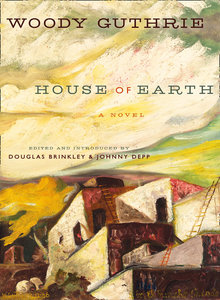
House of Earth, by Woody Guthrie

Staff Review by Chris Saliba

Woody Guthrie's long lost novel, House of Earth, describes the hardships endured in the American Dust Bowl of the 1930s. It is striking for its authentic dialogue and gritty realism, its psychological intensity and raw emotional power.

Woody Guthrie, the famous protest singer-songwriter, wrote songs about the hardships and injustices of the American Dust Bowl. In 1947, he completed his one and only novel, House of Earth. He typed up the manuscript and posted it to filmmaker Irving Lerner, hoping to have it produced. Lerner declined, and the novel languished. When Lerner died and his estate was being sorted out, the typescript came to light. Enter Johnny Depp and Douglas Brinkley. As they were researching a project on Bob Dylan last year, in 2012, they came across the long forgotten novel. House of Earth was published in 2013 under Depp’s imprint Infinitum Nihil.

The blurb on the dust jacked describes House of Earth as a mix between John Steinbeck and D. H. Lawrence, and with this it’s hard to disagree. There is an earthy mix of sex, nature, land and reproduction which is mixed with social realism, politics and the harshness of the depression. The personal and the political are tightly bound in this intensetly intimate tale of a couple struggling against harsh natural conditions and a deeply exploitative economic system.

The novel tells the story of Tike and Ella May Hamlin. They live in a flimsy wooden house that can barely hold against the wind, the rain and of course the dust storms. Tike buys a 5 cent government pamphlet which gives instructions on how to build a house made out of adobe – a solid material made of earth. (In the introduction we learn that this was an idea that would obsess Guthrie in real life.) If the couple could only build a house made of adobe, they would be protected from so much of life’s troubles. A house made out of adobe, earth, represents security and safety.

The couple conceive a child in the first chapter’s long sex scene (you can barely imagine this being published in 1947), or this is when the reader presumes the conception takes place. During this detailed sex scene Guthrie intersperses a lot of dialogue, with Tike and Ella May discussing everything from politics to economics. The last of the four chapters is devoted to an incredibly detailed birth scene.

At heart this novel has a very static feeling, with storms of trouble and nature swirling around the two fragile main characters, trying to make a life for themselves and their new born child. I found myself constantly wondering how they would get on once the novel ended – surely a testament to the authenticity of Guthrie’s characters. Much of TIke and Ella May’s dialogue (not to mention Blanche, the nurse) is so uncanny and idiosyncratic that it’s obviously copied from real life. House of Earth gives an intimate view into the world of those who struggled as farmers and workers in the American Dust Bowl. Not only of their outward circumstances, but also their inner thoughts, hopes and dreams.

House of Earth could have ended up being just another literary curio, but it has real power and resonance. It doubles as a devastating document of the times and a showcase of Guthrie’s artistry, his ear for dialogue and skill at distilling sex, politics and nature into a style that is part stream-of-consciousness, part natural realism.

House of Earth, by Woody Guthrie. Published by Fourth Estate. ISBN: 9780007509850  RRP: $22.99

Tuesday, April 2, 2013

Quarterly Essay 49: Not Dead Yet: Labor’s Post-Left Future, by Mark Latham

Staff Review by Chris Saliba

Former Labor leader Mark Latham looks at the party’s search for meaning and original policy thinking, and sees embracing the science of global warming as the way forward for Labor. Not Dead Yet offers lots of brilliant analysis, but despite its proposed solutions keeps its optimism for positive change in reserve.

This latest Quarterly Essay from former Labor leader Mark Latham examines Labor’s structural and cultural problems, and points to a possible way out of its current existential crisis. Since leaving politics, Latham has devoted time to raising his children and continued on with his writing career, contributing regular columns to the Australian Financial Review and publishing his notorious The Latham Diaries.

According to Latham, Labor has had its meaning and relevance hollowed out. Once a grand working class party that served its active grass roots membership, it is now a sorry mess of weak local branches and powerful union chiefs, this in an age when union relevance continues to slide. What, then, does Labor stand for?

Latham charts a proud history of Labor reform, paying special tribute to the Hawke-Keating reforms from 1983-1996. One of Labor’s big mistakes since Keating has been a failure to capitalise on this history of economic policy success and use it as a convincing argument that Labor is the better economic manager. Since 1984, Latham writes, real wages have increased by 20 per cent as a result of these reforms. Yet still the electorate cries poor (see Laura Tingle’s Quarterly Essay Great Expectations on this subject).

A large central part of Not Dead Yet reprises Latham’s political writings when he was in opposition, during which time he published such books as Civilising Global Capital (1998), What Did You Learn Today (2001) and From the Suburbs (2003). In these works Latham urged a rebalancing of rights and responsibilities (tilting more towards the latter) for citizens too dependent on government and welfare. He also suggested ways in which globalisation could somehow be harmonised with its more deleterious effects on family and community. Many of these ideas he reprises for Not Dead Yet.

What is completely new in Latham’s thinking is his central idea for giving Labor relevance and purpose in the twenty-first century. In a chapter titled "The Great Disruption", after the book of the same name by Paul Gilding (Latham is clearly convinced by the arguments in that book, which maintains that huge structural changes to the economy are inevitable), it is suggested that Labor should wholeheartedly embrace global warming as the number one issue of our times. This makes unerring sense; it’s just that Labor has gone about the whole thing in such a shambolic manner. Under Rudd it was the moral cause of our time, then he dropped the ETS (one understands at the urging of Julia Gillard) and his popularity nosedived. Gillard implemented a carbon tax and may well lose the 2013 election because of it. Labor is in the strange position of avoiding discussing this huge reform at all due to its unpopularity with the electorate. It seems impossible that Labor could now start talking about global warming as a number one issue. Who would seriously listen?

This is a smart and well observed essay on the Australian Labor Party’s identity crisis, and to a larger extent, the nation’s politics in the early 2010s. Latham strikes some good blows against the right wing media (namely Andrew Bolt) and politicians (Tony Abbott). While I closed Not Dead Yet feeling quite intellectually nourished, the essay has a dry and disinterested feeling, especially for a former Labor leader. It’s as though Latham knows what course Labor should take to revive its fortunes, but remains completely devoid of all hope that it will. This perhaps explains Not Yet Dead’s lack of passion and enthusiasm for Labor’s in the 2010s, while praising much of its past. The grim title pretty much says it all.

Quarterly Essay 49: Not Dead Yet: Labor’s Post-Left Future, by Mark Latham. Published by Black Inc. ISBN:  9781863955973  RRP: $19.99

Monday, April 1, 2013

How Music Works by David Byrne

Staff Review by Chris Saliba

David Byrne distils a lifetime of experience and reading on the subject of music into a far reaching meditation. The result is a book that is both aesthetically satisfying and intellectually stimulating. A must read for all music fans!

How Music Works
defies simple categorisation. This may make it sound complex and unwieldy, but it’s anything but. David Byrne’s meditative and engaging voice unifies its numerous themes into a very solid and coherent whole. The book is perhaps best described as a mix of autobiography, philosophy, history, science and even self-help.

Fans will be well aware of David Byrne’s time as singer / songwriter with the band Talking Heads, plus his catalogue of solo albums and collaborations. While How Music Works almost reads as academic in some parts, it is Byrne’s long experience as a practitioner that makes the book also quite inspirational. A long chapter titled “Amateurs!” urges a return to a time when everyone made music themselves. As technology has advanced, making music more ubiquitous in our lives, our hands-on ability to make music has diminished. There are more listeners than players.

Byrne discusses technology and its impact a lot. While not declaring for or against new technologies, he highlights the pros and cons that new technologies bring. For example, computers ensure music is easier to make, but tends to homogenize it. Digital music makes it more accessible, but lacks quality and fidelity when compared with analogue recordings.

Surprisingly, the chapter ‘Business and Finances’ has some really interesting insights. Byrne candidly lays out the balance sheets for a couple of his albums, breaking down the costs for recording, advertising, distribution, paying musicians etc. You’d be amazed at how little money is made on some of these recordings.

The genius of this book is that, even reading about the miserly remuneration for musicians and artists, it still makes the prospect of creating music exciting. Byrne’s endless fascination with the creative process, his happy immersion in all things musical, makes it clear that art making is very much its own reward. How Music Works is both a practical and an inspiring book.

David Byrne’s How Music Works can be read on a number of levels. It can assist as a guide for those wanting to embark on a career as a musician, or as an appreciation for those who enjoy listening to music. It addresses many serious intellectual questions, but in an accessible way by someone who wants to include the reader in his musical journey. The book penetrates deeply into music’s mystery, showing us that there is so much more than what appears on the surface, and guiding us to our place in that sonic universe.

How Music Works, by David Byrne. Published by Canongate. ISBN: 9780857862501 RRP: $39.99