Monday, January 27, 2014

Zukeika Dobson, by Max Beerbohm

Staff Review by Chris Saliba

Wit, critic and caricaturist Max Beerbohm wrote only one novel. Zuleika Dobson is a perfect minor comedy, written in Beerbohm's deliciously witty prose.

Max Beerbohm was a famous literary critic and caricaturist. Born in 1872, he had built up quite a reputation by the early years of the twentieth century and was dubbed 'the incomparable Max'. In 1911 he published his only novel, Zuleika Dobson.

Mr Beerbohm is not read that much nowadays, and his high, artificial style would make him somewhat of an acquired taste. But if you like absolutely faultless, chiseled prose, then Beerbohm is just right for you. His lapidary style recalls such masters as E. F. Benson, Oscar Wilde and G. K. Chesterton.

Zuleika Dobson is, of course, a comedy. Moreover it's a merciless satire on undergraduate life at Oxford. The plot is impossibly silly: Zuleika Dobson visits Oxford for a short period because her grandfather is warden of Judas College. When she meets the Duke of Dorset, a snobbish dandy, the two conduct a love affair that takes place more in the head than in the heart. This is a love that is more conceptual than real. Of course such an affair cannot have a traditional happy ending, yet Zuleika Dobson being a comedy, both parties end quite satisfied with themselves in their own peculiar ways.

This is a fabulous literary curio that I'd recommend to anyone who likes classic English comedies. Much of the humour doesn't derive so much from the action or characters, but rather from Beerbohm's witty commentary. He is never at a loss for the perfect word or metaphor. He arranges his sentences so they shimmer and glisten. The effect is to keep the reading buzzing with aesthetic pleasure.

Zuleika Dobson, by Max Beerbohm. Published by Collector's Library. ISBN: 9781907360220 RRP: $16.99

Sunday, January 26, 2014

I Am Malala, by Malala Yousafzai and Christina Lamb

Staff Review by Chris Saliba

Malala's story, one encompassing Middle Eastern politics and the first hand experience of terrorism, is utterly gripping, from the first page to the last.

The story of Malala Yousafzai is surely one of the most incredible of modern times. In October of 2012, a Taliban gunman shot her in the face while she was traveling to school. Her parents had bravely supported her outspoken views on education for girls. The Swat Valley in Pakistan at this time was a dangerous place to be so vocal, but Malala’s parents felt that the Taliban would never target a child. They did.

Almost a year to the date since that shocking event, Malala Yousafzai has written her story. I Am Malala presents a bracing mix of Pakistani history, the politics of terrorism and a young girl’s struggle to fulfill her aspirations: education and a career in politics.

Credit for this gripping book must also go to Malala’s father, Ziauddin Yousafzai, who supported his daughter in a culture that hinders rather than celebrates female achievement, and to Middle East Journalist Christina Lamb, for helping render Malala’s story accessible for a wider audience and providing a journalistic rigour to an important subject.

I Am Malala: The Girl Who Stood Up for Education and was Shot by the Taliban, by Malala Yousafzai. Published by W & N Non Fiction. ISBN: 9780297870920  RRP: $32.99

Friday, January 24, 2014

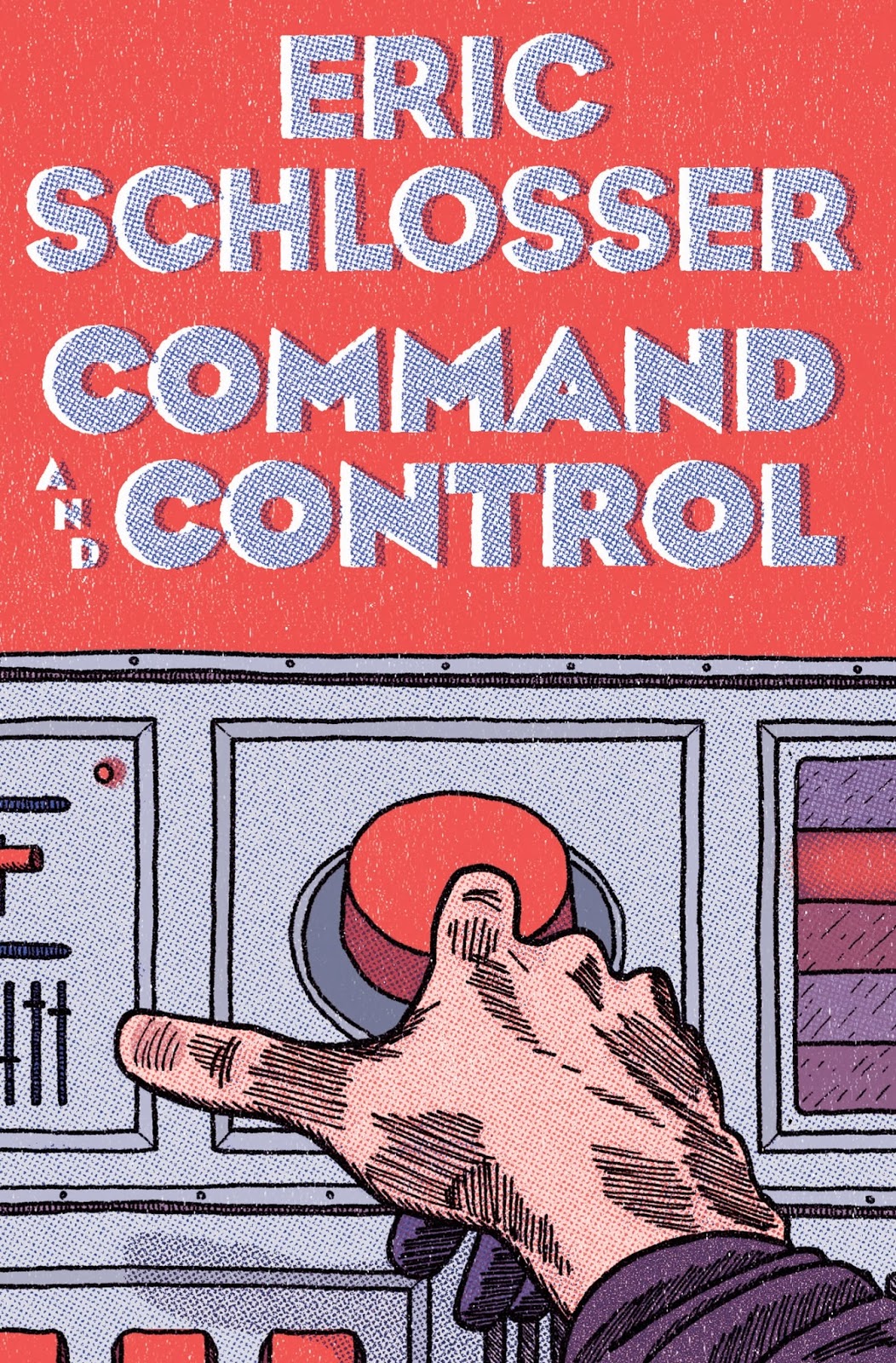
Command and Control, by Eric Schlosser

Staff Review by Chris Saliba

American journalist Eric Schlosser revisits a 1980 nuclear missile accident, weaving around this gripping narrative a fascinating and frightening 70 year history of the US's nuclear arsenal. The result is a must read, providing a new angle on the cold war from the people who were there working at the ground level. 

Eric Schlosser is well known to readers for his 2001 book Fast Food Nation, which, amongst other things, investigated industrial food production, especially the hazardous work practices of modern abattoirs. Command and Control continues this theme of work place safety, but on a much, much larger scale. The book works as a dual history of nuclear accidents and the Cold War, brilliantly interweaving the two: the practical and the theoretical. It also raises many profound and critical questions about technology and how much control we have over it. This is one of those books that will genuinely scare you.

Command and Control's main set piece is the 1980 Titan II missile accident that occurred in Damascus, Arkansas. Schlosser has interviewed the surviving participants of that explosion, giving his retelling of events an edge-of-your-seat urgency. Every so often the narrative shifts, and we are taken back to the history of nuclear weapons, a history that is necessarily a heavily political one. It’s to Schlosser’s credit that he so skilfully interweaves these two narratives into a cohesive whole, allowing the reader to see how individuals are caught up in history's sweep.

The Damascus accident that the book concentrates on highlights just how complex, and hence fragile, nuclear technology is. Two fuel technicians were doing some routine work on a Titan II intercontinental ballistic missile that was housed in an underground silo. The Titan II also carried a nuclear warhead. One of the technicians accidently dropped a socket down the silo, which ripped a hole in the skin of the missile. Fuel started leaking, control panels that were supposed to give accurate reading for what was happening in the silo didn’t function properly, and soon enough the missile was threatening to explode. One man eventually died and some 20 others were injured.

The nuclear political narrative that is interspersed with this story is equally mind blowing, both from a psychological and technological point of view. At first, when America dropped atomic bombs on Japan, causing a great human tragedy for that country and also ending the Second World War, Americans were proud of their technical know-how and ability. That feeling soon came to an end when Americans realised that the same could now happen to them. The arms race was on, but politicians could not think their way out of the problem.

To read the various strategies for launching a nuclear war, and the magic thinking necessary to fool military strategists into believing that it could be done ‘rationally’, with casualties minimised, can only be described as a form of abnormal psychology. Planners and strategists tried desperately to think their way out of the total war conundrum that nuclear war technology determined, but couldn't. Reading these sections of the book is like watching someone stuck in a terrible dream, running to try and escape but with legs hopelessly unresponsive. 

Nuclear war messed up everyone’s thinking. Trying to create a logical nuclear defense policy starts off hopefully, but the end game is always the same: total annihilation. Rational war planners couldn't accept this outcome, but then found themselves developing policies that would have resulted in virtual national suicide. The list of pacifists and politicians who found nuclear war abhorrent, but who nonetheless eventually signed up for all out nuclear war, is astonishing. Even Bertrand Russell, the First World War pacifist who went to jail for his views, advocated bombing the Soviet Union back to the stone age. Incredible! In the end, the US settled for an all out nuclear war policy, one that would, on conservative estimates, kill at least 54% of the Soviet population if unleashed. This policy was in place from 1960 to 2003 - that is, official policy! (It was called the Single Integrated Operational Plan, or SIOP.)

Different readers will draw different conclusions from Command and Control. What I found most fascinating is how technologies contain their own rationales and are wholly deterministic. Once nuclear bombs had been invented, it was impossible to go back. Nuclear power controlled humans, not the other way around. Nuclear power also unleased a huge amount of fear, distrust and secrecy. The amount of secret information that was even withheld from successive Presidents is extraordinary. The public were constantly misled or lied to about the danger of their own country’s nuclear arsenal.

Another interesting aspect of the book is how unbelievably complex the technology is for nuclear war heads. It’s astonishing how many serious malfunctions occurred. For example, computers processing information from missile sensors would falsely signal an all out Soviet attack was happening. When computer experts finally investigated what the problem was they found a 40 cent computer chip was faulty! But here’s the good news. The need for intergrated systems and complex data analysis meant the need for computer networks. Information had to be communicated computer to computer, and super quick: you got it, the internet.

This book completely spun me out, and in a funny way, answered a lot of questions about the mad technological world we now live in. Highly recommended!

Command and Control, by Eric Schlosser. Published by Allen Lane. ISBN:  9781846141492  RRP: $29.99

Wednesday, January 22, 2014

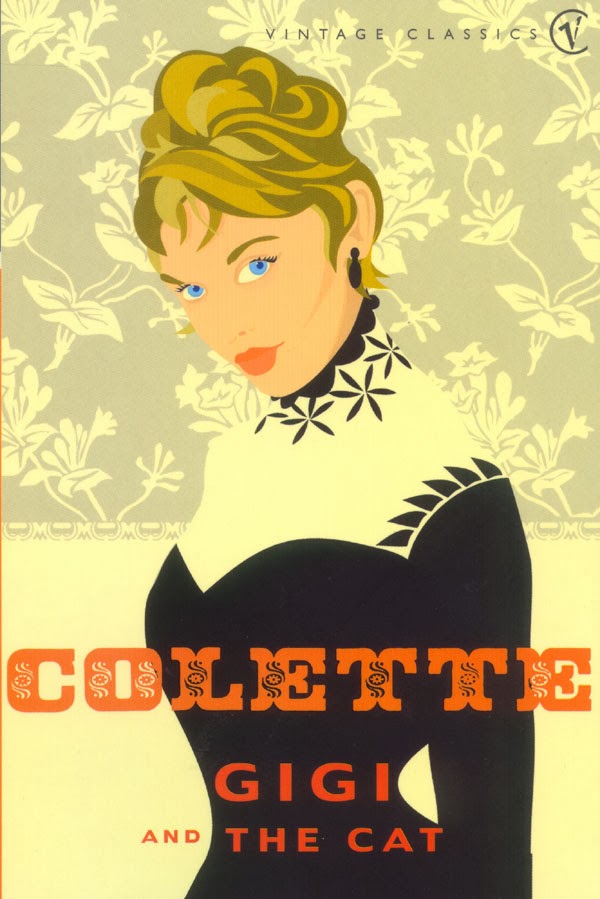
Gigi and the Cat, by Colette

Staff Review by Chris Saliba


These two delightful novellas have plenty of sumptuous detail and engaging dialogue, making Colette's writing like an exquisite miniature painting.

Colette is one of those author's whose name I've heard seemingly a million times, but have never read. Recently I was blessed to have been able to read her two lovely novellas, Gigi and The Cat. Whenever I've seen the cover of this slim volume, I've presumed it to be one short novel. Actually, it's two stories. Gigi is about 50 pages long, while The Cat is some 100 pages.

Gigi

I loved both these stories, but it was perhaps Gigi that won out as favourite. The story is about a young 15-year-old girl, Gilberte, or Gigi for short. She is primarily looked after by her grandmother and great aunt, who are grooming her to be a courtesan. The charm, for me anyway, of the story was the humour and rather witty dialogue. And then of course there are the beautiful descriptions. Colette concentrates on lots of fine detail, giving her writing a painterly quality.

The Cat

A young married couple, Alain and Camille, are experiencing some tension in their relationship. The uneasiness is mainly manifesting on Alain's side. He longs for the comforts and sweetness of his childhood, here embodied in his cat, Saha. Camille isn't particularly sympathetic to Alain's plight. She's young and energetic and somewhat coarse. The tension builds up in their relationship until Alain discovers she has betrayed him by an act of cruelty to his beloved cat, Saha,

Both of these stories were so moreish and delectable that I'll be searching out other works by Colette. Her fiction is original and personal, with its own refreshing rhythm.

Gigi and the Cat, by Collete. Published by Vintage Classics. ISBN: 9780099422754  $12.95

Tuesday, January 14, 2014

Full of Life, by John Fante

Staff Review by Chris Saliba

John Fante's 1952 autobiographical novel Full of Life is a minor gem, a slice of Italian-American family life set in 50s America. It's funny, poignant and rings true to life.

Recently chance brought to me a wonderful book by John Fante called The Brotherhood of the Grape (1977). John Fante was an Italian American novelist publishing mainly between the 1930s and 1950s. He was also a huge influence on Charles Bukowski.  Hoping to repeat my happy experience with The Brotherhood of the Grape, I purchased a copy of his 1952 novel Full of Life. (Fante also wrote the screenplay for the 1957 film version.)

Like Fante’s other novels, Full of Life is entirely autobiographical. Written in the first person, the narrator is even named John Fante. The story basically centres around Fante’s pregnant wife, hence the title. John is struggling  to deal with his wife’s condition. Other dramas are thrown in when his mad Italian-American father and mother enter the scene and throw everything haywire. They are both superstitious Italian immigrants with their own totally irrational ideas. Fante paints them as loveable yet impossible. These parental portraits are often very funny, although Fante never ridicules. He rather teases out all the complexities and contradictions that come with close human relationships. In the end the reader gets a neatly drawn picture of life within an Italian American family in 50s America.

This is another perfect little gem of a book. Fante’s scope is small: his literary world only consists of his immigrant parents and 50s suburban life. But the execution is absolutely faultless. He captures the language and situations of the times in a neat, tidy prose that is unpretentious and honest. It’s a mystery that Fante is not better known amongst such American greats as Nathaniel West, Sylvia Plath, John Cheever, J.D Salinger and Richard Yates.

Full of Life, by John Fante. Published by Black Sparrow Press. ISBN: 9780876857182  $19.95

Friday, January 10, 2014

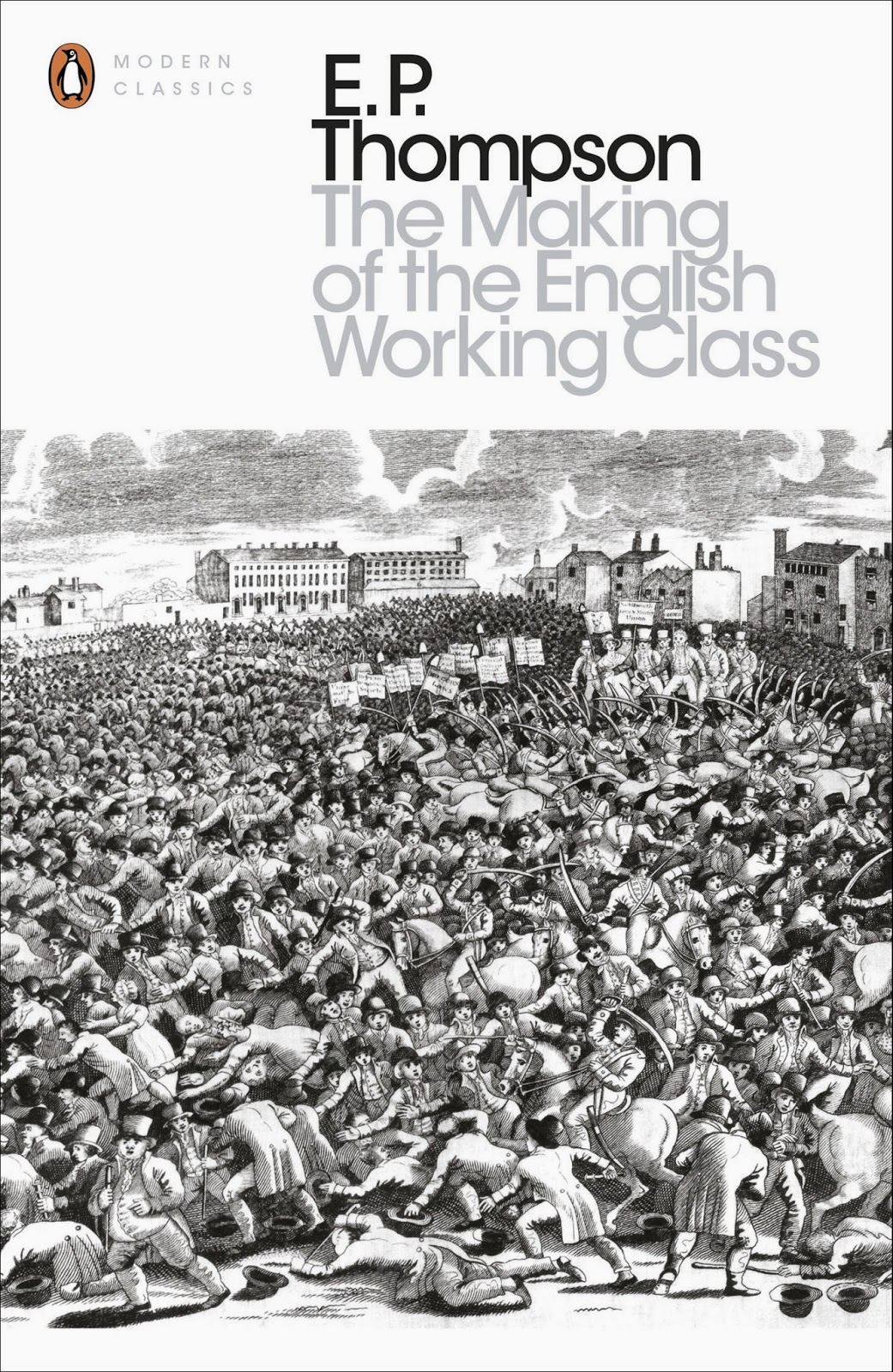
The Making of the English Working Classes

Staff Review by Chris Saliba

E. P. Thompson's classic The Making of the English Working Classes traces the genesis of working class consciousness and how it was parlayed into action, resulting in many workers' rights that are taken for granted today.

The title of this 1963 classic by leftist historian E. P. Thompson makes it sound like some dreary Marxist tome. I opened The Making of the English Working Classes suspiciously, thinking I would perhaps give it a cursory look and get a rough idea of what it was about. Little did I think I would spend two happy weeks engrossed in its fascinating 960 pages.

For such a large book, The Making of the Working Classes covers a fairly short span of time, from roughly 1780 to 1830. This is a period when the Industrial Revolution was kicking in and the artisan classes were having their skills and livelihoods encroached upon by new labour saving technologies. Skilled stockingers and hand loom weavers were finding their wages cut and their craft made irrelevant by the new machines. During the period that Thompson chronicles, the conflict between capital and labour was at its most violent. Luddites who broke machines risked death, whether in combat with the authorities or by sentence of death.

The most fascinating aspect of this book is how it integrates all the different parts of the workers struggle for fair pay and conditions. Thompson discusses in detail how a working class culture came into being, through the use of legal, political and journalistic means. The working classes didn't manifest themselves as part of a natural capitalistic cycle: they educated themselves and used the British legal system to their best advantage. The French revolution had resulted in a reign of terror; the British Industrial Revolution, while ruining many lives, did manage, even if by default, to give birth to a working class that knew how to fight for its rights, without widespread bloodshed and turning its government upside down and inside out.

To appreciate the genius of the English working classes, and to learn the importance of their legacy to today's workers, then this classic is indispensable.

The Making of the English Working Classes, by E. F. Thompson. Published by Penguin Classics. ISBN: 9780141976952  $29.99

Here Be Dragons, by Stella Gibbons

Staff Review by Chris Saliba

Stella Gibbons' 1950s novel Here Be Dragons is a dark and brooding story set in London's underworld of cafe's and backstreet bars.

Ever since I read Stella Gibbons’ 1946 novel Westwood I’ve become a big fan of her writing. While nothing I’ve read of Gibbons since Westwood has matched that book, there are many others that I’ve enjoyed very much.

Here Be Dragons was published in 1956 and is a rather dark, brooding novel. Nell Sely is a young woman just entering adulthood in post-war London. Her father, Martin, is an ex-vicar who has lost his faith, and as a consequence, his income and means to support his family. Nell’s mother, Anna, is an intelligent woman struggling to deal with life’s setbacks. To try and help out her family, Nell takes on some office work, but that doesn’t work out. She then tries out work as a waitress, which pays more. 

In the meantime, she has started a light flirtation with her Bohemian cousin John. John introduces Nell to the seedy underside of London – bars and coffee houses where young artists and poets strive to realise their full potential. There’s a lot of bravado in their talk, and Nell, who has a good head on her shoulders, tries to navigate this dark and shimmering underworld. She feels great affection for her cousin John, but his nihilism and decadence means the two can’t really be meant for each other. She is practical, he is a self-destructive dreamer. The novel basically charts her inner turmoil over her relationship with him and her struggle to find her own place within her generation. It’s also full of wonderfully poetic descriptions of London – its streets and parks and life after dark.

While Here Be Dragons is not her best novel, I enjoyed it very much. Gibbons is a natural born writer and can effortlessly spin out the pages, developing character and painting lovely set pieces of London. I could read her evocations of London Streets for ever. Nell Sely’s moody and melancholic journey, her struggle to find herself in the dark world of post-war Britain, has a harrowing truth to it. 

Here Be Dragons, by Stella Gibbons. Published by Vintage Classics. ISBN:  9780099529361  RRP: $12.95

Monday, January 6, 2014

Mademoiselle de Maupin, by Theophile Gautier

Staff Review by Chris Saliba

Gautier's superb cross dressing novel explores issues of sexuality and personality, their possibilities and their limits. 

Theophile Gautier (1811 - 1872) wrote this quite extraordinary novel in his early twenties. Published in 1835, Mademoiselle de Maupin must have shocked and scandalised its 19th century reading public. Today, almost 180 years later, it still reads as very modern and even confronting. The novel inspired writers such as Oscar Wilde, Balzac, Proust and Flaubert. I first read about it in Camille Paglia's Sexual Personae: Art and Decadence from Nefertiti to Emily Dickinson (1990).

Gautier was originally commissioned to write about the French opera star Mlle de Maupin, but the project took on a life of its own and spun out into the psychosexual Mademoiselle de Maupin. The original de Maupin was an excellent swordswoman, cross dresser and lesbian. Gautier places his fictional de Maupin at the centre of a dizzying love triangle between the poet d'Albert and his mistress Rosette. Madelaine de Maupin enters the couple's life in disguise, dressed as a man called Theodore. D'Albert falls in love with Theodore, in a shock gay confession, while Rosette falls for de Maupin in male drag. Identities become even more convoluted when the threesome stage Shakespeare's As You Like It, with de Maupin, already in drag as Theodore, playing  Rosalind. After conducting love affairs with both Rosette and d'Albert, de Maupin vanishes without a trace, leaving her lovers in a flurry of confusion.

I actually read Mademoiselle de Maupin over twenty years ago but completely forgot. It wasn't until  I was half way though that I remembered turning its pages in a flat in East Melbourne in the early nineties. At the time it completely baffled me. I'd read so many glowing reports about it, but was disappointed that I couldn't really get into it. This time I enjoyed it considerably more. It's written in a heightened literary-poetical voice that is best described as vertiginous. You travel through the sexually confused and startled minds of all the characters as they try to hold in their secrets and boudoir adventures. This is a novel that frantically whispers its secrets in your ear.

There's so much about this novel that shouldn't work - the chopping and changing between an episolotory story telling mode and the conventional third person, the cross dressing and sexual delusions - and yet it all weaves together beautifully into a heady brew. By the end of it I think my heart rate had accelerated and I'd experienced a mild out of body experience! Mademoiselle de Maupin may not be everyone's cup of tea, but for those exploring the possibilities and limits of sexuality and personality, then Gautier's extraordinary novel is just the ticket.

Mademoiselle de Maupin, by Theophile Gautier. Published by Penguin Classics. ISBN: 9780140448139  RRP: $9.95