Sunday, August 31, 2014

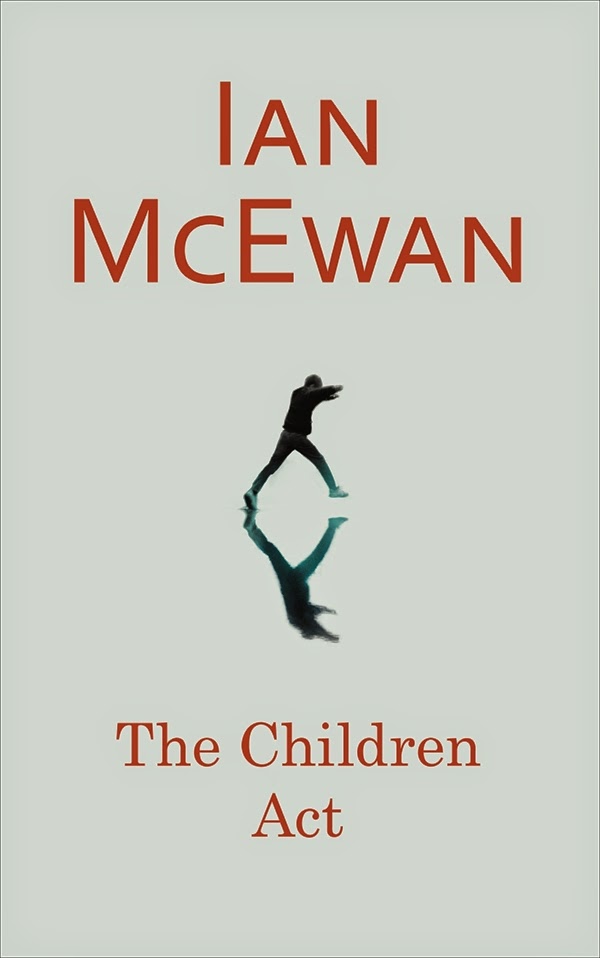
The Children Act, by Ian McEwan

Staff Review by Chris Saliba 

Ian McEwan’s new novel is a gripping story that tackles many morally complex questions about life, death and professional ethics.

Ian McEwan always manages to mix psychological insight with taut sentences to create novels that are both literary and entertaining. His works grab you from the start and keep you in a state of exquisite suspense, turning page after page. He’s a storyteller par excellence. The Children Act, his latest novel, is no exception to this rule.

Fiona Maye is a High Court judge who presides over cases in the family court. She’s smart, successful and highly respected. However, her personal life is unravelling. Her husband of thirty-five years, Jack, announces he wants to have an affair with another woman. Married life for him has turned into a dull routine and he wants to experience a grand passion. Fiona is plunged into emotional turmoil.

To try and keep sane she throws herself into her work. She is called to preside over a morally complex case: a boy only three months away from turning eighteen has refused a blood transfusion on religious grounds. Adam Henry has been raised a Jehovah’s Witness by his two loving parents, and it is clearly their overpowering influence that has led him to this decision. Fiona has been called on by the hospital to make a decision on whether they should intervene. To help get a clearer picture of what is at stake, Fiona visits Adam at his hospital bedside. She finds a sensitive boy who writes poetry and is learning to play the violin. Soon she finds herself being drawn into an emotional relationship with the boy that threatens to undo her professional career.

I couldn’t put this short novel down. McEwan draws a marvelously realistic portrait of a High Court judge, her day to day professional life and the high stakes decisions she has to make. This is contrasted against Fiona’s rather meagre personal life, her humdrum apartment and microwave meals bought from convenience stores. The real pleasures of her life are simple things, like taking moody walks and indulging in her passion for music.

The novel examines a set of interlocking moral quandaries, balancing the personal with the professional. Fiona Maye is in a personally vulnerable condition when she is asked to make the life and death decision of whether Adam Henry should take a blood transfusion. McEwan expertly draws every nuance of her deteriorating inner life, her desire for personal happiness and the demands of her professional life. Through Fiona’s eyes we see how decision making at the highest levels often comes precariously close to being subsumed by human frailty and personal need. Fiona nears the precipice of professional ruin, but manages to pull back.

An utterly compelling new work from a master novelist.

The Children Act, by Ian McEwan. Published by Jonathan Cape & Bodley Head. ISBN: 9780224101998  RRP: $29.99

To sign up for our monthly newsletter, featuring new releases, book reviews and favourite articles from around the web, click here.

Thursday, August 28, 2014

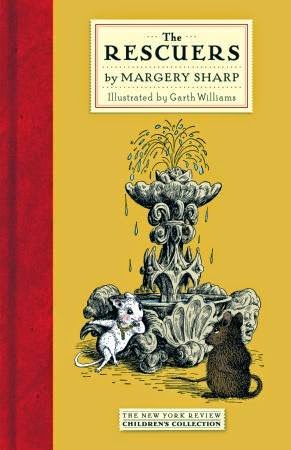
The Rescuers, by Margery Sharp

Staff Review by Chris Saliba

This funny and enchanting story of three brave mice is an entertainment for young and old alike.

The Rescuers is the first in a series of children’s novels by British author Margery Sharp (1905-1991). The series inspired two Disney films. The New York Review Children’s Collection edition, which is reviewed here, features charming illustrations by Garth Williams. At 150 pages, this is a perfectly paced and executed little story about three rather heroic mice.

Miss Bianca, the focus of the story, is a white mouse of stunning beauty. She lives in a porcelain pagoda painted with violets, primroses and lilies of the valley. She is a pampered little creature, with exquisite manners. When she is approached by Bernard, from the Prisoners’ Aid Society, to rescue a Norwegian poet imprisoned at Black Castle, she faints away. She soon gathers her strength back, along with her nerve, and travels by diplomatic pouch to Norway where she enlists the brave mouse Nils. Together all three - Bernard, Miss Bianca and Nils - go on the most thrilling adventure.

If the premise of the story sounds hilarious, that’s because it is. This is the sort of story written to amuse the adults just as much as the kids. Some of the descriptions of the divine Miss Bianca will keep you chuckling along. For example, outside of Miss Bianca’s porcelain pagoda there is a little pleasure ground:

“Round about was a pleasure ground, rather like a big bird-cage, fenced and roofed with golden wires, and fitted with swings, seesaws and other means of gentle relaxation.”

What a life! The descriptions of the other mice are full of fun too. When Miss Bianca and Nils, the Norwegian mouse, are traveling by sea, Nils likes to break out singing sea chanteys. Mouse society is organised into groups, societies and all sorts of other interesting hierarchies. In other words, it’s a perfect little world of a story, delicately put together, like a ship in a bottle. This exciting tale of mouse bravery will make you a fan of Miss Bianca and her friends, Bernard and Niles, for life.

The Rescuers, by Margery Sharp. Published by New York Review of Books.  ISBN: 9781590174609  $25

To sign up for our monthly newsletter, featuring new releases, book reviews and favourite articles from around the web, click here.
Confessions of a People Smuggler, by Dawood Amiri

Staff Review by Chris Saliba

Dawood Amiri's Confessions of a People-Smuggler is starkly written and compelling. It takes you into an underworld of desperate, stateless and unwanted people and shows a reality that so many of us turn away from.

Dawood Amiri fled Afghanistan with his family when he was a boy and settled in Quetta, Pakistan. He had hoped to establish a career as an accountant, but the rise of the Taliban meant his life was in  danger. Amiri decided the best course was to make his way to Australia. In 2010 he arrived in Indonesia, and was ready to travel by boat to Christmas Island, when he was caught. Desperately short of money he started working for people-smugglers. He was eventually arrested (one of the boats he organised sank, killing 96 asylum seekers, including two of Amiri’s friends) and sentenced to six years in Jakarta’s Cipinang prison.  

Confessions of a People-Smuggler
shows the human side of those seeking asylum and fleeing their home countries. Dawood Amiri’s story is one of unrelenting horror, tragedy and hopelessness; it reads like a mix between Hieronymus Bosch and Kafka. Amiri himself saw people smuggling as noble humanitarian work ‘to help my brother asylum-seekers’, work he did with ‘purity and pain in my heart’. Confessions is starkly written and compelling. It takes you into an underworld of desperate, stateless and unwanted people and shows a reality that so many of us turn away from.

Confessions of a People-Smuggler, by Dawood Amiri. Published by Scribe. ISBN: 9781925106091  RRP: $24.99

This review was first published in Books + Publishing magazine.

To sign up for our monthly newsletter, featuring new releases, book reviews and favourite articles from around the web, click here.
Monday, August 25, 2014

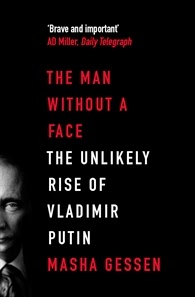
The Man Without a Face: The Unlikely Rise of Vladimir Putin, by Masha Gessen

Staff Review by Chris Saliba

Russian journalist Masha Gessen's The Man Without a Face is both chilling and frightening, farcical and surreal. It describes a world where murder and mayhem manifest as a matter of routine, yet explanations for such crimes often border on the absurd. The book provides a bracing history of Russia's faltering democracy.

Masha Gessen in a Russian journalist, activist and author. This 2012 book (with a fascinating new afterword, written for the 2013 edition) is not so much a biography of Vladimir Putin as a Russian history of the period 1990 to the present. Gessen has been there for all the key events, following them closely as a journalist and participating in protests. The Man Without a Face has a very urgent and up to the minute feel.

The basic premise of the book is that Putin's character and political outlook were formed by his time in the KGB, the main security agency of the Soviet Union, which employed him between 1975-1991. Gessen argues his whole thinking and psychological make-up was formed during this period. When the democracy movement started in the early nineties, this was a threat to Putin’s worldview. Putin’s current whittling away of democratic checks and balances is his attempt to restore authoritarian government.

There is enough subterfuge, mysterious killings, bullying, blowing up of public buildings and other mayhem in The Man Without a Face to permanently set your hair on end. Gessen marshals convincing evidence to point the finger for the Russian apartment bombings of the early 90s at the state’s secret service, the FSB (formerly the KGB). Putin blamed these outrages on terrorists.

When one of the bombings was foiled, it took several days for the FSB to come forward and claim responsibility. They concocted a bizarre story, claiming they had placed sacks of sugar, masquerading as explosives, in the bottom of an apartment stairwell as part of a training exercise to test that the public was remaining alert. The fact that an alert citizen reported suspicious looking bags with 'sugar' written on them proved security was in order! (Investigations make it appear likely that the 'sugar' sacks were indeed filled with explosives.)  

While The Man Without a Face is a chilling and frightening book, a lot of the events described (such as the FSB’s bizarre training exercise explanation) are absolutely farcical and surreal. The Russian public are asked to believe the most far fetched stories from their straight faced government officials.

Another chilling episode the book describes was the poisoning of Alexander Litvinenko with polonium-210, a substance which could only be manufactured at the highest levels of government. Litvinenko was a whistleblower and former FSB agent. It was he who suggested that the apartment bombings could have been done by the FSB. A British investigation (Litvinenko died in a British hospital) found that the most likely poisoner was Andrei Lugovoy - a former KGB bodyguard and current member of the Russian parliament. Russia has refused Britain’s requests to extradite him. Gessen suggests that it was Putin who ordered the killing.

Many who have read this book have noted Masha Gessen’s bravery. She chronicles the terrible fate of several journalists, mysteriously murdered. Reading The Man Without a Face you do fret over the author’s safety, not your typical experience when reading a book.

For Australian readers, it may make you appreciate our long history of democratic institutions. In Russia, trying to put together a democracy after so many years of totalitarian government is a process of two steps forward, one step backward. At the moment, however, Russia’s democratic future looks very grim.

The Man Without a Face: The Unlikely Rise of Vladimir Putin, by Masha Gessen. Published by Granta.  ISBN: 9781847084231 RRP: $24.99

To sign up for our monthly newsletter, featuring new releases, book reviews and favourite articles from around the web, click here.
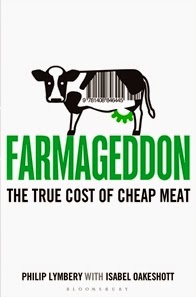
Farmageddon: The True Cost of Cheap Meat, by Philip Lymbery with Isabel Oakeshott


Staff Review by Chris Saliba

Philip Lymbery, CEO of Compassion in World Farming, with co-author Isabel Oakeshott, show in this devastating book how the negative impacts of industrial farming harm not only animal welfare, but also human health.

Today our supermarket shelves positively groan with food. So extremely well fed are we that our biggest problem is that we eat too much. In the globalised economy, food is shipped from all corners of the world and delivered to supermarket shelves at the lowest possible cost. It’s a system so wondrous as to be almost magic.

Farmageddon shows an inverse world, where nature is pushed to its limits, the environment is treated as nothing more than a toxic dumping ground and animals don’t graze peacefully (as you see on food packages) but live in extreme concentration camp conditions. Humans don’t have so good a time of it either. Indian farmers suicide in huge numbers due to market pressures, meat and milk from cloned animals makes its way into the food chain and factory farming creates diseases resistant to antibiotics. Even pollinating bees, so integral to food production, are under threat.

Author Philip Lymbery, CEO of Compassion in World Farming, has a long history in animal activism. His writing is a vibrant mix of dedicated research and first-hand reporting. As a nimble and media savvy activist, he brings an energetic and optimistic tone to his subject. In Farmageddon, he roams the world to visit intensive farming businesses and learns what havoc they are wreaking on animal welfare and the environment. Lymbery and co-author Isabel Oakeshott make the pressing case not only for animal welfare, but human welfare. Mega farms devastate local communities with their environmental impact and are also bad for human health. Meat produced from intensive farming contributes to disasters like avian flu and nutritionally isn’t as good as organic meat. The great lesson of this book is that if you care for human health, then you’ll also care for animal welfare. The two go hand in hand.

Farmageddon
is one of the best books written in recent years on food, animal welfare and the environment. It rivals Michael Pollan’s modern classic The Omnivore's Dilemma for its research, journalism, passionate advocacy and clarity.

Farmageddon: The True Cost of Cheap Meat, by Philip Lymbery with Isabel Oakeshott. Published by Bloomsbury. ISBN: 9781408846445  RRP: $29.99

To sign up for our monthly newsletter, featuring new releases, book reviews and favourite articles from around the web, click here

Saturday, August 23, 2014

Car Sick: Solutions for our Car-Addicted Culture, by Lynn Sloman

Staff Review by Chris Saliba

In this inspiring and impressively researched book, Lynn Sloman shows how traffic congestion could be dramatically cut. She convincingly demonstrates that cars are expensive, wasteful and not necessarily faster than other transport options.

Author and sustainable transport consultant Lynn Sloman brings her passion for walking, cycling and public transport to this smart and practical book, Car Sick. She believes that car traffic could be dramatically cut, anywhere up to 80 percent, by a mixture of improved public transport, information campaigns, cycleways and the creation of more attractive public places. In one study she cites, suburban shopping strips actually attracted increased trade once car parking was banned, despite retailers fearing they would lose significant business.

The popular solution today to fixing up road congestion is the building of more roads. Sloman cites a comprehensive 1970s study of the Westway elevated motorway in West London. It found that once the Westway was built, traffic flows increased 79% between 1970-1975, until it was fully clogged with traffic and couldn't grow any further. She says that authorities were mystified as to where all the extra cars were coming from. It seemed the only explanation was that people were now taking extra trips that they usually wouldn't, or finding jobs further away from home. The basic lesson of building extra roads is if you build it, they will come. The building of a new roads is simply an invitation for more people to avoid walking, public transport and cycling, opting to drive instead.

The most amazing findings of Car Sick are the amount of car trips that could be cut. After reviewing the research, Sloman grouped car trips into three different types. She found 40 percent of trips could be easily done by other means (foot, bike or public transport), but that car drivers lacked knowledge of alternatives. Another 40 percent could be cut by improving public transport and other options. The last twenty percent of trips she found to be immovable. These are the sort of trips that are unavoidable, for example taking a sick family member to the hospital or when you need to move something heavy.

I know that the car driving reader is probably groaning by this stage: if I catch public transport, it will take an hour longer. Again, the research provides some interesting counterpoints. It appears that when considering public transport, commuters are more pessimistic about how long a journey will take. Whereas when contemplating car use, drivers are overly optimistic. They think they will get to a destination quicker, but they don't. The reason for this optimism, it is speculated, is the nature of glossy car advertising: freewheeling car trips along gorgeous country roads and no traffic congestion in sight.

Sloman discusses research by Werner Brog, who conducted surveys in the UK city of Darlington.

“He found that on average, people overestimated the public transport journey time by 70 per cent, so that, for example, they assume a 20-minute trip would actually take 34 minutes. They underestimated the journey time by car by 26 percent, assuming a 20-minute trip would actually take 15 minutes. In another survey, this time in Germany, he found the same car-bias in people's perceptions of the cost of travel. People over estimated the cost of public transport travel by 21 percent, and underestimated the the true cost of car travel by 58 percent.”

Sloman has done extensive work with local councils and government, and her personal insights into transport planning are revealing. She says that transport ministers are invariably male and are attracted to big projects that make them look important (cycle paths don't fit the bill for this). She says how hard it is to get ministers to look at the research and think of alternatives to cars. Male urban planners see cars and roads as the only solution to transport problems.

For Australians, who are stuck in so much gridlock, Lynn Sloman's useful book points the way to reducing traffic, creating safer places for pedestrians and healthier lives through cycling and walking. It sounds overly optimistic to say we could cut traffic by some 80 percent. Even though I am biased in favour of walking and cycling, I believe Lynn Sloman has demonstrated proven ways to get people out of their cars. This is a book our transport planners should study.

Car Sick: Solutions for Our Car-Addicted Culture, by Lyn Sloman. Published by Green Books. ISBN: 9781903998762  $26.95

To sign up for our monthly newsletter, featuring new releases, book reviews and favourite articles from around the web, click here.
Sunday, August 17, 2014

I Capture the Castle, by Dodie Smith

Staff Review by Chris Saliba

This bitter-sweet story of teenage longing never flags in its brilliance.

Dodie Smith published her debut novel, I Capture the Castle (1949), when she was in her early fifties. Before that, she had had considerable success as a playwright. Today she’s perhaps best known for her children’s book The One Hundred and One Dalmatians

I Capture the Castle could best be described as a young adults book. It’s very much a coming of age story, dealing with adult psycho-sexual themes. I can’t think of a better, more consoling book to put into the hands of teenagers experiencing romantic turbulences and disappointments.

The novel is narrated by 17-year-old Cassandra Mortmain, who is writing her story as a diary in three different notebooks. She lives in an old, run down castle with her father, a once famous novelist who has since gone a bit mad, an elder sister, Rose and a younger brother, Thomas. Topaz is the eccentric, nature loving second wife of Mr Mortmain (she likes roaming around naked) and Stephen is the good looking family friend who also lives with them. The family lives in genteel poverty. They miraculously survive in dilapidated splendour on practically no money, although they are all getting tired of their privations.

Things are complicated when new, rich American neighbours move in. Brothers Neil and Simon Cotton set up residence in nearby Scoatney Hall and become the new landlords of the castle. As the two sisters become friends with the brothers, a whole host of romantic complications start to set in. It ends happily for some, unhappily for others, and hopeful for still yet other characters.

This is a highly original book that perfectly captures teenage angst and longing. The crumbling yet splendid castle seems to be a melancholy metaphor for unfulfilled dreams of love and romance. In the voice of the intelligent and perceptive Cassandra, Dodie Smith sustains a 560 page narrative that never loses its integrity or authenticity. You feel the pain of being young and in love all over again in this bitter-sweet story.

I Capture the Castle, by Dodie Smith. Published by Vintage. ISBN:  9780099572886 RRP: $12.99

To sign up for our monthly newsletter, featuring new releases, book reviews and favourite articles from around the web, click here.

Wednesday, August 13, 2014

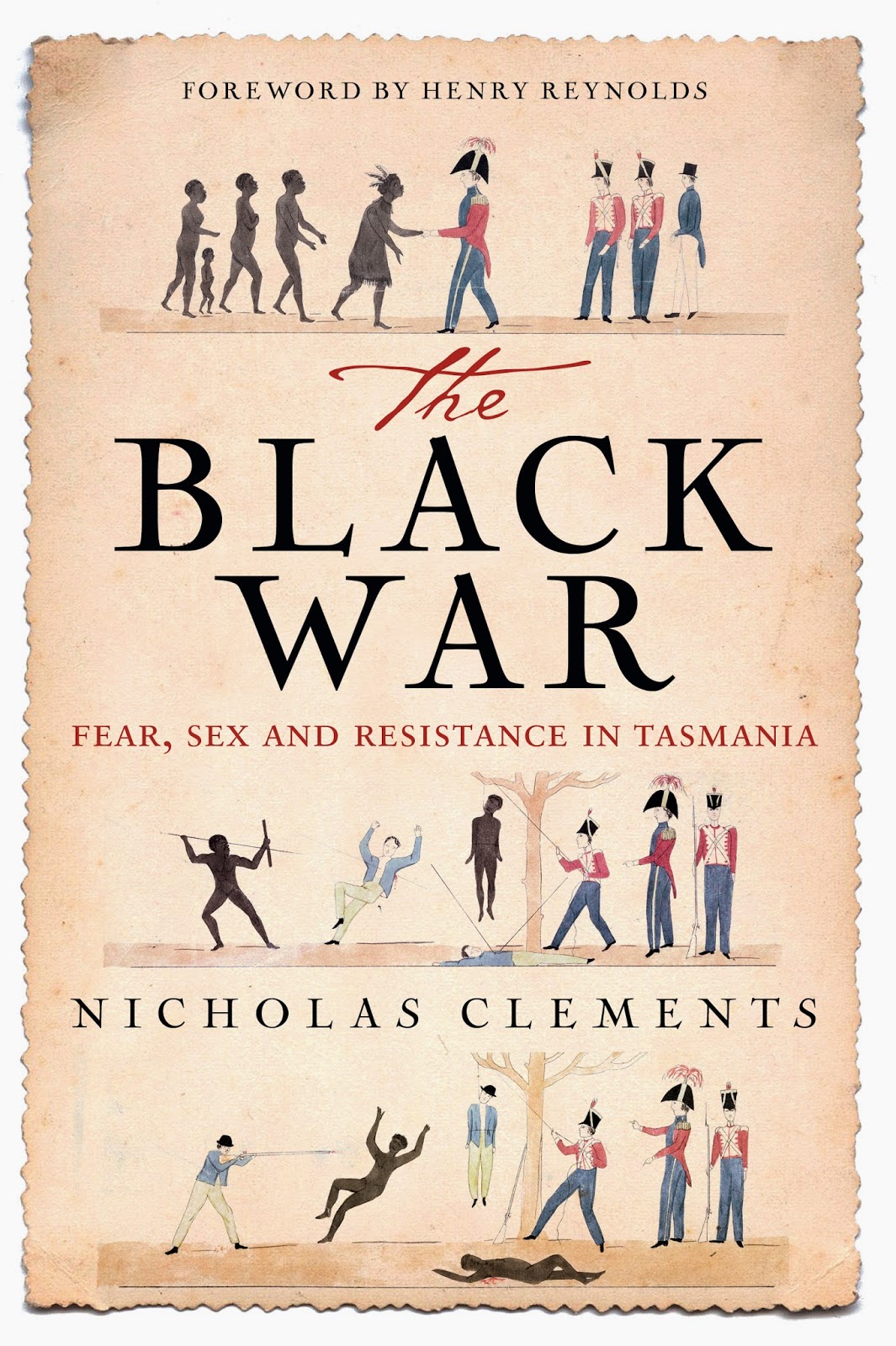
The Black War, by Nicholas Clements

Staff Review by Chris Saliba

In this new history of Tasmania's Black War, historian Nicholas Clements examines the conflict from both a black and white perspective.

The Black War took place between 1825 and 1831 in Tasmania, a full blown conflict of shocking violence. The combatants were the British colonialists and the various differing Tasmanian Aboriginal tribes. It was a war in which the colonialists were ultimately victorious, although it plunged them into a life of fear and loathing. By 1833, the last remaining Tasmanian Aborigines were persuaded to surrender, with assurances they would be protected and looked after. They were taken to Flinders Island where their health steadily declined, due to disease.

This new history by Nicholas Clements started its life as a 200,000 word doctoral thesis. For this book it’s been reduced to about 60,000 words (on my guess). Clements has tried to strip out a moralising tone by viewing the conflict from a white perspective, then a black perspective. Hence each chapter tackles a particular aspect of the Black War, first through white eyes, then black. One of the difficulties of presenting a black side of the conflict is the paucity of Aboriginal records. The historian has to rely on what contemporary white diarists, writers and journalists wrote about their encounters with Aborigines.  

Reading this sort of history, where so much of the record is sparse, it really is incumbent upon the reader to try and imagine what the Black War must have been like, for both sides. The risk is always to accept the numbers killed as just an abstract historical statistic. You really need to imagine the full implications of the information that is presented.

The British government never had an official policy of exterminating the Tasmanian Aborigines. Yet the project of settling Tasmania was so confused and ad hoc, with little forethought given to the rule of law or how to effectively communicate with the natives, that it left a huge vacuum for just about anything to happen. On the frontier, away from the more civilised centre of Hobart, life was pretty much lawless. You could kill, abduct and rape without anyone to stop you.

There were often explicit calls for extermination in Tasmania’s newspapers. These calls grew as the conflict escalated. They expressed a common view, strongest at the frontier where men and women had to actually deal with Aboriginal attacks, that the only way to solve the problem was to get rid of all Aborigines. It’s quite extraordinary to read the newspapers of the time with their explicit language and reported views of white colonialists.

The conflict largely began due to a gender imbalance. There were far more white men than white women in Tasmania. So colonialists, their servants and convicts, took it upon themselves to start abducting Aboriginal women for the purposes of sex. They were locked up, raped, and many times simply murdered afterwards. Aboriginal men started launching attacks in retaliation.

The Aboriginal attacks grew in violence as did their despair throughout the conflict. There are descriptions in the book of white men surviving Aboriginal attack, and how terrifying it was. Tasmanian Aborigines also killed white women and children. The Aborigines were initially dismissed as being backward natives with minimal skills, but colonial fighters soon came to realise that their opponents were very skilled warriors. Aborigines could ambush their enemies, melt into the bush, then move on at extraordinary speed. All on foot.

There are several things that held the Aborigines back, although they were very successful on many fronts and created an atmosphere of dread and terror. White colonialists felt Aboriginal numbers were far larger than what they actually were, a testament to their success as fighters. Firstly, the native Tasmanians were organised as separate tribal groups, so they didn’t work in concert. Secondly, Tasmanians were fearful of night time spirits, so they would not attack at night. Due to this fear, they also kept fires at night, which would give away their location.

White colonialists, on the other hand, would only attack by night. If anything attests to the differences between the two groups, their thinking and culture, it is the fact that blacks attacked only by day, and whites only by night.

This is a shocking book. If you take the time to imagine the violent episodes, the hopelessness of the situation, the inability of whites to approach an ancient people who’d never met outsiders before, then it’s one of the most despairing tragedies that never should have happened. Imperial Britain was supposed to be one of the most enlightened cultures the world had ever seen. How did they then end up killing an entire population?

Nicholas Clements does a restrained and highly intelligent job in showing a bloody colonial conflict from both sides. In just 200 pages he portrays one of Australian history’s most comprehensively destructive wars.

The Black War: Fear, Sex and Resistance in Tasmania, by Nicholas Clements. Published by University of Queensland Press. ISBN 9780702250064. RRP: $34.99

Similar books:
Forgotten War, by Henry Reynolds
The Biggest Estate on Earth, by Bill Gammage
Tasmanian Aborigines: A History Since 1803, by Lyndall Ryan
1835: The Founding of Melbourne and the Conquest of Australia, by James Boyce

To sign up for our monthly newsletter, featuring new releases, book reviews and favourite articles from around the web, click here.
Saturday, August 9, 2014

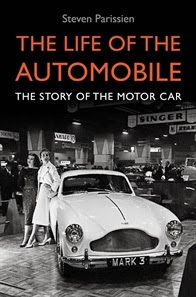
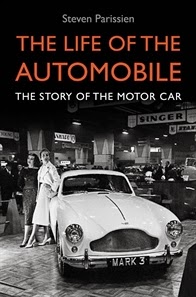
The Life of the Automobile: A New History of the Motor Car, by Steven Parissien

Staff Review by Chris Saliba

Steven Parissien has written an enjoyable history, one which concentrates more on aesthetics than the larger issues that concern the car. 

This is an elegantly written and accessible history of the car, covering the period from the 1880s up to the present day. Steven Parissien has written extensively on architecture and cultural history, and it’s easy to see these influences come through in The Life of the Automobile.  He obviously appreciates cars for their design as much as their technological achievements. Hence the book is written more from the point of an aesthete rather than a petrol head, if I can put it like that. Parissien very much concentrates on the many different marques that have evolved over the automobile’s 130 year history. What’s under the bonnet takes more of a backseat, as does environmental concerns, the oil crisis of the 1970, negative effects on health etc.

Parissien includes a substantial amount of business history, chronicling the dizzying mergers, government interventions and takeovers in the car industry. It’s an unwieldy business and most of the major, ‘iconic’ brands have had very choppy histories. Nor are these huge companies averse to government hand-outs and tax breaks when the times are tough. It’s extraordinary how car brands can be considered national icons that must be saved.

The sections on the mavericks running these huge concerns is fascinating. Henry Ford’s notorious anti-Semitic views are well known, but here Parissien gives more detail on what a horrid crackpot Henry Ford was. Then there is GM’s notorious tyrant, Alfred Sloan, someone not well known today.

The Life of the Automobile doesn’t go too deeply beyond the surface of the car, which can make the book a little limiting for those seeking a book with broader sweep. Nonetheless, there’s plenty to interest the general reader.

The Life of the Automobile: A New History of the Motor Car, by Steven Parissien. Published by Atlantic. ISBN:  9781848877054  RRP: $45

To sign up for our monthly newsletter, featuring new releases, book reviews and favourite articles from around the web, click here

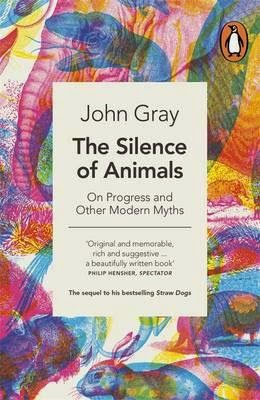
The Silence of Animals: On Progress and Other Modern Myths, by John Gray


Staff Review by Chris Saliba

John Gray's pessimistic yet ultimately liberating view is that humans think life could be better than it is, and that change is possible. Gray says, like the animals, we should accept life as it is and eschew notions of progress. 

According to British philosopher John Gray, human beings are different from animals in that we have ideas about ourselves and how life should be. Our minds are filled with thousands and thousands of words - ceaseless noise - tormenting us into thinking that life should be better than it is. This has led us as a species to believe in our own human perfectablility.

The philosophy of humanism, which is our own secular religion, insists that we are on an inexorable path to progress. We can expect life to get better, because we are rational, intelligent human beings. John Gray says this is a myth. He insists that while science continues to make advances, human psychology stays hopelessly the same.

Animals, however, are not tortured by words and their own ideology of progress. While they have methods of communication with each other, and ways of interpreting the world around them, their minds are not prey to the distressing cognitive noise that so preoccupies humans. Animals accept the world as it is and don’t mourn an imagined utopia. John Gray suggests we should turn away from our unrealistic myths of progress, try to clear the ceaseless noise in our heads, and try to live like the animals, accepting life as it is.

To illustrate his argument, Gray uses examples from writers and poets such as J.G Ballard, Freud, Wallace Stevens and Arthur Koestler, to name a few. Indeed, the text liberally quotes a wide range of writers. Gray clearly finds literature both inspiring and aesthetically satisfying, giving The Silence of Animals a rich tone that in part reads like literary appreciation.

The Silence of Animals is a both pessimistic and liberating. It liberates the reader from the constant hurly-burly of modern life, with its imperative for change and improvement. It’s also sobering, as it suggests that we are flawed animals that think too much and too well of ourselves.

The Silence of Animals: On Progress and Other Modern Myths, by John Gray. Published by Penguin. ISBN: 9780241953914  RRP: $19.99

To sign up for our monthly newsletter, featuring new releases, book reviews and favourite articles from around the web, click here.   
Tuesday, August 5, 2014

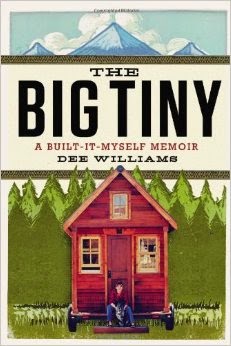
The Big Tiny: A Built-It-Myself Memoir, by Dee Williams

Staff Review by Chris Saliba

When Dee Williams downsized her life into a tiny 84-square-foot house, she found her personal life grew immensely rich and rewarding.

Dee Williams was trying to lead a regular, normal life. She had a mortgage, a big house to upkeep and a full time job as a hazardous waste inspector. Then at the age of forty she was diagnosed with congestive heart failure. It caused her to rethink everything. She came to the conclusion that she didn’t want to spend her life working hard to pay off a big house in which she didn’t spend that much time anyway. While waiting in a doctor’s surgery she read an article about tiny house builder and advocate Jay Shafer. A light bulb went off. Dee Williams decided to completely downsize her life and concentrate on the important things: friends, community and the immediate world around her. She picked up the phone and called Jay Shafer.

An amateur carpenter at heart, Williams built her 84-square-foot house, which is set on a trailer, out of salvaged materials. It cost her approximately $10,000. It has a one burner stove, a composting toilet (no shower, she bought a gym membership instead), a loft for her bed and is run mostly on solar power. She pays $8 per month for her utilities. She’s now been living in the tiny house for 10 years.

This is a funny, intimate and inspiring memoir. It’s like Thoreau’s Walden or Laura Ingalls Wilder’s Little House on the Prairie, but for modern day, green minded urbanites. Dee Williams’ writing has a poetic and thoughtful tone. It’s introspective and meditative, but also reaches out to show other possible ways of living. Who knew that in this era of rampant consumerism that it would be possible to envy someone who dramatically downsized and ditched so many of her own possessions, until there was only a tiny house left with not a lot in it.

The Big Tiny: A Built-It-Myself Memoir, by Dee Williams. Published by Penguin. ISBN: 9780399166174 $26.99

To sign up for our monthly newsletter, featuring new releases, book reviews and favourite articles from around the web, click here

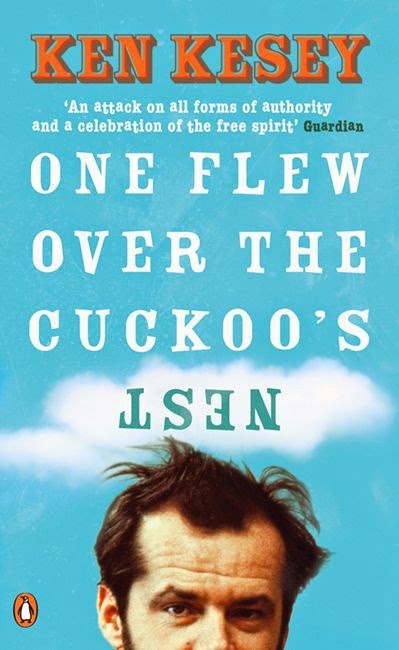
One Flew Over the Cuckoo’s Nest

Staff Review by Chris Saliba

Ken Kesey's bitingly real critique of corporate and political power working against the individual is just as powerful today as it was when first published over fifty years ago.

Ken Kesey based his 1962 novel, One Flew Over the Cuckoo’s Nest, on his personal experiences of working in a mental health facility in Menlo Park, California. He also volunteered to take psychoactive drugs as part of Project MKUltra, a CIA research program that experimented in the behavioural engineering of humans. How else could one explain the contents of Kesey’s famous novel? It’s the sort of stuff you simply couldn’t invent.

The novel employs an interesting narrative device, with the whole story told by “Chief” Bromden, a half-Native American inmate who is thought to be deaf and mute. Bromden is disenfranchised. His native lands have been aquired by government and business interests, destroying his people’s traditional way of life. He has stopped talking because, as a powerless Native American, people have stopped listening. He’s invisible and worthless to the American capitalist system. (Bromden calls these political and business interests “the Combine”.)

Enter Randle Patrick McMurphy. He has faked insanity so he can get out of prison (he’s doing time for battery and gambling) and hopefully enjoy an easier ride in a mental hospital. Things don’t go to plan, however. McMurphy hadn’t counted on the head administrative nurse, Miss Ratched, who rules the hospital. Her power is not overt, but subtle, relentless and insidious. She creates a sense of anxiety and inadequacy in the all male patients in the ward. McMurphy tries to rally the patients to resist her petty rules and control. He’s very much a messy, democratic figure, pushing back against power and authority. McMurphy’s time in hospital doesn’t end too well, nor does it end particularly well for Miss Ratched. In some ways One Flew Over the Cuckoo’s Nest is a tragedy; it’s so confrontational it forces you to face a lot of its themes at uncomfortably close quarters.

The novel is at core a critique of American corporate and political culture, and the power it wields. Chief Bromden is the perfect person to narrate this story of insidious and subtle control over the ordinary citizen. He is at the bottom of the social heirarchy. He’s been silenced and rendered invisible by “the Combine”. Yet Kesey has him tell the whole story from his point of view, highlighting how every dispossesed person is not some silenced casualty of economic progress, but a thinking, feeling human being.

Nurse Ratched is really a tool of “the Combine”. She’s middle management and terrified of losing her power. It’s this fear more than anything that makes her support the status quo. In many ways she’s as stuck as everyone else is in this system. She doesn’t seem to have anything to gain from running the hospital with such a firm hand except a regular paycheck. She’s like many middle class people who work hard for everything they have, but live in fear of losing it and resent those below them who they think are loafing.

This is a scary, depressing, original and frighteningly true book. Doubly depressing: it hasn’t dated since it was first published over fifty years ago. It’s still bitingly relevant.

One Flew Over the Cuckoo's Nest, by Ken Kesey. Published by Penguin. ISBN: 9780141024875 RRP: $12.95

To sign up for our monthly newsletter, featuring new releases, book reviews and favourite articles from around the web, click here