Friday, January 23, 2015

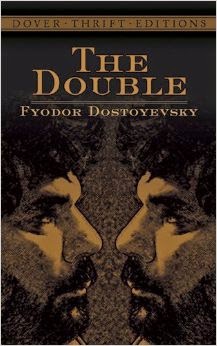
The Double, by Fyodor Dostoyevsky

Staff Review by Chris Saliba

Dostoyevsky’s short early novel about a paranoid, mid-level office worker is a minor classic. It’s comic, surreal and psychologically spot on.

The Double was Dostoyevsky’s second novel, published in 1846. He later revised it in 1866.

The style of the novel is very much in the vein of fellow Russian Nikolai Gogol’s black comedies, although the writing certainly does anticipate the later novels, such as Crime and Punishment and The Devils.

The plot is fairly simple. A government clerk, Yakov Petrovich Golyadkin, meets a younger man who looks exactly like him. Not only do the two men look like twins, they also have the exact same full name. To make matters worse, the younger Golyadkin (named junior throughout the text) has taken a job, exactly the same position at Golyadkin senior’s place of work. Throughout the story Golyadkin junior taunts and humiliates Golyadkin senior, who to add to his problems suffers all sorts of paranoia and hypochondria. Indeed, it often seems just possible that Golyadkin senior has dreamt up this terrible foe and the dreadful fate that he leads him to.

Dostoyevsky brilliantly mixes a hallucinatory style (visually the surrealist paintings of Magritte came to mind as I read) with a witty and sophisticated black humour. The laughs aren’t explicit, but rather implied in the farcical situations that Golyadkin senior keeps winding up in. Anyone who has felt themselves to be excessively sensitive, paranoid or simply unable to cope with social situations will find much relief in Golyadkin’s feverish stream-of-consciousness ravings. It’s good to know you’re not alone! Dostoyevsky clearly lived at the edge of his nerves, if The Double is anything to go by.

It’s a bit sad to read that Dostoyevsky didn’t think much of his second novel. He was only in his mid twenties when he wrote it. At only 130 pages, it’s quite a short and entertaining read. It carries its brief off very well, describing a man with a persecution complex who may be creating most of his problems in his own mind. The Double is a great place to start for those looking to read Dostoyevsky.

The Double, by Fyodor Dostoyevsky. Translated by Constance Garnett. Published by Dover Classics. ISBN: 9780486295725. $10.95

To sign up for our monthly newsletter, featuring new releases, book reviews and favourite articles from around the web, click here. 

Saturday, January 17, 2015

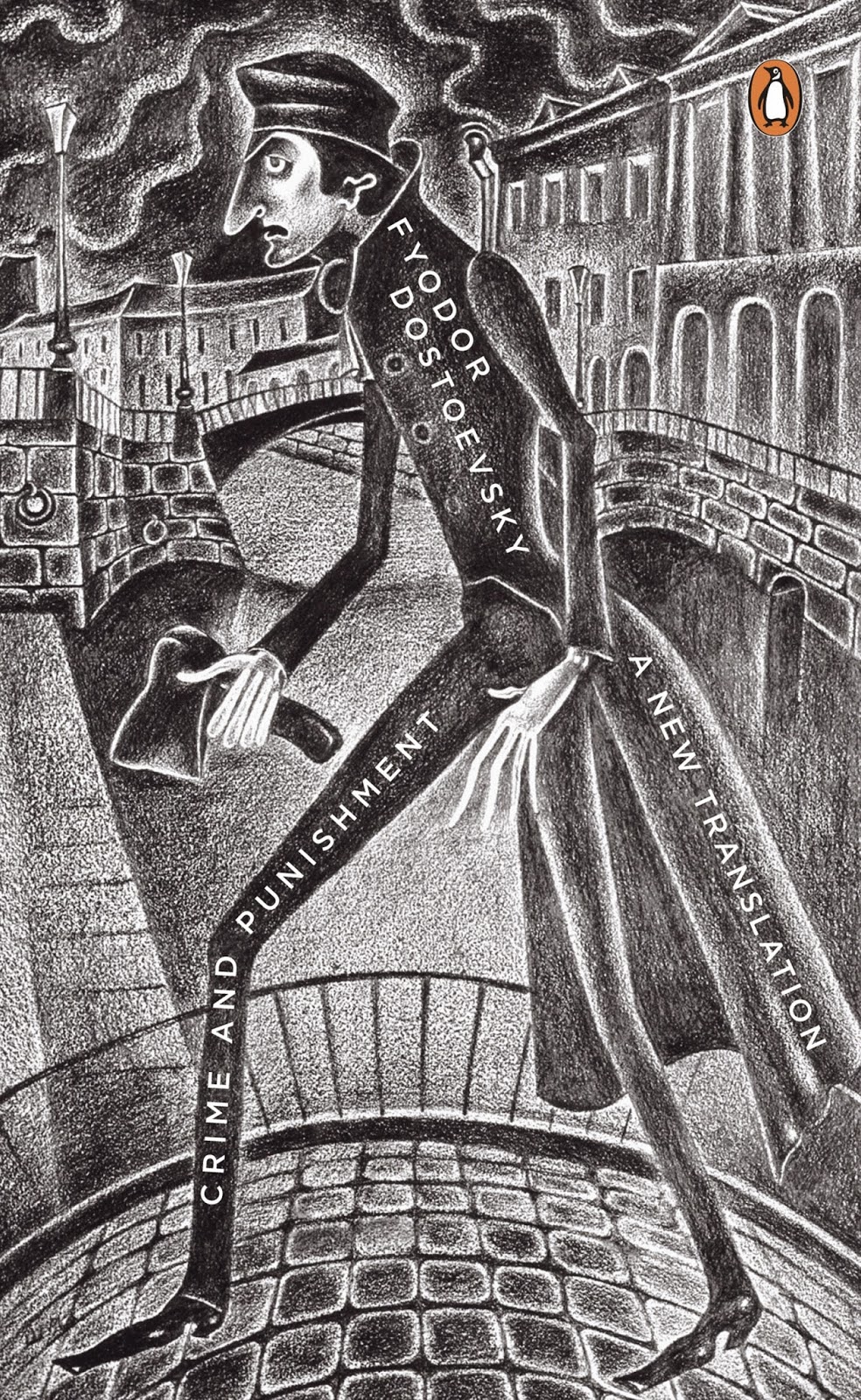
Crime and Punishment, by Fyodor Dostoyevsky

Staff Review by Chris Saliba

Dostoyevsky’s classic gets treated to a highly enjoyable new translation by Oliver Ready.

Penguin books has published a new translation by Oliver Ready of the seminal Russian classic by Fyodor Dostoyevsky. The basic plot, while rather unappealing, is one of the world’s most famous. A 23-year-old former student, Raskolnikov, decides to kill an old pawnbroker, Alyona Ivanovna, with whom he’s had substantial dealings. Things don’t go to plan, however, and the pawnbroker’s younger sister, Lizaveta, accidently intrudes on the murder. She is killed too, brutally, with an axe. Raskolnikov has murdered the pawnbroker because he is impoverished and feels the money will get him off to a good start.

To help him psychologically deal with the murder, it later emerges that he has developed his own philosophy, outlined in a published essay, that essentially divides the population off into two categories. There are the ordinary people who follow the laws and are submissive. Then there is a breed of superior people who can ignore the common laws and be a law unto themselves. Napoleon is cited as a prime example: killing innocents in order to achieve his military goals never caused his conscience a pang. Raskolnikov believes he should be able to follow this philosophy. Napoleon, he surmises, wouldn’t even stop to think about killing an old pawnbroker. It wouldn’t even enter his head as a question.

That’s Raskolnikov’s theory on paper. However, once the murder is done, he spirals into a near total nervous collapse. Much like Shakespeare’s Lady Macbeth, his former confidence quickly unravels into madness. He becomes physically sick. Ironically, he becomes so ill after the murder that his friends and family must look after him. None really know why he is so sick, but it’s clear to the reader why, which creates a sense of suspense and tension. You fear that this illness will soon give him away.

Virginia Woolf wrote of Dostoyevsky’s writing, “Against our wills we are drawn in, whirled round, blinded, suffocated, and at the same time filled with a giddy rapture. Out of Shakespeare there is no more exciting reading.” It’s hard to pin an exact theme to Crime and Punishment, the novel swirls around in such mad directions, seemingly losing control of itself in its many digressions. The dialogue is extraordinarily long, with single responses going on for pages. One thing is sure, it’s an incredibly detailed and complex psychological study of one man’s moral collapse. For this alone it’s unparalleled in literature, except arguably for Shakespeare, as Virginia Woolf noted. You could say that Crime and Punishment is Dostoyevsky’s Macbeth.

Dostoyevsky sustains his suspenseful story with a wonderfully claustrophobic atmosphere. The Haymarket precinct of St Petersberg is where much of the action takes place and Dostoyevsky describes every nook and cranny of this urban environment - the narrow, twisting streets, grimy stairwells and connecting courtyards - in exhaustive details. One house’s architecture is characterised as almost an offence against all morality - a roof that slants at a weird angle, doors askew and asymmetric walls that bring on a sense of nausea. This atmosphere is brought to a climax in the descriptions of Raskolnikov’s poky apartment - it’s likened to a coffin at one stage. At every turn there is a terrible feeling of entrapment, of people being too close to each other, of festering antagonisms and extremely frayed nerves.

Dostoyevsky is probably not for everyone. I could understand readers finding his dialogue and the feeling of endlessness that permeates his writing too much. His style and outlook is hallucinatory and ironic. It’s like Jane Austen, but on LSD. If you’re like me, you’ll find Crime and Punishment an awe inspiring achievement, it’s nothing less than a comprehensive map of the human heart. 

Crime and Punishment, by Fyodor Dostoyevsky. Translated by Oliver Ready. Published by Penguin. ISBN: 9780141192802. RRP: 16.99

To sign up for our monthly newsletter, featuring new releases, book reviews and favourite articles from around the web, click here. 
Tuesday, January 13, 2015

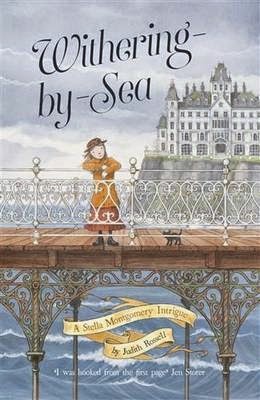
Withering-by-Sea, by Judith Rossell

Staff Review by Chris Saliba

Judith Rossel's Victorian intrigue is both entertaining and aesthetically rewarding. 

Orphan Stella Montgomery leads a drab and depressing life with her three aunts at the Hotel Majestic. The names of the aunts say it all: Aunt Deliverance, Aunt Temperance and Aunt Condolence. They are prim, proper and quite unforgiving. The aunts are staying at the Hotel Majestic because of the health benefits it is supposed to offer, chief amongst which is the wave bath that the establishment offers. This quite bizarre contraption rocks the patron back and forth in a bath that is serviced with hot, steaming water.

The Hotel Majestic is not a particularly cheerful place, however. It sits above the gloomy coastal town of Withering-by-Sea. It’s sort of a moody seaside version of Wuthering Heights - dark, brooding and lashed by waved. When Stella Montgomery accidently sees Mr Filbert, an elderly resident, secreting a package in one of the hotel’s Chinese urns, she returns later to dig it out. It is this package that will throw Stella into a most frightening and dangerous series of events.

Withering-by-Sea is illustrator and writer Judith Rossell’s first full length novel. It’s a genuine feat  of sustained suspense, a story that slowly reveals itself, page by page, ensuring the reader hangs breathlessly on every word. This is all set against a most brilliantly imagined world of Victorian darkness and wonder. Rossell excels at creating a novel that is dense in mood and ambience. The textures and smells of The Hotel Majestic, its imposing design, fine decor, grand stairways, long, brooding halls and hidden rooms, cling to you as you read. I’d perhaps caution against reading Withering-by-Sea alone at night: it fires the imagination so much that it’s easy to scare yourself!

Another wonderful aspect of the book is some of the characters and set pieces. Much of the action takes place at a theatre in the town. Here we are introduced to Mr Capelli and his “Educated Cats”, a troupe of performing cats who sing. Also the Flower Bells, a group of young dancing girls, featuring the feisty (and often quite funny) Gert. Rossell has really done her homework with the language used, and the cockney expressions she peppers her dialogue with make it crackle and pop with authenticity.

This is an enormously fun book. It took me back to being a child again when you first really enjoy the experience of immersing yourself in a story. The beautiful illustrations and presentation should also be noted. Withering-by-Sea has been lovingly put together, the drawings working perfectly with the text. It’s a book that is everything a book should be: both beautiful to hold and thrilling to read.

Withering-by-Sea, by Judith Rossell. Published by ABC Books. ISBN: 9780733333002  RRP: $19.99

To sign up for our monthly newsletter, featuring new releases, book reviews and favourite articles from around the web, click here. 
 

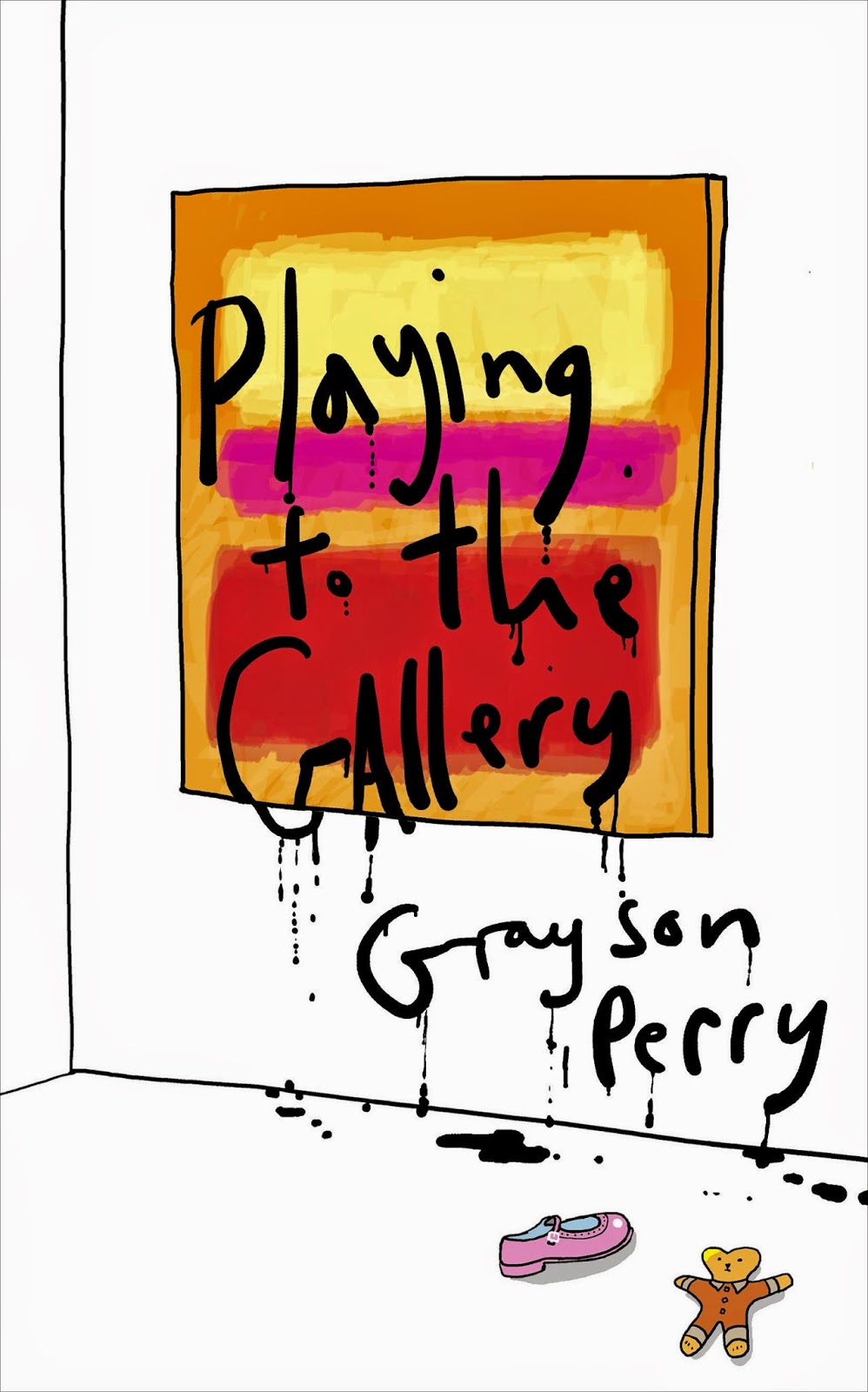
Playing to the Gallery, by Grayson Perry

Staff Review by Chris Saliba

Artist Grayson Perry gives his refreshing take on the art world. 

“For even I, an Essex transvestite potter, have been let into the art-world mafia,” happily declares Grayson Perry in the introduction to his manifesto Playing to the Gallery (based on his Reith Lectures). Australian ABC viewers may know Perry from his BBC documentaries, where he frequently dresses as his alter ego, Claire. In this short book the artist and potter writes about many aspects of the art world, much of it from a practitioner’s point of view. He discusses money and art, the vagaries of the art scene, popular art versus the cutting edge variety and whether the art world is truly revolutionary or secretly conformist.

Grayson is a bit of an outlier; he seems surprised by his own success. It is this distance that allows Perry to look on and comment about his milieu in an amused, detached yet appreciative manner. Playing the the Gallery offers many insights into the finicky world of art  and provides a useful guide for those wanting to make art a career. It counsels cheerful optimism but warns that success takes many decades to achieve. This is the perfect book to drop into the knapsack of any young art student.

Playing to the Gallery, by Grayson Perry. Published by Particular Books. ISBN: 9781846148576  RRP: $35 

To sign up for our monthly newsletter, featuring new releases, book reviews and favourite articles from around the web, click here. 
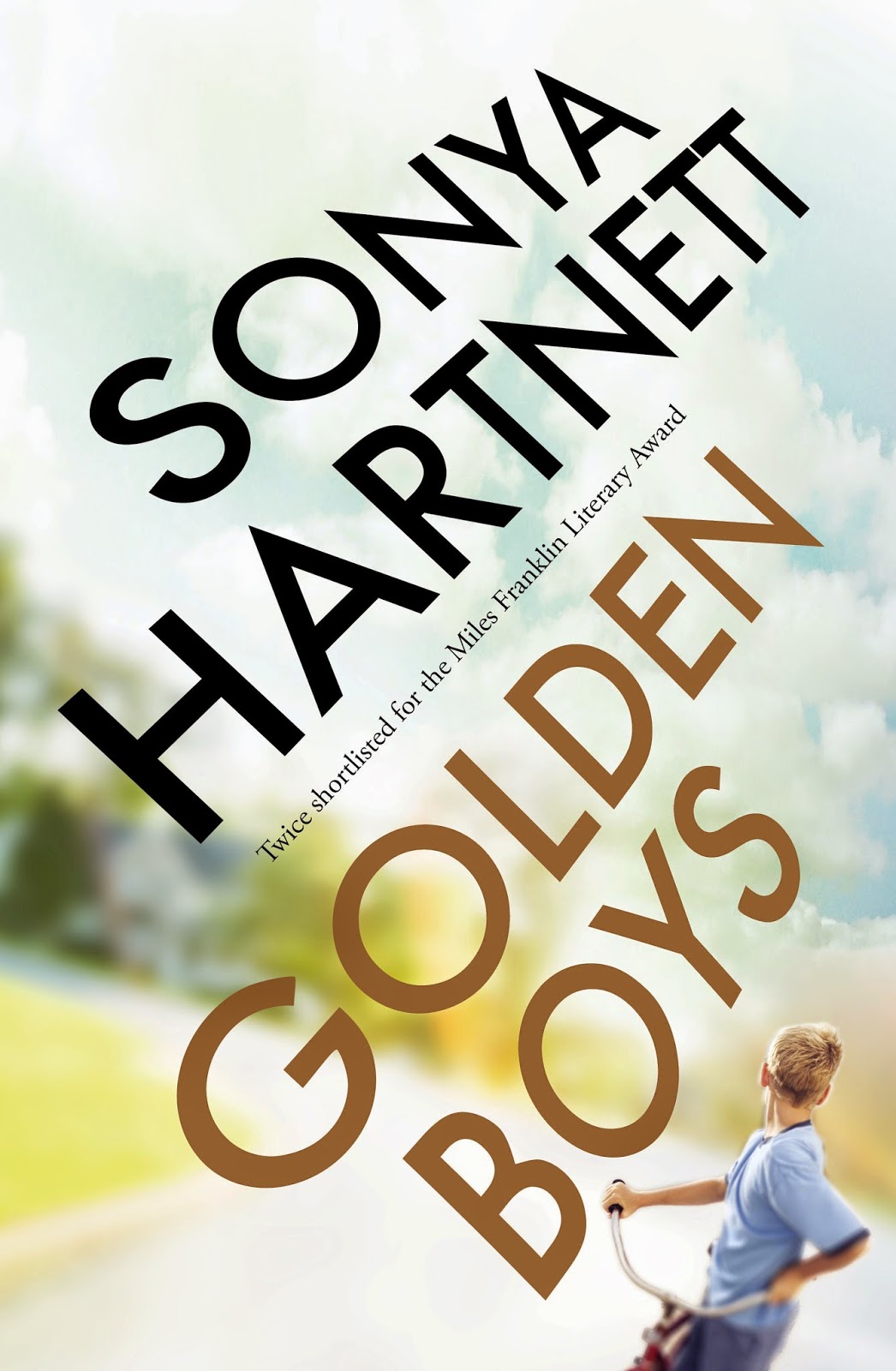
Golden Boys by Sonya Hartnett


Staff Review by Chris Saliba

Golden Boys is a near-perfect evocation of growing up in the Australian suburbs.

Sonya Hartnett’s new novel, Golden Boys, doesn’t set itself in a specific time, but it quickly becomes obvious we’re in late 70s, early 80s Australian suburbia. The tell-tale signs are in the objects that populate the story: a BMX bike, a cassette tape being flipped at a barbeque. This is a book rich in the texture of childhood toys, used to create an instantly recognisable urban landscape. Golden Boys plumbs the suburban subsconscious, creating an unsettling, dream-like atmosphere of anxiety and uncertainty.

The Jensons have moved into a new suburb. The father, Rex, is a happy-go-lucky dentist. He likes treating his two boys, Colt and Bastian, to games and puzzles. He’s an excellent provider for his family. His boys have all the toys they could possibly want. His wife, the somewhat amusingly named Tabby, seems to float on a cloud of suburban comfort. But underneath all this perfection there is a nagging sense of something not being quite right. In the opening chapter, when Rex makes the boys guess what colour the new BMX bike is that he’s bought them, the game turns almost into a mania for their father.

As the new kids on the block, the Jenson boys meet the Kiley family, who live just up the street. This family has more overt problems. The father, Joe, is a printer with a drinking problem. His marriage, to his wife Elizabeth, is a loveless and sometimes violent one. Their children, Freya, Declan, Syd, Dorrie, Marigold and Peter, try to cope with family life as best they can. It’s Freya, almost 13-years-old, who struggles the most. She wonders why their parents ever bothered marrying and feels most keenly what a hopeless failure her family is. When Freya meets Rex Jenson, she marvels at how wonderfully perfect he seems. He’s an adult she can talk to about her problems. But when she rushes to Rex for help to resolve a  domestic crisis, she feels let down by him. Her one light of hope in this suburban wasteland is suddenly extinguished. The idol she built Rex Jenson up into seems to be a false one.

Golden Boys is a near-perfect evocation of growing up in the Australian suburbs. Sonya Harntett describes the flipside of the Australian dream: envy driven by our commercial culture, the sharp limits to community feeling, the isolation children feel from adults, violence within marriages, the nagging sense of personal failure, the very prison of the mind and spirit that the suburbs seem to create. Reading Golden Boys I marvelled at how so true the novel was to life. It is a slice of real life.

Golden Boys, by Sonya Hartnett. Published by Hamish Hamilton. ISBN: 9781926428611 RRP: $29.99

To sign up for our monthly newsletter, featuring new releases, book reviews and favourite articles from around the web, click here. 
Wednesday, January 7, 2015

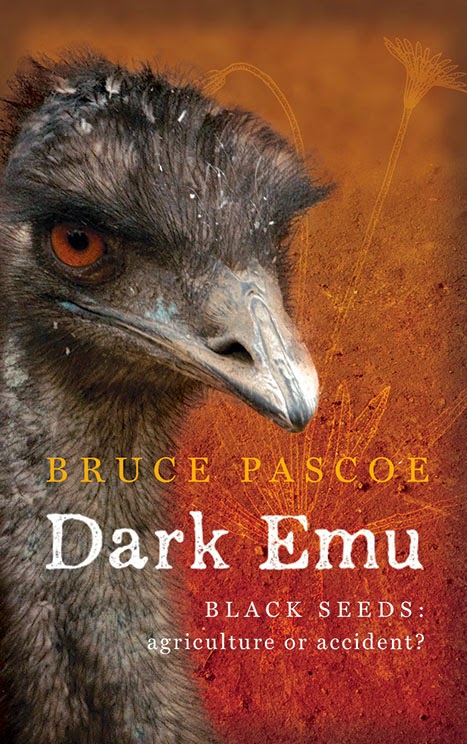
Dark Emu: Black Seeds: Agriculture or Accident? by Bruce Pascoe

Staff Review by Chris Saliba

In this fascinating history, Bruce Pascoe paints a lively and appealing picture of pre-contact Australia. 

This short book by Bruce Pascoe sets out to persuade the reader that Aboriginal people, pre-contact with Europeans, were not exclusively hunter-gatherers. Pascoe, a novelist and historian, argues that the British self-image as a rational and superior race blinded them to the many technological innovations of the First Australians. It turns out that Aboriginal people were perhaps somewhere halfway between being hunter-gatherers and farmers. In the end, however, labelling people as hunter-gatherers or farmers or whatever seems rather futile. Aboriginal pre-contact society was obviously complex; their people highly skilled and knowledgeable. The real aim of the book, you could argue, is to demonstrate Aboriginal accomplishments and technological expertise. In this Dark Emu does a wonderful job. Pascoe uses his skills as a novelist to help us imagine what Aboriginal life may have been like. He helps us to see where we have been blind or simply ignorant.

There is much to amaze in this book. Even those who feel they have already read quite a bit of Aboriginal history will find themselves shocked at what they didn’t know. Aborigines could produce food surpluses from grain, which were stored away. These grains were ground into flour and turned into cakes. Aboriginal science was applied to poisonous foods to make them edible and nutritious. Certain nuts would be sluiced in water for many days, and given other special treatments to remove toxins. The environment was manipulated with the use of fire, creating the landscaped garden-like effect that Bill Gammage has described in his book, The Biggest Estate on Earth. Firestick farming was also used to promote growth. Harvesting the staple yam daisy, the soil would be worked in such a way to ensure the crop replenished handsomely.

The sections on Aboriginal townships and house-building are fascinating. These constructions were designed in such a way as to provide warmth and protection from adverse weather conditions, could feature indoor fires, specially designed smoke systems to repel unwanted flies, and accommodated up to 40 or so people.

Much of the information we have for pre-contact Aboriginal society comes from early explorer and settler diaries. Many of these writers, despite their natural sense of superiority, showed amazement and admiration at Aboriginal technology and know-how. British explorer Charles Sturt noted that he had mixed with many Aborigines in their camps and felt that they were “undervalued by the learned in England”. He also noted that “...I am, in candour, obliged to confess that the most unfavourable light in which I have seen them, has been when mixed up with Europeans.” Aboriginal society left unmolested was highly functional and admirable.

Two hundred years down the track, you would think that we would have all we need to know about the First Australians, but Bruce Pascoe writes that much more archaeological work needs to be done.

Dark Emu: Black Seeds: Agriculture or Accident? is an absorbing and fascinating read that breathes life into its subject. Bruce Pascoe makes it very easy to transport yourself back in time and imagine what it may have been like living before Europeans changed the continent.

Dark Emu: Black Seeds: Agriculture or Accident? by Bruce Pascoe. Published by Magabala Books. ISBN: 9781922142436 RRP: $35

To sign up for our monthly newsletter, featuring new releases, book reviews and favourite articles from around the web, click here. 
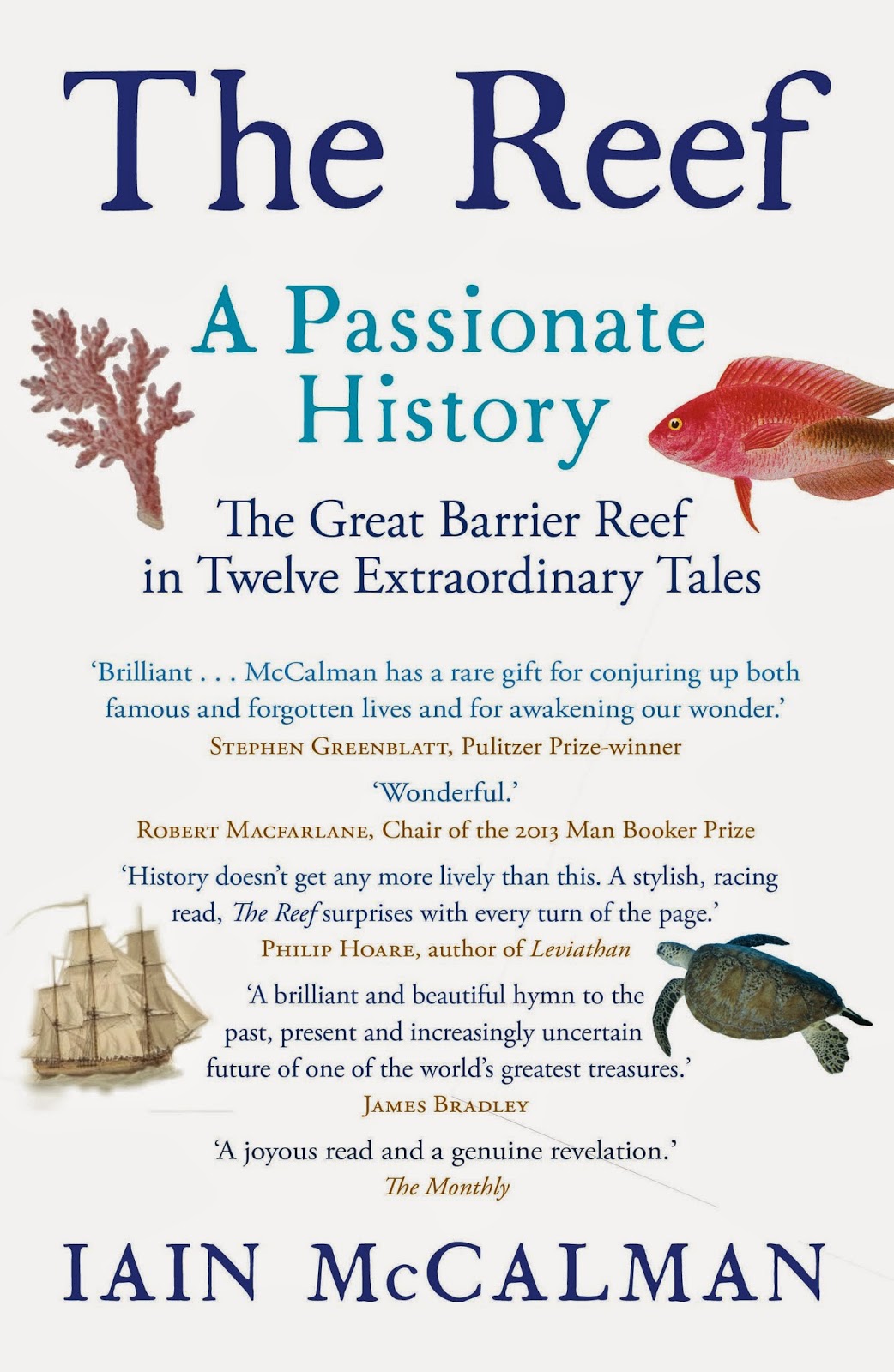
The Reef: A Passionate History, by Iain McCalman

Staff Review by Chris Saliba

Iain McCalman's wide ranging and imaginative history of the Great Barrier Reef throws up many surprises and long forgotten stories.

Historian Iain McCalman’s The Reef: A Passionate History, is divided up into twelve chapters, plus a prologue and epilogue. “Being drawn instinctively to human stories, I’ve chosen to write a series of biographical narratives…” writes MacCalman, explaining his book’s clever organisation. Each chapter focuses on famous or forgotten figures in Australia’s history. We start out with Captain Cook’s unwitting voyage into what would later be known as the Great Barrier Reef in 1770. The narrative then moves through various other explorers, settlers, castaways, aboriginals, naturalists, conservationists and scientists, all building up a hugely varied and rich history of the reef. The book really is a brilliant patchwork of natural history, biography, science and brutal frontier politics. 

The most fascinating aspects of the book were the more obscure characters and their stories. The middle section of The Reef, called “Nurture”, concentrates on castaways on the reef who were found and looked after by the local aboriginal tribes. It seems unbelievable that this part of Australia’s history isn’t more well known. The story of Eliza Fraser is a great example of the uninformed way white Europeans made assessments of the Aborigines’ character. Eliza Fraser spent six weeks living with an Aboriginal clan at the southern end of the Great Barrier Reef. A highly sensationalised account of her ordeal was published by the journalistic hack, John Curtis. The book painted the indigenous peoples as absolute savages. It was hugely popular, demonstrating that white audiences wanted to believe the worst.

In contrast to this, McCalman provides many examples of Aboriginal clans looking after shipwrecked Europeans. The most interesting stories are of James Morrill and the Frenchman Narcisse Pelletier. Both would be adopted by indigenous clans and would learn their language, customs and way of life. Reading these accounts makes for fascinating reading. You really get to see the other side of the frontier conflict.

Life would end fairly tragically for both men. Narcisse Pelletier eventually returned to France, but never felt at home. Treated as a bit of an oddity, he felt he didn’t fit in and grew depressed. James Morrill remained in Australia. Due to his considerable knowledge of the local Aboriginal clans, he was asked to work as a translator and go-between. Things didn’t work out well. He felt torn between his Aboriginal friends, friends he knew were being dispossessed of their lands, and the white authorities. He often had to explain to his Aboriginal friends, those that had looked after him, that the whites were going to take their land. The colonial authorities he translated for didn’t trust Morrill, thinking that he was colluding with the Aborigines. Hence he was deeply distrusted by both sides. Worse, Morrill knew extinction of his old friends was underway:

As early as 1864 Morrill reached the melancholy conclusion that “the work of extinction is gradually but surely going on among the aboriginals. The tribe I was living with are far less numerous now than when I went among them”.

The last chapters of The Reef deal with environmental degradation and the campaigns to stop the Reef being exploited. Charlie Veron, a famous marine biologist, ends the book with the depressing verdict that the corals are being bleached at an alarming rate, due to climate change warming the water.

The Reef is an extraordinary history, from Captain Cook’s troubled voyages through the Reef, to the Aboriginal philosophy of maintaining care for the land and sea, and ending up with ecological destruction due to economic exploitation of the environment.

The Reef: A Passionate History, by Iain McCalman. Published by Penguin. ISBN: 9780143572053  RRP: $24.99

To sign up for our monthly newsletter, featuring new releases, book reviews and favourite articles from around the web, click here.