Showing posts with label Aboriginal Australia. Show all posts

Friday, March 7, 2025

Murriyang: Song of Time, by Stan Grant

Acclaimed author and journalist Stan Grant writes very personally about faith and Aboriginality.


After decades spent roaming the globe as a journalist, covering wars and disasters, Wiradjuri man Stan Grant has turned his back on politics and media to search for peace through faith. Murriyang (meaning “Skyworld” - home of the creator spirit, Baiyaame, or God) fuses Christianity with Indigenous beliefs. In Grant’s telling, Baiyaame-God existed before, or outside,  the power structure that is the Christian Church. Indigenous people have always known God. 

​“When I hear stories of Jesus, I hear our story. Jesus was a dark-skinned man in a land of empires - oppressed and colonised: a tribal man. I hear the story of someone speaking back to power. I hear the words of an ancestor.”

There is a rather Hamlet-esque tone to 
Murriyang - Grant sounds world weary. Sick of politics, sick of the media. And like Hamlet, sick of words: “I am tired of words of certainty, tired of polled words, words with dollar signs in front of them, funded words. Reconciliation is not a word. Not anymore…What once were words are now antiseptic.”

While 
Murriyang is a book that seeks personal peace and emancipation from perpetual turmoil by aligning oneself with the universe and Baiyaame-God, the polemics of Grant’s previous books still come through. There is an underlying tone of anger with the world, with the injustices done to Australia’s First Nations. The book is hence a bit of a mix, travelling from rage to spiritual transformation. It feels like Grant has one leg stepping towards the light, with one leg still left behind in the gross material world of petty politics and naked self-interest. He most definitely wants out.

Interspersed among all of these philosophical and spiritual ruminations, are chapters titled “Babiin” (father), devoted to Grant’s ailing father, Stan Grant Sr. These are touching sketches of his father’s life and struggles, his wisdom and generosity of spirit.

Murriyang
 will appeal to the religious and non-religious alike. It is sometimes a bitter book, but overwhelmingly it fulfills its brief of guiding the reader to a place of oneness and forgiveness. Stan Grant is one of the nation’s best writers, tackling a difficult subject with maturity and erudition. 

Murriyang: Song of Time, by Stan Grant. Published by S & S Bundyi. $39.99

DEC 24

Thursday, September 12, 2024

Bitin' Back, by Vivienne Cleven


A twenty-one-year-old Aboriginal man wakes one morning and tells his mother he has become a woman.

All hell has broken loose in the rural town of Mandamooka. Single Aboriginal mother Mavis Dooley’s adult son, Nevil, wakes one morning and declares himself a woman. And not just any woman, he now insists on being known as Jean Rhys, the British author of Wide Sargasso Sea. Poor Mavis is thrown for a six. Has Nevil addled his brains with too many trashy American talk shows? When his Uncle Booty finds out that Nevil has taken to not only a new name, but wearing dresses and lipstick, he decides it’s time to toughen the boy up with a bit of extreme sport. The big worry is that Nevil has gone gay, but he calmly tells everyone he isn’t. Mavis does all she can to keep Nevil’s new identity under wraps, but this is difficult when nosey neighbour Mrs Warby is always peering over the fence, standing on her kero tin and asking far too many questions. Finally there is the local footy team, the Blackouts. Nevil is their star player, and they are trying to get him into practice for a big upcoming game.

If all of that were not enough, there is trouble at the local Bingo Hall where Mavis’s rival, Dotty Reedman, is making her life hell. Dotty is a nasty piece of work, accusing Mavis of cheating, competing for her romantic interest, Terry Thompson, and generally causing mayhem in Mandamooka society. It’s all too much for one woman to bear and Mavis fears that she might be losing her marbles. 

Bitin’ Back was Kamilaroi author Vivienne Cleven’s first novel, published in 2001. It’s been re-printed several times since then and is now part of the First Nations Classics series, by University of Queensland Press. The novel is narrated by Mavis in her own burly, broad accent, which propels the story at a great clip. She is incredibly funny, with a Chaucerian kind of energy. Mavis’s character also has touches of Nelly Dean, the redoubtable servant in Wuthering Heights who must singlehandedly battle chaos on every front. The novel’s strong comic aspects, however, act as a relief to the story’s alarming violence. It’s made clear that any divergence from the path expected of Mandamooka’s citizens - gender conformity, for one - will result in beatings and ostracism. Yet for all that Bitin’ Back feels like an affectionate, if unvarnished portrait of rural Queensland. 

In the end, the reasons for Nevil’s adoption of the Jean Rhys persona are explained, and all ends well. Bitin’ Back sometimes reads as a caricature of a novel - a mixture of the brutally real and the clearly absurd. Some aspects of the plot are far-fetched, requiring a suspension of disbelief, and near the end the threads of the story are stretched almost to breaking point. But that is only a minor quibble. Overwhelmingly Bitin’ Back is a great triumph, a success carried by the great Mavis Dooley, a true original in Australian literature. 

Bitin' Back, by Vivienne Cleven. Published by University of Queensland Press

JULY24

Wednesday, February 14, 2024

Everything You Need to Know About the Voice, by Megan Davis and George Williams


Megan Davis and George Williams take an historical perspective on the Voice in this instructive and useful guide. 


Constitutional experts Megan Davis (a Cobble Cobble woman from south-west Queensland) and George Williams AO have put together a neat, easy-to-read history of the Indigenous struggle for recognition in Australia's founding document, with useful timelines and appendices. Starting with an explanation of how the constitution came to be, Everything You Need to Know About the Voice then moves onto the 1967 referendum, which proposed changes that would allow Aboriginal and Torres Strait Islander peoples to be counted as part of the population and provide the Commonwealth with the power to make laws for them. This referendum was carried with an overwhelming majority and the authors spend much time dissecting the reasons for its success and the misunderstandings as to what was being proposed.

The rest of the book describes the democratic process that led to the Uluru Statement from the Heart and some of its key goals, namely Voice, Treaty and Truth-Telling. Davis and Williams put the Voice referendum in historical perspective, highlighting its challenges and clearing away the fog of misinformation. A vital contribution to the upcoming referendum that will help citizens to make an informed decision.

Everything You Need to Know About the Voice, by Megan Davis and George Williams. Published by New South Publishing. $27.99

SEP23

Friday, January 19, 2024

The Voice to Parliament Handbook, by Thomas Mayo and Kerry O'Brien


Two experts explain what the Voice to Parliament will and won't do. With cartoons by Cathy Wilcox.

Indigenous leader Thomas Mayo and former ABC journalist Kerry O'Brien have come together to write this short “handbook” to the Voice to Parliament. They have kept its length short, the idea being to make it easily posted or shared.

What do you get inside? It's a mix of personal stories, some history of previous referendums, a calling out of the misrepresentations about the Voice (it won't be a third chamber of parliament) and a section devoted to FAQs. A closing essay from Marcia Langton and Fiona Stanley explains how the Voice will help close the gap on Indigenous disadvantage. The final section provides some good tips for spreading the Yes message.

What do we learn? The Voice will be a representative body loosely similar to ATSIC (The Aboriginal and Torres Strait Islander Commission) set up by the Labor Hawke government in 1990, and dismantled by the Liberal Howard government in 2005. The world “loosely” should be stressed. If the Yes vote is successful, then the model could take any form, and change over time, according to legislation. The vexed issue of the Voice's form is really more of a procedural one. The key point is that if the Yes vote is successful, the Voice will be enshrined in the constitution. No government will be able to dismantle the Voice, ensuring continued representation from First Nations people.
An accessible explainer and impassioned call to vote Yes.

The Voice to Parliament Handbook, by Thomas Mayo and Kerry O'Brien. Published by Hardie Grant. $16.99

JUNE23

Don't Take Your Love to Town, by Ruby Langford Ginibi


Ruby Langford Ginibi's classic memoir is a no holds barred story of pain, joy and survival

As part of its new series of First Nations Classics, University of Queensland Press is re-publishing Ruby Langford Ginibi's acclaimed memoir Don't Take Your Love to Town (1988).

Langford Ginibi, a Bundjalong woman, was born in 1934 and raised in the small New South Wales town of Bonalbo. Her mother left the family when she was six, to marry another man. By age 16 Ruby was pregnant and she would go on to have nine children by several fathers. These relationships started out good, but would eventually turn sour, ending in either neglect or abuse. Langford Ginibi, in wiser old age, would swear off men, hence the book's title. Tragically, three of her children died, causing her years of grief – and a drinking problem that she finally kicked.

It's hard to understate how extraordinary a memoir this is. Langford Ginibi, viewed as a character on the page, is a mix of Chaucer's Wife of Bath and Brecht's Mother Courage, a woman of irrepressible life force and a tough survivor. She is a workhorse providing for her brood, living rough in outback tents and killing her own food. She brawls and drinks, would give you the shirt off her back if asked and raises a glass to life despite its endless hardships, especially for First Nations people.

At 400 pages long, there is never a dull moment in Don't Take Your Love to Town, as it chronicles a life lived to the fullest. Despite the vein of pain and suffering that runs through the book, Langford Ginibi is also very funny. She has an ironic turn of phrase and delightfully blunt sense of humour that gives her story heart and humanity.

An incredible memoir, an incredible life lived. Indeed, a classic.

Don't Take Your Love to Town, by Ruby Langford Ginibi. Published by Queensland University Press. $19.99

MAY23

The Window Seat, by Archie Weller


​Nineteen intricate and nuanced stories about the experiences of First Nations Australians.


Western Australian writer Archie Weller has published novels, poetry and short stories. His novel The Day of the Dog was made into the film Blackfellas. His 2009 short story collection, The Window Seat, is here republished as part of the First Nations Classics series.

Weller is a versatile writer and the 19 stories presented here cover many styles and genres, from mystery and crime to dystopian, futuristic themes. For the most part, Weller's fiction examines the difficulties of growing up mixed-race and Aboriginal: the prejudice, low expectations and bullying by police. There are also stories that explore Indigenous culture and spirituality.

While Weller often describes the brutal facts of life for First Nations people – violence, stints in jail, wrongful arrest, racism – his evocations of land, wildlife  and country are beautiful and ornate. Weller also has a good ear for dialogue which brings his characters vividly to life. These are stories firmly rooted in personal experience, providing a unique perspective on Australian life.

A special mention must go to the collection's title story "The Window Seat", which rivals Guy de Maupassant's "Boule de Suif" for its brilliance at exposing hypocrisy and moral vacuity. An elderly Aboriginal woman is taking a final bus ride home, but the white man who must sit next to her is full of resentment and racist thoughts. When he later discovers something about the woman, his smug moral universe is turned upside down.

A fine collection that explores a side of Australia rarely seen.

The Window Seat, by Archie Weller. Published by Queensland University Press. $19.99

MAY23

The Queen is Dead, by Stan Grant


Stan Grant on the British monarchy, Australia and its legacy of whiteness.

Wiradjuri man and author Stan Grant says he wrote his new book, The Queen is Dead, in an explosive burst and in real time, as events unfolded. Despite the quick writing time, there is nothing rushed or rash in Grant's book. This is a deeply considered work with not a word wasted or out of place.

When Queen Elizabeth died, Grant expected there would be some discussion of the effect of colonialism and conquest on the lives of First Nations people. While many may have wished to mourn the queen, there should also have been recognition of the terrible legacy of English invasion and occupation. As a Wiradjuri man, Grant felt this personally.  When colleagues and friends confessed feeling a sadness, even shedding a tear, over the queen's passing, Grant felt betrayed. Why didn't his friends consider his perspective, or that of his people's? Didn't they know the queen represented hundreds of years of oppression, suffering and violence? 

The major theme, you could say, of The Queen is Dead is the notion of whiteness. Whiteness as an historical phenomenon and institutional power. A whiteness that is so pervasive, at every level of society, that white people themselves don't see it. They simply see life proceeding as normal. Yet for First Nations people, everyday they are running up against whiteness – at work, in politics, in popular culture. Most importantly, in everyday life, in the endless comments on race, skin colour and heritage.

While Stan Grant discusses the large philosophical issues – the weight of history, white ignorance and blindness, how these power structures crush First Nations people – the book has a deep, almost confessional vein. Grant examines his personal emotions, how they swing from hate and resentment to love and forgiveness. These sections are vulnerable and brave in trying to get across the truth of the author's experience and feelings. They make for humbling reading.

Stan Grant brings his formidable mix of intellect, passion and truth-telling to a subject many may want to turn away from. Uncomfortable reading, but essential. 

The Queen is Dead, by Stan Grant. Published by 4th Estate. $34.99

MAY23

Friday, August 18, 2023

Follow the Rabbit-Proof Fence, by Nugi Garimara (Doris Pilkington)

The famous story of three girls who walked 1600 kilometres home.

The extraordinary story of three young girls' escape from an internment camp for mixed-race Indigenous children and their 1600 kilometre journey by foot Jigalong, in the Pilbara region of Western Australia, first appeared as Follow the Rabbit-Proof Fence

In 1931, three young girls escaped the Moore River Native Settlement, an internment camp for Indigenous children of mixed-race heritage and made the 1600 kilometre journey, all on foot, to their home in Jigalong. Traces of the story were on the official record, but by and large the girls' walk had been forgotten. It was only when author Doris Pilkington (Nugi Garimara) was told the story by her aunt Daisy, that she began to research it in earnest.

Pilkington's book is an interesting mix. Not quite a biography, and not quite a history, it pieces together the journey of fourteen -year-old Molly, her half sister, eight-year-old Daisy and 10-year-old cousin Gracie in a fragmentary manner, as one would expect. The book is a sort of palimpsest – layers of personal story, official records and truth-telling – neatly set down in Pilkington's clear prose to offer a humbling account of three children, members of the Stolen Generation.

The great tragedy is that Doris Pilkington was forcibly removed from her mother, Molly, when she was three-years-old and taken to Moore River Native Settlement. She didn't see her for another 21 years.  


Follow the Rabbit-Proof Fence, by Nugi Garimara (Doris Pilkington). Published by University of Queensland Press. ISBN: 9780702265976

Saturday, December 11, 2021

Tongerlongeter: First Nations Leader and Tasmanian War Hero, by Henry Reynolds and Nicholas Clements


A first class biography of a forgotten Australian war hero.


Tasmania's Black War raged from the mid 1820s until its conclusion in 1832. The conflict was between the Oyster Bay – Big River clans and white settlers. There were many shocking atrocities on both sides. Initially the First Nations tribes thought the Europeans were their returned ancestors, but this reasoning came under sustained pressure as their lands were appropriated and women abducted, raped and murdered. Life became an intense struggle as food sources were dramatically reduced and comfortable resting places taken. Out of this chaos emerges the leader and war strategist Tongerlongeter. He managed to organise and maintain a dogged resistance against impossible odds, causing a general terror among the white population. Surrounded and with no other option, he and the last 25 of his people made a peace agreement. He was offered land to live on and guaranteed protection from whites. This promise was broken and he and his compatriots were sent to Flinders Island, which was rife with disease. He would die there, never seeing his homeland again.

An excellent work of scholarship that chronicles in lucid detail a terrible war and acknowledges Tongerlongeter as an extraordinary fighter, one that history must remember.

Tongerlongeter: First Nations Leader and Tasmanian War Hero, by Henry Reynolds and Nicholas Clements. Published by NewSouth. $34.99

Wednesday, October 20, 2021

Truth-Telling: History, Sovereignty and the Uluru Statement, by Henry Reynolds


Historian Henry Reynolds examines the legal underpinnings of Australia.

​
What are the legal foundations for Australia? How was a whole continent simply claimed by the British Crown? Was such a move even legal under international law? And what of the estimated original five hundred nations that lived on the landmass, ruled by their own laws and customs? Did they even exist, or were they no more than the flora and fauna covering the land? These and many other fundamental legal questions historian Henry Reynolds addresses in Truth-Telling: History, Sovereignty and the Uluru Statement.

What we learn is that the British were on shaky legal ground when Australia was claimed. It was more a massive land grab than a legally binding property transfer. International law and thinking at the time bears this out. Land that was already inhabited by indigenous peoples could not be appropriated. The only option was treaty making, a practice that was already happening in America with its First Nations.

The total absence of treaty making in Australia, along with the shaky legal foundations of claiming a continent as uninhabited (terra nullius), meant there was no clear pathway to negotiating with the First Nations. Official word from England was to treat the indigenous population with respect and to avoid violence. But this authority was too far away to enforce its directives and soon settlers were pushing out into First Nation territories. Violence ensued, with no legal foundation to mediate the conflict. Were Indigenous people now subjects of the British Crown, with a right to its legal protections, or could they simply be killed? (The euphemism was “disperse”, that is, groups of Indigenous people could be “dispersed” by shooting.) Media reporting and letters at the time refers to the progress of this frontier as warfare. As Henry Reynolds maintains, no one at the time was under any illusion as to what was happening.

Fast forward to the National Constitutional Convention in 2017 and its landmark Uluru Statement from the Heart, which declares sovereignty has never been ceded or extinguished. Truth-Telling demonstrates that so much more work needs to be done, on treaty making and the recognition of Australia's frontier wars, among other things.

Henry Reynolds must surely be one of Australia's most penetrating historians, with his deep reading of the contemporary literature on our country's early years. His writing is intellectually honest and brave. Whether you agree with his conclusions or not, Truth-Telling is deeply considered and researched, presenting some of the most serious issues facing Australia today.

Truth-Telling: History, Sovereignty and the Uluru Statement, by Henry Reynolds. Published by New South. $34.99

Tuesday, January 19, 2021

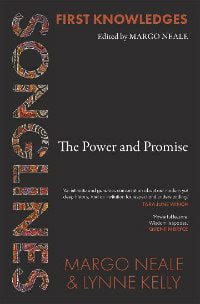
Songlines: The Power and the Promise, by Margo Neale and Lynne Kelly

The first in a series of six books introducing Indigenous knowledges,  Songlines: The Power and the Promise explains the use of mnemonics, or  memory systems, in Aboriginal culture.

Songlines archive knowledge in the landscape and are often associated with major ancestral beings, animals, natural elements or even contemporary events. For example, a landslide of red rocks may tell of a bloody ancestral battle. In this way, Songlines, with their additional use of art and song, are a form of writing. Deep forms of knowledge are written into Country and passed on from one generation to the next. We know this system is powerful because of its longevity, with stories maintained over tens of thousands of years. Ensuring the accuracy of information relies on a system of checks and balances: stories, songs and answers are owned, and ownership is not granted to a person until they clearly understand what they have been taught. In an oral culture, information is strongly protected.

With its use of personal story, history, art and even neuroscience, Songlines generously invites the reader to expand their consciousness with memory practices that are older than the Western Bible.  An instructive and enjoyable primer that will appeal to the scholar and lay reader alike.

Songlines: The Power and the Promise, by Margo Neale and Lynne Kelly. Thames & Hudson. $19.99

Review by Chris Saliba. First published at Books + Publishing. 

Saturday, July 25, 2020

Sandtalk, by Tyson Yunkaporta

A new voice uses Indigenous Knowledge to bring enlightenment and balance.  

Sand Talk, a highly original new book by poet, artist and academic Tyson Yunkaporta, presents Indigenous Knowledge as a way of solving our many contemporary ills. Modern life is out of balance and causing harm. There are problems everywhere – from how the economy is run, prioritising growth that is really a form of death to the environment, to poor personal and spiritual health. Society is based around hierarchical relationships, rather than interdependence and shared knowledge. Our narcissism makes us believe we are better than and superior to each other. The ego constantly gets in the way of clear thinking, obscuring the path to true knowledge.

Tyson Yunkaporta was born in Melbourne and raised in rural Queensland, living with about a dozen different Indigenous communities during his youth. As a young man in Cape York he was adopted by Dad Kenlock and Mum Hersie, and subsequently travelled around Australia, working with Indigenous groups and gaining a wealth of traditional knowledge. It is these years spent learning from Elders and knowledge keepers that Yunkaporta brings to Sand Talk. It is a book that has clearly spent many years in the making, a work that is the result of years of deep thought and meditation. On every page Yunkaporta strives for simplicity and truth, as revealed to him by his experiences travelling all over Australia.

Sand Talk is hard to categorise. It reads as a mix of philosophy, self-help and spiritual text. Yunkaporta has a keen analytical mind. There are many passages of surprising clarity. The author is quick to cut through modern received wisdom to expose the lie at the centre of it. For example, in a chapter discussing violence he says our clean, technological, peaceful cities outsource their violence to other places and peoples. “You carry the pillaged metals in your phone from devastated African lands and communities. Your notions of peaceful settlement and development are delusions peppered with bullet holes and spears.” Another chapter discusses the origins of modern education as a way of ensuring obedience and conformity, with an impressive use of history to make the point. The book is full of such radical examples, showing how Western civilisation uses artifice and polished rhetoric to conceal its darker side.
​

Written in a simple, clear language, yet demanding concentration and commitment, Sand Talk is like nothing you've read before. 

Sand Talk: How Indigenous Thinking Can Change the World, by Tyson Yunkaporta. Published by Text. $32.99

First published September 2019 at northmelbournebooks.com.au

Saturday, June 20, 2020

Australia's Original Languages: An Introduction, by R. M. W. Dixon.

A fascinating, brief overview of Australia's first languages. 

R. M. W. Dixon is a Professor of Linguistics who specialises in Australia's first languages. Before Europeans and the English language, Australia's First Nations spoke some 250 different languages. Early on in Australia's Original Languages, Professor Dixon clears up a common misconception. The 250 languages originally spoken were not dialects. They were not variations on the same basic language, such as American English or Australian English. Each language was entirely different, with its own vocabulary, grammar and complex forms of expression. 

If our language reflects our emotional, social and psychological complexity, then Australia's Original Languages provides a snapshot of its speakers' nuanced and intricate modes of thought, categorisation and social organisation. For example, First Nations' kinship structures provide a broad classification system with names for every member, describing how they relate to the society at large. The key is that everyone is interrelated, and the language reflects the social structure. Some First Nations speak two languages, one a regular, mainstream language, and another, what's known as an avoidance language, used for particular relationships. 

This book is subtitled “An Introduction”. R. M. W. Dixon gives the broadest overview of a subject that, by its nature, has great complexity. It's a reminder of how the First Nations people who speak their own language carry within them a unique consciousness and view of the world, coupled with an expressive vocabulary and grammar.
​

For readers who enjoyed Bruce Pascoe's brilliant Dark Emu, Australia's Original Languages provides many fascinating insights.

Australia's Original Languages: An Introduction, by R. M. W. Dixon. Published by Allen & Unwin. RRP: $32.99

Review by Chris Saliba. First published July 2019 at northmelbournebooks.com.au.

Wednesday, January 8, 2020

Australia Day, by Stan Grant

Following on from Stan Grant’s 2016 memoir Talking to My Country comes Australia Day, an eloquent and neatly organised series of essays that examine how two centuries of British cultural and political hegemony have impacted Australia’s First Nations People. 

Stan Grant, a Wirdadjuri and Kamilaroi man, tries to weave into a harmonious whole the differing parts of his identity: First Nation, personal and Australian citizen. A lover of European thinkers such as Hegel and Kant, some of whom he admits were terrible racists, Grant nonetheless admires their philosophical brilliance. The question remains: how to appreciate the triumphs of European culture, law and politics when your people’s history is one of dispossession and loss? The First Fleet didn’t bring European Enlightenment, but dispossession, disease and death.

It is this unresolvable tension that is at the centre of Australia Day, making it a work of acute personal struggle. Grant stretches his intellect and compassion in order to reconcile his admiration for Australia’s law, political culture and good citizens with its treatment of First Nations People. In the end, the attempt can’t proceed much beyond being an act of cognitive dissonance. The pain and suffering Grant feels, for his family, his ancestors, his people, is a wound that can’t heal. Many pages are spent weighing emotional and philosophical strategies for dealing with the legacy of dispossession, but none will work. What makes the pain so much greater is the blithe attitude of the non-Indigenous. There is a critical lack of understanding of what it means to be a First Nations Australian.

Grant provides many personal stories that highlight ongoing humiliation. Family members being arrested on the most spurious of reasons, Grant’s experiences at school, where he was asked why his skin colour was so dark. And then the trauma of the Don Dale detention scandal, a tragedy that hits home as the victims were the same age as his sons.

The book’s arguments are made all the more potent by Grant’s luminous prose and clear thinking. He has thought and read deeply on race, history, trauma and nationhood, providing thought provoking discussion while referencing an impressive array of other writers. Australia Day is both erudite and passionate.

Stan Grant lays down the challenge for non-Indigenous Australians. We need to learn to walk in someone else’s shoes. Our ignorance alone is the cause of so much suffering. To heal the divide calls for listening and an open heart. Australia Day offers an opportunity that must be grasped.

Australia Day, by Stan Grant. Published by HarperCollins. RRP: $34.99

Tuesday, October 31, 2017

North Melbourne Books November Newsletter - featuring Claire G. Coleman

In the November edition of the North Melbourne Books newsletter we talk to novelist Claire G. Coleman. Claire if from Western Australia and identifies with the South Coast Noongar people.

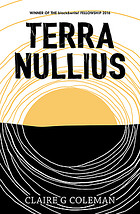
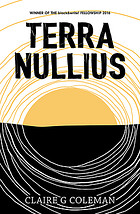
Terra Nullius is a powerful re-imagining of Australia's violent and oppressive past.

Jacky, a male youth, is on the run. He’s on the run from the Troopers, part of the colonial police force, well known for their human rights abuses.

This is a familiar Australian colonial narrative – invasion, brutality, dominance. Or so you would think. Half way through the novel, however, the reader learns that we are not reading about events that have happened in the past. The year is actually 2041 and something quite unthinkable has happened to Australia.

To view the latest edition of the North Melbourne Books newsletter, click here. To sign up for our monthly newsletter, click here.

North Melbourne Books talks to Claire G. Coleman


North Melbourne Books: Jacky, a male youth, is on the run from the colonial Troopers. He’s escaped Sister Bagra’s mission, where he’s been working essentially as a slave. He is pursued by Sergeant Rohan, well known for his cruelty and hatred of the Natives. This is a familiar Australian colonial narrative – invasion, brutality, dominance. Or so you would think, but half way through the novel it becomes clear we are not in colonial Australia. This is Australia in the near future.

Terra Nullius is both familiar and discombobulating, holding up a mirror to Australia’s
violent history. How did you get the idea for the plot?

Claire G. Coleman: In 2015 I was travelling through my Grandfather’s Country, to discover more about my past, to the town where he was born, Ravensthorpe Western Australia. When I was there I was invited, by the local historical society, to the opening for a memorial park, to memorialise the massacre that happened not far from the town. My ancestors’ extended family were swept up in that massacre, there were few survivors.

After that event I was left in a confused and unsettled state, I understood the brutality of
the invasion of Australia in a way I hadn’t before. I wanted everybody to be as unsettled
as me, as discombobulated (I love that word) as me, I wrote Terra Nullius in an attempt to
achieve that. The story and device I used to achieve that came to me in a rush, along with
the title. I can’t remember the moment it came to me, once it happened it was like it had
been there, in my head, forever.

NMB: Your novel really elicits the reader’s empathy. Every page makes you think and feel
deeply about what it must have been like for Indigenous people suffering colonisation.
What do you hope the reader will take away from the story?

CC: Empathy was all it was about. What I was thinking every moment I wrote, for every word I
placed in the story, “how do I provoke empathy”. I am glad my novel has elicited empathy,
for that was my intent and it is gratifying I if I have achieved any of that at all. I want
people to know how it felt to be colonised, or invaded. Maybe if people can understand
some of what it felt like to be invaded, dispossessed and oppressed they can help us all
bring an end to the colonisation that continues even today. I would love it if everyone who
reads Terra Nullius reacted by fighting with us to end racism, to stop Indigenous
disadvantage and maybe even bring about a treaty.

NMB: In the author’s notes for the novel you list some of your influences for Terra Nullius. The novel has a strong science fiction component. Do you have any favourite science fiction authors?

CC: I mostly love books, rather than authors. Frankenstein is one of the greatest books ever
written. It comes from a time when there was no such thing as the genres we speak of. It
was not horror, even though it had horrific elements, it was not sci-fi, although it had a
strong sci-fi bent – I believe it is more sci-fi than horror. It was literature, because all
books were.

The same can be said of War of the Worlds and 1984, by existing before the existence of
the genres as we know them they could use speculative elements without being shoe-
horned into “science fiction” or relegated to the “genre fiction” shelves. Sometimes the
genres and categories that are used for marketing seem somewhat arbitrary.

The authors I do love are those who blur the lines between science fiction and literature.
J. G. Ballard wrote in both Speculative Fiction and Literary Fiction and it seems to me that
he had no respect for the line between them. Sheri S. Tepper was shelved with Sci-fi early
in her career and got stuck there even though her works skirted close to and often crossed
the line between sci-fi and literature. Sometimes I have a hard time understanding why
Margaret Atwood, who I respect greatly, is in Literary Fiction and Sherri S. Tepper, who I
respect just as strongly, was always shelved in “genre fiction”

NMB: You wrote your novel while travelling around Australia in a caravan. What was that
experience like (it sounds like a whole other book!) and did it influence the writing
process?

CC: Writing while travelling in a caravan is both easier and harder than most people would
imagine. It’s harder because there are things that eat your time and leave less time for the
actual writing. Every daily task takes longer than it does when not travelling and there are
the constant minor repairs to the car and caravan. Most of the time I travelled every day
which ate a big chunk of time just in itself. It’s easier because I didn’t have to look far for
inspiration, it was outside the windscreen all day, it was in the places I stopped and slept, it
was in the information plaques at historical sites, in the people I met. It was in the land
itself.

It was a massive and constant influence on the writing process and on the book. Most of
the characters are travelling for big chunks of the story, I didn’t even notice that when I
wrote it because travelling was my default state, it was completely normal. The
landscapes I travelled in were characters in the work as well as being analogous for the
emotional state of the story’s characters.

NMB: What books are you enjoying reading at the moment?

CC: I am a bit of a book monogamist, I don’t like trying to read more than one book at a time.
At the moment I am really enjoying Why I’m No Longer Speaking to White People About
Race by Renni Eddo-Lodge if “enjoying” is the right word with that book. It is not a
pleasant book, it is about an unpleasant topic, racism, but it is a very important book.
I have also started Common People by Tony Birch, being a collection of short stories I can
consume the book in smaller bites. The stories Tony revealed in that book illuminate the lives of people you might not normally speak to, the people whose stories are normally
lost.

Terra Nullius, by Claire G. Coleman. Published by Hachette. RRP: $29.99

Saturday, October 14, 2017

Terra Nullius, by Claire G. Coleman

Staff review by Chris Saliba

Claire G. Coleman's debut novel is a powerful re-imagining of Australia's violent and oppressive past.

Jacky, a male youth, is on the run. He’s on the run from the Troopers, part of the colonial police force, well known for their human rights abuses. Jacky has been working as a virtual slave at Sister Bagra’s religious mission. A mean woman who despises the Natives – she thinks them vile savages – Jacky has run away and is now trying to find his true home. Sergeant Rohan, a violent  and amoral man, is leading the chase.

Not all of the colonial masters, invaders, despise the Natives as lesser beings. A Trooper, Johnny Star, has absconded after being made to participate in a vile massacre. He is on the run from the colonial authorities.

A young woman, Esperance, is leading a group of Natives out into the desert. Their hope is to create a new beginning for themselves, out of the reach of the invaders. The invaders hate dry places, indeed can’t survive there, and so dry, remote places are their best chance.

This is a familiar Australian colonial narrative – invasion, brutality, dominance. Or so you would think. Half way through the novel, however, the reader learns that we are not reading about events that have happened in the past. The colonisers of the story are not the British. The year is actually 2041 and something quite unthinkable has happened to Australia.

By any measure, Claire G. Coleman’s Terra Nullius is mind blowing. By projecting Australia past into a speculative future narrative, Coleman holds an inescapable mirror up to the nation. She makes us confront the horrors of dispossession and genocide. The great achievement of the book is its empathetic power. The reader really feels the terror and desperation of being an occupied people, considered sub human. Setting the story in the future, with Australian society turned upside down,  explodes preconceived ideas about how to approach our colonial past and highlights that for many, the past is nowhere near over.

Terra Nullius, by Claire G. Coleman. Published by Hachette. ISBN: 9780733638312 RRP: $29.99

To sign up for our monthly newsletter, featuring new releases, book reviews and favourite articles from around the web, click here.

Tuesday, July 26, 2016

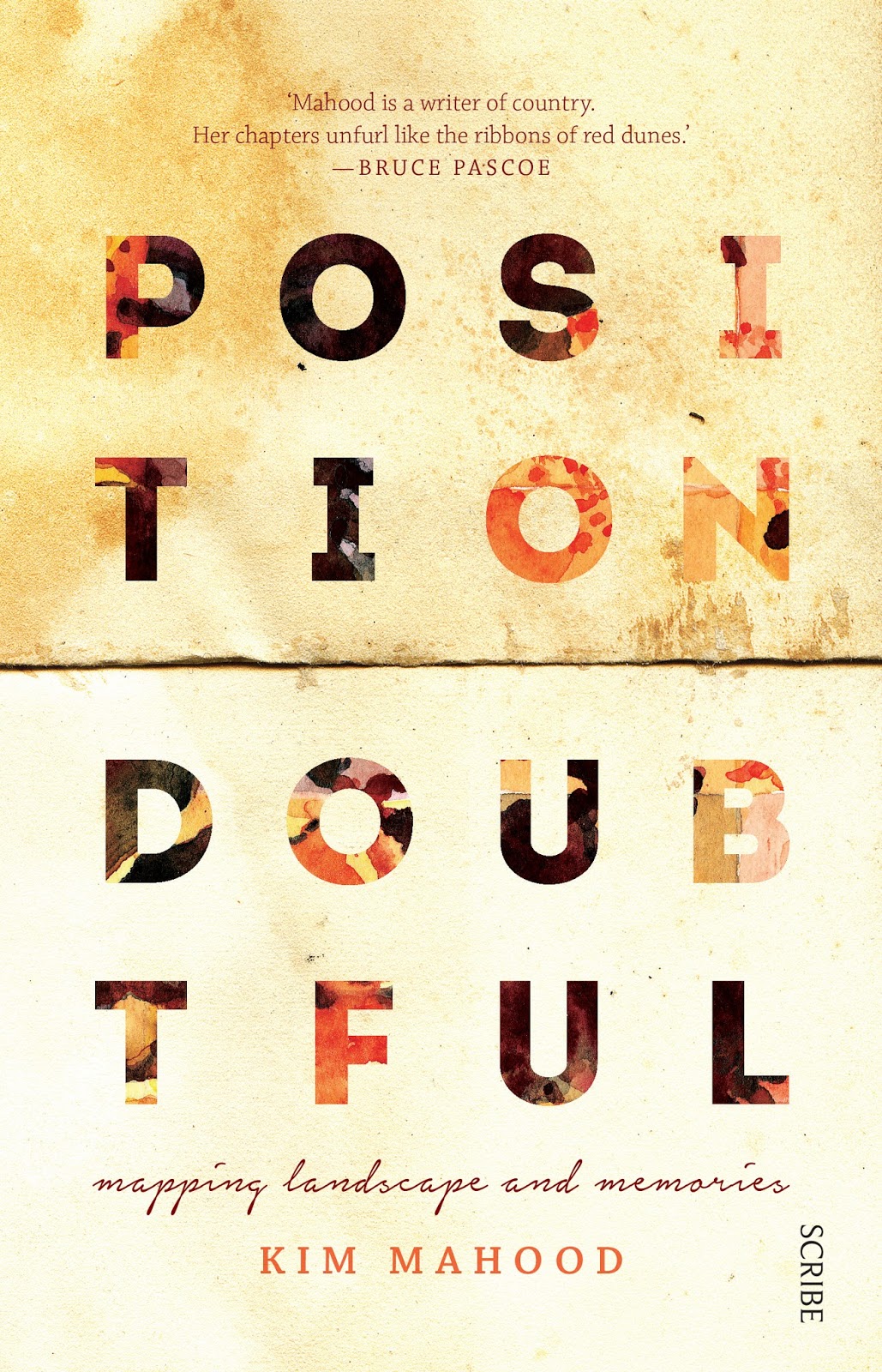
Position Doubtful: Mapping Landscapes and Memories, by Kim Mahood

Staff review by Chris Saliba

Artist and writer Kim Mahood gives readers an authentic and compelling portrait of Aborginal Australia today.

Kim Mahood is an artist and writer. She grew up on her family’s cattle station in Tanami Downs, a desert area 650 kilometres north-west of Alice Springs. The family eventually sold the cattle station, but ever since Mahood has felt the strong pull of the land. Over the years she has been returning to Tanami Downs, working as a volunteer amongst several Aboriginal communities and finding inspiration for her art works. It’s not only the land that Mahood finds compelling, but she also has strong relationships with the local Indigenous population, especially the elder Aboriginal women.

One of the central themes of Position Doubtful is a mapping project Mahood performed in collaboration with the Indigenous people of Tanami Downs. The maps were large canvases that Mahood painted, recording dreaming tracks, place names and culturally significant information. Mahood’s idea was to try and merge two ways of seeing the land, Western and Indigenous. It was also a way for Indigenous people to recover a sense of ownership.

The most rewarding aspect of the book is how Mahood describes the complexity of the interaction between white and black culture. There is unflinching detail of poor Aboriginal health, infighting, disadvantage and general cultural and psychological dislocation. It raises the question of how Aboriginal people are to carve out a meaningful place for themselves in a country where their history has been one of dispossession. Mahood is also honest about her own shortcomings when it comes to working with Aboriginal people, confessing to her impatience and exasperation.

This is a must read for anyone who wants a faithful portrait of Aboriginal Australia today, as lived out in remote communities. Although it’s subject matter is quite different to Chloe Hooper’s The Tall Man, Position Doubtful has much in common with that extraordinary book, most notably its descriptions of remote Aboriginal communities.

A series of heartfelt postcards from the Australia’s central heart.

Position Doubtful: Mapping Landscapes and Memories, by Kim Mahood. Published by Scribe. ISBN: 9781925321685  RRP: $29.99

(Release date 15th August.)

To sign up for our monthly newsletter, featuring new releases, book reviews and favourite articles from around the web, click here.

Sunday, February 21, 2016

Talking To My Country, by Stan Grant

Staff review by Chris Saliba

Stan Grant addresses racism, history and identity in this heartfelt memoir. 

Journalist Stan Grant has made a distinguished name for himself, reporting from some of the toughest conflicts all over the globe. Grant is an Indigenous Australian, a Wiradjuri man from Griffith. His father, also named Stan Grant, is an elder of the Wiradjuri people. Written much in response to the Adam Goodes controversy, where the AFL player was constantly booed match after match, apparently for having the temerity to call out a thirteen-year-old girl for racially abusing him, Talking To My Country uses memoir to tackle issues such as racism, Aboriginal history and identity. Its central theme is Grant trying to answer the question: what is it like to be Aboriginal in Australia today? The book’s intimacy and naked honesty allows the reader to walk in Grant’s shoes and experience his world.

Grant grew up dirt poor and his parents struggled. His father moved the family from town to town, always on the lookout for economic opportunities. Grant says two key events allowed him to move beyond entrenched poverty and into a career. His family moved to Canberra, which allowed him to advance his studies. There he met academic Marcia Langton, who pushed him hard to pursue his dreams. A stellar career in journalism followed.

Talking To My Country speaks plainly and directly about the Aboriginal experience. Grant is always intelligent and measured. This should be an angry book, but it’s not. It chronicles a tragedy now more than 200 years old, of how white civilisation was built on the assumption that the first Australians were lesser human beings, that they deserved to have their lands usurped, that this was all part of the Darwinian scheme of things. Near the end of the book, Grant put this is in words that many will find confronting, maintaining that the Australian dream is built on racism.

There is much sorrow and heartache in Talking To My Country. It asks non-indigenous readers not to turn away, but to imagine what life must be like outside of the Australian dream. 

Talking To My Country, by Stan Grant. Published by HarperCollins. ISBN: 9781460751978 RRP: $29.99

To be published 1st March 2016

To sign up for our monthly newsletter, featuring new releases, book reviews and favourite articles from around the web, click here.

Friday, September 25, 2015

No Small Change: The Road to Recognition for Indigenous Australia, by Frank Brennan

Staff review by Chris Saliba

In this nuanced study, Frank Brennan examines what a yes vote at the coming referendum to recognise Aboriginal people in the Constitution might mean for Australia.

Frank Brennan is an Australian Jesuit priest and human rights lawyer. He is well known for his work on Aboriginal land rights and has published several books on the subject. No Small Change: The Road to Recognition for Indigenous Australia examines the proposed referendum to recognise Australia’s indigenous people in the Constitution.

Such a question might seem like a no-brainer. Frank Brennan shows in this subtle and nuanced book how changes to the constitution, no matter how small, can open a legal pandora’s box. There is also the problem of being tempted by such an historic referendum to try and do too much. In fact, it’s important that the proposed changes be conservative in order to garner wide public support. For example, any proposals that might make it appear that indigenous people are being favoured could create resentment in the electorate. An overwhelming yes vote is necessary to avoid making constitutional change appear controversial and contested.

The majority of No Small Change is an exercise in history. Brennan concentrates on the successful 1967 referendum, which allowed the Commonwealth to make laws specifically for Aboriginal people. The overwhelming groundswell of support for a yes vote in 1967 was the mainspring for the Aboriginal land rights campaigns that were launched over the following five years. It is this period of legal challenges, of bouncing the issue between courts and parliament, that Brennan picks apart in fine, almost forensic detail. If you thought the notion of land rights was a fairly simple business of merely handing land over then think again. Important questions that must be worked out in law relate to how the land is used, whether for spiritual or economic purposes, and how that land is responsibly preserved for future generations. All of this involves complex legal thought.

By going back to the land rights struggles of the late 60s and early 70s, Brennan hopes to school the reader in the big legal questions that another successful referendum could bring on. If the upcoming referendum produces a yes vote on the same scale as the 1967 referendum, then this could give momentum to further fundamental changes in Aboriginal status in Australian society. Another Wik or Mabo, for example.

No Small Change provides a level headed guide to the key constitutional questions that the nation will face when it votes on this upcoming referendum to formally recognise our indigenous heritage.

No Small Change: The Road to Recognition for Indigenous Australia, by Frank Brennan. Published by UQP. ISBN: 9780702253324  RRP: $32.95

To sign up for our monthly newsletter, featuring new releases, book reviews and favourite articles from around the web, click here.

Wednesday, January 7, 2015

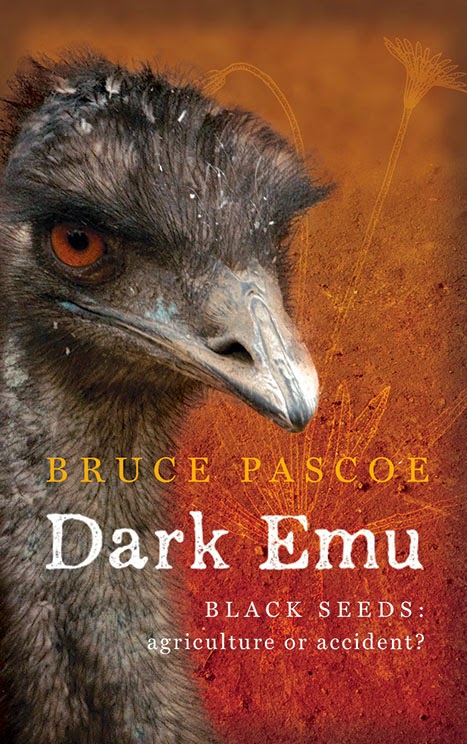
Dark Emu: Black Seeds: Agriculture or Accident? by Bruce Pascoe

Staff Review by Chris Saliba

In this fascinating history, Bruce Pascoe paints a lively and appealing picture of pre-contact Australia. 

This short book by Bruce Pascoe sets out to persuade the reader that Aboriginal people, pre-contact with Europeans, were not exclusively hunter-gatherers. Pascoe, a novelist and historian, argues that the British self-image as a rational and superior race blinded them to the many technological innovations of the First Australians. It turns out that Aboriginal people were perhaps somewhere halfway between being hunter-gatherers and farmers. In the end, however, labelling people as hunter-gatherers or farmers or whatever seems rather futile. Aboriginal pre-contact society was obviously complex; their people highly skilled and knowledgeable. The real aim of the book, you could argue, is to demonstrate Aboriginal accomplishments and technological expertise. In this Dark Emu does a wonderful job. Pascoe uses his skills as a novelist to help us imagine what Aboriginal life may have been like. He helps us to see where we have been blind or simply ignorant.

There is much to amaze in this book. Even those who feel they have already read quite a bit of Aboriginal history will find themselves shocked at what they didn’t know. Aborigines could produce food surpluses from grain, which were stored away. These grains were ground into flour and turned into cakes. Aboriginal science was applied to poisonous foods to make them edible and nutritious. Certain nuts would be sluiced in water for many days, and given other special treatments to remove toxins. The environment was manipulated with the use of fire, creating the landscaped garden-like effect that Bill Gammage has described in his book, The Biggest Estate on Earth. Firestick farming was also used to promote growth. Harvesting the staple yam daisy, the soil would be worked in such a way to ensure the crop replenished handsomely.

The sections on Aboriginal townships and house-building are fascinating. These constructions were designed in such a way as to provide warmth and protection from adverse weather conditions, could feature indoor fires, specially designed smoke systems to repel unwanted flies, and accommodated up to 40 or so people.

Much of the information we have for pre-contact Aboriginal society comes from early explorer and settler diaries. Many of these writers, despite their natural sense of superiority, showed amazement and admiration at Aboriginal technology and know-how. British explorer Charles Sturt noted that he had mixed with many Aborigines in their camps and felt that they were “undervalued by the learned in England”. He also noted that “...I am, in candour, obliged to confess that the most unfavourable light in which I have seen them, has been when mixed up with Europeans.” Aboriginal society left unmolested was highly functional and admirable.

Two hundred years down the track, you would think that we would have all we need to know about the First Australians, but Bruce Pascoe writes that much more archaeological work needs to be done.

Dark Emu: Black Seeds: Agriculture or Accident? is an absorbing and fascinating read that breathes life into its subject. Bruce Pascoe makes it very easy to transport yourself back in time and imagine what it may have been like living before Europeans changed the continent.

Dark Emu: Black Seeds: Agriculture or Accident? by Bruce Pascoe. Published by Magabala Books. ISBN: 9781922142436 RRP: $35

To sign up for our monthly newsletter, featuring new releases, book reviews and favourite articles from around the web, click here.