Showing posts with label Irish Fiction. Show all posts

Friday, September 4, 2026

Long Island, by Colm Toibin


When an old flame comes back to town, a spurned lover can’t decide what he wants, or what is best. 


Eilis Lacey moved from Ireland to Long Island, New York in the 1950s and secretly married an Italian American, Tony Fiorello. It’s 1976 and she now has two teenage children, Larry and Rosella. One day a complete stranger - an aggressive Irishman - knocks on her door and tells her that his wife is pregnant with Tony’s child, and that he intends to dump the baby on her doorstep when it is born. The news knocks Eilis for six, but worse is to come. Her mother-in-law, Francesca, concocts a plan to take care of the baby herself. Eilis doesn’t want the baby anywhere near her family. 

Stressed and not knowing what to do, she travels alone to her hometown of Enniscorthy in Ireland, ostensibly to celebrate her mother’s 80th birthday. An old flame, Jim Farrell, is running the local pub. The two had originally intended to marry, but Eilis ran out on him, starting a new life in America. Jim never married, but has now started a clandestine relationship with Nancy Sheridan, an old friend of Eilis’s. They are planning their own marriage, but carefully timing the announcement. When Eilis turns up in Enniscorthy, Jim’s is plunged back into the emotional turmoil of some two decades ago, when he was abandoned. He meets up with Eilis, which only opens old wounds; he also entertains naive hopes. Could he start a new life with Eilis in America, or is this mad, wishful thinking? And what of Nancy, who has invested so much in her relationship with Jim?

Samuel Johnson, the great English essayist and lexicographer, once wrote that “Love is the wisdom of the fool and the folly of the wise.” This piece of wit goes some way to explaining the themes of Long Island. Jim is hopelessly intoxicated with the possibility of a rejuvenated affair with Eilis, and he knows it is seriously upending his judgment. But still he ploughs into danger. The sensible path, staying with the practical and stable Nancy, seems like a let down when compared to Eilis, who represents a youthful passion that can maybe be recaptured.

Colm Toibin perfectly describes a slow moving trainwreck as Jim gets sucked further and further into this romantic delusion. A sense of suspense builds as it becomes obvious that none of what his characters are planning can possibly come to good. There are some humorous moments. The portrait of the prickly yet crafty Mrs Lacey, Eilis’s mother, is a delight. And the descriptions of Nancy’s business, a fish and chip shop which is subject to multiple complaints because of the smell, are wonderful for their relentless dinginess. The lives of Enniscorthy are often pathetic and small, but are nonetheless filled with warmth and humanity. 

There are some uneven notes, however. The novel doesn’t really resolve the plot involving the unwanted child and the family dynamics of the Italian family back in Long Island. The trauma this has caused for Eilis is pretty much left up in the air. And Nancy’s revenge on Jim perhaps stretches credulity a bit far. Having said that, this is a story I thoroughly enjoyed, with  characters whom I became totally involved with. 

Long Island, by Colm Toibin. Published by Picador. $34.99

MAY 2026

Friday, March 7, 2025

Intermezzo, by Sally Rooney

Two brothers must confront their troubled past when their father dies.

Peter and Ivan are two brothers. Ivan is in his early twenties, a chess ace who is still coming out of his adolescence. Peter is the older brother by a decade. He works as a lawyer and has a complicated love life with two women. Recently the brothers' father has died from cancer, and unresolved emotional conflicts are still bubbling below the surface. When competing in a chess tournament, younger brother Ivan meets a woman fourteen years his senior. The two tentatively embark on an affair, weary of how friends and family will take their budding romance. When Peter does find out, he is immediately critical and dismissive, infuriating Ivan. Soon their hidden grievances and long simmering animosities burst out into the open. Can the steadying influence of the women in their lives heal these deep wounds and create harmony?

Acclaimed and best-selling author Sally Rooney does it again with a compelling page turner that anatomises a close but fraught relationship between two brothers. The novel is drenched in detail, fleshing out character and place. While the story is as slow moving and introspective as a Bergman film, it has an uncannily addictive quality. It is probably the unflinching intimacy and vulnerability exhibited in Intermezzo that makes it so appealing.     

Sally Rooney fans will no doubt flock to Intermezzo, which heralds a more mature phase in her writing. New fans are sure to get on board too. 

Intermezzo, by Sally Rooney. Published by Faber. $34.99

DEC 24

Saturday, September 7, 2024

Long Island, by Colm Toibin


When an old flame comes back to town, a spurned lover can’t decide what he wants, or what is best. 

Eilis Lacey moved from Ireland to Long Island, New York in the 1950s and secretly married an Italian American, Tony Fiorello. It’s 1976 and she now has two teenage children, Larry and Rosella. One day a complete stranger - an aggressive Irishman - knocks on her door and tells her that his wife is pregnant with Tony’s child, and that he intends to dump the baby on her doorstep when it is born. The news knocks Eilis for six, but worse is to come. Her mother-in-law, Francesca, concocts a plan to take care of the baby herself. Eilis doesn’t want the baby anywhere near her family. 

Stressed and not knowing what to do, she travels alone to her hometown of Enniscorthy in Ireland, ostensibly to celebrate her mother’s 80th birthday. An old flame, Jim Farrell, is running the local pub. The two had originally intended to marry, but Eilis ran out on him, starting a new life in America. Jim never married, but has now started a clandestine relationship with Nancy Sheridan, an old friend of Eilis’s. They are planning their own marriage, but carefully timing the announcement. When Eilis turns up in Enniscorthy, Jim’s is plunged back into the emotional turmoil of some two decades ago, when he was abandoned. He meets up with Eilis, which only opens old wounds; he also entertains naive hopes. Could he start a new life with Eilis in America, or is this mad, wishful thinking? And what of Nancy, who has invested so much in her relationship with Jim?

Samuel Johnson, the great English essayist and lexicographer, once wrote that “Love is the wisdom of the fool and the folly of the wise.” This piece of wit goes some way to explaining the themes of Long Island. Jim is hopelessly intoxicated with the possibility of a rejuvenated affair with Eilis, and he knows it is seriously upending his judgment. But still he ploughs into danger. The sensible path, staying with the practical and stable Nancy, seems like a let down when compared to Eilis, who represents a youthful passion that can maybe be recaptured.

Colm Toibin perfectly describes a slow moving trainwreck as Jim gets sucked further and further into this romantic delusion. A sense of suspense builds as it becomes obvious that none of what his characters are planning can possibly come to good. There are some humorous moments. The portrait of the prickly yet crafty Mrs Lacey, Eilis’s mother, is a delight. And the descriptions of Nancy’s business, a fish and chip shop which is subject to multiple complaints because of the smell, are wonderful for their relentless dinginess. The lives of Enniscorthy are often pathetic and small, but are nonetheless filled with warmth and humanity. 

There are some uneven notes, however. The novel doesn’t really resolve the plot involving the unwanted child and the family dynamics of the Italian family back in Long Island. The trauma this has caused for Eilis is pretty much left up in the air. And Nancy’s revenge on Jim perhaps stretches credulity a bit far. Having said that, this is a story I thoroughly enjoyed, with  characters whom I became totally involved with. 

Long Island, by Colm Toibin. Published by Picador. $34.99

MAY24

Friday, February 16, 2024

The Paper Man, by Billy O'Callaghan


A box of letters reveals a tragic past.

Jack Shine works on the docks in the Irish city of Cork. It's 1980 and Jack is forty-one years old. He's helping clear out his uncle Joe's house, which is up for sale. It is the house he was born and raised in. While cleaning up they find a box of letters and news articles. The letters are addressed to his mother, Rebekah, and are from a famous footballer named Matthias Sindelar. Rebekah had fled Vienna in the late 1930s, in serious danger as a young Jewish woman. The letters and articles reveal the essence of a passionate relationship between Rebekah and the Catholic Matthias.

Eager to find out more, Jack travels with his Jewish (and German speaking) father-in-law, Samuel, to Vienna, trying to piece together more pieces of the puzzle. Rebekah had died when Jack was only 10 years old and had never explained this mysterious part of her past.

The Paper Man (the title refers to the on-field agility of Matthias Sindelar as a footballer) is apparently based on real people and events. Irish writer Billy O'Callaghan has fashioned a slow moving yet absorbing story of love, desperate times and the tragic effects of war on everyday people. This is not a perfect love story by any chance. Matthias is portrayed as a bit of a womaniser, and Rebekah's parents are none too happy with their relationship, but O'Callaghan shows how war cut like a scythe through society. Those on the Nazis' hit list had to drop everything and run for their lives. We don't know how Rebekah and Matthias's relationship would have panned out had not war interrupted it.

A poignant war story carefully told.  

The Paper Man, by Billy O'Callaghan. Published by Jonathan Cape. $34.99

OCT23

Wednesday, February 14, 2024

The Wren, The Wren, by Anne Enright


An Irish poet's legacy is generational trauma for daughter and granddaughter alike.


Nell is a twenty-something freelance writer, knocking out dodgy travel pieces for online publications. She's in a sort-of relationship with Felim, a strapping lad of farming stock. Things are less than ideal, as Felim is borderline abusive. The sex is often rough and unsatisfying, but Nell is a bit of a masochist, prone to self-harm, and employs a wry sense of humour to try and rationalise her experiences. She has moved away from home, and her mother Carmel, to try and begin living an independent life, and hopefully forge a more independent identity.

The two women, mother and daughter, have a complicated relationship, full of love, but also frustration and exasperation. Carmel is a no-nonsense woman, with a realistic yet also ironic outlook. She raised Nell without a father, conceiving her daughter randomly, seeing single motherhood as less complicated than a traditional nuclear family. Carmel's attitude to men is perhaps coloured by her father, Phil McDanagh, a famous Irish poet (as far as poet's can be famous)

Phil McDanagh is a mildly comic figure, the proverbial Irish poet. Neither daughter nor granddaughter take him too seriously, although he is a major presence in their lives, despite the fact that he has passed away. The poetic Phil, in touch with the beauty of language and expression, dumped his wife Terry when she was suffering with cancer and quickly took up with other women. Old television interviews of Phil are available online, which are a focus of Nell and Carmel's attention, as they try to figure out what his relationship with them meant, and how it continues to shape them.

Anne Enright has a great skill for describing life as it really is, with a focus on motherhood and its complex, often divided emotions. Nell and Carmel are undoubtedly close, and would do anything for each other, but there are fights and resentments. Enright also writes about the body in an almost Chaucerian way, with emphasis on menstrual blood and sperm, stark realities of life's cycle. All these elements put together – the natural insistence of the body, the challenges of mother-daughter relationships, a steady stream of bad or boring sex, a gnome-like poet father – create an emotionally messy yet compelling page-turner of a novel. Enright weaves much humour through her well observed prose, creating well rounded characters that readers will feel close to.

A skilful portrait of intergenerational relationships, executed with wit and understanding.

The Wren, The Wren, by Anne Enright. Published by Jonathan Cape. $32.99

SEP23

Friday, June 16, 2023

Nothing Special, by Nicole Flattery


Two teenage girls type up lurid transcripts for Andy Warhol during the 1960s, and are transformed in the process


Seventeen-year-old Mae likes to ride the escalators in New York's department stores, especially Macy's. Life's possibilities seem to open up for her there. She feels less alone and more connected to the world. It's riding the escalators she meets Daniel, almost a male ingenue version of herself, which soon turns into an unsatisfactory one night stand. The morning after, she falls into a discussion with Daniel's mother, who suggests she see a doctor. At the doctor's appointment, things take an unusual turn when she gets a job referral, typing, as it turns out, at Andy Warhol's factory.

It's 1966. Mae feels she has an awkward personality and decides to drop out of school. Her home life is seedy and alienating, living with an alcoholic mother and Mikey, her mother's on-again, off-again boyfriend. At Warhol's factory she meets Shelley, a girl of similar age and background. The two are charged with typing up tape recordings of conversations between Ondine, a self-dramatising Factory habitue and “Drella”, Warhol's nickname (a mixture of Cinderella and Dracula). These conversations, along with contributions from other Factory “superstars”, will form a novel called "a".

Mae and Shelley soon get caught up in the Factory lifestyle – parties and performances – until it all gets a bit jaded. Too much experience turns excitement and novelty into nausea. Their deep involvement with the tapes – listening to hours of the mad ravings of Ondine – makes them feel that they are indeed the true authors of "a". What a shock then to see it published without their name on it.

Nothing Special is the debut novel from Irish writer Nicole Flattery, following on from her short story collection, Give Them What They Want. It's a strange yet absorbing book, written in an unsettling yet unique authorial voice. Mae's world is full of dinginess, morally limited behaviour, low expectations, bad sex and petty rivalry. She and her friend Shelly feel trapped in an existential funk – think Kafka in New York, stuck in a maze of frustrating dead ends. Or the damned souls of Sarte's No Exit, locked in a drab room for all eternity. Nor do they have a road map to get out – there are no ideas about education, marriage or career that might shine a light to salvation. They are imprisoned in an uninspiring eternal present.

The ironic, almost nihilistic tone of Nothing Special feels like it was almost written by Warhol himself. The clipped, detached dialogue echoes Warhol's laconic wit and love of the banal, exhibited in his best book, From A to Be and Back Again: The Philosophy of Andy Warhol.

A strikingly original novel examining the limits of experience, perhaps an acquired taste for some, but an author to watch nonetheless.

Nothing Special, by Nicole Flattery. Published by Bloomsbury. $29.99

Tuesday, November 8, 2022

Small Things Like These, by Claire Keegan


A short novel that deals with institutional child abuse in Ireland during the 1980s.


It's 1985, a small town in Ireland. Bill Furlong works in a timber and coal yard. He has a family of five girls. It's Christmas and the family are preparing, making fruit cake and writing letters to Santa. Despite all this festive cheer, there is one thing niggling at Bill's conscience. A local laundry, run by the Good Shepherd nuns, is clearly mistreating its charges, although the power of the church means this could never be said out loud. He meets a girl from the laundry – a young woman, really, she's given birth to a child – named Sarah. She's clearly abused, often locked in a shed and kept in a filthy condition. Bill thinks of his own daughters, and also his mother, who had him out of wedlock, and managed to escape a similar fate. Is there something he can do to help?

Based loosely on Ireland's Magdalene laundries, homes for “fallen women” where many abuses took place, Claire Keegan has woven a sparse, elegiac story, centring on a good-hearted man who must confront a difficult moral choice. A novel of quiet grace and dignity.

Small Things Like These, by Claire Keegan. Faber Fiction. $22.99

SEP22

Saturday, December 11, 2021

​Beautiful World, Where Are You, by Sally Rooney

Two uncertain couples move towards commitment in this compelling anatomy of love.

Alice is a successful novelist, with two best sellers under her belt. She wearily does the literary circuits and fronts up for photo shoots, but finds herself unhappy despite her success. She lives alone. One night she goes on a date with a stranger she met on Tinder. Felix works in a warehouse and doesn't read books, in many ways the polar opposite of Alice. The date, it seems, is a flop at first. But the two run into each other later and start an uncertain relationship.

Eileen is Alice's best friend. She works as an editor at a niche literary magazine, earning a pittance. She's struggling to articulate her feelings for her childhood friend, Simon, who she grew up with. Simon is a decent fellow and a practising Catholic. His only flaw is that he can be emotionally withdrawn. Not cold, but slightly reserved and unable to fully declare himself. He is already in a non-committal relationship with another woman, but is also hooking up with Eileen.

The two women, Alice and Eileen, carry on a correspondence via email that often becomes philosophical, discussing religion, economics, politics, science, global warming, friendship and sex. There is a physical reserve between the friends as they do not see each other very often, even though they live in the same city. Nonetheless the friendship is intensely close, even if this intimacy manifests itself more in words than a human presence.

As with so many preternaturally gifted writers, it's hard to put one's finger on why Sally Rooney's writing is so addictive and appealing. She has a clean, almost clinical prose, describing in fine detail her characters' movements, motives and manoeuvres. Jane Austen kept coming to mind as the small world of this novel was fleshed out, the quiet struggles of four people trying to overcome themselves – their vulnerabilities and anxieties – to find lasting love. Again, one thinks of the convoluted misunderstandings and sensitive egos that make up the plot of Pride and Prejudice, until all is resolved with marriage.

In Rooney's novel, the characters peel back the layers to reveal  their flaws and blind spots, allowing them to examine more clearly where they have injured others, and as a consequence, injured themselves. Like all truthful revelations, this is a painful process, and as with all classic novels, everyone comes out the other end a slightly different, if not better person.

A novel that concentrates on the myriad emotional difficulties of opening up to others and forming close relationships. 

​Beautiful World, Where Are You, by Sally Rooney. Published by Faber. $29.99

Friday, January 15, 2021

Exciting Times, by Naoise Dolan.

A sharply observed satire by young Irish writer Naoise Dolan.

Ava is a 22-year-old Irish foreign worker, teaching English to children in Hong Kong. When she meets Julian, a smart yet obnoxious banker, she moves into his apartment and starts a casual relationship with him. The two often spar on economic and politic issues, Ava playing the deadpan socialist and Julian smug with his capitalist assertions. Ava knows she's somewhat of a hypocrite, living rent free off her banker friend, but she ploughs ahead nonetheless. An emotional spanner is thrown in the works when Ava meets Edith, a young Hong Kong lawyer, and the two start a relationship. Things become increasingly complicated as Ava keeps the true nature of her relationship with Julian secret. When Julian arrives back in Hong Kong after a work jaunt, the manipulative Ava must do some explaining.

Naoise Dolan is a young Irish writer and Exciting Times is her debut. Apart from being a compelling portrait of modern day relationships, the novel also provides a razor sharp analysis of money, power and class. Dolan's narrative shimmers brilliantly due to its fierce intelligence, sly humour and ability to illuminate the hidden ways in which power is entrenched. A new voice to watch out for.

Exciting Times, by Naoise Dolan. Published by Weidenfeld & Nicholson. $32.99

First published at northmelbournebooks.com.au June 2020

Monday, January 11, 2021

Girl, by Edna o'brien


Edna O'Brien paints an unforgettable portrait of the lives of African women.

A group of Nigerian girls are abducted from their school by a militant jihadi group. They are taken to a secret camp and undergo all sorts of horrors, including genital mutilation and pack rape. To show the girls their possible fate should they not submit to the militants' authority, they are made to witness a woman's public stoning.

The focus of the novel is Maryam, who narrates her story. She has been through so much trauma and hardship that she is not even sure of her age. Married off to a jihadi soldier, she has a baby girl, but manages to escape the camp. Finally reunited with her mother after much danger, it would seem her ordeal has ended, but it's only really just begun.

Irish novelist Edna O'Brien's new novel is a work of great courage, integrity and artistic risk-taking. Taking on the voice of a young African woman (the story is based on the Boko Haram abductions) is a brave step, but in such skilled hands it pays off. O'Brien's novel has  urgency, fire and anger. Written with consummate skill, even grace, it's an unforgettable portrait of the shocking abuses of girls and women.   

Girl, by Edna O'Brien. Published by Faber. $29.99

First published at northmelbournebooks.com.au January 2020

Monday, October 7, 2019

Normal People, by Sally Rooney

Normal People explores with superb precision the emotional complexity of an on-again, off-again relationship between two young people. 

Irish writer Sally Rooney’s sudden fame seems too good to be true, especially considering she’s only twenty-seven years old. One is almost tempted to ignore all the hoopla. Her second novel, Normal People, has followed on quickly from her debut, Conversations With Friends

Recently a reading copy of Normal People fell in my lap. Twenty pages in and I thought it was a bit slow. Despite this, I pressed on a bit further and soon found myself hooked. I didn’t want it to end.

The story concerns two university students, Marianne and Connell, and their on-again, off-again relationship. Both are navigating sex, friendships, study, school politics and careers. Marianne is complicated, with a troubled family history; she is perceived by her schoolmates as somewhere between awkward and freakish. She doesn’t know her place in the world, wonders if she’ll ever find it and borders on being masochistic. Connell is more “normal”, but as the novel progresses, we learn he has some serious mental health issues. 

The novel is told episodically, with several months elapsing between chapters. Within the chapters the timelines jerk back and forth, detailing previous events then jumping forward. Marianne and Connell split up, start new relationships that fail, try to get back together, repeating this pattern over and over. They love each other, but somehow, due to their damaged natures, can’t maintain a normal relationship. 

There are echoes of Sylvia Plath’s The Bell Jar in Normal People. Rooney writes in a simple, concise language, exploring the deeper recesses of the psyche with delicacy and a striking clarity. Her ability to capture the things that are left unsaid between people, the strange and indecipherable moods we all experience, is uncanny. Rooney sticks to what she knows – the domestic, university life, friendships – creating fiction that has the ring of truth.

There is a brittleness and sensitivity in Normal People that makes you feel like you are holding in your hands a rare glass or tea cup. You can’t help but care deeply for Rooney’s characters, sympathising with their struggles. 

A work of surprising maturity and insight.

Normal People, by Sally Rooney. Published by Faber. RRP: $29.99

Tuesday, October 14, 2014

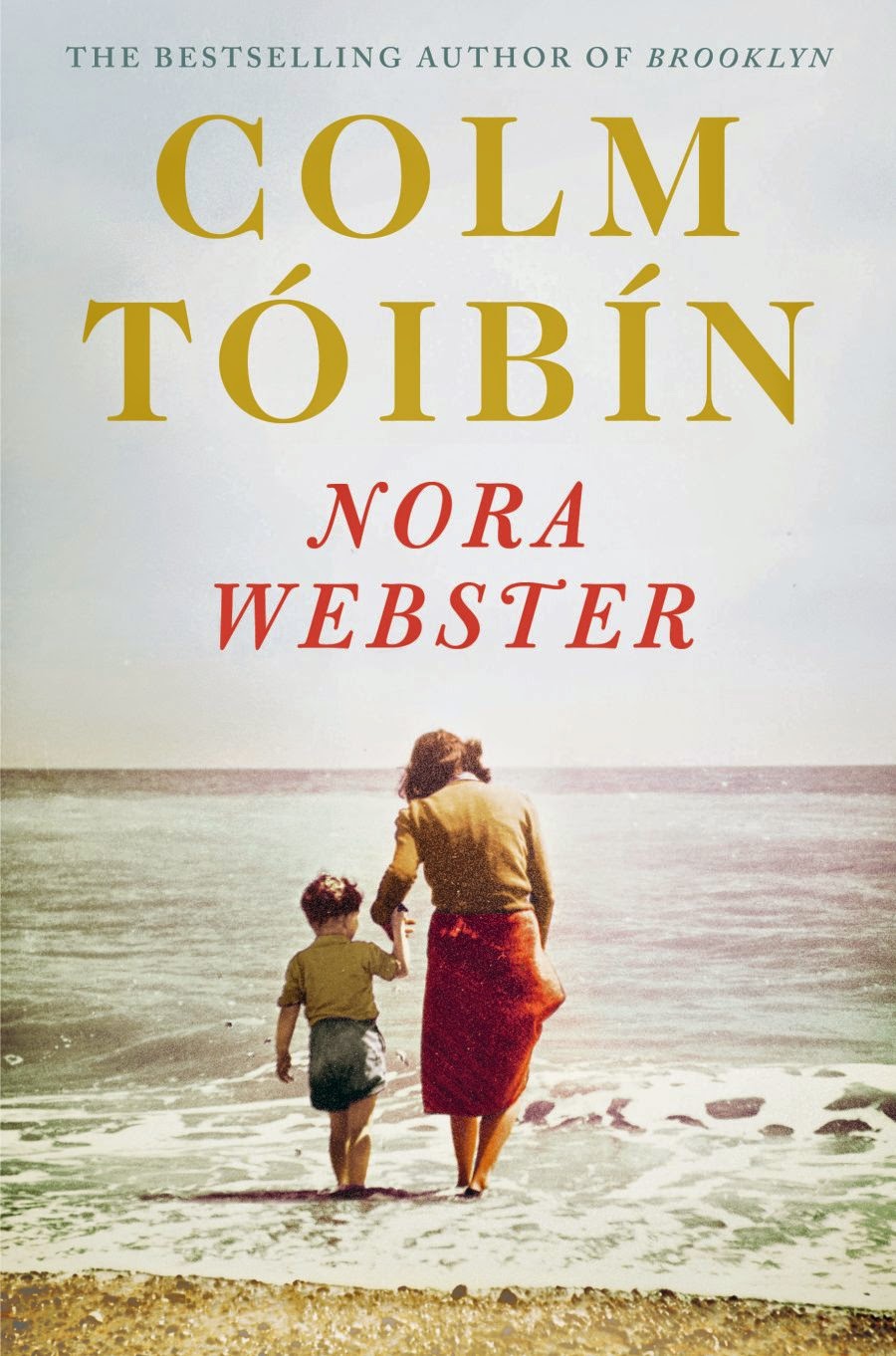
Nora Webster, by Colm Toibin

Staff Review by Chris Hubbard

Colm Toibin's latest novel, Nora Webster, tells of a woman's grief and stress at having to re-enter the world of work and society after losing her husband.

Set in late 1960’s Ireland, Nora Webster is the story of a woman coming to  terms with the death of her husband, Maurice Webster, a teacher in their small village. Nora took comfort in the fact that she could rely on him - a highly regarded pillar of the community - to negotiate the difficulties of social life, while she was content to stay at home and look after her four children.

After his death, Nora finds herself having to deal with well meaning but sometimes unwanted visits from friends and family, offering advice and assistance. The realisation that she has to get her life back on track sees Nora returning to work in an office she was happy to leave upon marriage. There is a sad humility in the scenes where Nora has to prove herself a competent employee to people she thought she would never have to meet again.  It is a work environment where petty office politics and gossip are the order of the day.

Colm Toibin is a master of subtlety and the quiet moment. So much of the emotional punch of Nora Webster is to be found in the very things left unsaid by characters unable to articulate their real thoughts and feelings. It is quite obvious that the stammer developed by one of Nora’s sons is a manifestation of pent up emotional stress. Nora’s emergence from her grief corresponds with her newfound assertiveness, which is often misunderstood for rudeness.

There is a point in the novel when Nora discovers the joy and wonder of classical music via the record collection of some new friends. This is a turning point in her life and proof of the restorative power that music can have.  Nora begins to take singing lessons, realising full well that her best days as a vocalist are behind her, but now understanding how she can draw on her love of music to maybe ease her grief and suffering.

Nora Webster is such an honest and truthful novel where the very ordinariness of people’s lives makes for the most remarkable reading. There is a wonderful scene where Nora is persuaded by an overbearing hairdresser to change her hair colour to add some spark to her life but the end result just causes more anxiety.  Perhaps the highest praise I can give this novel is that should Nora Webster ever go out of print it could re-emerge as a Persephone Classic – a publisher that champions books about women and the little battles they win in the midst of family and community life.

Nora Webster, by Colm Toibin. Published by Picador.  ISBN: 9781743533284  RRP: $19.99

To sign up for our monthly newsletter, featuring new releases, book reviews and favourite articles from around the web, click here.