Showing posts with label Environment. Show all posts

Tuesday, November 8, 2022

​Regenesis: Feeding the World Without Devouring the Planet, by George Mobiot


How farming is eating the world.


​George Monbiot is a well known columnist at 
The Guardian with a strong interest in environmental issues. In Regenesis, he looks at the impact of farming globally. The conclusions he comes to are pretty stark, to say the least. In fact, many will be shocked where Monbiot writes that farming is “the most destructive force to have ever been unleashed by humans.” That’s a pretty big call, and one would expect it to be backed up with compelling evidence.

The first half of Regenesis paints an almost apocalyptic image of a world despoiled by farming. The biggest culprit is animal farming, which produces enormous amounts of excrement. And not just any excrement, but poo that is full of antibiotics and other pharmaceuticals that have been pumped into animals to make them grow faster and bigger. Living as most of us do in cities, we aren’t directly exposed to this environmental degradation.

Another madness of the global food system is the volume of animal feed grown (soy beans, primarily) that humans could eat. Under ten percent of soy grown actually goes into soy drinks and protein like tofu. The rest is fed to cattle, shipped from countries such as Brazil, the United States and Argentina. This massive soy production causes environmental damage of its own, with millions of acres of forest and grasslands cleared.

What is the solution? A plant based diet. Globally. The amount of carbon drawn down from the atmosphere by this change in diet “would be equivalent  to all the world’s fossil fuel emissions from the previous sixteen years.” Obviously this has little to no chance of happenening. What to do?

The second half of Regenesis sees Monbiot talking to specialist farmers and scientists about alternatives. One avenue is what is known as no-till farming, where the soil is not turned over (tilling soil causes much damage). But the biggest discovery is what is known as microbial farming, using “hydrogen-oxygenating bacterium”. It produces a flour high in protein and can be produced in tanks, reducing the need for large swathes of farmland.

Monbiot describes the joys of eating a pancake made with this bacteria, which reminded him of the ones he used to eat made with egg:

“I would have found it harder still to accept that the main ingredient was the dessiccated bodies of bacteria. It tasted rich and mellow and filling: just like the pancakes I used to eat.”

Regenesis is well researched and thoughtfully written. Monbiot shows great intellectual honesty in contemplating the problems ahead for the global food production. He worries that there could be ticking environmental time bombs that have not been anticipated in our increasingly complex food system. Anyone with a serious interest in environment, sustainability, food security, climate and fairness for poorer nations must read this book. 

​Regenesis: Feeding the World Without Devouring the Planet, by George Mobiot. Published by Allen Lane. $32.99

OCT22

Friday, September 23, 2022

Movement, by Thalia Verkade and Marco te Brömmelstroet


Two Dutch writers consider how to make the roads more human friendly.


Dutch journalist Thalia Verkade teams up with the self-described “cycling professor” Marco te Brömmelstroet to examine the ways our roads and streets are currently used. Congestion, road rage, injuries, hospitalisations and fatalities are the current reality of our roads. Drivers rule the roads while pedestrians and cyclists must keep out of danger's way and avoid getting hit. News stories always report a pedestrian did something wrong – appearing out of nowhere, not crossing the lights in time.

Verkade and te Brömmelstroet argue that the onus should be more on motorists to drive carefully. It is they who are at the wheel of a dangerous machine and should carry more responsibility. Speed limits should be reduced (speed causing the most fatalities) and an attitudinal change fostered to see roads and streets as public places, owned by all. In many ways, it is time – the need to get back and forth between places with clockwork precision – that is the enemy of this book.

Movement doesn't propose any easy fixes to the problems of traffic congestion and road fatalities (around 1.3 million people die globally every year.) The authors rather meditate philosophically on how public space should function. Who should have the most right of way? What sort of safety should pedestrians be able to expect? Can cycling really save the day, or could it end up imitating cars with a desire for speed and exclusive access?

The thinking for decades has been that we could build our way out of congestion by rolling out more roads. But as all research shows, build it and they will come. New roads designed to curb congestion have the opposite effect and soon fill up. On the other hand, reduce road availability and car drivers find alternative modes of transport. Another common belief is that reduced parking means reduced commerce. However, creating public spaces that are pedestrian friendly have shown to greatly increase foot traffic, and hence customers for business.

In the final analysis, Movement argues for more human environments where cars don't dominate. How this mammoth task is achieved is anyone's guess. Verkade and te Brömmelstroet offer some stimulating ideas on the way forward.

Movement, by Thalia Verkade and Marco te Brömmelstroet

AUG 2022

Wednesday, October 20, 2021

Imaginative Possession: Learning to Live in the Antipodes, by Belinda Probert


 A breezy yet well informed journey through the Australian landscape.


Academic and writer Belinda Probert moved from the UK to Australia in the late 1970s. She travelled around the country taking up various teaching posts, mainly between Western Australia, South Australia and Victoria, finally settling in Melbourne.

Imaginative Possession describes Probert's decision to buy a property in the Otways, rural Victoria. Her aim was to get a better grip on the Australian landscape by studying and living with it at close quarters. Taking inspiration from writers such as Don Watson (The Bush), Charles Massy (Call of the Reed Warbler), Kim Mahood (Position Doubtful), Bill Gammage (The Biggest Estate on Earth) and Tim Winton, Probert explores notions of belonging and meaning. How do Australians of European ancestry relate to the land, if at all? Why do First Australians have such strong ties to Country?

Part memoir, part essay, part literary appreciation, Imaginative Possession is a fascinating and thought provoking book that will get you thinking about what the Australian environment means to you.  

Imaginative Possession: Learning to Live in the Antipodes, by Belinda Probert. Published by Upswell. $26.99

Saturday, May 15, 2021

How to Avoid a Climate Disaster, by Bill Gates

A genius book that explains big problems and concepts in an easy to grasp manner.


Do you read lots of books and articles about climate change but still find you have only a foggy idea of what it all really means? If so, How to Avoid a Climate Disaster will set you on the right path. Bill Gates brings his considerable analytic skills to the planet's biggest and most complicated challenge, translating it into an accessible explainer. All those facts and figures, graphs and computer models, are boiled down to two simple numbers, 51 and zero. Currently we put 51 tonnes of carbon into the atmosphere per year. That figure needs to be brought down to zero. Otherwise the planet's temperature will undoubtedly continue to rise. Babies born today, without effective action, will experience a planet eight degrees hotter than today in their old age.

This task will not be easy. Our economy, dependent on cheap fossil fuels, has been baked in over centuries. To change the world's power grid to renewables will take decades, not years. Emissions from agriculture pose a special problem, as people's diets are cultural and difficult to change. In a world where millions of people need to be lifted out of poverty, more pressure will be put on global emissions, as poor countries improve their standard of living, consuming more energy and meat.

The solution, according to Gates, is a mixture of technology, business and government. Governments can legislate to price carbon, creating a more level playing field. Technology, especially the riskier research and development, when backed with government money, can produce winners that business can capitalise on and improve.

Avoiding a climate disaster will be a huge task, not fixed by merely buying electric bulbs and purchasing an electric car, although all this helps. It will involve huge technological change, government commitment and global co-ordination. Perhaps some changes in our behaviour. To not do anything seems impossible. Leaving today's children with a planet eight degrees hotter – with the chaos and destruction that will cause – can't be an option.  

How to Avoid a Climate Disaster: The Solutions We Have and the Breakthroughs We Need, by Bill Gates. Published by Allen Lane. $39.99

Friday, January 15, 2021

Windfall: Unlocking a Fossil Free Future, by Ketan Joshi

Energy industry insider Ketan Joshi gives a bracing history of Australia's climate wars.


In Windfall: Unlocking a Fossil Free Future, renewable industry insider Ketan Joshi gives a teeth gnashing account of Australia's interminable climate debates. Working as a data analyst and communicator at Infigen Energy, Joshi sometimes wound up as collateral damage himself. He was hit with a defamation lawsuit from an anti wind turbine group for live tweeting the innocuous details of a senate inquiry. It was vexatious litigation, designed to suppress and scare.

The minutiae of climate science can often make the eyes glaze over. Ketan Joshi does a superb job of explaining the complex and arcane in a manner that is often riveting. Windfall is informative, but also enjoyable and stimulating. What we learn is that the decades wasted in pointless 'debate' have done Australians a great economic disservice. While renewable prices have dipped, greater savings could have been made had not the scare campaigns worked so effectively. The renewable energy industry gets some of the blame, too: they failed to effectively engage at a grass roots level with suspicious communities who felt railroaded into accepting new technologies.

Windfall is perfect for the lay reader and non-specialist wanting to know how climate policy went so terribly wrong, and offers hope that a decarbonised future is within reach.

Windfall: Unlocking a Fossil Free Future, by Ketan Joshi. Published by New South Books. $29.99

Review by Chris Saliba

This review first published at Books + Publishing. Click here.

Wednesday, January 13, 2021

We Are the Weather: Saving the Planet Begins at Breakfast, by Jonathan Safran Foer


Jonathan Safran Foer explains the impact of diet on the environment.

Changes in diet may well be one of the most difficult requirements for reducing our carbon footprint. As novelist Jonathan Safran Foer discusses in his new book,
We Are the Weather, emissions from livestock pose an enormous danger to the planet. Not only does livestock create methane and other emissions, but land cleared for grazing removes trees and foliage that would usually sequester carbon. A double hit to the environment. Some researchers even suggest that if the world went on a plant-based diet this would quickly and dramatically reduce carbon in the atmosphere.

No doubt this is all daunting to consider. Foer doesn't preach or thunder from on high about the need to eat more plants, and confesses to his lapses as a vegetarian. Indeed, for the most part, We Are the Weather addresses the psychology of inaction and draws parallels with historical examples of looming catastrophes that were ignored.

We Are the Weather is a book of ethical conundrums, a personal quest to find the right way to live. Melancholy reading for sure, sometimes confronting, yet  searingly honest about our collective failure to act and what needs to be done.   

We Are the Weather: Saving the Planet Begins at Breakfast, by Jonathan Safran Foer. Published by Hamish Hamilton. $35

First published at northmelbournebooks.com.au April 2020

Tuesday, January 12, 2021

Hop, Skip, Go: How the Mobility Revolution Will Transform Our Lives and Our Planet, by John Rossant & Stephen Baker

Two experts explain how we will travel in the future.

Cars are great, as long as everyone doesn't drive. When everyone does, congestion and dangerous emission levels are the result. Commuting by car in some major cities, such as Los Angeles, has become almost impossible. Traffic barely moves, resulting in lost hours better spent elsewhere. What to do?

Mobility expert John Rossant and business journalist Stephen Baker team up to present transport solutions from the future. They visit cities and tech start-ups that are pushing ahead with new, better ways to do travel. There are businesses trying to build cars with less of a carbon footprint, cutting edge ride-share services and apps galore to more efficiently marshal travel services. The authors even look at the possibilities of drones – either to carry online ordered packages or humans.

Most of the future's mobility revolution will be run not on fossil fuels, but on data. Our mobile phones will allow technologists to figure out the most efficient ways for us to get around. The downside, or course, will be the loss of privacy and surrendering so much of our personal data to big business and government.

Hop, Skip, Go is one of those technology books that likes to repeatedly predict how we will live in the future. At best, we're given an array of nascent technologies. Which ones take off, if any, is anyone's guess. Also, there are bound to be “black swans”, those unpredictable events that turn all received wisdom upside down. Having said that, Rossant and Baker have written a valuable book that explains why car travel has become untenable and the possible ways it might be wound back to some degree.

Hop, Skip, Go: How the Mobility Revolution Will Transform Our Lives and Our Planet, by John Rossant & Stephen Baker. Published by HarperCollins. $32.99

First published at northmelbournebooks.com.au March 2020


Saturday, June 20, 2020

On Eating Meat: The Truth About Its Production and the Ethics of Eating It, by Matthew Evans

Chef, writer and farmer Matthew Evans tackles the thorniest of ethical issues concerning our food choices.

On Eating Meat investigates every aspect of meat production – ethical, economic, practical and environmental. In essence, argues Matthew Evans, Australians eat too much meat (three times the global average). Not only that, Australians want to eat cheap meat. And therein lies the problem. Cheap meat is ruinous to the environment, of questionable value to human health, especially when consumed in large quantities, and lastly, is terrible for animal welfare. The sections describing attempts to inspect intensive farming operations – piggeries and chicken factories, most notably – are worrying. Evans was blocked and frustrated at every step. Big corporate producers are secretive and defensive, not wanting the general public to see how they operate.

What is the solution to this problem? More consumer activism for a start, whether it be at the checkout or simply demanding better welfare standards. Evans believes the debate has been set solely by animal welfare activists, especially vegans, whereas meat eaters should be taking a leading role. Ideally, he would like to see vegans and carnivores come together to advocate for better animal welfare standards. While this seems unlikely, there are good arguments made in its favour. Evans shows that whether your diet is vegetarian or vegan, animals still die as a consequence. Orchards cull animals to protect their fruit, seasonal crops kill small animals, such as rodents, egg production involves feeding unwanted male chicks into mulchers and the dairy industry produces unwanted male calves, either killed on site or sent to market.

This is a book that always strives for honesty and balance, in what is often an ethical minefield. Matthew Evans leaves no stone unturned as he looks at food production and its impacts from all possible angles. Every reader will find some new fact to surprise and shock: commercial bees employed to pollinate food crops, the amount of bugs that end up in food, the rampant use of antibiotics to promote animal growth, the impact of feral cats on Australia's native wildlife, etc.

A book perhaps as important as Peter Singer's Animal Liberation for its thoughtfulness and intellectual rigour.

On Eating Meat: The Truth About Its Production and the Ethics of Eating It, by Matthew Evans. Published by Murdoch Books. $32.99

​Review by Chris Saliba. First published July 2019 at northmelbournebooks.com.au

Wednesday, November 22, 2017

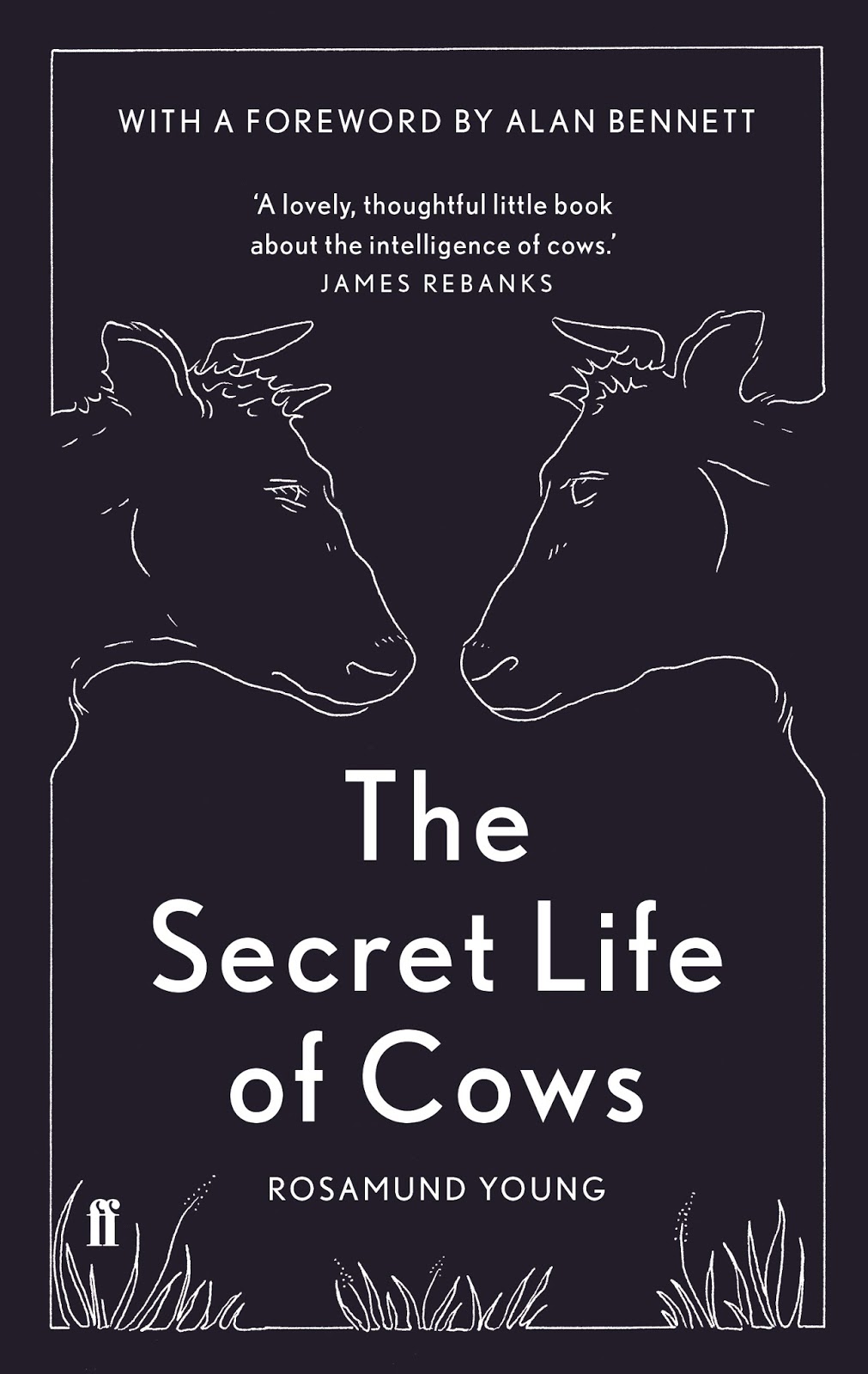
The Secret Life of Cows, by Rosamund Young

Staff review by Chris Saliba

Organic farmer Rosamund Young has been communicating with and observing her cows for decades. She reveals their secrets. 

Cows are integral to our food system. The dairy industry in Australia is worth some four billion dollars a year. Through science and other measures, cows have doubled their milk production over the last thirty years. Despite cows being so important, we remain ignorant about their intelligence and personalities. Popularly, cows are considered more as dumb and docile beasts.

Shining a light on these matters is farmer Rosamund Young, who runs Kite’s Nest Farm with her brother and partner. Kite’s Nest Farm produces beef and lamb from grass fed animals that are butchered and sold in the farm shop. Their philosophy is to let the animals run free, choose what plants and grasses they prefer to eat and socialise how they like. When the animals are allowed to live as they see best, their health is improved and they lead more contented lives. This regime has allowed Rosamund Young to observe cows (and other farm animals, including hens, pigs and lambs, of which she also writes) up close.

What she finds, essentially, is that cows behave pretty much like your much doted on household pet. They communicate by “mooing” and with their eyes, staring at you until they get what they want. Failing that they can simply refuse to move when requested. We learn that cows can recognise individual humans by their voices, love eating apples, like to be groomed, enjoy music and can make friends. In one touching description Young describes two young calves born at the same time that became instant friends, and friends for life. They constantly doted and looked after each other. Cows are even clever enough to ask for help if they have mastitis (a disease that affects their udders).

One of most fascinating claims of the book is that cows self-medicate by choosing particular plants to eat. Perhaps one day we shall consult cows when we have a medical problem.

Rosamund Young writes in lively, almost eccentric manner, referring to the way she “talks” to the cows and how they can understand her. The style veers almost towards P.G. Wodehouse (think of Empress the pig of the Blandings Castle novels). But I think there is a method in Young’s anthropomorphism: she really wants us to think of cows not as dumb units of economic production, but as inspired creatures with endlessly fascinating lives of their own. In this she achieves her brief.

The Secret Life of Cows, by Rosamund Young. Published by Faber. ISBN: 9780571336777  RRP:$19.99

To sign up for our monthly newsletter, featuring new releases, book reviews and favourite articles from around the web, click here.

Thursday, September 14, 2017

Call of the Reed Warbler: A New Agriculture - A New Earth, by Charles Massy

Staff review by Chris Saliba

Farmer and environmentalist Charles Massy's new book, Call of the Reed Warbler, is sure to become an Australian classic.

Early on in Call of the Reed Warbler, author and farmer Charles Massy relates an instructive story. On his New South Wales property he has a kurrajong tree. He'd always wondered how it got there, seeing it was not the type of tree you'd find in the Monaro region. One day an Aboriginal Ngarigo elder, Rod Mason, visited his property to have a look at it and became emotional. There were several long, vertical strips where Aboriginal women had stripped back the bark to make fibrous materials. The tree was 400 years old. Rod Mason, the Ngarigo elder, said seeds would have been planted by Ngarigo women, after travelling the songlines from western desert country.

The story highlights how for Aboriginal people the land is rich with meaning. For non-Aboriginal people, the relationship to land is nowhere near as strong. In short, we don't have a deep knowledge or feeling for country. We brought Western methods of farming, using intensive chemicals – pesticides and herbicides – and battered the land into submission. Now we face a situation where much of the soil has been near destroyed. Over the last 200 years, it is estimated that 70 percent of our agricultural land has been seriously degraded.

Charles Massy has been thinking deeply about the land, the environment and our relationship to it for most of his adult life. Brought up in a culture that saw industrial farming methods as the only way to work the land, with its intense use of chemicals, he slowly changed his thinking about the wisdom of such farming practices. Over time he would embrace more holistic methods of working the land.

In this remarkable book, Massy argues for five regenerative landscape functions to restore life and health to the soil: solar, water, soil, dynamic eco-systems and the human-social. The last point gets special emphasis. Massy writes that our thinking is akin to a "Mechanical mind", where we seek to impose our will on the land. Instead we need to embrace a different type of thinking, an “Emergent mind”, one that judiciously uses technology and science, but also stands back and allows nature space to breath and find its own expression.

It's hard not to think that Call of the Reed Warbler is destined to become a classic of its kind. Massy has clearly spent years thinking and talking about the land and our relationship to it. His book has echoes of Thoreau's Walden, Rachel Carson's Silent Spring and Jared Diamond's Collapse. Massy's honesty and depth of feeling, coupled with his clear vision, makes Call of the Reed Warbler essential reading.

The Call of the Reed Warbler: A New Agriculture - A New Earth, by Charles Massy. Published by UQP. RRP $39.95

To sign up for our monthly newsletter, featuring new releases, book reviews and favourite articles from around the web, click here.

Thursday, August 11, 2016

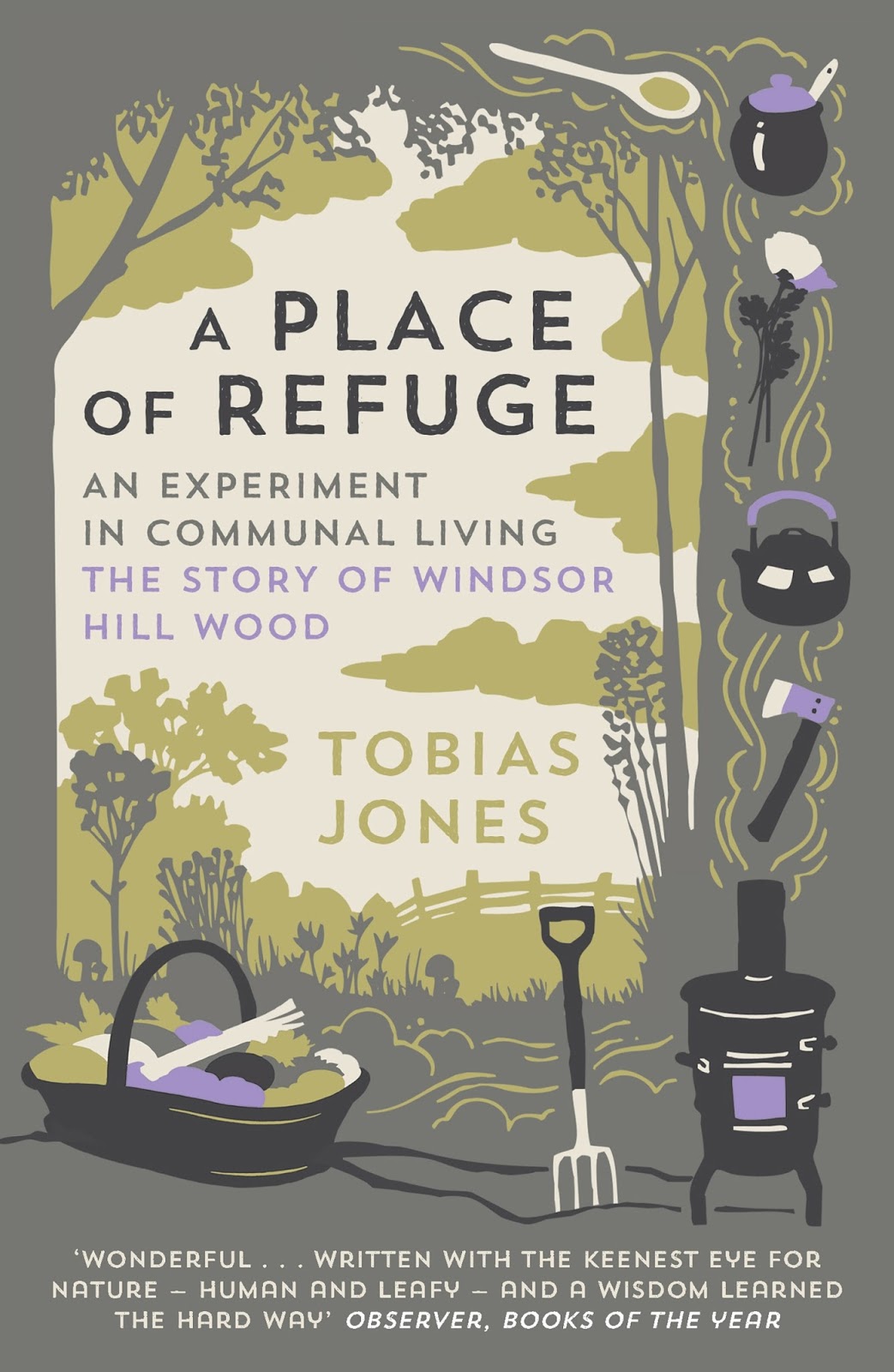
A Place of Refuge: An Experiment in Communal Living: The Story of Windsor Hill Wood, by Tobias Jones

Staff review by Chris Saliba

Tobias Jones' page-turning memoir about his experiment in communal living is full of insights, empathy and understanding.

When British author and journalist Tobias Jones bought a gorgeous woodland property in Somerset, a county in South West England, he knew he'd made the perfect choice. What better place to raise his young family of three children with his Italian wife, Francesca. They would keep animals, grow their own vegetables, wake to the early song of birds in the morning and skip through wild flowers all the day long. His children would grow up enjoying the quietude of nature, spared much of the hurly-burly of modern day life, with its distractions and trivialities.

But Tobias Jones felt he had a calling. He wanted to turn him home into a commune for society's damaged and outcasts. A woodland refuge would be just the place for recovering alcoholics, the sexually abused, ex-soldiers suffering post traumatic stress and a host of other illnesses. So the family opened their doors and started taking in around five or six people at a time. The average time these guests would stay was about three to six months, sometime up to a year. A Place of Refuge is the story of that experiment, covering a five year period.

The most refreshing aspect of Jones' memoir is his honesty about the difficulties and frustrations of living communally with people who are severely damaged. This is no idyllic story of people walking through the gates of heaven and then finding miraculous, instantaneous healing. There are simmering tensions, individuals with persecution complexes and plain ignorant behaviour. Jones describes one guest who would leave his medication laying about, frequently on the floor. This wouldn't have been so bad on its own, its just that Jones' son, Leo, was a toddler at the time, fond of crawling about and sticking things in his mouth. Mealtimes could frequently be stressful, as guests would have poor hygiene and no table manners, rudely chomping through as much food as they could without thinking of others.

Despite all the frustrations and difficulties, there were breakthroughs. Troubled guests would improve during their stay. Many found the routine and work in the woodlands took their minds off their troubles. People who felt uncared for their whole lives knew there were people trying to look after their best interests.

A Place of Refuge provides a fascinating and empathetic study of society's fringe dwellers. It really is the type of book that makes you step back and take a deep breath as you confront people with serious problems that require understanding a patience. It's also a book full of engaging natural history. Jones' lovely descriptions of Windsor Hill Wood - the trees, the birds, the fresh air - makes you long to visit.

Wonderfully written and full of genuine insights into the human soul, A Place of Refuge is a book with much to teach.

A Place of Refuge: An Experiment in Communal Living: The Story of Windsor Hill Wood, by Tobias Jones. Published by Quercus. ISBN: 9781848662513  RRP: $19.99

To sign up for our monthly newsletter, featuring new releases, book reviews and favourite articles from around the web, click here.

Wednesday, May 20, 2015

Happy City: Transforming Our Lives Through Urban Design, by Charles Montgomery

Staff Review by Chris Saliba

Happy City convincingly shows how we can make our cities better for our health, well-being and happiness.

Charles Montgomery is a Canadian writer and urbanist. His 2013 book, Happy City: Transforming Our Lives Through Urban Design, examines the poor design of our cities and how they fail to take into account our health, happiness and well being. In many ways, our modern urban environments, built around private cars, are making us sick and isolated. They discourage walking, add to our stress levels and make us avoid contact with each other.

The book’s title, Happy City, may make it sound like a rather fey, whimsical look at city life. The most impressive thing about Montgomery’s writing, however, is its rigour, clear headed organisation and depth of research. He thoroughly deconstructs the way cities are built and convincingly shows how they can be redesigned in a way that serves people, rather than just  business interests. Montgomery also uses a lot of the latest scientific research in behavioural economics to show how the simple choices we make can lead to happier outcomes. We may think we’re happiest driving speedily around from one place to another, but slow walks through pleasant urban landscapes (we like to walk, research shows, when the environment is pleasant) may make us even happier. And definitely healthier.

This is an intelligent and deeply considered book that will convince you that the happy city is possible, if only we will change our thinking about it.

Happy City: Transforming Our Lives Through Urban Design, by Charles Montgomery. Published by Penguin. ISBN: 9780141047546  RRP: $22.99

To sign up for our monthly newsletter, featuring new releases, book reviews and favourite articles from around the web, click here. 

Wednesday, November 26, 2014

This Changes Everything: Capitalism vs. the Climate, by Naomi Klein

Staff Review by Chris Saliba


In this impressively researched and deeply considered book, Naomi Klein argues that dramatically cutting our emissions, as the science declares is necessary, will turn our economy and politics upside down, and maybe for the better.

Naomi Klein hardly needs any introduction. Famous for such books as No Logo and The Shock Doctrine, the Canadian writer and activist has written extensively on globalisation and its power dynamics. It seemed only a matter of time before Klein would turn her attention to climate change and how it affects the economy.

What may surprise many is that Klein for a long time considered herself to be a climate denier. Not the hard core type, but a more passive one. This is the sort of denial we are all guilty of. We read the facts about climate change, then turn away, lulled by the fact that our immediate environment doesn’t appear to be under any threat. Everything looks fairly rosy, and so we turn our attention away.

This Changes Everything approaches climate change from a strongly economic point of view. Klein’s argument is that the science of climate change, which demands that we entirely wind down our fossil fuel industries, will necessarily transform the global economy. And global politics along with it. The excavative industries stand to lose all of their power, their assets left stranded in the ground. Klein makes a very insightful point on this: she says the reason that right wing deniers, in business and politics, are so virulent in their attacks on the science is because they are perfectly placed to know exactly what it will cost. They have a firmer grasp on the economic detail and a clearer picture of what a decarbonised economy would look like.

The implications of this are quite staggering, as the fossil fuel industries are enormously  powerful, at both the economic and political level. They have also influenced society into believing globalisation is the only way to run an economy, a paradigm we as citizens find it hard to think our way out of. We all seem to think that big business knows best. However, if the economy decarbonises, then that mindset will change as well. We won’t be sitting at the knees of free market ideologues, awaiting their wisdom.

Klein’s book is divided into three parts. The first part discusses how those on the extreme right wing have denied the science, and been rather successful at it. The second part looks at the businessmen and scientists who think they may have the solutions to the climate crisis. Klein does a great job debunking Richard Branson’s much touted efforts to find a fuel that doesn’t pollute, all the while expanding his global air travel business. There’s also a completely creepy section on geoengineering our way out of a warming planet. This involves spraying reflective particles out into the atmosphere, thereby ‘cooling’ the sun. No one really knows what kind of unintended results this might prompt. As one critic noted, geoengineering is untested and untestable. We could make things only worse.

Part three of This Changes Everything is, thankfully, more upbeat. Klein argues that because the excavative industries are moving more and more into people’s backyards, with such controversial practices as “fracking”, that resistance is growing. A grassroots movement is organising at the local level opposing the plans of the big fossil fuel companies. Indigenous groups are everywhere rising up and challenging these powerful interests from encroaching on their land. While these movements, which Klein extensively documents, are quite impressive, it’s difficult to see them being enough to force through the cuts in emissions that are needed. Klein believes it is only grassroots movements that will make changes happen, but it’s hard to believe that government won’t have the biggest role to play.

This is an exceptional book. The research and depth of understanding of the problems involved is stunning. Klein thinks out all the issues to their fullest extent. Along the way she simplifies much that has always been presented as too complicated. The short of it is this: if we decarbonise our economy, as the science says we must, then our economic model will be turned upside down, and much of our politics along with it. Maybe for the better; we could end up with a more equitable society as the rich are asked to give up their luxuries. 

This Changes Everything: Capitalism vs. the Climate, by Naomi Klein. Published by Allen Lane. ISBN: 9781846145063  RRP: $29.99

To sign up for our monthly newsletter, featuring new releases, book reviews and favourite articles from around the web, click here.   

Monday, August 25, 2014

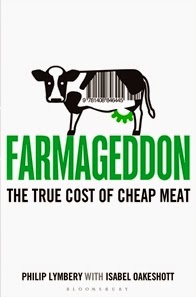
Farmageddon: The True Cost of Cheap Meat, by Philip Lymbery with Isabel Oakeshott


Staff Review by Chris Saliba

Philip Lymbery, CEO of Compassion in World Farming, with co-author Isabel Oakeshott, show in this devastating book how the negative impacts of industrial farming harm not only animal welfare, but also human health.

Today our supermarket shelves positively groan with food. So extremely well fed are we that our biggest problem is that we eat too much. In the globalised economy, food is shipped from all corners of the world and delivered to supermarket shelves at the lowest possible cost. It’s a system so wondrous as to be almost magic.

Farmageddon shows an inverse world, where nature is pushed to its limits, the environment is treated as nothing more than a toxic dumping ground and animals don’t graze peacefully (as you see on food packages) but live in extreme concentration camp conditions. Humans don’t have so good a time of it either. Indian farmers suicide in huge numbers due to market pressures, meat and milk from cloned animals makes its way into the food chain and factory farming creates diseases resistant to antibiotics. Even pollinating bees, so integral to food production, are under threat.

Author Philip Lymbery, CEO of Compassion in World Farming, has a long history in animal activism. His writing is a vibrant mix of dedicated research and first-hand reporting. As a nimble and media savvy activist, he brings an energetic and optimistic tone to his subject. In Farmageddon, he roams the world to visit intensive farming businesses and learns what havoc they are wreaking on animal welfare and the environment. Lymbery and co-author Isabel Oakeshott make the pressing case not only for animal welfare, but human welfare. Mega farms devastate local communities with their environmental impact and are also bad for human health. Meat produced from intensive farming contributes to disasters like avian flu and nutritionally isn’t as good as organic meat. The great lesson of this book is that if you care for human health, then you’ll also care for animal welfare. The two go hand in hand.

Farmageddon
is one of the best books written in recent years on food, animal welfare and the environment. It rivals Michael Pollan’s modern classic The Omnivore's Dilemma for its research, journalism, passionate advocacy and clarity.

Farmageddon: The True Cost of Cheap Meat, by Philip Lymbery with Isabel Oakeshott. Published by Bloomsbury. ISBN: 9781408846445  RRP: $29.99

To sign up for our monthly newsletter, featuring new releases, book reviews and favourite articles from around the web, click here

Saturday, August 23, 2014

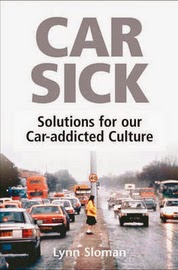
Car Sick: Solutions for our Car-Addicted Culture, by Lynn Sloman

Staff Review by Chris Saliba

In this inspiring and impressively researched book, Lynn Sloman shows how traffic congestion could be dramatically cut. She convincingly demonstrates that cars are expensive, wasteful and not necessarily faster than other transport options.

Author and sustainable transport consultant Lynn Sloman brings her passion for walking, cycling and public transport to this smart and practical book, Car Sick. She believes that car traffic could be dramatically cut, anywhere up to 80 percent, by a mixture of improved public transport, information campaigns, cycleways and the creation of more attractive public places. In one study she cites, suburban shopping strips actually attracted increased trade once car parking was banned, despite retailers fearing they would lose significant business.

The popular solution today to fixing up road congestion is the building of more roads. Sloman cites a comprehensive 1970s study of the Westway elevated motorway in West London. It found that once the Westway was built, traffic flows increased 79% between 1970-1975, until it was fully clogged with traffic and couldn't grow any further. She says that authorities were mystified as to where all the extra cars were coming from. It seemed the only explanation was that people were now taking extra trips that they usually wouldn't, or finding jobs further away from home. The basic lesson of building extra roads is if you build it, they will come. The building of a new roads is simply an invitation for more people to avoid walking, public transport and cycling, opting to drive instead.

The most amazing findings of Car Sick are the amount of car trips that could be cut. After reviewing the research, Sloman grouped car trips into three different types. She found 40 percent of trips could be easily done by other means (foot, bike or public transport), but that car drivers lacked knowledge of alternatives. Another 40 percent could be cut by improving public transport and other options. The last twenty percent of trips she found to be immovable. These are the sort of trips that are unavoidable, for example taking a sick family member to the hospital or when you need to move something heavy.

I know that the car driving reader is probably groaning by this stage: if I catch public transport, it will take an hour longer. Again, the research provides some interesting counterpoints. It appears that when considering public transport, commuters are more pessimistic about how long a journey will take. Whereas when contemplating car use, drivers are overly optimistic. They think they will get to a destination quicker, but they don't. The reason for this optimism, it is speculated, is the nature of glossy car advertising: freewheeling car trips along gorgeous country roads and no traffic congestion in sight.

Sloman discusses research by Werner Brog, who conducted surveys in the UK city of Darlington.

“He found that on average, people overestimated the public transport journey time by 70 per cent, so that, for example, they assume a 20-minute trip would actually take 34 minutes. They underestimated the journey time by car by 26 percent, assuming a 20-minute trip would actually take 15 minutes. In another survey, this time in Germany, he found the same car-bias in people's perceptions of the cost of travel. People over estimated the cost of public transport travel by 21 percent, and underestimated the the true cost of car travel by 58 percent.”

Sloman has done extensive work with local councils and government, and her personal insights into transport planning are revealing. She says that transport ministers are invariably male and are attracted to big projects that make them look important (cycle paths don't fit the bill for this). She says how hard it is to get ministers to look at the research and think of alternatives to cars. Male urban planners see cars and roads as the only solution to transport problems.

For Australians, who are stuck in so much gridlock, Lynn Sloman's useful book points the way to reducing traffic, creating safer places for pedestrians and healthier lives through cycling and walking. It sounds overly optimistic to say we could cut traffic by some 80 percent. Even though I am biased in favour of walking and cycling, I believe Lynn Sloman has demonstrated proven ways to get people out of their cars. This is a book our transport planners should study.

Car Sick: Solutions for Our Car-Addicted Culture, by Lyn Sloman. Published by Green Books. ISBN: 9781903998762  $26.95

To sign up for our monthly newsletter, featuring new releases, book reviews and favourite articles from around the web, click here.

Tuesday, August 5, 2014

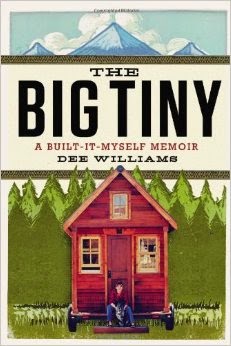
The Big Tiny: A Built-It-Myself Memoir, by Dee Williams

Staff Review by Chris Saliba

When Dee Williams downsized her life into a tiny 84-square-foot house, she found her personal life grew immensely rich and rewarding.

Dee Williams was trying to lead a regular, normal life. She had a mortgage, a big house to upkeep and a full time job as a hazardous waste inspector. Then at the age of forty she was diagnosed with congestive heart failure. It caused her to rethink everything. She came to the conclusion that she didn’t want to spend her life working hard to pay off a big house in which she didn’t spend that much time anyway. While waiting in a doctor’s surgery she read an article about tiny house builder and advocate Jay Shafer. A light bulb went off. Dee Williams decided to completely downsize her life and concentrate on the important things: friends, community and the immediate world around her. She picked up the phone and called Jay Shafer.

An amateur carpenter at heart, Williams built her 84-square-foot house, which is set on a trailer, out of salvaged materials. It cost her approximately $10,000. It has a one burner stove, a composting toilet (no shower, she bought a gym membership instead), a loft for her bed and is run mostly on solar power. She pays $8 per month for her utilities. She’s now been living in the tiny house for 10 years.

This is a funny, intimate and inspiring memoir. It’s like Thoreau’s Walden or Laura Ingalls Wilder’s Little House on the Prairie, but for modern day, green minded urbanites. Dee Williams’ writing has a poetic and thoughtful tone. It’s introspective and meditative, but also reaches out to show other possible ways of living. Who knew that in this era of rampant consumerism that it would be possible to envy someone who dramatically downsized and ditched so many of her own possessions, until there was only a tiny house left with not a lot in it.

The Big Tiny: A Built-It-Myself Memoir, by Dee Williams. Published by Penguin. ISBN: 9780399166174 $26.99

To sign up for our monthly newsletter, featuring new releases, book reviews and favourite articles from around the web, click here

Thursday, June 26, 2014

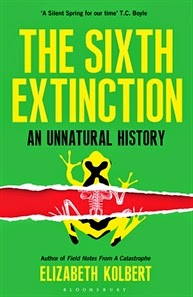
The Sixth Extinction, by Elizabeth Kolbert

Staff Review by Chris Saliba

Science writer Elizabeth Kolbert examines the history of mass extinctions and shows how we are in the midst of a sixth extinction, caused by human progress. Kolbert's skill is to distil complex science into an easily accessible form. Much of the book, however, makes for scary reading.

Throughout the world’s 4.5 billion year history, there have been five mass extinction events. In this highly readable history, science writer for The New Yorker magazine, Elizabeth Kolbert, examines how we are now heading into a sixth mass extinction. This time, however, the extinction is happening before our eyes and it is being caused by human expansion. We are moving into animal environments, using their resources and leaving behind toxic pollution. As we continue to expand and exploit resources, biodiversity shrinks and atrophies. 

What makes this book so appealing is Kolbert’s engaging style and skill at communicating the science on extinction in a happily digestible form. Her book mixes on the ground reportage, history and science, creating a compelling picture of an environment under very dangerous pressure. The concentration on individual species and their reduction to zero, often at the hands of greedy humans, will make you wring your hands in despair.

The Sixth Extinction is high quality popular science that excels at communicating some of the toughest environmental issues we face today.

The Sixth Extinction, by Elizabeth Kolbert. Published by Bloomsbury. ISBN:  9781408851227  RRP:$29.99

To sign up for our monthly newsletter, featuring new releases, book reviews and favourite articles from around the web, click here.   

Thursday, May 29, 2014

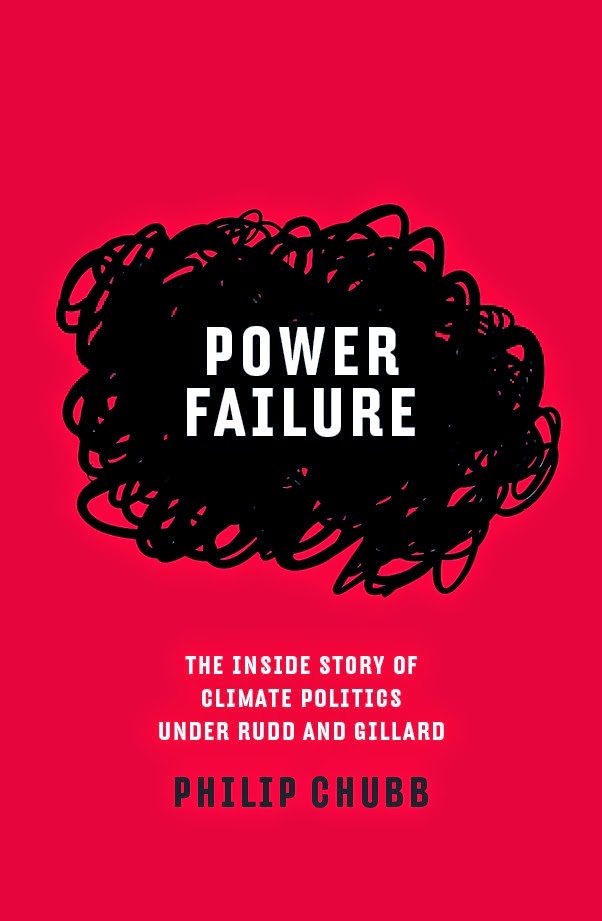
Power Failure: The inside story of climate politics under Rudd and Gillard

Staff Review by Chris Saliba

Scrupulously fair, brilliantly researched, based on over a hundred interviews with key players, Philip Chubb's Power Failure is a cracking read. It highlights the many failures and few successes of Australian politics. Essential reading for anyone wanting know what went wrong with climate politics in Australia.

If you're looking for a highly readable book that examines in careful detail Australia's torturous political process of putting a price on carbon, then look no further. This is the business. The author, Philip Chubb, is currently the Head of Journalism at Monash University. He's worked at The Age and the ABC's 7.30 Report, and was also the creator of the documentary series, Labor in Power.

One of the most impressive things about Power Failure is its detail, research and balanced approach. Chubb conducted over a hundred interviews with key players. Most interestingly, he interviewed Kevin Rudd once, and Julia Gillard twice. Rudd was interviewed on the condition that everything he said was taken on 'background', that is, he wouldn't be quoted. Chubb says in the introduction that he has tried to infuse Rudd's views into the text.

The book sets itself the task of finding out why climate politics under Rudd, then Gillard, was such a nightmare. The story starts with the Rudd government. Rudd centralised power in his office, didn't communicate, was poor at decision making, buried himself under so much detail that paralysis was an inevitable result and basically had a temperament not suited to working in a collegiate environment. Rudd kept much of his climate policy hidden from view, meaning that even many frontbenchers were in the dark when it came to the detail of the Carbon Pollution Reduction Scheme (CPRS). Julia Gillard, one of the Rudd government's most capable ministers, had some catching up to do herself once she formed government.

Rudd made many big mistakes. When Malcolm Turnbull became Liberal leader, Rudd failed to get a bi-partisan agreement on climate policy and concentrated on simply trying to bring Turnbull's leadership down. He gravely underestimated Tony Abbott as opposition leader. When Rudd couldn't get his CPRS through both houses of Parliament, he refused to talk to the Greens to try and find a compromise. Then, when it all looked too hard, he simply walked away.

In Chubb's analysis, Julia Gillard comes through as the better leader. She was inclusive, a good communicator with colleagues, could build consensus, would compromise and treated people with respect. She never got flustered and worked extremely well under pressure. But most of all, she was courageous and would stand and fight, whereas Rudd retreated. It should also be noted that Chubb refutes the rumours that Gillard counselled Rudd to drop the CPRS when he couldn't get it through both houses of parliament. This is supported by extensive interviews he did with key players. Gillard maintains she was willing to go to a double dissolution election and fight for the CPRS.

Gillard had many flaws and made some fatal mistakes, according to Chubb. She failed to communicate effectively to the electorate what the benefits of carbon pricing would be, how it would work, and what the financial impacts would be on the ordinary voter. She put too much faith in the idea that the 'lived experience' of the tax would show people that the opposition's scare campaign had been just that: all sound and fury, signifying nothing. She also made a grave error in conceding that carbon pricing was a tax. Putting a price on carbon had been on the table since the Howard government's Shergold Report. Tony Abbott had supported it when in the Howard government. Anyone thinking about the subject knew pricing carbon, trading carbon permits or whatever system you put in place would involve imposts on business. Gillard should have said it was, in essence, the same deal as an emissions trading system.

The Greens come in for a good deal of criticism too. They voted down the CPRS, but what they got in its stead you could argue was not that much better than what they got under Gillard. A lot of political pain had been gone through because the Greens wanted to hold out for a better deal. They seriously misjudged. (Then again, they had tried repeatedly to organise talks with Kevin Rudd.)

Power Failure is a cracking read, brilliantly researched, comprehensive and fair. You will pull your hair out in frustration that so much went wrong, that so many leaders went down because of carbon pricing. It's a brilliant example of how difficult big policy is to get passed successfully into law.

Power Failure: The inside story of climate politics under Rudd and Gillard. Published by Black Inc. ISBN:  9781863956604  RRP: $29.99

To sign up for our monthly newsletter, featuring new releases, book reviews and favourite articles from around the web, click here.  

Wednesday, May 28, 2014

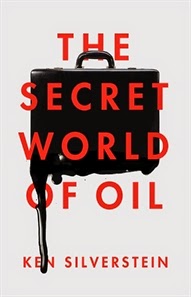
The Secret World of Oil, by Ken Silverstein


Staff Review by Chris Saliba

Investigative journalist Ken Silverstein uncovers the murky deals, collusion and money-grubbing that lies at the centre of the global oil industry.

It fuels the global economy, but do we really know much about how the oil business is run? How are the deals done, interests protected and most importantly, who are the characters making all the money? Ken Silverstein, a senior investigative reporter with First Look Media, travels to all corners of the globe to interview key figures and conduct research into the murkier side of the oil trade.

Silverstein concentrates on the fixers, lobbyists, PR agents and other players who work in an area where transactions are borderline legal and often morally questionable. Energy resources are often found in Third World countries, which means that dictators, crooks and gangsters are the powerful deal makers. Western democracies, ever eager to get access to oil and gas, are ready to hold their noses while schmoozing these unsavoury characters.

Tony Blair (“the human cash register”) is a case in point and gets a whole chapter devoted to his pecuniary interests. Since leaving parliament he has made a motza in consulting and speaking fees, with clients including several Caspian Sea oil companies.

Arguably the best chapter is the last one on Louisiana, a petroleum rich American state. Silverstein speaks to lobbyists, politicians, PR agents, lawyers and businessmen, drawing a depressing picture of environmental vandalism and an oil industry powerful enough to virtually set the legislative agenda. Silverstein shows that wherever there is oil in abundance, corruption, collusion and deal making are sure to follow.

The Secret World of Oil brims with top class investigative journalism. Ken Silverstein’s work shows careful research and a willingness to travel all lengths to get an interview and a story. His writing helps to pull back the veil and show the reader what happens behind the scenes in the all-powerful oil industry. It’s a scary story of greed, vandalism and corruption that’s not to be missed.

The Secret World of Oil
, by Ken Silverstein. Published by Verso Trade. ISBN: 9781781681374  RRP: $32.99

To sign up for our monthly newsletter, featuring new releases, book reviews and favourite articles from around the web, click here.