Showing posts with label Science Fiction. Show all posts

Friday, January 19, 2024

Termush, by Sven Holm


A luxury hotel becomes a place of menace and fear.

A group of rich guests have booked places at the Termush hotel, a comfortable resort. The only difference is that they are not hoping to enjoy a relaxing holiday. They have reserved places in the hope of surviving a nuclear Armageddon. The story opens after the “disaster” has happened, with a brief description of what atmospheric changes a nuclear explosion can wreak. The hotel guests try to believe that life can return to some sort of normalcy – but everyone knows they are lying to themselves. The hotel's management endeavours to create a veneer of polite civilisation, but tough decisions are being made, primarily, whether survivors of the explosion that try to enter the hotel should be allowed in. Should there be a cap on how many survivors can be accommodated? Who gets to make these decisions? What are the ethical implications? Can there even be ethical questions in such an environment?

A mounting tension builds as it becomes obvious that there are forces outside the hotel that want to break in. No matter how much the management tries to pretend that everything is under control, it's clear that the hotel provides a flimsy bulwark against the reality of the outside world. The guests' safe haven is crumbling before their eyes.
Danish author Sven Holm published Termush in 1967, and it was translated into English in 1969 by Sylvia Clayton. It's a short, terse novel with clipped, pared back prose. Every character in the story remains unnamed, except for Maria, whose emotional outbursts are deemed the only rational response to the unfolding horror of the guests' situation. Termush brilliantly examines the psychology of survival at any cost, creating a novel of unremitting despair.

Termush, by Sven Holm. Published by Faber $22.99. 

JULY23

Saturday, January 8, 2022

Robot, by Adam Wisniewski-Snerg


A Polish science fiction classic at last available to English readers.


A robot, known as BER-66, sits on an assembly line. When he comes to his final position, the robot in front of him turns and gives a long speech. It starts, “We have given you life, so you can discover a fraction of the great secret.” BER-66 learns he has been created by a force called “the Mechanism”. He is a robot, but he is able to at least imagine free will. His mission is to collect information on the inhabitants of a subterranean world, called the shelter. A catastrophic event, explained much later in the book, has caused the earth’s population to seek refuge underground. But BER-66 discovers another world, a petrified city, further down. BER-66 learns that time and gravity are different in the petrified city. “One second in the city equalled three hours in the shelter.” All objects are also correspondingly heavy. As BER-66 tries to solve the mystery of the petrified city, and also whether he is indeed human or robot, he will be forced to consider such weighty questions as fate, destiny, time, gravity and free will.

Robot by Polish writer Adam Wisniewski-Snerg is considered a science fiction masterpiece. First published in 1973, this English translation by Tomasz Mirkowicz was prepared some thirty years ago, in collaboration with the author. For some reason, it’s only been published now.

Science Fiction buffs will enjoy this complex, surreal and philosophical novel, with its concentration on Einstein’s theory of relativity. It’s haunting imagery reminded this reviewer of the paintings of Salvador Dali and films of David Lynch. Wisniewski-Snerg’s intellectual powers and conceptual gifts put him somewhere in the realm of Stanislav Lem, but without that author’s sense of humour and great sense of irony.

An eerie and creepy story, deeply intellectual and sometimes hard to grasp, but unforgettable nonetheless.

Robot, by Adam Wisniewski-Snerg. Published by Penguin. $19.99

NOV 21

Friday, January 22, 2021

Trafalgar, by Angelica Gorodischer

Argentine writer Angélica Gorodischer’s 1979 book of stories Trafalgar offers a quirky new angle on the sci-fi genre.

Trafalgar Medrano is an intergalactic trader. He buys and sells whatever will make him a buck, travelling to exotic and bizarre planets in his “clunker”, a small spaceship that’s seen better days. In the bars and cafes of Rosario, Argentina, Trafalgar relates his adventures to various interlocutors. A favourite café is the Burgundy, where Trafalgar is served by the adept Marcos who has an uncanny skill in anticipating his every need. Chief among them is coffee: Trafalgar downs bitter black coffee by the gallon.

Trafalgar has seen it all in his day. There are planets run by matriarchal hybrid human/robots, societies where the dead keep living, causing all sorts of mischief and far away places that are populated by bizarre dancing troglodytes. Several of the stories feature time travel, with interesting twists. The book ends with the surprise introduction of Trafalgar’s daughter, Eritrea. A surprise, because Trafalgar is a known womaniser. He claims not to even know who Eritrea’s mother is.

As should be fairly clear from the above, Trafalgar is a series of freewheeling space stories linked together by their settings in bar rooms and cafes, and the roguish character of Trafalgar himself. There’s a lot of humour in Angélica Gorodischer’s writing. The dialogue is breezy and good natured, with many incredulous and playful interjections from friends, waiters and family giving the whole affair a realistic, earthy feel. Trafalgar as a character is somewhat 
reminiscent of Han Solo from the Star Wars series. He likes women to a fault, indulges in drink and cigarettes, drives a clapped out space ship and makes fast friends with all sorts from outer space.

The stories also have the irreverent quality of Kurt Vonnegut, describing topsy-turvy lands, while the Argentinian settings give a feeling of joi de vivre. Not classic sci-fi, but a trippy, hallucinatory side road that is worth the journey.  


Trafalgar, by Angelica Gorodischer. Penguin. $19.99

The Hair-Carpet Weavers, by Andreas Eschbach

An ancient peoples on a hidden planet make hair carpets, but no one seems to know why.

On a distant planet, on the outskirts of a galactic empire, a rudimentary civilisation makes intricate, hand woven carpets. The carpets are made out of human hair, the hair of the wives and daughters of the male carpet makers. It takes an entire lifetime to weave a single carpet, which is then given to the Emperor. This seemingly patriarchal society allows the husbands to have multiple wives – a head wife, and a sub wife. Daughters are welcome, but surplus sons are killed.

The distant planet is part of the Gheera province. It is thousands of years old and has been part mothballed, part forgotten by the Empire. The planets which form part of Gheera province no longer have contact with the central powers of the Empire and live in a lot of ignorance. When rumours start to spread that the Emperor has been overthrown, people are executed for uttering such heresy.

When the narrative jumps to an exploratory expedition set up by the new government, it becomes clear that the Emperor has indeed been executed by a group of rebels, who are now in charge. The exploratory spaceship is hovering over the mysterious planet and one of the crew members, Nillian, decides to descend. What he finds there shocks him. An endless stream of hair carpets are being sent to a planet that is hidden within a black hole. But no one knows why.

The Hair-Carpet Weavers is a 1995 science fiction novel by German writer Andreas Eschbach. It reads very much like a cross between Isaac Asimov’s Foundation and Stansilav Lem’s Solaris. That is, the novel has Asimov’s muscular plot structure and Lem’s brilliant sense of irony and eerie atmosphere. Together they make for an utterly compelling story. One of the main themes of the book is how our habits, customs and religious beliefs are formed by hopelessly outdated historical forces. We hold prejudices and are willing to fight wars due to millennia old events. Not only that, we haven’t got a chance of breaking out of these patterns of thinking, as we have no idea of their actual starting point. The hair carpet weavers in Eschbach’s novel have created a whole political and religious system around servicing an ancient Emperor’s ridiculous whim.

A mind-blowing space opera powered by a superbly imagined plot. 


The Hair-Carpet Weavers, by Andreas Eschbach. Penguin. $19.99

Tuesday, August 21, 2018

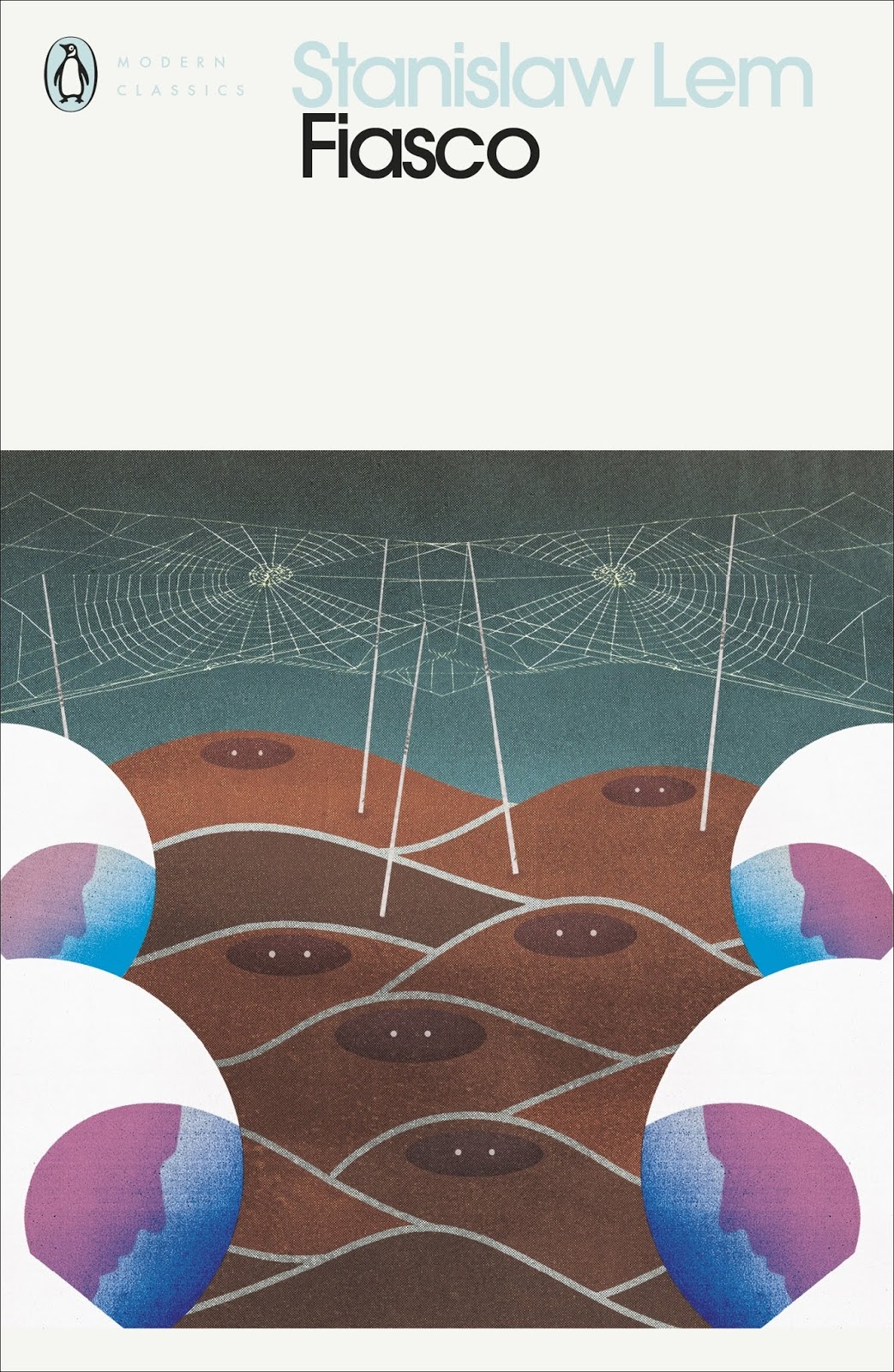
Fiasco, by Stanislaw Lem

Staff review by Chris Saliba

A challenging masterpiece from an indisputable genius.

Fiasco opens describing events that have taken place one hundred years before the main story. A young pilot named Parvis is sent to Saturn’s moon, Titan, to find another pilot, named Pirx, who was lost there. Parvis experiences a fatal accident during the search and before he dies, manages to activate a device that cryogenically freezes him. One hundred years later Parvis and Pirx’s bodies are exhumed. Scientists manage to bring one of the bodies back to life, using organs from the two, but don’t know whether it is Parvis or Pirx. When the reanimated body is brought back to life, it has no memory and goes under the new name of Mark Tempe.

Tempe is asked to take part in a new voyage, to the planet Quinta, which it is believed harbours an intelligent life form on a par with earth’s humans. The huge mothership  Eurydice is dispatched to a black hole near Beta Harpiae, where it sends off a smaller spaceship, the Hermes, which contains a full crew of scientists, astrophysists and even a Dominican priest.

Once the Hermes approaches Quinta, strange, unanticipated things are noticed. The planet is covered with an extremely high volume of radioactivity, a baffling blanket of white noise. The planet is also surrounded by a ring of ice, the result of all the surface water – the oceans - being somehow forced up into the atmosphere. How or why the Quintans have done this is a mystery.

The crew tries to communicate with Quinta, sending out messages over a sustained period, almost like a bombardment. There is no response. More messages requesting contact with the Quintans are sent, but an eerie silence remains. As a show of strength, the crew decides to create a massive cavity on their moon’s surface, but when the missiles are sent they are intercepted by Quinta’s defense system which sends the missiles off course, only to create catastrophic damage as huge chunks of the moon fall to the planet’s surface.

As a final attempt at contact, the crew decides to project a “cartoon” onto Quinta’s clouds. This works, and the Quintans agree to meet a human ambassador. Mark Tempe is sent to the planet’s surface, but when he arrives, and discovers the strange form the Quintans take, he is horrified by their banal, ugly, incomprehensible forms. The whole expedition has been a bizarre – and tragic - waste of time.

Stanislaw Lem’s 1986 novel is an intellectual, philosophical and aesthetic tour de force. It’s a fully realised alien world set in deep space. Like his other first contact novel, Solaris, it is enveloped in a haunting, eerie, claustrophobic atmosphere. The sense of existential dread is palpable. The crew, slowly going insane, are deluded that powerful computers and probability theory can predict life on an unknown planet. Yet all their superior systems continually fail them. The Quintans refuse to communicate. The crew tries to anticipate every possible reason for Quinta’s unfathomable behaviour, but their only response to the maddening silence is the use of violence. In the end this violence turns out to be a show of weakness and impotence.

The basic theme of Fiasco is the limit of human technology and science. Trying to overreach only leads to madness. It could be argued that Lem is saying the human race is a diabolically mad race (Lem was writing in the middle of the Cold War, when nuclear weapons threatened to blow the globe up.) This is a novel that is deeply pessimistic (even cynical) about the kind of hubris that results from too much faith in technology, mathematics and science.

Fiasco is a difficult novel to read and it demands some attention. There are some flaws: the opening chapter, set one hundred years in the past, is perhaps too long; the text can be dense at times, laden with scientific language; and the plot could perhaps move more swiftly. Having said that, Fiasco is a novel that can have few peers for its astonishing range and depth of ideas, written by a man who is an indisputable genius.  

Fiasco, by Stanislaw Lem. Published by Penguin Modern Classics. ISBN: 9780241334355 RRP: $22.99

To sign up for our monthly newsletter, featuring new releases, book reviews and favourite articles from around the web, click here.

Thursday, November 9, 2017

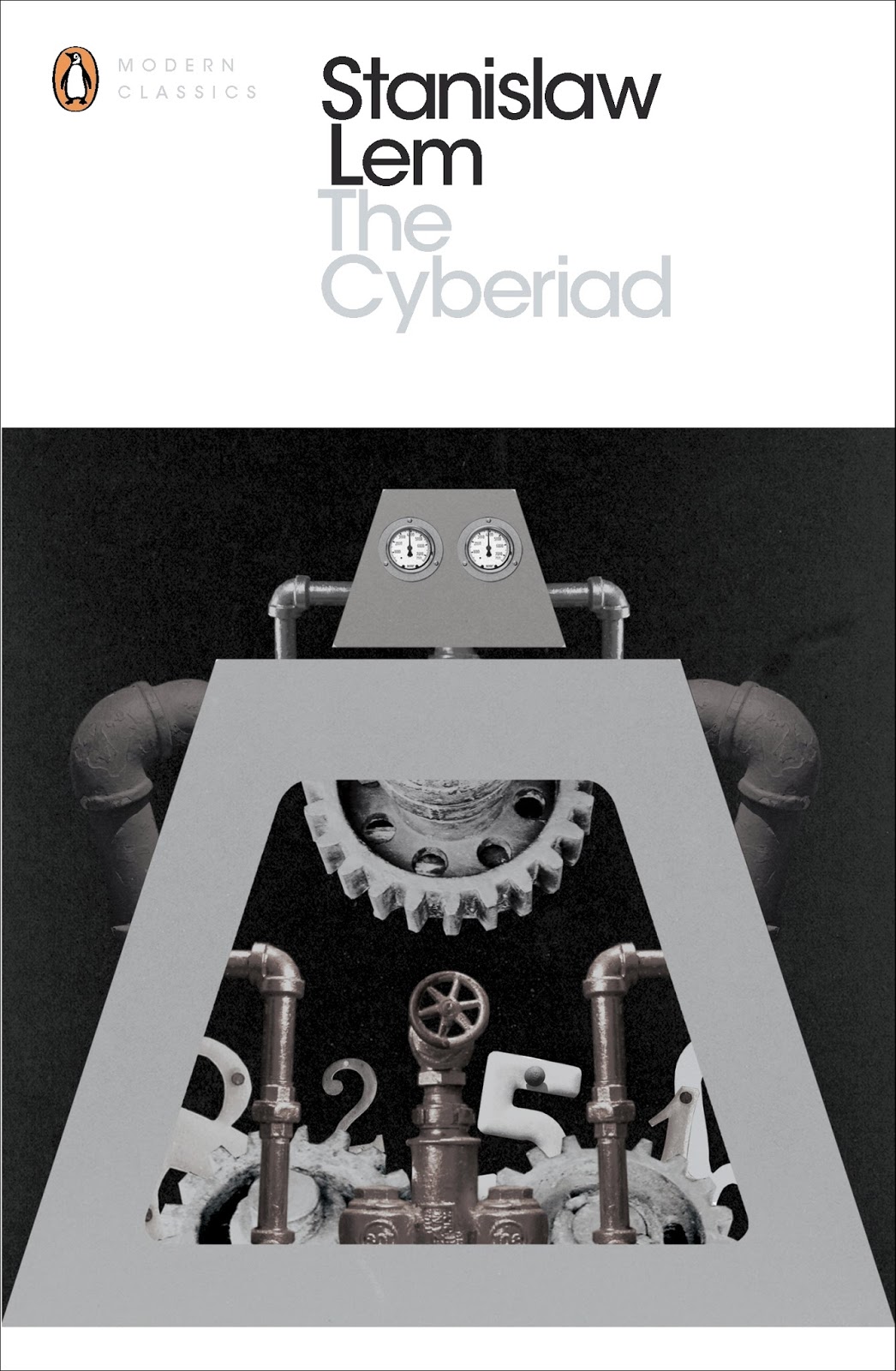
The Cyberiad, by Stanislaw Lem

Staff review by Chris Saliba

A cast of wise cracking robots, electronic bards and storytelling machines discuss philosophy, physics, notions of free will, existence and cyber ethics. Endlessly brilliant, funny and innovative.

Stanislaw Lem’s 1965 book, The Cyberiad, is a work of fiction, but what type is hard to classify. For the most part it is the adventures – both physical and philosophical – of two ‘constructors’, Trurl and Klapaucius. They are builders of robots, smart machines and other electronic devices. The book starts with three stories featuring Trurl and Klapaucius, the middle section is called “The Seven Sallies of Trul and Klapaucius” and a last section of three stories brings The Cyberiad to an end.

The stories all consist of mad plots involving wise cracking robots, electronic bards, storytelling machines, lovesick princes, fussy bureaucrats and tyrant kings (one is named King Kroul, also known as “His Boundless Kroulty”.)  What elevates Lem’s fiction above all the rest is its sheer unbounded and uninhibited inventiveness. His prose, with its endless references to scientific phenomena, dances on the pin of a needle. It doesn’t matter that you don’t know the technical details of the language. In fact, perhaps Lem doesn't know either. He’s inordinately fond of creating so many nonsense words and expressions, his own buoyant vocabulary. Reading Lem you are taken for an exuberant intellectual, speculative and imaginative ride. For example, a computer tries to explain his history:

“A trillion years ago we were a civilization like any other. We believed in the transmittance of souls, the Virgin Matrix, the infallibility of Pi squared, looked upon prayer as regenerative feedback to the Great Programmer, and so on and so forth.”

Or try this wise cracking robot:

“Matrix-schmatrix. Look pal, I’m not just any beast. I’m algorithmic, heuristic and sadistic, fully automatic and autocratic, that means undemocratic, and I’ve got loads of loops and plenty of feedback so none of that back talk or I’ll clap you in irons, that means in the clink with the king, in the brig with the green gig, get me?”

This kind of talk goes on for 300 pages. Lem has his robots and humans constantly bounce ideas off each other, discussing philosophy, physics, notions of free will, existence and cyber ethics. Some of the longer passages read like a sci-fi Socratic dialogue. The Cyberiad is perhaps closest to Gulliver’s Travels in the often perilous journeys Trurl and Klapaucius take to other planets, where they are forced to evade the bad tempers of tyrants and must suffer the endless dead-ends of state bureaucracy. The stories all add up to a kind of existential comedy, an absurdist literature, an intergalactic theatre of ideas by a genuine genius.

Utterly brilliant!

The Cyberiad, by Stanislaw Lem. Published by Penguin. ISBN: 9780141394596 RRP: $24.99

To sign up for our monthly newsletter, featuring new releases, book reviews and favourite articles from around the web, click here.

Sunday, July 30, 2017

North Melbourne Books August Newsletter - featuring Toby Walsh

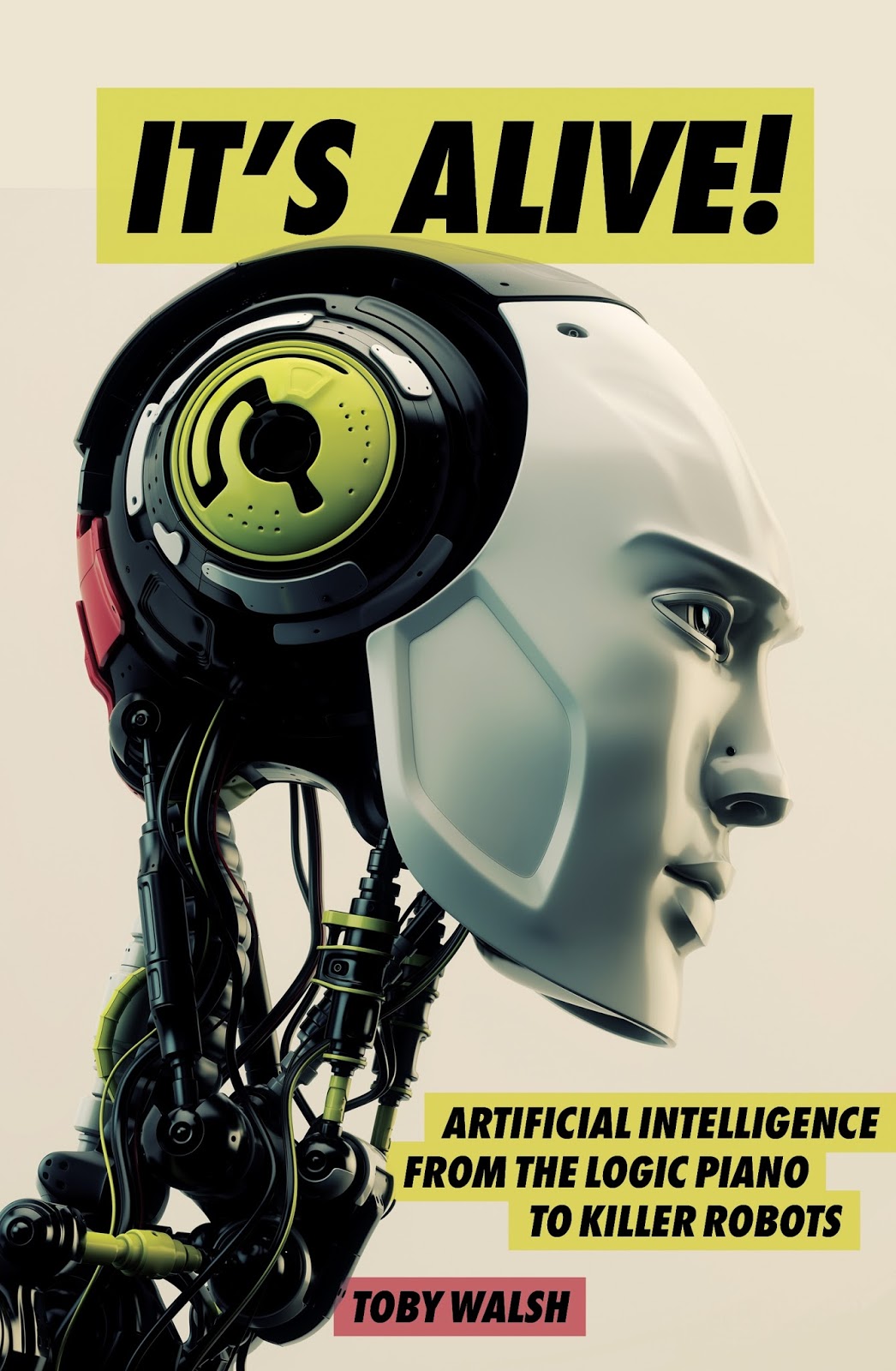
In the August edition of the North Melbourne Books newsletter we talk to Toby Walsh, professor of artificial intelligence at the University of New South Wales, about his fascinating (and sometimes scary) new book It's Alive!: Artificial Intelligence from the Logic Piano to Killer Robots.

The book looks at the history of AI and what its possible future might be, while also discussing the many disruptions and ethical questions that automation will bring to society.

Brilliantly researched and timely, It's Alive! is essential reading for anyone who wants to get up to speed on this subject.

To view the latest edition of the North Melbourne Books newsletter, click here. To sign up for our monthly newsletter, click here.

North Melbourne Books talks to Toby Walsh


NMB: Your book looks at the past, present and future of artificial intelligence. It describes how we got here, how AI (often unconsciously) affects our lives today and what a future dominated by AI might look like. Why did you want to write this book?

Toby Walsh: There's a real appetite to understand Artificial Intelligence (AI) and where it is taking us. We're making remarkable progress. I get calls from journalists almost every day. And as a scientist, funded by public money, I feel a real responsibility to help inform this debate. Especially so, when many people me included expect society to be in for a period of very rapid and dramatic change. However, talking to journalists is never entirely satisfactory. So I wanted to have a longer conversation, where I could go into more depth and explain the different sides to the issues. And in writing the book, I came to understand even more how critical it is that we have this debate now.

NMB: There are a lot of ethical questions that It's Alive! addresses. For example, how will driverless cars make life-and-death decisions and the dangers posed by the automation of war. Have you long had an interest in the ethics of AI?

TW: I've always been interested in big questions. This is what got me into AI in the first place.
There are a number of deep, fundamental questions that science asks. How did the universe
come into existence? Can we unify the laws that govern the very small like quantum mechanics
and those that govern the very large like gravitation? Are we alone in this universe? What is 
the nature of intelligence? Is it something we can simply create in silicon? 

I expect in time we will build machines that are more intelligent than us. You'll have to read the 
book to see how long this might take. This will hopefully be a humbling and important moment for the human race. But we can already see that it will have immense impacts on many aspects of our lives:  where we get our news, who we elect, how we educate our young, and how we look after our elderly.

The invention of machines that are more intelligent than humans will be one of the most far reaching inventions we ever make. Indeed, it could even be the last one that we make. 

NMB: While your book concentrates a lot on the advances that AI has made and how it has improved our lives, you devote a bit of time to discussing the negative aspects of new technologies. As technology transforms society there will be winners and losers, a further concentration of wealth, unemployment and general disruption. Are you optimistic about the future?

TW: I am mostly optimistic. As with any technology, there will be winners and losers so we need to make sure that we look after the losers. We will need to worry about issues like increasing inequality, technological unemployment, and the impact of autonomous weapons on warfare. Equally, technology is likely a big part of a successful future. The world faces some unprecedented challenges, in areas like climate change, and the ongoing and likely never-ending global financial crisis. Our only hope to defeat these problems is to embrace technology, especially technologies like Artificial Intelligence. We live better lives than our grandparents in large part due to the benefits of computing. If our grandchildren are going to live as good if not better lives than us, we need to take advantage AI whilst avoiding the pitfalls. The ultimate message of my book is that Artificial Intelligence can lead us down many different paths, some good and some bad, but society must choose which path to take, and act on that choice. There are many decisions we can hand over to the machines. But I argue that only some decisions should be – even when the machines can make them better than we can. As a society, we need to start making some choices now as to what we entrust to the machines. 


NMB: Do you think politicians are up to speed about how AI will truly transform society and are you confident they will be able to develop the right policy responses?

TW: No. Our politicians are neither up to speed, nor is our political system well suited to deal with such large scale disruption. There is one obvious precedent here, the industrial revolution. We made some major changes to the way that we ran society to deal with the changes brought about by the industrial revolution, as jobs on the farm were destroyed and new jobs created in factories and offices. We introduced universal education so the population had the skills necessary for these new jobs, the welfare state so those made unemployed didn't end up in the workhouse, unions to protect workers rights and help them share the benefits of industrialization, even bank holidays are on of the beneficial changes that came out of the industrial revolution. All of these changes made sure that Karl Marx's predictions were wrong and most of us shared the increasing prosperity that the machines brought. Society may need to go through equally profound changes this time. There is, however, one important and worrying difference. Last time, we still had a big edge over the machines. They replaced much of our manual labour. But we still had an edge in cognitive tasks. It is less clear that we'll have any such edge after the AI revolution. My book spends a lot of time considering what other edges we might have over the machines. and how we might deal with these changes so that the machines can take the sweat, both physical and intellectual, and all of us can enjoy the benefits.

NMB: What books are you enjoying reading at the moment?

​TW: I'm enjoying Homo Deus by Yuval Noah Harari, even if I didn't 100% agree with some of his ideas. In my view, he over-estimates the increasing importance we will all place on social contact, and how our markets will adjust to appreciate more the products of the human hand. What machines make will simply be valued less than what we make. We will appreciate everything more that speaks to the human condition.

It's Alive!: Artificial Intelligence from the Logic Piano to Killer Robots, by Toby Walsh. Published by La Trobe University Press. ISBN: 9781863959438  RRP: $34.99

Saturday, February 11, 2017

Solaris, by Stanislaw Lem

Staff review by Chris Saliba

Stanislaw Lem's Solaris has the well earned reputation of a science fiction classic.

Dr Kris Kelvin is a psychologist sent to a space station hovering above the planet Solaris. The space station is involved in research work, trying to assess life forms on the planet. Two other scientists, Snow and Sartorius, are working on the station when Kelvin arrives. The novel opens dramatically as Kelvin is told by Snow that another scientist on board, Gibarian, has committed suicide. Snow is clearly shaken by what has happened and refuses (or is unable, due to his trauma) to say what happened. Sartorius has withdrawn and is virtually living as a recluse on the space station.

The reason for the fraught psychological state of the space station is the strange apparition of people from the scientists' past. Kelvin soon understands what is going on when is confronted by Rheya, an ex-lover from his past who committed suicide when he left her. She appears real and Kelvin, full of remorse for how their relationship ended, falls in love again with this copy of Rheya that has appeared.

The scientists start to piece together what they think may have happened. The long history of the study of Solaris has shown that the ocean that mostly covers the planet, which is made of a plasmatic kind of jelly, is actually a living being. It has been reading the minds of the scientists and then creating people from their past and placing them on the space station. It's almost a strategy of psychological warfare, but the scientists can't be sure. Their repeated attempts at communication with the ocean have been futile.

Solaris is a perfectly written and imagined short novel, each page maintaining an exquisite suspense. The novel has a genuinely claustrophobic atmosphere that eerily clings. The space station and planet Solaris are so brilliantly drawn that the whole story feel very real. This aspect mixed with the fraught mental states of the scientists (they are all one step away from going mad) makes Solaris utterly compelling. It's the sort of story that is hard to forget once finished.  

Solaris, by Stanislaw Lem. Published by Faber Classics. ISBN:  9780571311576 RRP: $19.99

To sign up for our monthly newsletter, featuring new releases, book reviews and favourite articles from around the web, click here.

Wednesday, February 8, 2017

Foundation, by Isaac Asimov

Staff review by Chris Saliba

Isaac Asimov's Foundation, the first novel in a series of seven, is a feat of great imagination and intellectual power.

Foundation is the first in a series of novels by science fiction writer Isaac Asimov. Although described as a novel, the book is in actual fact comprised of five short stories, written between 1942 and 1951. The first story that opens Foundation, “The Psychohistorians”, was actually written last, while the others follow their publishing sequence. Asimov would go on to write another six novels in the series, including two prequels.

Hari Seldon is a mathematician working on planet Trantor, the capital of the 12,000-year-old Galactic Empire. Through the science of psychohistory, a statistical method that models the behavior of the masses, Hari is able to confidently predict the end of the Galactic Empire. It is destined to decay from within. When Hari Seldon takes his findings to an aristocratic council, he incurs their wrath. A committee tries him, but decides against his execution as this would make him a martyr. Instead a compromise is struck. Hari Seldon is allowed to start up a community of like-minded scientists and psychologists on the planet Terminus, at the very outer reaches of the Galactic Empire.

That is the first story that opens Foundation. The next four stories chart the history of this founding community on Terminus, concentrating on the power plays of the four powerful kingdoms that surround the planet. In the background of all this action looms the shadow of the great Galactic Empire. This galactic history (it's difficult to really describe Foundation as having a novelistic-like plot) covers a period of about 155 years.

Reading Foundation it's hard to shake the image of George Lucas's Star Wars series. The scope, design, philosophical breadth and political structure are so similar. Asimov himself based Foundation on Gibbon's Decline and Fall of the Roman Empire. Despite Foundation's short length (200 pages), the book has great sweep and majesty. It's a work of fiction that deals with ideas and theories about human behaviour, politics, science, religion, psychology and economics. It's serious stuff, written in an appealingly neat, clipped prose. The characters, however, are not particularly three dimensional: they are more composites of a particular scientific or political view, rather than individuals grappling with personal dramas. There's no Shakespearean inwardness in Asimov's characters. The great planets, like Terminus and Trantor, are more the stars of the show.

Nonetheless it all works marvellously well together to create an absorbing and immensely thought provoking galactic saga. For Asimov fans, the good news is that six of the seven Foundation novels have been published by the Voyager imprint.

Foundation, by Isaac Asimov. Published by Voyager. ISBN: 9780008117498 RRP: $22.99

To sign up for our monthly newsletter, featuring new releases, book reviews and favourite articles from around the web, click here.

Thursday, April 14, 2016

Do Androids Dream of Electric Sheep? by Philip K. Dick


Staff review by Chris Saliba

Philip K. Dick's classic novel explores what it is to be human in a world of advanced technology. 

Rick Deckard is a bounty hunter, his job to kill (“retire”) androids. He is given a challenging task to perform: kill six Nexus-6 androids. These are androids that are more intelligent than most humans. They have escaped from Mars, where they worked as servants to humans. To verify whether someone is an android or not, Rick Deckard must administer a test that checks for a person's empathy levels, as this is the only thing that differentiates a human from an android. Much of the novel's superb meditation on personality is seen through this prism of human empathy. In one chilling scene, one of the androids cooly snips the legs off a spider. One of the subtle lessons we learn is that technology dehumanises without us knowing it.

Meanwhile, in a run down, empty apartment building lives a “special” named John Isidore. Specials are on the lowest rung of society, derisively called chicken heads. Isidore is not highly evolved intellectually, but he is deeply empathetic, and longs for company. When he befriends the Nexus-6 androids that have escaped, his simplicity leads him to develop feelings of empathy for them, even though they are cold and manipulative. Part of John Isidore's tragedy is that real friendship with these androids is impossible.

Another main part of the plot involves Rick Deckard's desire to obtain a real animal. To own one confers status, because to own animals shows your empathetic qualities. Rick owns an electric sheep. Seeing most of the animals on planet earth have died off after a nuclear war, they are quite difficult to come by, and hence quite costly. One reason why Rick wants to make a lot of money from bounty hunting is so he can buy his own animal, a real one rather than a fake one.

It's hard to encapsulate this extraordinarily imaginative and emotionally deep novel. The themes it deals with are profoundly existential: the nature of being, our relation to the animal world, the common need for religious feeling, technology and its power to change and dehumanise us. Do Androids Dream of Electric Sheep? is a visionary work of literature. While on the surface its a sci-fi story, underneath it bores into the reader's consciousness with its relentless existential and philosophical questions.

Do Androids Dream of Electric Sheep? by Philip K. Dick. Published by Phoenix. ISBN:  9781780220383 RRP: $19.99 

To sign up for our monthly newsletter, featuring new releases, book reviews and favourite articles from around the web, click here.

Monday, January 18, 2016

Nick and the Glimmung, by Philip K. Dick

Staff review by Chris Saliba 


Philip K. Dick's only novel for children, Nick and the Glimmung, is a fine adventure full of mystery, wonderful characters and strange events.   


Science fiction master Philip K. Dick wrote one book for children, Nick and the Glimmung. Originally composed in 1966, it was rejected when submitted to the publishers, Doubleday. The manuscript was thus put in a drawer and didn’t see the light of day again until the author’s death in 1982. It was first published by Gollancz in 1988. Reading it today, fifty years after it was first written, it has the quality of a timeless classic.

It is 1992 and planet earth is crowded. Jobs are scarce, as are resources. To conserve food for humans, all pet ownership is now illegal. Nick, a young boy, has a cat named Horace. Somehow the authorities have found out. The ‘anti-pet man’, an overly militaristic looking police officer, has turned up at Nick and his family’s house. He aims to get rid of the cat. The only option is for the entire family - Nick, his parents and Horace the cat - to leave planet earth and settle on a new colony, Plowman’s Planet.

Once they arrive on Plowman's Planet, all sorts of strange things start to happen. They meet the local indigenous creatures - a lazy wub, the vulture-like werjes and the rather funny spiddles, amongst many others. The most fearful presence is the Glimmung, a cold and malevolent force that came from another planet and has created a state of perpetual war between two major groups. Nick unwittingly becomes involved in a conflict with the Glimmung, and when a group of creatures called trobes steal Horace, the race is on to find and save him.

There is much to enjoy in this absorbing, rather surreal story of strange creatures and evil forces in a foreign land. Philip K. Dick writes his story with great confidence and assurance, making his unbelievable world compelling and real. The story as it unfolds really is very gripping. There are mystical elements as well which are very thought provoking. For example, some of the plant life is able to duplicate humans. These menacing duplicates are called ‘father-things’, which can only be destroyed with fire. We are told in the text that it’s very dangerous to let a father-thing near you, if it has duplicated you.

Philip K. Dick obviously loved his cat, and in many ways, Nick and the Glimmung seems like a fun way for the author to get his beloved pet into a science fiction adventure. Wisely, Horace is given no dialogue. Instead, Dick gives perhaps one of the best descriptions of a cat ever brought to the page. Horace is a wise soul, with intelligent and brooding eyes. He’s almost like a Buddha that sits at the centre of the novel. His every purr, his every movement, is given great importance and weight. Anyone who has ever had a cat and watched them sit in their contented state and wondered, what’s he or she thinking?, may perhaps know after reading Nick and the Glimmung.

Nick and the Glimmung, by Philip K. Dick. Published by Gollancz. ISBN: 9780575132993 RRP: $22.99  

To sign up for our monthly newsletter, featuring new releases, book reviews and favourite articles from around the web, click here.

Sunday, May 18, 2014

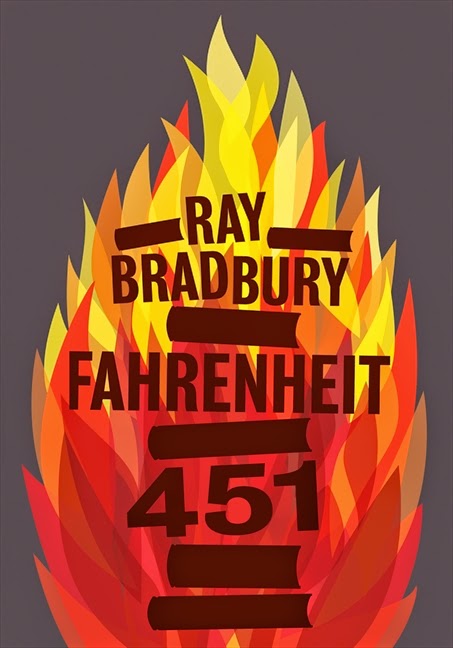
Fahrenheit 451, by Ray Bradbury

Staff Review by Chris Saliba

Ray Bradbury's Fahrenheit 451 remains an extraordinarily visionary work. In it he sees our current addiction to technology and media, and how disengaged we have become with politics and reality. The only thing missing today, thankfully, is the burning of books.

Cold War Fears and Tensions

Fahrenheit 451 is the classic dystopian science fiction novel by Ray Bradbury, first published in 1953. The writing and publication history of the novel is quite interesting. Bradbury said the novel essentially developed from a 1951 short story called “The Pedestrian”. This story was inspired by a real life event. While taking a late night walk in 1949, Bradbury was asked by a suspicious police officer to explain himself. In the short story, the suspicious walker is taken to a psychiatric centre. Most people, it is understood, should be indoors watching their ‘viewing screens’ – televisions. To be out walking is seen as quite bizarre when you have a mass media to consume.

Another short story, written between 1947 – 1948 and called “Bright Phoenix”, contains the theme of book burning as a means of censorship. Bradbury conflated the two themes of “The Pedestrian” and “Bright Phoenix” to write the novella “The Fireman” in 1951. The first 25,000 word draft was written on a library typewriter that he rented at the cost of 10 cents per half hour. Urged by a publisher at Ballantine books, he expanded the novella to its current length. It was published as a paperback in 1953, then the following year it was serialised in Playboy magazine.

As you can imagine, Fahrenheit 451 is drenched in cold war fears and tensions. The early fifties was an era of McCarthyism and the House Committee on Un-American Activities. Many American writers had their careers ruined by the committee’s investigations. Bradbury would also have been influenced by the the Nazi book burnings and Joseph Stalin’s Great Purge, which saw artists, writers and poets arrested, some even executed.

Technology Addiction and Political Disengagement

The plot of the novel follows Guy Montag, a “fireman” hired to burn books. He clearly has doubts about what he’s doing. He’s married to Mildred, who’s hooked on sleeping tablets and addicted to what we would perhaps call in our day reality TV. They have a parlour where three of the walls have giant TV screens that boom out dialogue. Mildred wants to get the fourth wall covered with a screen as well.

The reason that it has been deemed necessary by the government to burn books is that they add too much complexity to life. They provoke thought, demand serious intellectual attention and are often controversial in their contents. Government would rather everyone be zoned out watching their screens or listening to their musical shells (like today’s iPods).

Meanwhile, a huge nuclear war is being planned. Yet the whole populace is so hooked on mind-numbing mass media trivialities, that they don’t see the looming danger. Many of Mildred’s set of friends fail to grasp what a war will really mean for them.

It all ends rather apocalyptically. Ironically enough, a purifying fire allows the first steps of a new literary book culture to emerge.

I must admit to not really being a big science fiction fan. You really have to believe the world that has been created, and I sometimes find it hard to stay convincingly in that science fiction world . Maybe it's a failure of imagination on my part. Some of the things that happened in Fahrenheit 451 seemed a bit corny, like when Morag meets a group of exiled drifters who have memorised books in the hope of using their knowledge to create a new society.

A Visionary Book

Having said that, you really have to take your hat off to Bradbury’s prescience. What a visionary! So much of the world we live in today is pretty much there in Fahrenheit 451: the mass media, the populace anesthetized by it, the lack of interest in politics, the reducing of complex information to soundbites and tweets, even technical inventions like ATMs and iPods. No wonder people keep reading it today.

The book is perhaps best read as a critique of 20th century mass media and the political culture that has grown hand in hand with it. It’s very much of its time, but maybe belonging to our time even more, which is quite a scary thought.

Fahrenheit 451, by Ray Bradbury. Published by Voyager. ISBN: 9780007491568 RRP: $24.99

To sign up for our monthly newsletter, featuring new releases, book reviews and favourite articles from around the web, click here.   

Thursday, November 8, 2012

The Space Merchants, by Frederik Pohl and Cyril M. Kornbluth

Staff Review by Chris Saliba

Written some sixty years ago, The Space Merchant’s basic theme remains one of our time. The novel dramatises the conflict between the ideology of the conservationist movement and that of market capitalism. The earth is running out of natural resources like water and energy, while huge advertising agencies try to dupe people into volunteering to help colonise Venus as the answer to such a looming environmental crisis. Pohl and Kornbluth use science fiction to raise questions over the supposedly omnipotent powers of science and technology.

This classic of the science fiction genre has apparently sold some 10 million copies since it was first published in 1952. It has also given the English language several words. The Space Merchants is cited by the Oxford English Dictionary as having been the source for such modern day expressions as ‘soyaburger’, ‘R and D’ for ‘research and development’ and ‘muzak’. The novel also contains the first usage of ‘survey’ as a verb, i.e. to carry out a poll.

Frederik Pohl wrote a first version called For Some We Loved, but thought it so bad he junked it. One of the main problems was its inauthenticity according to Pohl. The main character was an advertising copywriter, but Pohl had no experience in the industry. To fix this problem he took on a job in a Madison Avenue agency. Several years later, after having burnt the original manuscript, Pohl started work on a new novel with similar themes. This new manuscript was shown to his friend Cyril Kornbluth, who made some suggestions and wrote a 20,000 word middle section. Finally the two writers completed the novel together.

The plot is amazingly relevant and up to date, especially considering it was written 60 years ago. The United States is now run by advertising agencies and government is pretty much owned by large corporations. The advertisers, part of the economic elite, freely admit to brainwashing people into buying crap they don’t need. Meanwhile, the planet is quickly running out of vital natural resources, like water and fuel. The solution to this problem is to colonise Venus. By applying enough technology, it is believed that the planet can be made habitable.

Enter Mitch Courtenay, a ‘star class’ advertising copy writer. It’s his job to sucker people into signing up to become colonists for Venus, even though the early years of the colony will most likely be a living hell. Mitch believes wholeheartedly in the capitalist system, but then strange things start happening. He finds himself demoted to the lowest class, a ‘consumer’, who must work as a virtual slave for a huge trans-national. In his reduced circumstances he joins a ‘Consie’ (conservationist) cell. In his privileged role as a copywriter he’d been deeply prejudiced against the Consies, but his new life causes him to reassess the whole social order.

I must confess that I don’t read much, if any, science fiction, but found the plot intriguing and the rave reviews a good reason to give the novel a go.

The story is pretty much an adventure, and sometimes the writing can seem a bit clunky. Nonetheless it had me riveted most of the time and I finished it pretty quickly. What stands out is how it is so utterly relevant to how we live life today, with big corporations owning political parties and the population brainwashed by advertising. The second major theme, the argument between science's confidence that technology can save us, versus the conservationist’s philosophy that there are limits to how much we can exploit the environment, make the novel startlingly modern.

The Space Merchants, by Frederik Pohl and Cyril M. Kornbluth. Published by Gollancz. ISBN: 9780575075283  RRP: $22.99


Wednesday, May 11, 2011

Twenty Thousand Leagues Under the Sea, by Jules Verne


Jules Verne’s late nineteenth century classic Twenty Thousand Leagues Under the Sea (1869) is part adventure story, part science fiction extravaganza and part disturbed psychological portrait. It’s central character, the enigmatic and mysterious Captain Nemo, roams the ocean’s depths in self-imposed exile from land-based societies, and one must presume, their political systems.

It is this political exile that is the most fascinating. The reader is led to believe that Captain Nemo has been the victim of some outrageous injustice, and has lost his wife and children as a result. Verne never discloses the reason for Captain Nemo’s misanthropy, which is terrifying in places. Near the end of the novel he indulges in mass killings while at sea. Yet the overall presentation of Captain Nemo invites sympathy. He is a learned and cultural man, scientist and art curator.

Jules Verne’s Propulsive Narrative Energy

Verne’s greatest achievement with Twenty Thousand Leagues Under the Sea is his compelling narrative. Despite the various adventures the crew of the Nautilus undergo, not a lot happens in terms of character interaction and dramatic events. Mostly, the novel is an extraordinary scenic trip under water, with page after page of minute descriptions – more catalogues really – of the life of the sea. Verne writes with a propulsive energy that keeps the reader eagerly turning the pages.

The novel begins in 1866, with the world convulsed by the appearance of a menacing sea monster. Theories abound as to what the monster actually is. Most conjecture that it is a giant narwhal. A French marine biologist, Professor Pierre Aronnax, gamely suggests that the sea monster may just be a large metal vessel.

An expedition to locate and destroy the sea monster is instigated by the United States government. Professor Aronnax and his assistant Conseil join this team, along with Canadian harpoonist, Ned Land. The sea monster hits the naval ship the Abraham Lincoln, and Professor Aronnax, Conseil and Ned Land find themselves thrown into the sea. Soon they are stranded on the sea creature, which turns out to be a huge metal vessel, the Nautilus, run by Captain Nemo.

The rest of the story is a scenic cruise, interspersed with various rollicking adventures. Captain Nemo shows off the various technical feats the Nautilus is capable of, astonishing his captives / guests. Amazingly, the vessel lives entirely off the natural resources provided by the ocean’s deep.

Professor Aronnax, who narrates the story, is duly impressed. As a fellow scientist, he is almost the alter ego of Captain Nemo. The only difference is that Captain Nemo has the chutzpah and nerve to attempt what Professor Aronnax could only dream of. Yet by the novel’s end the psyches of the two men have come to resemble each other more closely. Professor Aronnax’s final question to the reader is, quoting the Book of Ecclesiastes, ‘Who can fathom the soundless depths?’ to which he answers ‘Captain Nemo and I’. The two men are almost one.

A Long, Brooding, Prose Poem Set Under the Sea

Twenty Thousand Leagues Under the Sea is a novel that is both strangely dark and light. The magical world of the Nautilus, with its wide-open windows onto a nautical fantasia of wonderful images, shows that technological progress can achieve absolutely anything. Yet Captain Nemo, who is the driving force behind that technology, is such a dark and brooding character, that the novel ends in a mysterious black hole. The Nautilus simply disappears into a whirlpool off the coast of Norway. Why does Captain Nemo hate the world so much? The reader is invited to sympathise with the Captain, yet we never find out the reasons for this dark attitude.

The unresolved ending – not knowing what happens to Captain Nemo and his vessel – shouldn’t work. The reader has been led along for 500 or so pages, and it seems should be given a final explanation for Nemo’s character. Yet Verne manages to get away with this mystery, as Twenty Thousand Leagues Under the Sea is in many ways a long, brooding prose-poem, a dark romance about the unfathomable depths of the sea in which a deeply damaged man seeks refuge and healing.