Showing posts with label Psychology / Self Help. Show all posts

Friday, September 4, 2026

Talk: The Science of Conversation and the Art of Being Ourselves, by Alison Wood Brooks


Learn how to get more out of your conversations with this indispensable guide

Everyone knows how to talk, right? Wrong, according to Harvard Professor Alison Wood Brooks. We’re ill prepared with topics to discuss, don’t ask enough questions to maintain momentum and fail to see conversation as a way to engage and have fun. Professor Brooks backs up her guidelines for good conversation with rigorous science. Many of her findings may surprise you. 

For example, one section of the book discusses the importance of apologising, even for things you didn’t do. Brooks cites a study where participants asked complete strangers if they could borrow their mobile phone to make a call. Only 9% of those asked cooperated. But when the study was performed on a rainy day, and participants apologised for the rain, 47% of people offered their phones when asked. 

Other research shows that, despite our aversion to sounding intrusive or overly familiar, asking directly personal questions are for the most part well received. They demonstrate a strong interest in people, and so recipients are almost flattered at the attention. 

Not all conversations are good, however. Some are hostile, or can quickly escalate. In a particularly useful chapter, Brooks guides the reader through the minefield of disagreement.and conflict. By listening and acknowledging grievances, the way can be smoothed to air an opposing point of view or opinion. Research shows that this method of discourse makes an opponent more amenable to what you have to say. 

To make the book’s lessons easier to remember, Brooks smartly distillates her message into four main points:

T. Topics. Research things to talk about.
A. Asking questions
L. Levity. Finding the fun in conversation.
K. Kindness. Hear out what people have to say and give them space.

Written in cheerful, companionable prose, this guide to talking offers vital tips not only for making good conversation, but for also building strong relationships. A must read.

Talk: The Science of Conversation and the Art of Being Ourselves, by Alison Wood Brooks. Penguin Books. $26.99

JUNE 2026

Saturday, June 20, 2026

The Gift of Not Belonging, by Rami Kaminski


A psychiatrist explains why some people harbor a horror of the group

Dr Rami Kaminski is an American psychiatrist with decades of clinical experience. As a child Kaminski always felt at odds with school groups and teams. He was not a joiner. This did not mean he was lonely or solitary. He felt happy and fulfilled on his own. He could maintain solid  friendships on a one-on-one basis. But force him to join a sporting team or go on a school camp and he was beside himself with worry and stress. 

After years of treating similarly disposed people in his clinical practice, Kaminski has come up for a title for this condition: otrovert. Extroverts look outward, introverts inwards. An otrovert is someone who looks in a different direction to the crowd or group. (Otro means “other” in Spanish while “vert” means direction.) Extroverts and even introverts are communal people, meaning they find safety and belonging in the group. Otroverts find no such comfort. In fact, they find the opposite. 

What is the reason for this discomfort, even anxiety? Communal people don’t see individuals in the group. They see more of an homogenous single entity. For example, you could say they see the group as being the colour blue, and if the individual considers themself blue too, then they can easily fit into the group. Otroverts, on the other hand, don’t see sameness. They see everyone as an overwhelming separate entity. They can’t melt into the group, but must negotiate every person as an individual. It brings an uncomfortable intensity to all group interactions. 

The Gift of Not Belonging, by Rami Kaminski. Published by Scribe Publications. $32.99

NOV 25

Thursday, March 6, 2025

The Science of Happiness, by Bruce Hood


A happiness expert uses the latest science to show how the brain defaults to negative thinking, and how we can fix that bias.

Professor Bruce Hood is a psychologist and philosopher specialising in neuroscience. His latest book, The Science of Happiness, mixes the self-help genre with up-to-date scientific research to establish the best path forward in the pursuit of happiness. Seven chapters, or “lessons”, are provided that cover the various ways our brains work, or rather work against us. We learn, among other things, that we are prone to negative comparisons, need to avoid isolation and should focus our attention better. The overarching theme of the book is that egocentrism, which is our natural default position, causes significant suffering. We think too much about ourselves, which only leads to worry. The antidote to this condition is to pursue “allocentrism”, a state of mind that is more collective and outward focused. In short, we should try to do more for others, or think of ourselves more as part of a group. Scientific studies show allocentrism leads to a more sustained happiness. 

The Science of Happiness makes for rewarding reading, providing a simple, cohesive psychological overview of how the brain is predisposed to negative, egocentric thinking, and how by considering ourselves a small part of something bigger can bring joy. 

The Science of Happiness, by Bruce Hood. Published by Simon and Schuster. $32.99

OCT 24

Friday, September 9, 2022

The Breathing Revolution, by Yolanda Barker


An invitation to breathe your way to health, inner peace and happiness.


Yolanda Barker is a film maker and yoga teacher. She had experienced persistent depression and decided to try yoga. While this helped, the dark feelings didn't entirely lift. Going deeper into her yoga practice, she decided to concentrate on breathing exercises. A mixture of research and talking to experts in the field helped Yolanda discover breathing techniques that suited her. Finally, relief. Yolanda was hooked on breathing.

Everyone knows how to breathe, so why read a book on it? Apparently we don't breathe properly. We should breathe calmly, with correct posture and always through the nose. The nose filters toxins before entering the lungs. Moreover, breathing is a part of our body's functioning that we can actually control. Research shows that by controlling breathing we can change our mood. Our emotional state does not necessarily emanate from the mind, but from the nervous system. Measured, thoughtful breathing can reduce inner turmoil and bring equilibrium. 

The book is divided into a seven day program, which can really be read as seven aspects of breathing. Yolanda Barker mixes a good dose of science and physiology with practical steps to improve breathing. The Breathing Revolution is an easy to read guide that is a surprisingly calming experience in itself.

Discover how mind and body are more closely intertwined than previously thought.

The Breathing Revolution, by Yolanda Barker

JUNE 2022

Saturday, May 15, 2021

Chatter: The Voice in Our Head and How to Harness It, by Ethan Kross


What to do when that punishing inner voice takes over?

When Ethan Kross received a threatening letter, he went into meltdown. For three days the voices in his head incessantly replayed one horrifying scenario after another. He couldn’t stop the chatter in his head, which was ironic, as he is an expert on emotion and self-control. The letter had come after a television appearance, causing Kross to chastise himself for putting his family and himself at risk.

Then Kross stumbled across something quite by accident. Instead of his internal monologue repeating “I” all the time, he started to use his own name, Ethan. By addressing himself in a more formal way his anxious inner voice was calmed. Distance and perspective were created, putting a stressful situation into a more rational context.

Put simply, this is the case that Chatter makes. We allow our inner voice to obsess us and run rampant; we get into a loop of negative thoughts, and when we share our concerns with friends and sympathisers, this doesn’t help either, only reinforcing the bad feelings. The best way to tame the voices in our head is to try and create distance and put things in perspective. When we think about our problems and worry about our standing in the world, or how the world perceives us, it’s best to look at the big picture.

Chatter uses a lot of science to prove its point. Interestingly, using your own name when ruminating on negative thoughts has been proven in laboratory settings to make subjects feel better and calmer. The book offers other techniques and suggestions: keeping busy, sticking to routines and ensuring an orderly environment are methods of calming runaway inner voices.

All this sounds very promising, in theory, but how effective these tools are in practice could be another matter for many people. When the mind is in a fully blown panic, it can take days to calm down. Nevertheless, Chatter offers a concise explanation of the psychology of the inner voice. Such self-awareness coupled with the tools he provides could help some troubled souls.

Science we’ve been over before, but worth a look in.

Chatter: The Voice in our Head and How to Harness It, by Ethan Kross. Published by Vermilion. $35

Wednesday, January 8, 2020

The Neuroscience of Mindfulness, by Stan Rodski

How to manage stress in a busy world.

Stan Rodski is a cognitive neuroscientist based in Melbourne. He created the colouring book stress management technique that, for a period, took the publishing world by storm. (Yes, he’s responsible for that craze.)


The Neuroscience of Mindfulness is a multi-faceted book. It explains in very simple language the basic principles of neuroscience, with updates of the latest findings on how the brain works. Research has revealed that basic, repetitive tasks have a powerfully calming effect. The brain is most relaxed when it experiences pattern, repetition and control. Happily, we learn that mindfulness can be incorporated into our everyday activities: walking, driving, brushing your hair. The book includes useful sidebars and practical exercises, guiding the reader through the thought processes required to live mindfully.

Some of the more fascinating research Rodski discusses concerns what is known as the mind-body connection, or MBC. Science has discovered that when we experience stress, a harmful protein known as amyloid protein builds up in the brain, affecting the immune system. Negative thoughts can physically damage the body.

Part practical workbook, part scientific digest, The Neuroscience of Mindfulness offers real help in managing stress in our busy modern world.

The Neuroscience of Mindfulness, by Stan Rodski. HarperCollins. $34.99

Saturday, June 16, 2018

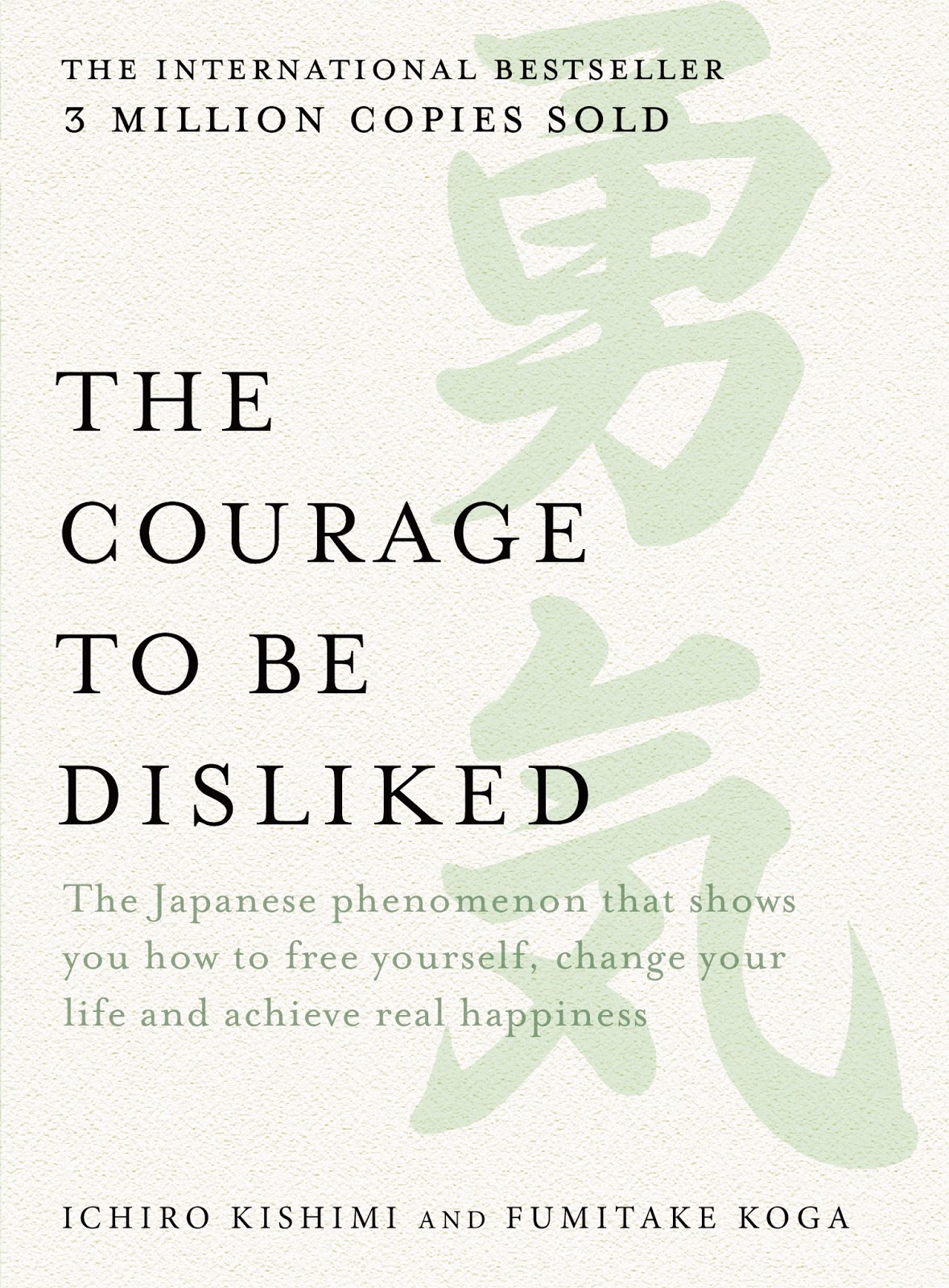
The Courage to be Disliked, by Ichiro Kishimi and Fumitake Koga

Staff review by Chris Saliba

Japanese authors Ichiro Kishimi and Fumitake Koga present the ideas of Austrian psychologist and philosopher Alfred Adler in the form of a dialogue.

Along with Sigmund Freud and Carl Jung, Alfred Adler (1870-1937) is considered one of the greats of psychology. In The Courage to be Disliked, Kishimi and Koga distil Adler's key ideas and theories into an accessible dialogue between a youth and a philosopher. The youth and philosopher meet over five nights, where the philosopher puts forward the Adlerian recipe for a happy and contented life, while the youth argues and disputes many of the central tenets of this school of thought. In the end, over much intense discussion, the youth is converted to this new way of thinking.

The main point of departure that Adler makes from Freud and Jung is his denial of the importance of past traumas in our psychological make-up. The Freudian belief that past traumas affect us deeply is known as an “aetiology”, or cause and effect. Adler, by contrast, maintains past traumas are not so significant and that we often use past traumas as an excuse to avoid performing important tasks (social engagements, for example, or not applying for a new job). Adler calls this a “teleology”.

So, we avoid perfoming life's tasks and blame events from our past. Another main cause for inaction is our fear of what others think. We are all in competition with one another, often judging and assessing our social standing. Adler says that our interpersonal relationships are at the core of all our problems. The solution to this is to concentrate only on our own tasks in life and find the courage to be disliked by others.

The final plank of the Adlerian philosophy is something called “community feeling”. While we are encouraged to find some distance from others, and to disentangle ourselves from feelings of either inferiority or superiority, we should imagine that we belong to one large global community. The main goal should be to concentrate on how we are useful to others. This will lead to a simpler and happier life.

The Courage to be Disliked provides an engaging and at times challenging philosophical dialogue. Many of the complex emotional states that are described, the feelings we keep hidden from others, ring true and also explain some of our darker motives. The philosophy of Adler, as it is distilled here, really strives for a balance between not worrying too much about what others think and being active members of our communities. It's about being close to people, but not too dependent on their opinions of us.

A self-help book that resonates deeply because of the elemental truths it speaks about the human condition.

The Courage to be Disliked, by Ichiro Kishimi and Fumitake Koga. Published by Allen and Unwin. ISBN: 9781760630492 RRP: $24.99

To sign up for our monthly newsletter, featuring new releases, book reviews and favourite articles from around the web, click here.

Monday, May 7, 2018

10% Happier: How I Tamed the Voice in My Head, Reduced Stress Without Losing My Edge, and Found Self-Help That Actually Works - A True Story, by Dan Harris

Staff review by Chris Saliba

A witty and entertaining journey from anxiety to mindfulness. 

Dan Harris is a journalist and TV anchor. In 2004, while presenting a news break on a chat show, he suffered an on-air panic attack. (You can see it on YouTube: Dan gasps for breath, fumbles his words and prematurely throws back to the presenters.) As an ambitious journalist, keen on furthering his career, this was seriously disconcerting on many levels. He sought the help of a psychiatrist and confessed to being a recreational drug user, mostly cocaine.

The sessions with the psychiatrist helped, but Dan wanted further help to deal with his ongoing anxiety problems, a lot of which centred around his ambitious nature. A friend suggested he read Eckhart Tolle, the German self-help author, famous for writing The Power of Now and A New Earth. He gave it a go. While Tolle's books had many insights, it was all mixed in with a lot of gobbledygook. Next Dan went onto Deepak Chopra (whom he found to be a bit of a fraud) and before he knew it, he was on a 10 day retreat, on the way to becoming a Buddhist, at least in practice.

10% Happier manages to do two things. It’s both enormously entertaining (Dan Harris is whip-smart and witty, with plenty of good lines) and instructive, explaining concepts like mindfulness in a practical way that resonates and makes sense. His simple message is that meditation might not solve all your problems, but with continual practice, it will make you at least 10% happier. And who doesn’t want to be 10% happier?

Another great advantage of the book is it's easy for modern day urbanites to identify with the author. He’s your typical young professional: energetic, smart and successful. Like most of us working in a cut-throat commercial society, we’re brutally sceptical and only see value in the holy dollar. The book’s narrative allows us to comfortably walk this sceptical path, rolling our eyes at the shenanigans of gurus and yogis and the spiritually eccentric, but as the author reluctantly discovers the insights of meditation, we too must allow a change of mind.

Heartily recommended. Dan Harris is a fun, likable guide on an often awkward and difficult journey.

10% Happier: How I Tamed the Voice in My Head, Reduced Stress Without Losing My Edge, and Found Self-Help That Actually Works - A True Story, by Dan Harris. Published by Yellow Kite. ISBN: 9781444799057  RRP: $19.99

To sign up for our monthly newsletter, featuring new releases, book reviews and favourite articles from around the web, click here.

Tuesday, April 17, 2018

Lost Connections: Uncovering the Real Causes of Depression - and the Unexpected Solutions, by Johann Hari

Staff review by Chris Saliba

Swiss-British journalist Johann Hari goes on a remarkable journey to discover the causes for his long term depression. 

At the age of eighteen Johann Hari was prescribed antidepressants and spent the next thirteen years on them. As a teenager he often found himself breaking down and crying for no good reason. Life was miserable. Then he had an epiphany of sorts: the problem simply must be an imbalance with the  chemicals in his brain. All he needed to do was correct the imbalance with drugs. Simple. At first the drugs worked, then after a time their effectiveness would wane. No problem. Simply get higher doses. There were side effects, however. Hari put on a lot of weight, but he figured to be depression free was worth it. Or was it?

Lost Connections is Hari’s attempt to look for the reasons why there is such an epidemic of depression and anxiety in Western societies. The early chapters of the book look at the science behind the effectiveness of antidepressants and finds, amazingly, that their efficacy is actually marginal. They act more as a placebo. Yet doctors unthinkingly keep prescribing them.

The book then outlines in individual chapters seven reasons why people develop depression and anxiety, such as a lack of meaningful work, disconnection from nature, lack of community etc. There is another chapter after these seven which addresses how our genes and changes in the brain can cause depression and anxiety as well, but Hari finds that even if you have a disposition towards depression, the seven factors outlined will greatly exacerbate it.

The rest of the book looks at ways of gaining re-connection to meaningful work, values, nature and other people. The most compelling passages describe Hari working with a protest group in a dingy housing project in Kotti, Berlin. Rents were going through the roof and so the residents, a disparate group of people, came together and found strength to help each other and make positive change. Hari found that concentrating on helping others, and belonging to a group, greatly helped as an effective antidepressant. Meditation is another tool which is investigated as a way of combating depression and is found to be a powerful way to build empathy with others, and hence reconnection to the world.

Lost Connections mixes a personal narrative of suffering and trauma with journalistic research and investigation. If you are depressed or anxious, this book perhaps won’t address all your problems or offer an instant cure, but it will give hope that there is a way out. The basic take-away it that our society is making us very sick, focusing too much on status, money and individual achievement, leaving us disconnected from each other and ourselves.

Lost Connections: Uncovering the Real Causes of Depression - and the Unexpected Solutions, by Johann Hari. Published by Bloomsbury. ISBN: 9781408878699  RRP: $27.99

To sign up for our monthly newsletter, featuring new releases, book reviews and favourite articles from around the web, click here.

Tuesday, April 10, 2018

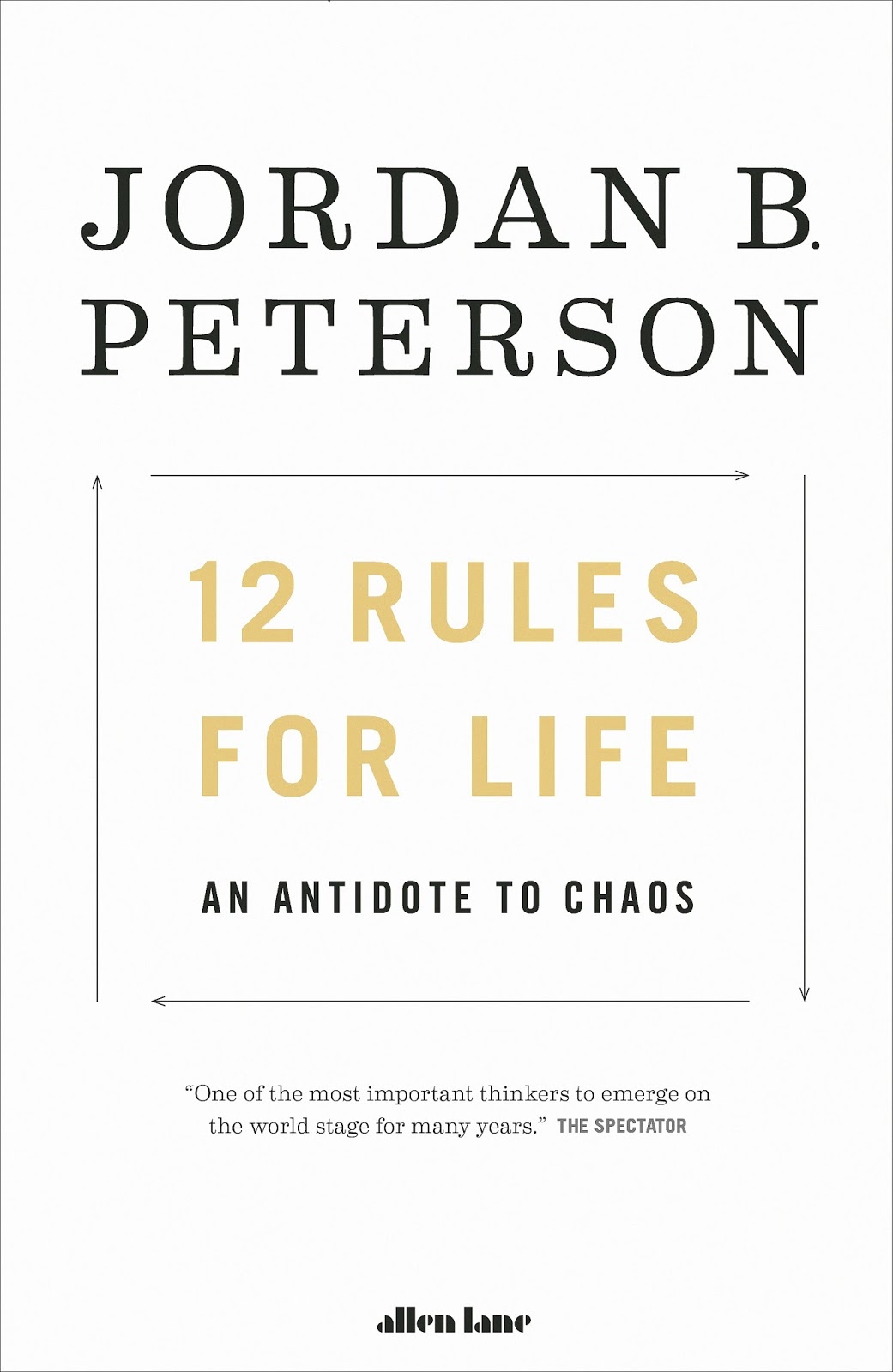
12 Rules for Life: An Antidote to Chaos, by Jordan B. Peterson

Staff review by Chris Saliba

There is both much to agree with and much to be challenged by in Jordan B. Peterson’s 12 Rules for Life.

It’s always interesting to read a book around which there is so much hype or controversy. Jordon B. Peterson is the current bete noire of feminists and leftists. His book, 12 Rules for Life, grew out of some writing he had been doing for the Quora website, where anyone can ask a question and anyone can answer it. His other book, Maps of Meaning, by his own admission is a rather dense, academic work. 12 Rules is for the general reader.

Despite all the controvery swirling around Peterson, there’s not much you could object to in his 12 rules for living a good life. Most of it is fairly basic stuff: don’t be resentful, maintain your dignity, learn what you can from others, don’t let your ego get out of control, don’t tell lies and above all, don’t lie to yourself. Some of it is quite humane and forgiving of the human condition. Each rule is backed up with interesting (sometimes debateable) analysis of some of the world’s best literature: the Bible, Milton’s Paradise Lost, Dostoyevksy, Nietzsche, Freud, Jung, Orwell etc. There is also quite a bit of pop culture analysis, from Disney films to the Simpsons.

Where some readers may take umbrage is the second last chapter, which discusses gender roles and what the author sees as the dangers of forcing men to be too feminine. Peterson has some good points to make about innate male and female characteristics, and how ridiculous it is to try and homogenise the genders and pretend there are no real differences. The book very much argues we can’t escape our evolutionary heritage: violence and aggression is how we got here. But some of his arguments are a bit hair raising. In one part of the book he pretty much condones male workplace bullying; in another he blames the rise of  fascist ideology on men being pushed too hard to feminise. The rise of Trump can also be blamed on this process of feminisation.

The grim, hard tone of the book, with its leaden prose, gives 12 Rules for Life a feel of ominous dread. It’s like conversing with a person who likes to stand too much in your personal space. Peterson perhaps put it best in the acknowledgements to the book, where he thanked the illustrator who provides a drawing that starts every chapter. Without these illustrations, Peterson muses, his book “might otherwise have been a too-dark and dramatic tome”. Dark and dramatic sums the text up pretty well.

A book sure to challenge and test your pre-conceived ideas about the world.

12 Rules for Life: An Antidote to Chaos, by Jordan B. Peterson. Published by Allen Lane. ISBN: 9780241351642  RRP: $35

To sign up for our monthly newsletter, featuring new releases, book reviews and favourite articles from around the web, click here.

Monday, July 4, 2016

The Paradox of Choice: Why More is Less, by Barry Schwartz

Staff review by Chris Saliba

In this useful book Barry Schwartz clearly demonstrates that too much choice is confusing people and making them less happy. 

First published a decade ago, in 2004, Barry Schwartz’s The Paradox of Choice is certainly more relevant than ever. The Internet not only offers more commercial choices, but with the explosion of social media, it offers more social choices as well. The main message of Schwartz’s book is to calm down and accept that it may never happen, or may never happen as perfectly as you expected.

The main idea behind the book is that there are two types of people, maximisers and satisficers. Maximisers are in a never ending quest for the perfect. Hence when they must make a decision it is an agonising affair. It becomes impossible to settle on a decision, because there is always the fear that they could have done better.

Satisficers, on the other hand, take as their motto “near enough is good enough”. They don’t spend too much time making their decisions. They’re more happy-go-lucky. If they get it wrong when making a decision, they don’t spend too much time regretting it.

As the reader can surmise, maximisers suffer more. They set the bar so high that they are constantly being disappointed. Even when they are materially better off than satisficers, they still feel they have lost out.

The Paradox of Choice you could perhaps file under behavioural economics. It uses a lot of psychological research to back up its arguments. The most famous test case it cites is an experiment where two groups of people were given a choice of ice cream. Group one got to choose from six different flavours, while group two had 36 to choose from. You’d think the second group, choosing from 36 ice cream flavours, would have had the better experience, but no, it was the first group that reported greater satisfaction with the taste of their ice creams!

Some choice is good, we learn, but too much choice is counterproductive. And lowering your standards and expectations is a good strategy to make your life more enjoyable.

The Paradox of Choice: Why More is Less, by Barry Schwartz. Published by HarperCollins. ISBN: 9780062449924 RRP: $29.99

To sign up for our monthly newsletter, featuring new releases, book reviews and favourite articles from around the web, click here.

Thursday, November 5, 2015

Modern Romance, by Aziz Ansari

Staff review by Chris Saliba

Stand up comic Aziz Ansari's first book, Modern Romance, proves to be a pleasant surprise. Equal parts self-help, sociology and humour, Ansari's book is the perfect guide to finding love in the internet age.

Aziz Ansari is perhaps best known for his role in the NBC comedy series, Parks and Recreation. Aziz is also a stand up comic. For his first book he has teamed up with sociologist Eric Klineberg to write about dating in the age of the internet. Modern Romance is the result.

The book is based on extensive research. Ansari and Klineberg conducted hundreds of interviews with participants from many countries, getting them to open up about their experiences of dating online. They also set up a forum on reddit and solicited answers to questions about internet dating.

Before the internet, we learn, most couples found each other locally, through friends, church groups or simply in the neighbourhood. People didn’t have a lot of choice and would mostly settle for someone who didn’t necessarily tick all the boxes, but was a pretty good match nonetheless. Fast forward to today and the world is your oyster. The internet has allowed those looking for a partner to pick and choose amongst literally millions of candidates. Even better, searches can be narrowed down to the exact characteristics you are looking for. It all seems too good to be true. First time internet daters confess to finding all the choice exciting and appealing. But after a while the gloss rubs off and the constant trawling through hundreds and hundred of potential mates becomes frustrating and tiring.

In what has been termed the paradox of choice, having so much freedom ends up being a trap in itself. Too much choice creates a fear of missing out, or FOMO, a social anxiety peculiar to the internet age. In one mad, but surely not unusual example, Ansari describes a young woman flicking through the dating app Tinder looking for potential dates while actually on the way to a real date. Anxious that her set date might not be up to the grade, she wanted a back up. As Ansari shows, the research on choice demonstrates that those who set the bar very high experience great dissatisfaction, even when they get what they want.

Another major problem the book highlights with the phone world of internet dating is the method of communication. Text messaging fosters the use of glib, pointless back-and-forth messages. Many daters complained about the amount of time wasted on these “conversations” that would fizzle out and go nowhere. Text messaging also gives a false sense of bravado, as phone users quickly dash off inappropriate messages they would never say in person. It’s quite gobsmacking to read some of the texts (young men especially) write. Compounding the problem is the fact that more and more people are uncomfortable actually speaking to each other over the phone. They find it too confronting and prefer to text.

Although this all sounds pretty depressing, Ansari tries to end the book with some upbeat tips. Basically, he suggests using the internet as simply one tool in your bag of tricks. Avoid too much texting, he suggests, and remember not to think of faces on dating apps as just digital bubbles on a screen, but as real people with feelings. Talk to people face-to-face. Give the real world a chance. All pretty common sense advice, really.

The most valuable thing about Modern Romance from a social sciences point of view is the detailed picture it gives of internet dating and how young moderns are searching for love. It’s kind of like a Hite Report on love and sex in the 21st century. As a self help book, it offers some salient advice, but one wonders how easy it is to resist such an addictive force as the internet.

Modern Romance, by Aziz Ansari, with Eric Klineberg. Published by Allen Lane. ISBN: 9780241211830 RRP: $39.99

To sign up for our monthly newsletter, featuring new releases, book reviews and favourite articles from around the web, click here.

Monday, June 15, 2015

Happiness by Design: Finding Pleasure and Purpose in Everyday Life, by Paul Dolan

Staff Review by Chris Saliba

Economist Paul Dolan gives some stark advice on how to be happy. In short, don't aim too high, don't delude yourself about your abilities and don't waste time thinking about things that may never happen.

In Happiness by Design, former economist Paul Dolan claims to have made the next big breakthrough in the study of happiness. He says that to achieve the maximum amount of happiness in our lives, we need to engage in activities that bring a mix of pleasure and purpose. Too much pleasure on its own is not so good, nor is too much purpose. But if we can balance both out, by finding enjoyment and meaning in life, then we're pretty much there as far as happiness is concerned. He also maintains that we spend too much mental energy attending to things that play no real part on our day-to-day life. We stress about things that may never happen.

The first part of the book explains Dolan's thesis, backed up with the usual array of behavioural research and science. The text is peppered with interesting factoids and figures about how we humans often delude ourselves. Some of Dolan's advice is quite stark: he opines that we generally think too much of ourselves and should be more realistic about our talents and abilities. Too many high expectations only leads to unhappiness. Ambition is also to be treated cautiously. The idea of fame and riches may seem more appealing in fantasy than reality. And the amount of time, sacrifice and effort spent achieving lofty goals might not be worth the reward. This all reminded me of that line by Oscar Wilde: ambition is the last refuge of the failure.

The second part of the book gives tips on how we can design our environment to push our thoughts and actions in the right direction. Paste sticky notes on the fridge reminding you to go to the gym, or make your computer open with a positive message. Stuff like that.

I quite enjoyed this book, but even at 190 pages it's a bit padded out. The prose is also as flat as a tack and plods along, even though the author tries to infuse the text with his own brand of humour. These are fairly minor caveats, however. I imagine Happiness by Design would be a useful tool for those who are unhappy and trying to figure out why. Paul Dolan might well have the answers for them.

Happiness by Design: Finding Pleasure and Purpose in Everyday Life, by Paul Dolan. Published by Penguin. ISBN:  9780141977539  RRP: $22.99

To sign up for our monthly newsletter, featuring new releases, book reviews and favourite articles from around the web, click here.

Tuesday, April 21, 2015

Happy Money: The Science of Happier Spending, by Elizabeth Dunn and Michael Norton

Staff Review by Chris Saliba

In this nifty short book Elizabeth Dunn and Michael Norton use the latest research to show how to best think about money. Their advice offers many surprises. 

Elizabeth Dunn is an associate professor of psychology and Michael Norton an associate professor of marketing. Together they've produced a book whose subject could best be described as behavioural economics. This is a branch of economics that examines the emotional and psychological aspects of how we make financial decisions. Classical economics teaches us that we always make rational decisions when spending money, whereas behavioural economics highlights how irrational our spending can be. We spend money on things that we regret and which later make us unhappy. National economies can also behave irrationally: think of bubbles in housing prices that lead to widespread economic damage.

Happy Money sets itself a rather modest and useful goal. How can we improve our happiness when we spend our money? The answers, it turns out, are rather paradoxical and not entirely what you’d expect. For example, research shows that buying a bigger, better house doesn’t increase your happiness, yet this is where most people spend their money. The next item we spend most of our money on is a car, which also fails to make us happy. In fact, driving a car can add to our stress levels. It appears living in cheap accommodation close to work provides a quicker ticket to happiness than living far from work in an expensive house. Another paradox: people who have more money report higher stress levels. The rich worry very much about managing their money.

To simplify matters, the authors set out five basic principles of happy spending:

  • Buy Experiences. Memorable experiences, such as going out to dinner or the theatre, are shown to leave us with a happier glow. The social aspect of these experiences also add to our wellbeing.
  • Make It a Treat. This chapter basically preaches that a bit of scarcity can greatly add value to something. Conversely, you could say that it’s possible to have too much of a good thing. By reducing and spacing out consumption, we can improve our enjoyment of it. For example, if you enjoy chocolate, maybe have it once a week at a special time, as something you can look forward to.
  • Buy Time. This is the most unusual chapter in the book, as it doesn’t directly relate to spending. It’s more about our attitude to how we spend time. Apparently rich people see their time as more economically valuable, and this causes angst and anxiety about how they spend their time. This chapter almost preaches mindfulness, enjoying the moment and not thinking about money. Research shows that just thinking about money makes us unhappier. Tip: Don’t think about money!
  • Pay Now, Consume Later. Pretty much the total opposite of our credit card model. If we pay for things upfront, they seem almost like free treats dropped from the heavens when we receive them at a later date.
  • Invest in Others. Being charitable also gives us a happiness boost. Even just giving away a small amount, like $5, can make us feel better. Again, this all sounds counter-intuitive to the received economic wisdom, where selfish decisions are seen as rational decisions. Yet all the research shows that giving away money to charities, friends and worthy causes clearly makes us happier.

Happy Money dispenses its advice and insights in a pretty chirpy and fun way. It’s light economic reading, but backed up with lots of fascinating research. It made me think in new ways about money and how to best spend it. This is the sort of book I’d put into the hands of a young person just entering the workforce, or someone experiencing some sort of financial stress. It may help them to re-prioritise. The ironic lesson of the book is that, by and large, there’s more to life than chasing money.       

Happy Money: The Science of Happier Spending, by Elizabeth Dunn and Michael Norton. Published by Bloomsbury. ISBN: 9781780743370 RRP: $19.99

To sign up for our monthly newsletter, featuring new releases, book reviews and favourite articles from around the web, click here. 

Friday, April 4, 2014

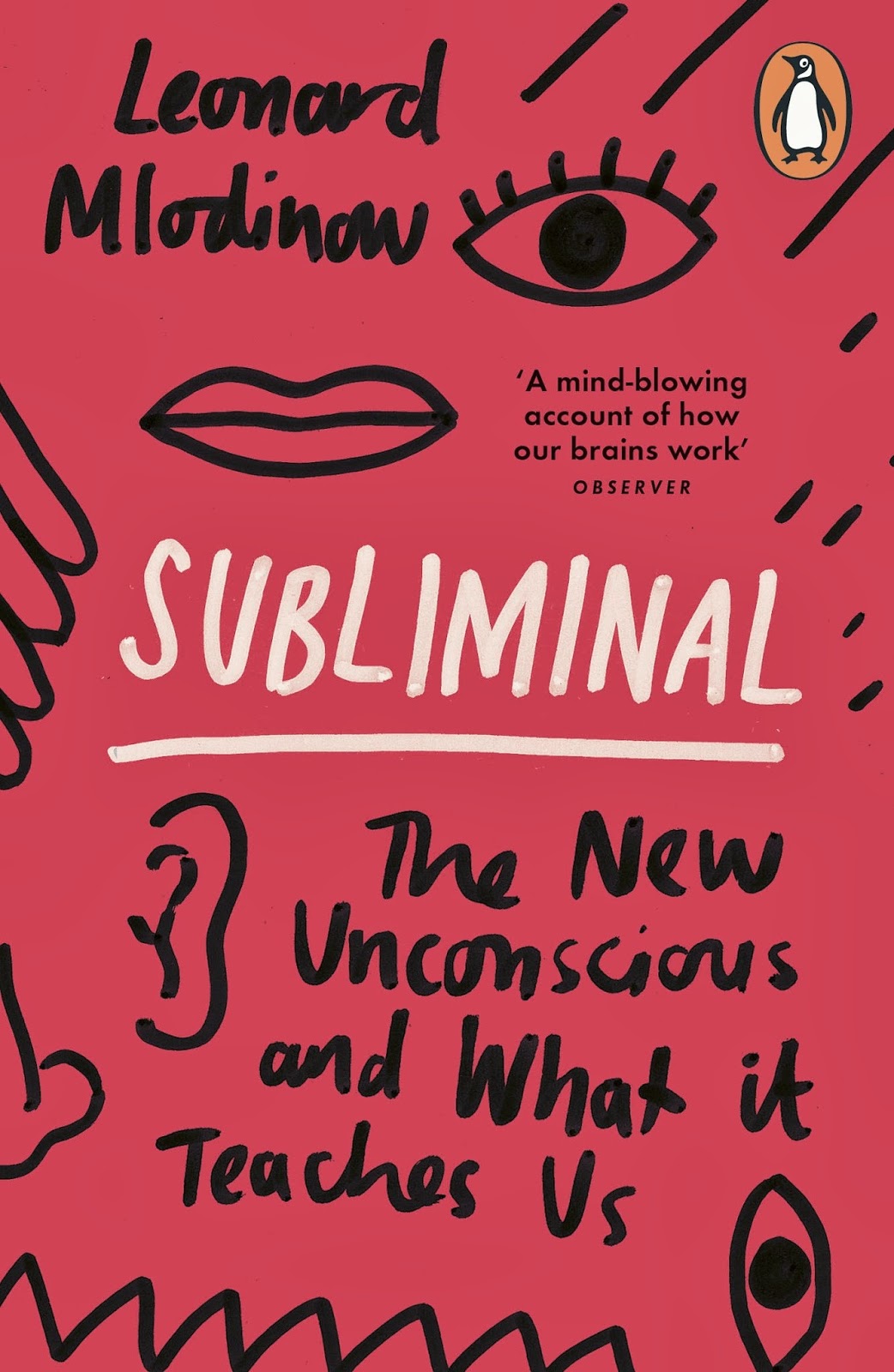
Subliminal, by Leonard Mlodinow

Staff Review by Chris Saliba

Leonard Mlodinow explains how we may think we're rational creatures, in charge of every decision we make, but that the reality is we are propelled by our deeper, unconscious brain.

Do you think you’re in control of your life and are a rational decision maker? Leonard Mlodinow’s Subliminal: The New Unconscious and What It Teaches Us is here to tell you you’re not. Using much of the latest science – brain imaging and psychological testing – this fun and insightful book demonstrates that more often than not we are helplessly riding the tiger that is our unconscious. Or maybe as Oscar Wilde put it, “Life is terrible. It rules us, we do not rule it.” Many of the examples Mlodinow marshals as evidence of our primitive brain controlling everything we do will shock and amaze.  

This may sound like bad news, to suddenly realise we’re not as smart and autonomous as we thought we were. But Mlodinow paints things in a positive light. He maintains that our primitive brain, the major part of the brain that instinctively controls everything we do and which we have inherited from our primate ancestors, is actually a tool that helps us negotiate modern life. It helps us apprehend danger and sense trouble, before our conscious selves finally see things. 

In the final chapter, Mlodinow shows how many of us rate our abilities higher than what they are. Those with an accurate view of themselves are often depressed! Apparently, it pays to be a bit deluded about ourselves. This delusion gives us the optimism and go-getter attitude that allows us to succeed in life. 

This is an illuminating book that will tell you many things you didn’t know about yourself, written by a jovial author who makes the science in this area easy to understand. Subliminal is much like Daniel Kahneman’s Thinking Fast and Slow, but a more accessible version.

Subliminal: The New Unconscious and What It Teaches Us, by Leonard Mlodinow. Published by Penguin. RRP: $19.99

To sign up for our monthly newsletter, featuring new releases, book reviews and favourite articles from around the web, click here.  

Wednesday, September 5, 2012

Man’s Search for Meaning: The Classic Tribute to Hope from the Holocaust, by Viktor E. Frankl

Staff Review by Chris Saliba


Viktor E. Frankl was a neurologist and psychiatrist who also survived the Nazi concentration camps. His experiences in the camps helped him to develop logotherapy, a treatment for depression and suffering. According to Fankl the best way to achieve contentment and avoid distress is to find meaning in life, whether through art, love, religion or even the endurance of suffering.

This holocaust memoir has a deservedly huge reputation, and has sold some 12 million copies. To my embarrassment, I didn’t know anything about Man’s Search for Meaning until I was searching for self-help books for our book shop.  This beautiful edition by Rider books inspired me to sit down and read it.

The book has a slightly unusual and ad hoc construction. The first 75 pages consists of Victor Frankl’s  experiences in Nazi concentration camps, which was first published in 1946. Then there is a 1962 essay which describes the psychotherapeutic treatment called logotherapy. Logotherapy was created by Frankl, who was trained as a neurologist and psychiatrist. Its method of healing is for patients to find some sort of meaning in their lives. Once meaning has been established in a person’s life – whether it be through love, religion or creativity – then depression lifts. Even though these two parts of the book were written some 16 years apart, they are both complimentary.

There are some further writings in this edition (I don’t know if they appear in others) :a 1984 postscript 'The Case for a Tragic Optimism', two letters and two speeches. These additions basically elaborate further on Frankl’s logotherapy but don’t add anything substantially new. You basically just need to read the first two parts to absorb the book’s major theory.

Part One, called 'Experiences in a Concentration Camp', describes the three main psychological stages of imprisonment. Firstly there is the shock of finding yourself in such unreal and horrific circumstances as a concentration camp, with a chimney in the background issuing smoke from human bodies that have been gassed to death.

The second stage occurs when prisoners become apathetic and accept their fate, enduring all sorts of hardships. Frankl describes how people can endure all sorts of intolerable conditions when they have to. It is during this second, apathetic phase that Frankl has an epiphany of sorts. During a particularly bad time, he brings to mind a mental image of his wife. Such are the powers of imagination, his wife almost becomes a physical presence. It is during this intense moment of imagining his beloved that a bird lands nearby and stares at Frankl. This crystalised Frankl’s belief that we all need something that gives us meaning in life. What creates meaning can be love or a creative pursuit. Finally, even when experiencing the worst of circumstances, we can choose how to conduct our behaviour. When we have no choice but to suffer, we still retain the freedom to suffer nobly. This sort of suffering, where we have no choice but decide to act nobly or with dignity, can give life meaning and should be considered a personal achievement.

The final stage that the concentration camp prisoner experiences is upon liberation and is often one of bitterness and disillusionment. Firstly, when the prisoner re-enters society, people seem indifferent to his or her sufferings in the camps. They don’t fully comprehend the full horrors that the Nazis were capable of. Secondly, when prisoners were released they often found that most of their family had been murdered. Chronic depression and lonliness were the result.

If I was rich and eccentric I’d stand in the Bourke Street Mall and hand out copies of this book to passers-by. The basic concept of the book, that finding a meaning in life can alleviate one’s suffering, makes the most elemental common sense. Neither money nor fame, it seems, can bring us contentment, but only through meaning – whether we discover that meaning through art, love or religion – can we find relief from the suffering that life often imposes.

Man’s Searchfor Meaning: The Classic Tribute to Hope from the Holocaust, by Viktor E. Frankl. Published by Rider Books. ISBN: 9781846042843 RRP: $24.95

Tuesday, July 3, 2012

Thinking, Fast and Slow, by Daniel Kahneman


 Staff Review by Chris Saliba

Our brains, according to veteran psychologist and researcher Daniel Kahneman, run at two speeds. System 1 is intuitive and emotional, with fast reaction times that protect us from immediate dangers. System 1, however, is prone to making mistakes. System 2 is more deliberative and analytical, with the power to fix up any of the hasty mistakes made by System 1. The bad news is System 2 is lazy and often needs prodding. Kahneman's wonderfully illuminating  Thinking, Fast and Slow shows how we often mistake our instinctive, gut reactions for rational thought. Our tendency is to be blinded by a narrowness of focus when we need to step back, look at the larger picture and put things in their proper perspective.


Daniel Kahneman is a psychologist with several decades worth of experience in the fields of research and academic writing. Throughout his career he has proposed many theories on the way we think and searched out their truth by scientific testing and collaborations with other researchers. While he has penned many important papers on his findings, this is his first book. Thinking, Fast and Slow is a distillation of a lifetime of thinking and research into the subject of how our cognitive processes work. Kahneman also applies his theories to economics, demonstrating how our often unreliable decision making processes affect attitudes to money and risk taking (he won the Nobel Prize in Economics in 2002).

The title of the book pretty much describes its theory. We humans are endowed with two styles of thinking. System 1 is the fast mode, which is emotional and intuitive. In fact, this part of our thinking apparatus is so fast that Kahneman shows how our bodies react ahead of our brains to external phenomena. For example, if we sense danger we physically react before our brains have completed their cognitive assessments of the situation. The slow thinking mode, which is called System 2, is deliberative and logical. It has the power to carefully process the sometimes hasty judgements of System 1 and therefore help us to make more rational decisions. Unfortunately, System 2 is lazy and doesn’t always step in when needed. Sometimes we have to make snap judgements and System 2 simply doesn’t have the time to intervene.

That’s the basic premise of the book. Kahneman expands this into a fascinating and often challenging journey through the many erroneous roads we travel in our thinking. It’s often very human to think fast, to be blinded by our biases and to look at problems with a narrow focus. Kahneman highlights the need to step back, look at the larger picture and put things in their proper perspective. He notes that this can be hard, even for a trained psychologist like himself.

For example, in one section of the book he describes a spate of terrorist bombings that happened while he was living in Israel. He knew that the statistics showed his likelihood of being a victim of terrorism to be extremely low, but nonetheless he felt the same fear as that of the general public. Kahneman said he felt ashamed of being so fearful, but no amount of trying to rationalise with himself would help.

In a larger sense Thinking, Fast and Slow reads like a book of philosophical thought. Frequently I was reminded of Schopenhauer’s The World as Will and Representation. Kahnenman tells us that the world is a place full of random, senseless events. To cope with this chaos humans reach for a story or narrative to try and make sense of a world that often seems to make no sense at all. While this may be only natural, it still leads us into erroneous thinking. Kahneman even goes to so far as to say that the accomplishments of high achievers are in part sheer luck, and that we shouldn’t extol these people as super humans. Everything in life ultimately ‘regresses to the mean’, and standout achievements are in part lucky events that cannot be repeated over and over.

Kahneman wrote Thinking, Fast and Slow in a style which invites us to imagine ourselves and our behaviour in the world. The effect is to feel like you are standing in front of a psychological mirror, confronting all your cognitive faults. Reading it, you will no doubt pick up many errors in your everyday thinking. Hence Thinking, Fast and Slow has the power to make you look at yourself in an entirely new light. This is very enlightening reading in its truest sense.

Thinking, Fast and Slow, by Daniel Kahneman. Published by Penguin. ISBN:  9780141033570  RRP: $22.95

Wednesday, April 25, 2012

Quiet: The Power of Introverts in a World That Can't Stop Talking, by Susan Cain


Staff Review by Chris Saliba


As an introvert herself, you’d expect Susan Cain’s style to be gentle and thoughtful. This, however, doesn't stop her arguments from being persuasive and compelling. The contemporary world values extroverts too much, says Cain, while ignoring the talents of introverts. Introverts bring deep thinking and a patient approach, allowing them to solve difficult problems that require a subtle approach. Susan Cain shows that introverts, from all walks of a life - business, government, law, technology, science – use their introversion to achieve greatness. Quiet seeks to demonstrate that the popular stereotype of introverts as airy dreamers or hopeless nerds is wrong.    

It’s not hard to disagree with Susan Cain’s argument that the extroverted personality type is handsomely rewarded (with fame, riches, status) at every corner in contemporary Western culture. One glance at our media drenched world tells the story in a nut-shell: talentless extroverts are ubiquitous on television, computer and iPhone screens. Susan Cain argues that we have let flashy extroverts dazzle us with their talk, charisma and presence, ignoring the quiet yet powerful achievements of introverts.

Worse still, by focusing on the sometimes dubious achievements of extroverts, we have sidelined introverts and blinded ourselves to their key skills: the ability for deep thought, a long term view of problem solving and sustained levels of concentration. Introverts are labelled as either shy social misfits or weird reclusive nerds. Yet, as Susan Cain shows, the list of people whose introversion has contributed to their high achievements is a long one. From stock market guru Warren Buffet to computer genius Stephen Wozniak, introverted high-achievers use their patience and sustained levels of concentration to solve problems that require subtlety of thought.

Using the latest science to back up her arguments, Cain challenges a lot of current orthodoxies. She argues that businesses that prize team work models would be better off sending their employees to private work booths to nut out problems (the research on the deleterious effects of open plan offices is alarming), rather than being subjected to collective brain storming sessions.

Some of the neuroscience on the subject of introversion is also fascinating. One scientist claims to be able to figure out whether babies as young as four months old will become introverts in later life. It all comes down to how sensitive the baby is to outside stimulus, like noise or colour. The more sensitive as a baby, the more introverted in adult life. Why? Introverts are highly sensitive people, whereas extroverts are less sensitive to their surrounds and don’t experience the same level of impact. Again, Cain backs all of this up with the latest in scientific research. In fact, extroverts have been found to need more and stronger stimulus than introverts. Extroverts don’t feel things as much as introverts, while introverts feel things too much, and hence need to sequester themselves away. The world is just too noisy for introverts.

Quiet does not argue against extroversion, but simply makes the case that more balance is needed. Introverts need to be taken more seriously in all facets of life – business, government, law – because to ignore them is to miss their deep well of talents. We still need extroverts, too, Susan Cain tells us, as the world would be a dull place without them.   

As you’d expect, Susan Cain’s prose is gentle and thoughtful. Her arguments and analysis, while quietly presented, are highly persuasive and compelling.

Quiet: The Power of Introverts in a World That Can’t Stop Talking, by Susan Cain ISBN:
9780670916764  RRP: $29.95


Thursday, August 24, 2006

Stumbling on Happiness, by Daniel Gilbert

This is a really fun book, the sort of book you look forward to reading. Daniel Gilbert is a bit of a groovy grampa (he talks a bit about his two year old grand daughter), who writes in a really engaging style, with lots of smart quips and jokes along the way. Reading him, you get the impression that he'd be a lot of fun to hang out with.

The book itself is about how the mind works, why we do certain things and behave in particular ways. The main point here is our brain's frontal lobe, a recent evolutionary invention, which allows us to imagine the future, rather than living in a permanent present, as animals (no offense meant, especially to cute grey kitties who are very intelligent) do.

Each chapter is prefaced by a quote by Shakespeare, illustrating that the author is immersed not only in science, but in the arts as well.

For those looking for the answers to why we do what we do, then this is a good place to start.