Showing posts with label Australian literature. Show all posts

Saturday, May 23, 2026

The Hollow Girl, by Lyn Yeowart


Editor and novelist Lyn Yeowart returns with a highly addictive new thriller. 

It’s 1961, regional Victoria. Near the city of Horsham is Harrowford Hall, a notorious and shame ridden home for girls who find themselves pregnant out of wedlock. It’s run by the tough-as-nails Matron, Mrs Denise Montague. She has little sympathy for her charges, and treats them to Dickensian conditions. One of her sidekicks, nurse Stella Chapman, is equally hard on the girls. When fourteen-year-old Jane McEvoy becomes pregnant, her mother has a meltdown and at their doctor’s recommendation, sends her off to Harrowford Hall. The adults hope the whole affair can be covered up with some concocted story about visiting a sick relative and no-one need ever find out about the pregnancy. But Jane’s life soon turns into a living hell. 

Fast forward to 1973 and nurse Stella Chapman’s body is found. She’s been murdered, just days before Harrowford Hall had closed its doors for good. Detective Sergeant Eleanor Smith, on her first murder case in which she has to prove her capability to her misogynist supervisor, is assigned to the case. But as events unfold it turns out not to be a single murder that needs solving, but a pandora's box of secrets and lies. 

Lyn Yeowart’s follow-up to her acclaimed debut thriller, 
The Silent Listener, is a brilliant page-turner that maintains its atmosphere of suspense and dread right up to the very end. The plot is expertly designed like a ticking time bomb, with breathtaking twists and turns. Based on extensive research and first-person testimony, it’s also an angry indictment on the appalling treatment of young women in the past and the culture of misogyny that enabled it. The seriousness of the book’s themes is leavened with some comic moments, notably the dialogue between hardboiled Detective Eleaonor Smith and her novice assistant constable.

A stunning thriller that also addresses outrageous historical wrongs. 

The Hollow Girl, by Lyn Yeowart. Published by Penguin. $34.99

August 2025

Friday, May 8, 2026

The Buried Life, by Andrea Goldsmith


Andrea Goldsmith confronts life’s big questions.


Three lives are at the crossroads. Adrian is an academic who specialises in the study of death. His partner of ten years, Irene, has left him and he quietly struggles to reorient his life. Kezi, neighbour and friend to Adrian, is a young artist, rejected by her fundamentalist Christian family because of her sexuality. And finally there is Laura, an accomplished town planner, who has married a self-assured yet vacuous man. Her husband Tony’s intellectual brilliance is based more in his insecurities than natural perspicacity. She genuinely loves him, but constantly finds herself walking on eggshells around his oversized ego.

One day a chance meeting brings Laura and Adrian together, and they realise they have academic interests in common. As an intimacy grows between the two - they meet for regular lunches on a bench in Melbourne’s Treasury Gardens - Laura is drawn more into Adrian’s world, and is eventually introduced to his friend, Kezi. A close knit friendship group grows between the three and is solidified when a tragedy strikes.

Andrea Goldsmith’s Melbourne-centric novel, 
The Buried Life, is an immersive, slow moving study of love, friendship, music and poetry. The novel concentrates on middle-class, academic lives, people living and working in Melbourne’s inner city, yet every character is easily recognisable. 

An entirely satisfying and sympathetic portrait of everyday lives, one that plumbs the depths of the soul. 

The Buried Life, by Andrea Goldsmith. Published by Transit Lounge. $34.99

March 25

Three Boys Gone, by Mark Smith


 When three school boys drown in a freak accident, a local community goes looking for a scapegoat.


Grace Disher is employed at an all boys Catholic School. As Outdoor Education teacher she is in charge of a school excursion to Juliet Beach, a notoriously volatile coastal stretch in Victoria. Three boys from the group - Jake, Harry and Roberto - take it upon themselves to strip off and run into the sea, for what reason no one knows. Before Grace can stop the boys, they are gone, swept out to sea. The remaining boys are instructed to keep quiet, until further notice, but immediately start sending messages to the outside world. Before Grace can properly grasp what has happened, the media have been alerted, and worse, social media has prematurely judged events. Grieving parents and an internet spiralling out of control turn the blame directly on Grace, who soon finds her own safety is at risk. 

Three Boys Gone is the debut thriller from author Mark Smith. The novel has a compellingly realistic tone and addresses key issues such as workplace misogyny, trial by social media and outdated Catholic School social attitudes. The story quickly builds to an unexpected shock-horror climax, as Grace must evade someone intent on doing her harm. A genuine page-turner confronting urgent contemporary themes. 

Three Boys Gone, by Mark Smith. Published by Macmillan Australia. $34.99

March 25

Saturday, September 7, 2024

We All Lived in Bondi Then, by Georgia Blain


A posthumous collection of nine stories from Georgia Blain

Australian writer Georgia Blain died in 2016 at the relatively young age of fifty-one. She already had a critically acclaimed body of work behind her, and surely there would have been more to come. We All Lived in Bondi Then is a collection of short stories that Blain wrote between 2012 and 2015, which she intended to publish after what was to become her final novel, Between a Wolf and a Dog. The nine stories that comprise the volume appear now for the first time.

Blain sticks to close and intimate subjects – elderly and sick parents, the difficulties of romantic relationships, childhood traumas, complicated friendships. The stories are written in a simple and immediate prose, detailing emotions and states of mind with an elegant clarity. The main appeal of this collection is Blain's ability to map the human heart – our failures, fears, anxieties and occasional triumphs – creating a compelling work of great authenticity.

A highly readable, absorbing collection that lingers in the memory.

We All Lived in Bondi Then, by Georgia Blain. Published by Scribe. $29.99

MAR24

Friday, January 19, 2024


Blood
 was Tony Birch's debut novel, published in 2011 and shortlisted for the Miles Franklin award. It appears now as part of the University of Queensland's First Nations series.

Thirteen-year-old Jesse and his younger sister, eight-year-old Rachel live an itinerant life with their mother, Gwen. Gwen is a terrible mother- there's no other way to put it. She's banned Jesse and Rachel from calling her “Mum” - a word she can't stand. She has no money, lives on the occasional job and a bit of drug running. Her boyfriends are generally pretty bad – ex convicts and worse. Things get so dire at one stage that she dumps Jesse and Rachel with her father, an ex-alcoholic who has found the Bible. The children like their grandfather and wish they could stay with him. He has his rules, but also provides stability and regular meals. They are soon disappointed when Gwen turns up again, with a new boyfriend, the borderline psychopath Ray Crow.

Gwen takes Jesse and Rachel from Melbourne to Adelaide, with the creepy Ray in tow. They meet up with Ray's mate, the equally scary "Limbo", so named because his criminal court cases were always in limbo. When Jesse finds a stash of cash and a gun, he knows the two men are up to something dangerous and illegal. The children decide to make a run for it and try to make it back to their grandfather in Melbourne.

Tony Birch's sparse, clipped prose (think James M. Cain and Cormac McCarthy) is a page-turning delight. Instantly the reader is hooked on this nail biting story as Jesse and Rachel live by their wits, trying to evade Ray and Limbo who are out looking for them with evil intent. The scenes and situations seem  so real that you feel certain the book is some thinly disguised autobiography. The descriptions of outback roads, greasy diners and dingy suburban shopping malls are all easily recognisable, giving the book an attractive realism.

A First Nations perspective is added by the fact that Jesse's father is Indigenous (his sister, Rachel, was fathered by a white man). Jesse is yet to fully realise his heritage, but witnesses the racism of white people around him. A brief encounter with an otherworldly Indigenous man, Magic, opens his eyes to other life possibilities – of identity and destiny.

An edge-of-your seat story told with consummate skill.

Blood, by Tony Birch. Published by University of Queensland Press. $19.99

JUNE23

Friday, June 16, 2023

Naked Ambition, by Robert Gott


Laughs abound in this witty new satire from Robert Gott.

Gregory Buchanan is a state politician and minister with a healthy dose of self-regard. A blithe spirit, he commissions career artist Sophie White to capture his portrait. The sitting takes an unusual turn when Gregory decides to pose nude. He unveils the painting, executed in photo realist style, in his dining room. His wife, Phoebe, is gobsmacked. The painting has to go – otherwise his career will be destroyed. But Gregory has other ideas: he wants to submit it for the Archibald Prize.

The plot thickens when a host of friends and colleagues turn up and inadvertently see the portrait. There is Gregory's gin-swilling mother, Margaret, his fundamentalist Christian mother-in-law, Joyce, and lycra-wearing lesbian sister, Sally. Half way through the novel, a surprise visit is made by the state premier, Louisa Wetherly. This mix of forceful females ensures that a stand off is inevitable, but who will win? Blackmail, threats, theft and heated arguments over Christian theology ensue.

Most of Naked Ambition takes place in Gregory and Phoebe's living room and reads somewhat like a closed circle mystery. When a theft occurs, only the people present are suspects. Most of the story is dialogue driven, giving it a campy, stagey feel, with characters often facing off against one another. Witty and full of laughs, readers looking for an offbeat entertainment will find it here.

Naked Ambition, by Robert Gott. Published by Scribe. $29.99

This review first published at Books + Publishing.

APRIL23

Thursday, June 8, 2023

Maggie, by Catherine Johns


In 1960s Australia, a Catholic priest starts an affair with a young student.

Gifted student Maggie Reed attends a Catholic boarding school in Cumberland, a western suburb of Sydney. It's 1967 and Maggie is seventeen-years-old. She's won a scholarship to attend the school, which is just as well, because her drunkard father would prefer she give up studying altogether and find a job. Her mother, who puts up with a lot of spousal abuse, has too much on her plate to take care of her daughter. Home is a depressing place, full of fear and anger, and Maggie is happy to be boarding, a brief respite from so many troubles.

Events take a sharp turn when local priest Father Nihill, handsome and charming, takes an interest in Maggie. She initially resists, but soon finds herself succumbing to a sexual relationship. It's one full of secrecy and deception. When Maggie becomes pregnant, her life is turned upside down as Father Nihill – Lloyd, as he has insisted she call him – tries to deal with the pregnancy in a very un-Catholic way.

Maggie is Catherine Johns' debut novel. It reads as autobiographical and one wonders if it's based on personal experience, or that of a friend. Every page feels real and immediate. The novel provides an excellent overview of social mores in 1960s Australia - the position of women, the church and reproductive rights. The hypocrisy of the church's priests is jaw dropping. Sometimes evil. The treatment of Maggie as a problem to be hidden away, with no concern for her as a person, will make readers indignant at such injustice and misogyny, obviously the norm for the times.

One minor caveat: for a story driven by so much drama, the writing can feel flat at times. Characters don't leap off the page and the plot structure feels pedestrian. Having said that, the book is still a page-turner and Maggie's journey is compelling in its twists and turns. A well rounded, disturbing portrait of the darker side of 1960s Australia.

Maggie, by Catherine Johns. Published by Hachette Australia. $32.99

FEB23

Friday, September 23, 2022

This Devastating Fever, by Sophie Cunningham


A warm, innovative, witty new novel from Sophie Cunningham


​Alice Fox has been struggling for years with her novel. Her agent, Sarah, has misgivings. Does anyone really want to read about Leonard Woolf? Alice claims that he was once a rock star of the colonial era. What Sarah wants to know is: will it sell? But Alice doggedly continues on with her project, researching in English libraries and travelling to Sri Lanka (once Ceylon) where Leonard was once a colonial administrator.

This Devastating Fever interweaves two timelines. Alice, between 2004 and 2021 and Leonard, between 1904 and his death in 1969. Alice's world is consumed with climate change, bushfires and in 2020, a global pandemic. Leonard's professional life starts in Ceylon. On one year's leave in 1911 he met Virginia Stephen and married her the following year. While his famous wife is better remembered, Leonard was also a prolific writer.

A novel about writing a novel seems like a recipe for disaster, yet Sophie Cunningham has pulled off something genuinely moving. Through Alice's irrational determination to write her novel, and her self-deprecatory wit, we enter into the heart of one of the 20th century's most famous and famously complicated marriages. Deeply humane, full of humour and delightfully gossipy about the sex lives of the Bloomsbury Group, This Devastating Fever is innovative in format, chatty in tone and will seduce readers with its simple, direct voice.

This Devastating Fever, by Sophie Cunningam. 

Review by Chris Saliba. First published at Books + Publishing

AUG 2022

Saturday, September 10, 2022

Denizen, by James McKenzie Watson


Black misdeeds committed in remote New South Wales shatter a small community.


On a rural cattle farm in remote western New South Wales lives nine-year-old Parker Davis. He's a rebellious, angry child, much like his mother. The two constantly fight and bicker. It's a relationship that mixes love and hate, but it is the hate which is more bitter and pronounced. Parker's father is a distant figure. Unable to cope with his son he retreats to his farm work, a distant, introverted figure. When Parker's cousin Ruben comes for a visit, the two boys hang out together, but have an uneasy relationship, filled with mutual disdain and rivalry. Ruben is very much a bad seed. A spirit of evil hovers over him. When the two boys come across an unpopular boy named Toby while out walking on the outskirts of the family's property, they do something horrible that will have reverberations for years to come.

Parker manages his feelings of guilt through his teenage years by developing close school friendships with Nayley and Hazel. When the three decide to camp together at a regular spot that holds significant memories, along with Nayley's new boyfriend, Jonah, the past comes crowding back in a dramatic way, threatening to blow their close bond apart.

James McKenzie Watson won the 2021 Penguin Literary Prize for this debut thriller. It's an eminently worthy winner. Dealing with themes of shame and guilt, Denizen has an irresistibly propulsive quality. The story constantly shifts back and forth in time, creating a sense of suspense and horror as key details are slowly revealed. The tension is pitch perfect and never lags. The rural setting is particularly evocative, highlighting the other themes of the book: toxic isolation, deteriorating mental health and suicide.

For readers of Lyn Yeowart's The Silent Listener and Jane Harper, Denizen is sure to be the literary phenomenon of 2022.  

Denizen, by James McKenzie Watson

July 2022

Saturday, January 8, 2022

Cold Coast, by Robyn Mundy


A beautifully evocative historical novel set in the Norwegian archipelago. 


It's 1932. Ivanna “Wanny” Wolstad longs to enter the male dominated world of hunting and trapping. An independently minded woman, she runs her own taxi in Tromsø, in Northern Norway. A chance meeting brings her into contact with Anders Sæterdal, a trapper heading out to Svalbard, a Norwegian archipelago in the Arctic Ocean. She manages to persuade a reluctant Anders to take her on as a partner. And so begins a year of adventure, wonder and incredible hardship. The unlikely partners shoot bears, trap foxes and battle the unforgiving cold. Over time, Anders puts aside his male prejudices and comes to a grudging admiration for Wanny's pluck, courage and ingenuity. Their partnership matures into one based on respect and mutual appreciation.

Based on the real life of trapper Ivanna Wolstad, Robyn Mundy's Cold Coast is a remarkable achievement. It tells Wolstad's story in a gorgeously intimate prose, with page after page of stunning nature writing. Mundy has clearly studied her subject matter in the field as the descriptions of wildlife, landscape and weather sing in a distinct poetic voice. (An interlocking narrative follows the life of a young fox.) While there are plenty of descriptions of killing, skinning and eviscerating animals, they are thankfully not gratuitous or stomach churning.

A perfectly balanced novel mixing natural history, biography and feminist concerns into an aesthetically pleasing whole.

Cold Coast, by Robyn Mundy. Published by Ultimo Press. $32.99

​This review first published at Books + Publishing

Wednesday, October 20, 2021

The Golden Book, by Kate Ryan


 When a childhood friend dies, a reckoning with the past must be confronted.


Ali is a middle-aged mother and teacher, living with her partner Ed and young daughter Tess in Melbourne. When news arrives that her childhood friend Jessie has died, scenes from the past come crowding back. Ali and Jessie grew up in the New South Wales town of Bega. They kept a “Golden Book” of their adventures and dares, a written record of their experiences. Jessie was the risk taker, a free spirit but prone to recklessness. Then one day a terrible accident at a forbidden watering hole changed their lives forever.

Skillfully slipping between 1980s Bega and contemporary Melbourne, The Golden Book evokes the liminal space between past and present, grief and healing, guilt and self-forgiveness. It’s a book that tries to make sense of the people left behind, what they meant, how they leave their indelible marks, even after they are gone.  

Kate Ryan has constructed a superb literary novel, but one that is also written in an absorbing, immersive prose. The storytelling is direct and often visceral, concerned with telling the truth of the human condition. Readers will easily identify themselves in many of the book’s realistic scenes and situations – the dread of attending a funeral, a lost child at a park, an uncomfortable confrontation at a reunion.

An assured debut from a writer who has honed her craft and written something genuine and true.

The Golden Book, by Kate Ryan. Published by Scribe. $29.99

Encounters, by A.E. Cochrane

 T

The second novel in A.E. Cochrane's Streetwise Series set in Melbourne.


A young, chronically depressed man, mourning the loss of his girlfriend Chloe, a barmaid at the Young and Jackson, wanders the streets of Melbourne's Docklands. At Flinders Wharf the navigator and cartographer Matthew Flinders approaches him. Flinders is in a predicament and the one man whom he believes can save him is the French explorer Nicolas Baudin. Could the young man keep an eye out for Baudin on his wanderings through Docklands? So begins a hopeless yet fascinating search for the elusive French explorer. Along the way, the young man meets many historical figures, the namesakes of Docklands' streets and bridges. Through their stories he learns, among other things, of the poor treatment of women in the early days of the colony. The example of the fifteen-year old servant, Margaret Howard, repeatedly raped by her rich boss, is particularly harrowing.

Encounters is the second in the Streetwise Series by self-published author A.E. Cochrane, following on from Three Thousand. Cochrane's lapidary prose brings to life a lost world of early Melbourne, with this volume concentrating on how women were often exploited and held back. Philosophical and witty, Encounters provides an innovative approach to the historical novel.

Encounters, by A.E. Cochrane. Decision Press. $25

Saturday, April 10, 2021

The Silent Listener, by Lyn Yeowart


In 1960s rural Victoria a nine-year-old girl goes missing.


It’s 1960, rural Victoria. Eleven-year-old Joy Henderson lives a nightmare existence, trying to avoid her father’s wrath. George Henderson is a pillar of the community, but at home he abuses his wife and children. A religious man and prominent member of his church, he viciously calls his children filthy sinners and enforces the most unforgiving, draconian version of Christianity. George's wife, Gwen, keeps her head down and tries to avoid her husband's terrible rages. Making matters worse, the family own a struggling dairy farm. With no money and ever stringent economies being forced on Gwen, who must put food on the table, life is one of unremitting misery.

Then one day nine-year-old Wendy Boscombe goes missing from a neighbouring property. It's a complete mystery, and locals hope that she's merely wandered off, but there are suspicions it could be a case of abduction or murder. The police come to the Henderson house and do a routine questioning. Everyone's nerves are on edge. George calmly answers questions and then announces he will go and pray with the Boscombe family.

The answer to what actually happened to Wendy Boscombe slowly unfurls over some 470 pages, going through many twists and turns until all is revealed near the book's very last pages. This is a psychological novel par excellence. Every page is filled with foreboding and dread, a feeling that never lets up. The plot is crafted with incredible skill, moving between the 1940s, 1960s and 1980s, slowly revealing its many layers. While the story is complicated and multifaceted, it's written in a lucid style that is totally addictive.

One of the novel's chief qualities is its realism. Apparently based loosely on the author's childhood, the descriptions of life on a farm in the 1940s and 1960s - of the dinginess, poverty, money worries and general meanness of life – have a gritty, true-to-life feeling. The portrait Yeowart paints of the food alone – eel stews, skinned rabbits and headless chooks – is stomach churning.

One could say the main theme of the book is the abuse of children, their helplessness and inability to speak for themselves. Many who have experienced compromised childhoods may find the book a cathartic experience.

A gripping psychological thriller, expertly told, but with a solid base of realism that lifts it above the pack.

The Silent Listener, by Lyn Yeowart. Published by Viking. $32.99

Originally published at northmelbournebooks.com.au February 2021

Monday, January 18, 2021

Maurice Guest, by Henry Handel Richardson

Against the lush backdrop of 1890s Leipzig, two unhappy lovers destroy each other in spectacular fashion. An emotional train wreck that you can't look away from.

Maurice Guest, an aspiring pianist and dissatisfied teacher, leaves his job in England to study music in Leipzig, Germany. It's the 1890s, and Leipzig is a cultural centre, with ambitious students, musicians and artists swirling around its vibrant conservatoriums and teeming streets. In the midst of this heady environment, bursting with dynamic personalities and outsize egos, Maurice catches a glimpse of Louise Dufrayer, an Australian woman several years his senior. She is not your classic beauty, but nonetheless he becomes obsessed with her. His friend, Madeleine Wade, a struggling student with a practical outlook, knows Louise's backstory and warns him to keep a wide berth. Louise has been carrying on an affair with the brilliant violinist, Schilsky. Schilsky is a complete cad, utterly immoral, and when he dumps Louise and bolts, Maurice begs her to allow him to pick up the pieces.

The two enter into a relationship which is doomed from the start. Louise, with her  refined taste in men and music, suffers in a state of perpetual dissatisfaction. Maurice has his faults too, chiefly an obsessive nature divorced from reality. The two lovers try in their own way to make a go of things, but a sea of personal grievances and dire secrets bubble away underneath, constantly threatening to blow everything up.

Maurice Guest was Australian novelist Henry Handel Richardson's first novel, published in 1908. Perhaps its most striking aspect is its modernity. Her frank detailing of the sex lives of Leipzig's cultural elite – the bed hopping, exploitation, sadism and other shennanigans – reads like Freudian case studies. Take away the nineteenth century frocks and furniture and the story could easily take place today. Richardson is a master psychologist and she expertly plays her wide cast of complex characters, elucidating in addictive prose the many troubling layers that make up the human condition. That this drama is sustained so wonderfully for over 600 pages, its interest never flagging, is a testament to Richardson's great powers as a novelist.

With its strong hints of Madame Bovary and Anna Karenina, Maurice Guest is first class stuff. Surely one of the best novels written by an Australian.

Maurice Guest, by Henry Handel Richardson. Published by Text. $12.95

First published at northmelbournebooks.com.au August 2020

Sunday, September 13, 2020

The Pillars, by Peter Polites

Peter Polites second novel is a witty exploration of class, race, sex and money, firmly set in gay Sydney.

Pano is slumming it, his work as a poet barely making an income. When he sees an advertisement on a gay website, he moves in with Kane, an IT specialist. The designer house, in upwardly mobile Pemulwuy, is everything he's ever aspired to. When Pano and Kane fall into bed together, Pano almost allows himself the fiction they are a happy couple. Kane is more interested in a proposed Albanian mosque, to be built across the road. He talks Pano into a plot to discredit the mosque. Meanwhile, Pano has taken on work as a ghostwriter for a dodgy property developer. Can Pano maintain this middle-class facade, or will it all come undone?


Peter Polites' second novel is a dry, witty exploration of class, race, sex and money, firmly set in Sydney and with a cast of mainly gay men. The Pillars drips with an irony worthy of Jean Genet and Joe Orton. One of its main concerns is artifice and the presentation of self. Everything – clothes, décor, cosmetics – are described in mesmerising detail, working up a picture of a superficial, branded world and its deluded denizens.

An astute work of social observation that entertains with a seductive, sly humour.

The Pillars, by Peter Polites. Hachette Australia. $32.99

First published October 2019 at northmelbournebooks.com.au

Saturday, July 25, 2020

Act of Grace, by Anna Krien

Anna Krien is well known to Australian readers for her journalism and non-fiction books, such as Into The Woods and Night Games. Act of Grace is her first work of ficion.

Make no mistake, this is an ambitious work. The multifaceted plot takes in a lot, with locations as diverse as Iraq and Uluru. Krien has a broad cast of characters, from different walks of life, that she finally brings together in Melbourne, on the West Gate bridge, for the final chapter.

The complexities of the plot and its characters are too much to describe in a short review, but here goes. Toohey is a returned soldier from the 2003 Iraq war, clearly suffering post traumatic stress. His character is quite brutal and he's quite harsh on his son, Gerry. In Iraq, Nasim is a gifted pianist. Saddam Hussein takes a shine to her, and then her murderous son, Uday, starts to abuse her, leading her into a life of hell. She manages to seek asylum in Australia, but she keeps some terrible secrets. In Melbourne, Robbie, a young indigenous woman, is going through a personal trauma. Her father has dementia. She also struggles with her identity as an Indigenous woman and seeks to find her place in Australian society.

It takes a good hundred pages for Krien to introduce all her characters, which basically constitute three separate stories, written in three long chapters. From there on in it's a long wait to see all the characters start to intertwine and impact on each others' lives. Even up to the last pages, I couldn't see how it was all going to gel and hold together.

The main problem with Act of Grace, I think, is there's too much sprawl. It seems like Krien set herself an impossible task by bringing so many different characters together in the one story. At best she could have turned this novel into two, one on Indigenous identity, history and place in Australia, and another on Australia's part in the Iraq war. Weaving the two together feels like too much of a stretch.

On the good side, Krien has an action packed writing style that keeps you turning the page. The scenes in Iraq are especially bracing. Kudos, too, for trying to address a lot of important Australian issues. The broad range of realistic characters and punchy dialogue will no doubt appeal to many and make the book a success.

For this reader, though, Act of Grace reads more like three novellas (The returned soldier, Toohey; the Iraqi asylum seeker, Nasim; and the Indigenous Australian, Robbie) trying to merge into one.

(This review was written late 2019)


Friday, November 8, 2019

Growing Up African, edited by Maxine Beneba Clarke.

An absorbing new collection of autobiographical pieces by African-diaspora Australians.

Growing Up African in Australia (edited by Maxine Beneba Clarke, Magan Magan and Ahmed Yussuf ) is a collection of autobiographical essays by African-diaspora Australians. Most of the pieces collected here are fairly short in length and cover a broad spectrum of nationalities and experiences. There are stories of leaving war-torn countries, the pain of being separated from family, the difficulties of cultural adjustment in a new land, the feeling of not belonging anywhere.

The inevitable experience of racism, in all its forms, whether it be a misguided but well-meaning remark, the cruelty of children in the playground, or the more sinister type, are all candidly discussed. The most common fault of white Australians is to ask: where do you come from? The onus always on the person of colour to validate their identity; the underlying assumption of the question being: you don't belong here.

While there are stories of struggle, pain and suffering, there are also inspiring stories of achievement and personal success, of finding friendships, love, place and community. A large number of the contributors are artists, performers and writers, and their stories are also a testament to the power of creativity to give solace and empowerment.

There is much to learn from this engaging and enjoyable collection. Growing Up African in Australia highlights the power of the word to create empathy and understanding.

Growing Up African in Australia, edited by Maxine Beneba Clarke. Published by Black Inc. RRP: $29.99

Tuesday, January 30, 2018

North Melbourne Books February Newsletter - featuring Clare Atkins

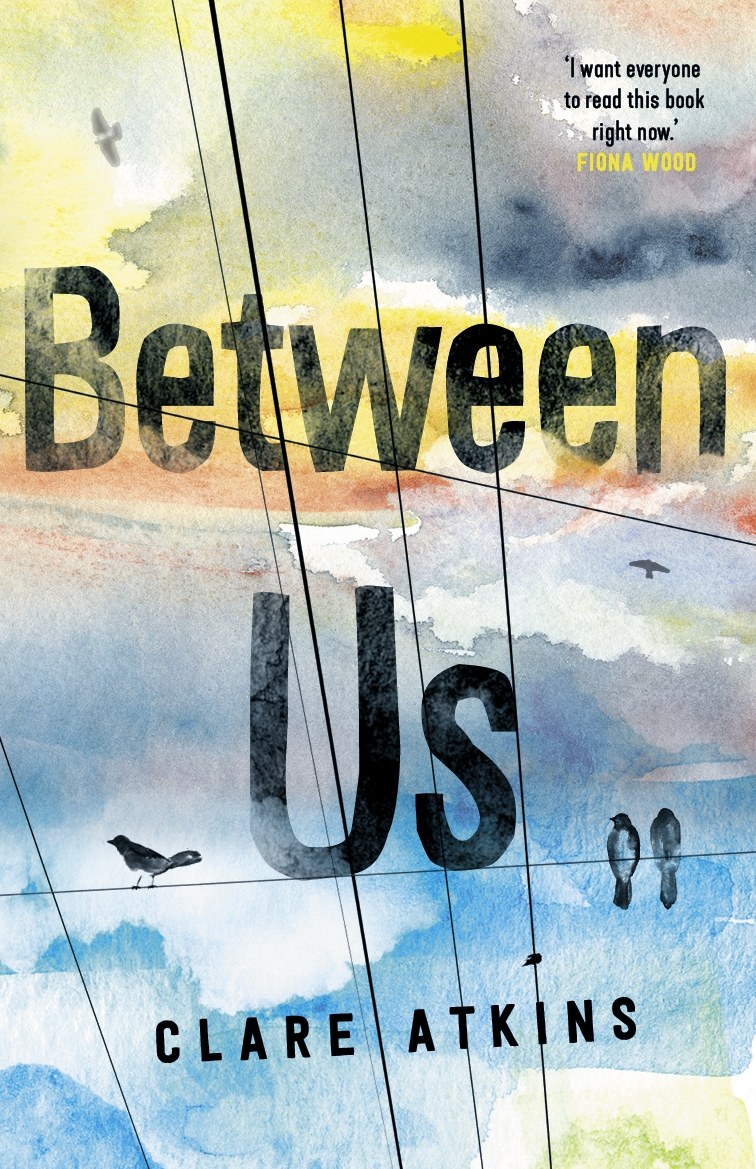
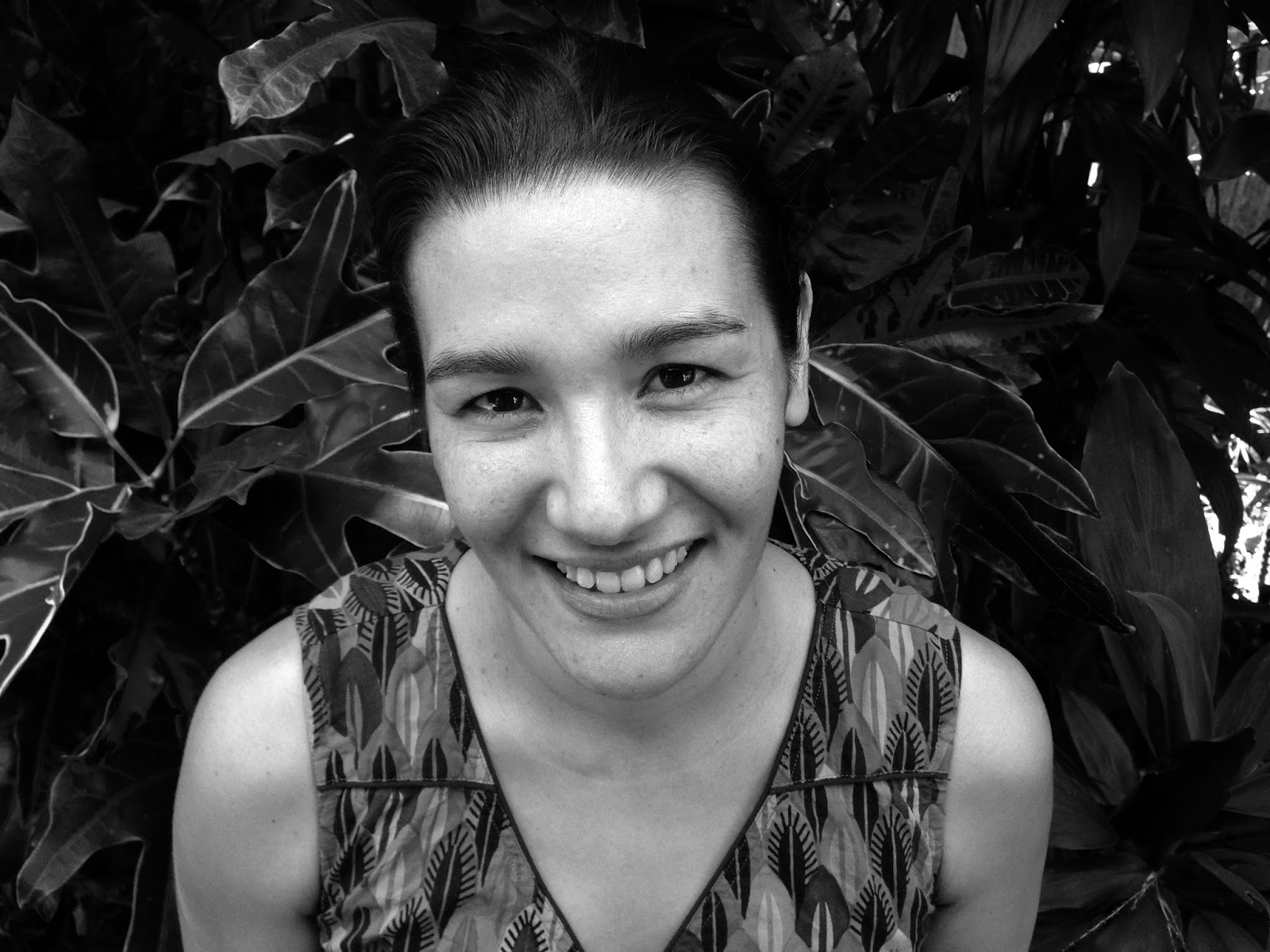
In the February edition of the North Melbourne Books newsletter we speak to award winning YA author, Clare Atkins, about her new novel Between Us.

It's a teenage love story and also a disturbing portrait of life inside an Australian detention centre. When Ana, an Iranian asylum seeker meets Australian-Vietnamese Jono, a relationship develops between the two. But there are enormous complications, as Ana, ashamed of her status as detainee, must live almost as a prisoner.

Clare Atkins's new novel is topical, heartfelt and an important contribution to Australia's asylum seeker literature. (Read our staff review of Between Us here.)

To view the latest edition of the North Melbourne Books newsletter, click here. To sign up for our monthly newsletter, click here.

North Melbourne Books talks to Clare Atkins

North Melbourne Books: Between Us tells the story of Iranian asylum seeker Ana. She is kept at Wickham Point Detention Centre with her mother and younger brother. During the day Ana is allowed to attend the local high school. There she meets Jono, an Australian-Vietnamese boy whose parents have split up. As the relationship between Ana and Jono deepens, a riot at the detention centre breaks out. Its repercussions will be far reaching for Ana and Jono.

What made you want to write a teenage love story centred around the plight of asylum seekers in detention?

Clare Atkins: Well, firstly, who doesn’t love a love story? But, more seriously, my main desire was to use a personal, character driven story to explore Australia’s changing attitudes to immigration, asylum seekers and multiculturalism. My father is Vietnamese and my mother is Australian. I’ve always felt like I’ve grown up in between cultures, and it’s these in-between areas that I was eager to explore. Jono and Ana both inhabit that space. Jono is the son of a Vietnamese migrant,
but sees himself as completely Australian. Ana’s life is in limbo; she is neither really living in Australia nor free from her memories of Iran. My interest in asylum seekers comes from volunteering to coordinate children’s activities at Villawood Detention Centre in my early twenties, and more recently visiting people at Wickham Point. Some of my extended Vietnamese family also arrived at Australia by boat. I was interested to research the very different reception those first boat arrivals received compared to today, and tried to weave that sense of history into the novel. Jono and Ana, and Jono’s father Kenny, who works in the detention centre, felt like the perfect characters to bring the story to life.

NMB: The novel presents a very realistic picture of life in detention, especially all the small rules and regulations, many which seem over the top. How did you do the research for the story?

CA: I did extensive research over several years, talking to asylum seekers, settlement workers, government employees, security guards, teachers, settled refugees and many more. This was challenging at times because of the Border Force Act, which prevents people working with asylum seekers from speaking out about the conditions they witness in detention centres. There were multiple meetings in cafes in which interviewees said: ‘I’m happy to talk but I don’t want my name anywhere near this.’ Local organisations such as the Darwin Asylum Seeker Support and Advocacy Network (DASSAN) and the Melaleuca Refugee Centre were a huge help in making sure I got the details right. I was also very lucky to work with two key consultants – Natasha Blucher, a refugee advocate who has worked closely with asylum seekers for many years, and Shokufeh Kavani, an Iranian writer and artist.

NMB: Australia’s detention regime remains a very controversial issue. Your book discusses the personal struggles that people go through. Did writing on such a sensitive issue, where real lives are at stake, make the process difficult? Did you feel a bit of a weight on your shoulders?

CA: At times it did feel like a huge weight. There was the temptation to try to make the story lighter. I adore Eleanor and Park by Rainbow Rowell and initially thought Between Us might have that kind of playful tone. But the more research I did the more that approach felt dishonest for Jono and Ana’s story. Of course, there is still joy and connection and fun, and the characters are trying to live normal teenage lives, but it became clear I needed to be honest about the other side of things too. Reading A Little Life and hearing Hanya Yanigihara’s closing speech to the 2016 Sydney Writers’ Festival was a real turning point for me. She talked about the responsibility of authors to show the dark as well as the light. And once I fully committed to that the story came together and felt real and honest, and the process became a little easier.

NMB: Between Us is a novel that tries to change hearts and minds on a fraught issue. Are you hopeful that the situation will improve for people in detention in the future, despite all the current difficulties?

CA: I wish I could say I’m hopeful but unfortunately I’m not. Australia’s treatment of asylum seekers often feels like one step forwards, two steps back. The political ground and rules are constantly shifting, and it’s all too easy to forget that the laws governing asylum seekers are not just words on paper, they are decisions that affect real people’s lives. I hope Between Us will allow readers to experience life behind the barbed wire fences - to have an intimate, if vicarious, experience of what as asylum seeker’s life may be like. The novel is fiction - it isn’t didactic and I don’t have any answers or solutions. But the one thing that was evident to me in Ana’s story, and the true stories of the many people still in detention today, is that our current approach is inhumane. There must be a better way forward.

NMB: What books are you enjoying reading at the moment?

CA: I’ve been enjoying Australian young adult fiction like Words in Deep Blue by Cath Crowley, and reading cli-fi, including James Bradley’s Clade. I also love my daily dose of Nayyirah Waheed’s poetry on Instagram – I need to get a hold of her books.

Between Us, by Clare Atkins. Published by Black Inc. $19.99

Friday, January 26, 2018

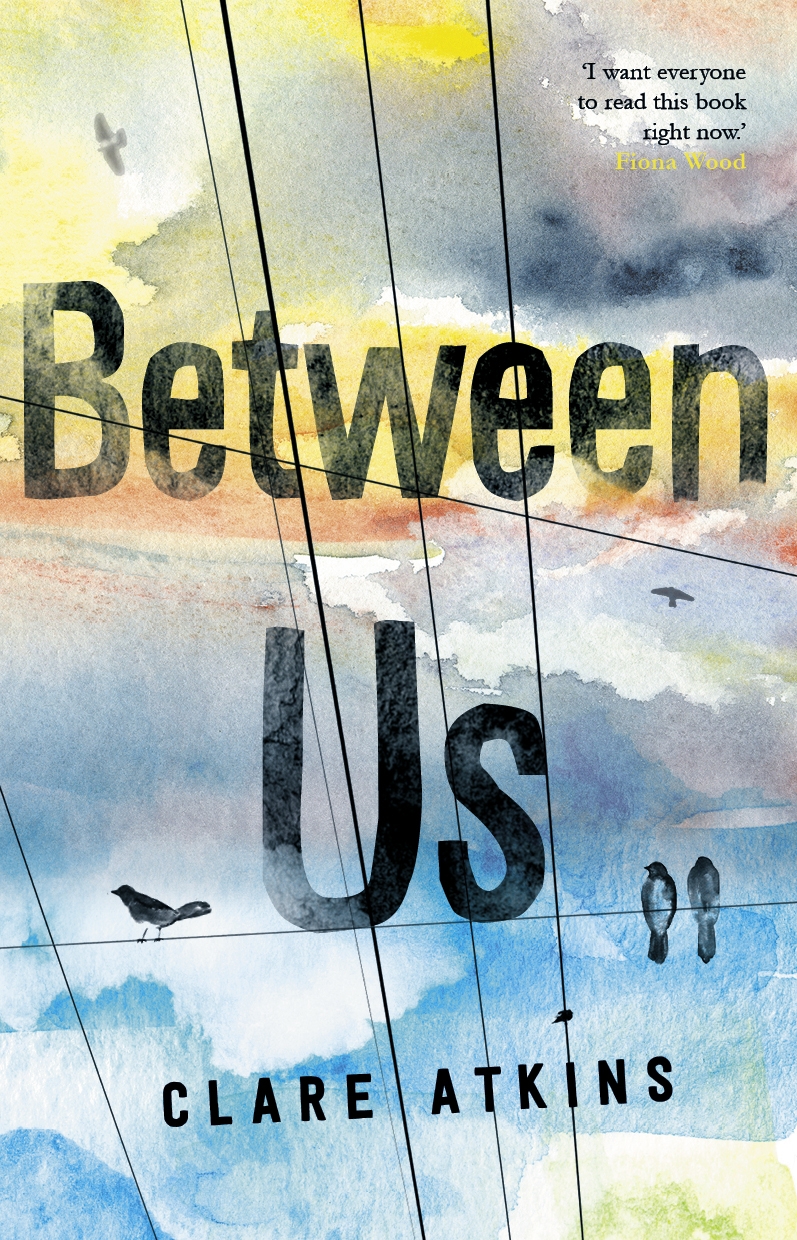
Between Us, by Clare Atkins

Staff review by Chris Saliba

A teenage love story and a faithful depiction of life in an Australian detention centre.

Ana is an Iranian asylum seeker, kept in detention at Wickham Point Detention Centre with her mother, Maman, and younger brother, Arash. They have been transferred from Nauru, but Maman’s partner, Abdul, has had to stay behind due to a criminal charge. He punched a wall. Ana is living two lives, because during the day she is let out of detention to attend high school. Her life behind the razor wire she tries not to discuss.

Early on at school she meets Jono. She feels embarrassed, almost ashamed, to admit to him that she lives in detention. Jono has a complicated story of his own. His parents have recently split up and he’s not talking to his Australian born mother (his father is Vietnamese). Jono is moody, frustrated and often acting out. A final twist in his story is the occupation of his father, Kenny. Kenny is a guard at Wickham Point Detention Centre. He’s been told not to trust the asylum seekers – they’re always trying to get something out of you.

Kenny has suspicions that Jono has started a relationship with Ana and is determined to stop it. When a riot breaks out at the detention centre, tragedy and heartbreak ensue for Ana and Jono.

Between Us follows Clare Atkins’ award winning debut novel, Nona and Me. The story is told in the voices of the three main characters, Ana, Jono and Kenny. The plot and events are quite straight forward: troubled yet sensitive bad boy meets beautiful, intelligent Iranian girl with complex background. Atkins moves skilfully through the troubled world of teenage love, capturing the language, pop culture references and general angst of being young. Over this she delicately weaves a nuanced drama of asylum seeker life in Australia – the brutality and toughness.

The great achievement of Between Us is in how it marries teenage fiction to a well researched  depiction of Australia’s detention centres. We witness all the small rules and regulations that asylum seekers have to comply with. For example, in one scene when Ana agrees to meet Jono at the pictures, she doesn’t inform the officer who must accompany her on excursions outside the detention centre. Once the officer finds out, Ana is threatened with the incident being reported. In another scene, when Jono tries to present Ana with some watermelon cut into wedges and placed in a plastic container, the attending officer says that this isn’t permitted. Throughout the book we are reminded that asylum seekers are referred to by a number, another way to humiliate and dehumanise.

A delicate teenage love story and a truthful presentation of life in an Australian detention centre.

To sign up for our monthly newsletter, featuring new releases, book reviews and favourite articles from around the web, click here.

Between Us, by Clare Atkins. Published by Black Inc. ISBN  9781760640217  RRP: $19.99

Friday, January 12, 2018

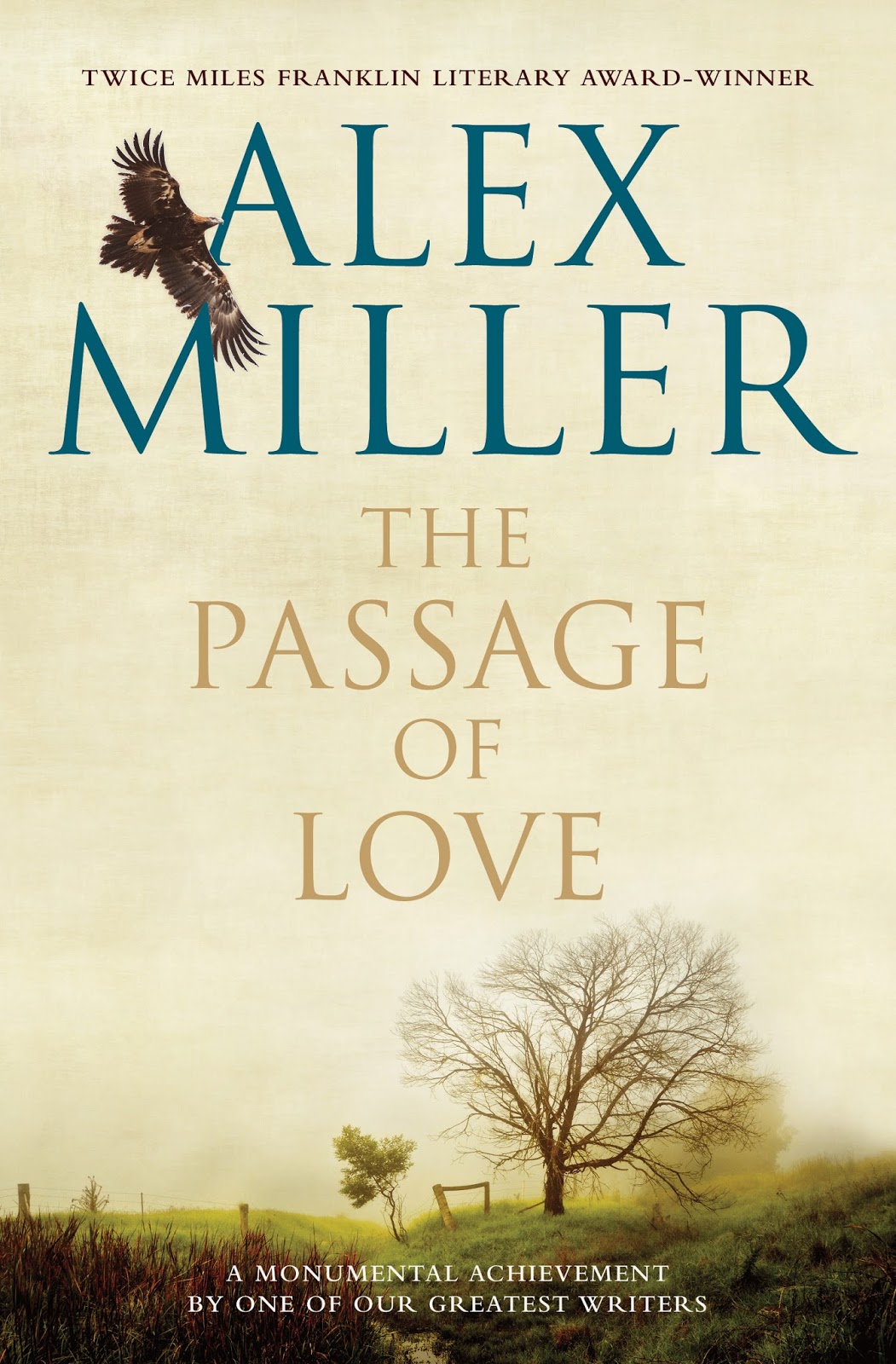
The Passage of Love, by Alex Miller

Staff review by Chris Saliba

Alex Miller's new novel is a work of autobiographical fiction that concentrates on Australian life in the 1950s and 60s.

Robert Crofts, who left his homeland in England at the age of sixteen, has been working as a stockman in Queensland. One day he decides to travel south to Melbourne and try his luck there. On his first night he sleeps rough on Caulfield's train platform. The station master tells him of a sympathetic nearby boarding house he should try and so he presents himself, with no job and no money. The landlady, a no-nonsense type of woman, takes him on nonetheless. Robert finds work, starts to make some friends and has an affair with the elusive Wendy, a writer for a socialist newspaper. He falls in love with her (more likely lust), but she is a free spirit and can't be pinned down.

The relationship with Wendy ends in frustration and disappointment, but then someone at the boarding house introduces Robert to Lena, a middle-class girl. The two fall into a problematic relationship and eventual marriage. Lena has unresolved psychological problems and is probably anorexic (her stark thinness and refusal to eat much is often noted). When her mother suddenly dies of a stroke she actually jumps for joy, declaring she's free at last.

A large part of The Passage of Love (it runs to 580 pages) covers Robert and Lena's troubled, almost loveless marriage. Once they're married, Lena runs off to Italy, against Robert's will. When he eventually finds her, she's a mess. From there on the marriage is almost sexless. What keeps them together is a shared pain: in a strange way they're both broken people. Their sufferings are only alleviated once they both find fulfillment in art, Robert through his writing and Lena through her drawing.

The first half of The Passage of Love is riveting. Miller does a terrific job of evoking the uncertainties of youth and the loneliness of being alone in a new place. He breathes life into Melbourne in the late 1950s and early 1960s with his descriptions of its streets, stores and various characters. His confrontation with a fellow boarder and university teacher is gut wrenching in its stark rendering of class differences. Miller even includes an Indigenous voice in Robert's friend and fellow stockman from Queensland, Frankie. We learn of the humliations Aboriginal people had to put up with in 50s Australia.

The third act of the novel tapers off a bit as it concentrates on the troubled relationship between Robert and Lena. Sometimes it feels like the story is meandering. Theirs is not an inspiring love affair and the reader is tossed back and forth as Robert and Lena try to figure out where they stand with each other. There's no strong commitment, just a lot of uncertainty and pain. It's also hard to decipher exactly what has made the middle-class Lena so emotionally and psychologically closed in.

Despite these caveats The Passage of Love is a very enjoyable read, with a lot of astute observations and well developed characters with complex inner lives. Alex Miller writes with the simplicity and directness of a Tolstoy.

The Passage of Love, by Alex Miller. Published by Allen & Unwin. ISBN: 9781760297343 RRP: $32.99

To sign up for our monthly newsletter, featuring new releases, book reviews and favourite articles from around the web, click here.