Showing posts with label Chris Hubbard Reviews. Show all posts

Tuesday, June 7, 2016

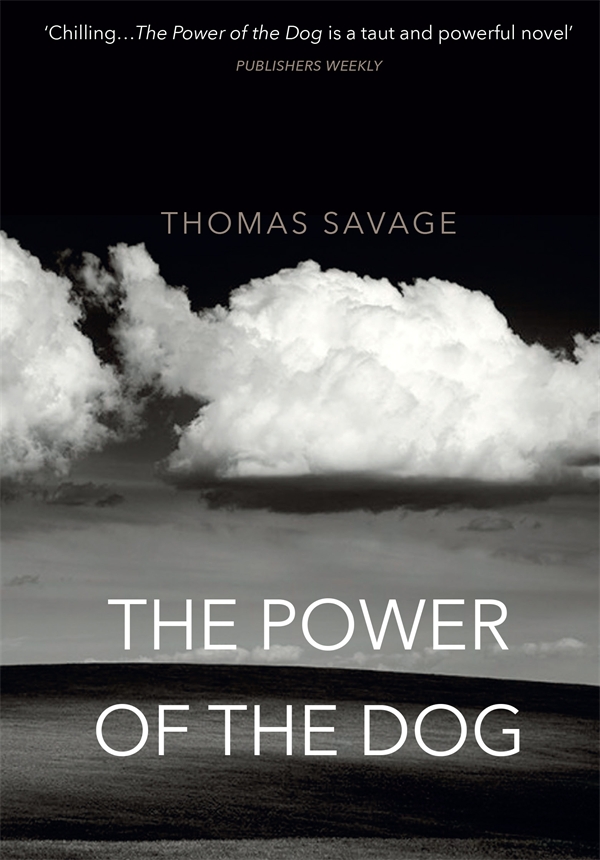
The Power of the Dog, by Thomas Savage

Staff Review by Chris Hubbard

An astonishing yet little known American Western novel from the 1960s gets another lease of life. 

First published in 1967, The Power of the Dog is a dark and disturbing tale of the American West. Set during the 1920s it is the story of two brothers, Phil and George Burbank, who take over the running of a ranch when their elderly parents retire to Salt Lake City.

Phil and George, despite being adult siblings who still share the same bedroom, are strikingly opposite in character and build. Phil is tall, wiry and quick-witted. He is also malicious and condescending with a mile-long cruel streak. He constantly belittles George, calling him “Fatso” and makes fun of his brother’s slow yet thoughtful approach to life. George is a kind soul who upon meeting Rose, recently widowed and a mother of one, decides to marry her and bring her to the ranch.

The jealous Phil takes an immediate dislike not only to the pitiable Rose but also to her son Peter. Phil dismisses the boy as a “sissy” and soon begins an onslaught of mental warfare against the new family. At first Rose tries valiantly to co-exist with Phil but his relentless teasing and tormenting eventually wears her down. Rose starts to develop chronic headaches and panic attacks which lead her to “self medicate” with alcohol. Peter on the other hand, caught up in his own private world and dealing with the earlier suicide of his father, appears oblivious to what is going on. But people can only be pushed so far and unforseen plans are being hatched.

Having grown up on a sheep ranch, Thomas Savage wrote this book with plenty of experience to draw upon. It’s a brutal and cynical novel about man’s inhumanity not only toward his own kind but also to the natural world. The novel begins with a shocking aspect of cattle farming which immediately lets the reader know that this is no romanticised account of life in the American West. Rose’s descent into alcoholic despair could easily have become the subject of melodrama but Savage makes the reader feel every anxious moment of her mental deterioration. The Power of the Dog is a brilliant book  that could almost be described as a psychological horror Western. Despite the bleak subject matter it abounds with astonishing and poetic images. Definitely worth discovering!

The Power of the Dog, by Thomas Savage. Published by Vintage Classics.  ISBN: 9781784870621 RRP: $22.99

To sign up for our monthly newsletter, featuring new releases, book reviews and favourite articles from around the web, click here.

Sunday, January 31, 2016

North Melbourne Books February Newsletter - featuring Amy Stewart


In the February edition of the North Melbourne Books newsletter we talk to American writer Amy Stewart about her fiction debut, Girl Waits With Gun.


When Amy came across the true story of the Kopp sisters, three young women who in 1914 joined forces with the local sheriff, she knew she had her next book.  Girl Waits With Gun is an absorbing historical drama, its gorgeous language perfectly capturing the times. Amy tells us what inspired her about the story and what helped her to write it.

To view our latest February edition, click here. To sign up for our monthly newsletter, click here.

North Melbourne Books talks to Amy Stewart

North Melbourne Books: Girl Waits With Gun tells the true life story of the Kopp sisters - Constance, Norma and Fleurette - who in 1914 find themselves in a heated dispute with a rich, belligerent silk factory owner. When he tries to bully the three young women with his gang of men, the sisters join forces with the local sheriff. He teaches them how to use a gun and offers protection but ultimately it is the sisters who must combine their inner strengths to fight not only kidnapping and death threats but also public ridicule. It’s an amazing story, all fully researched from the historical record. What was it about these women, especially Constance, that leapt out at you and inspired you so much?

Amy Stewart: I think I liked Constance right away because she was kind of a misfit, and don’t we all identify with that? At the age of 35 she was unmarried, still living at home. She very much wanted a job but it wasn’t so easy in 1914. And she was a large woman – almost 6 feet tall, 180 pounds. She would have towered over most of the men at that time. She must have felt like she didn’t fit in in so many ways, but thanks to this accident, she found her calling.

And I loved the idea of writing about three sisters! Their personalities are very much based on real life. I was able to interview family members who gave me hints about what they were like, and I tried to stay as true to that as I could. Norma really was very grumpy and anti-social, and Fleurette was, in real life, very fashionable and theatrical.


NMB: While the story is based on fact, where the record is missing you’ve filled in the gaps using your imagination. Did you find yourself putting aspects of your own personality into the story?


 AS: That was the challenge - in spite of everything I knew about them, there are all kinds of gaps in their story. I knew that if I could write it as historical fiction, I could fill in those gaps.

I’m not confined to the facts, although I try to be true to them. If something really happened, I kept it (with very few exceptions, all of which are explained at the end.)

I didn't deliberately put my own personality into those characters, but I suppose that's inevitable. I did really enjoy writing Norma, because I got to be as misanthropic as I wanted to be, and not apologize for it! Norma hated just about everybody. We've all had days like that, right?


NMB: One of the book’s great achievements is how it reads very much like it was written at the time the events take place, in 1914. How did you get the tone and voices right? Were there any particular writers from this period that you found helpful?

 
AS: Thank you! I put a lot of thought into how to make this book sound like it was written in Constance's speaking voice, as if she's sitting in a chair in her living room telling you what happened. I read - and continue to read - a lot of fiction from the era, including Mary Roberts Rinehart and other crime fiction writers. Of course, I was reading a lot of newspapers. I also found it very helpful to read transcripts of any kind - Congressional testimony, court proceedings, speeches - Google has scanned a lot of stuff like that, so you can spend hours reading transcripts of people speaking in their own words. All of that made such a difference. I have a long list of words and phrases that struck me as unusual to modern ears but common in those days. My copyeditor and I go round and round about what would have been common usage at the time. For instance, in those days it was "lip-stick," not "lipstick." Little things like that occupy a great deal of my time.


NMB: Girl Waits With Gun is enormously enjoyable to read. You’ve also written a second Kopp sisters book. Was the book as much fun to write as it is to read?


AS: Yes, the second book will be out in September 2016. They've been great fun to write, but of course, it's a lot of work. I work every day, whether I feel like it or not, which means that I have good days and bad days.

I think it's always more fun to read a book than to write one, just as it's probably more fun to watch a movie than to make one. I've never made one, but it seems to me that making a movie must involve hours of tedium, lots of things going wrong, accidents, cost overruns, equipment failures...and writing a book is the same, in a way. It's fun, but it's also work.


NMB:  What books are you enjoying reading at the moment?


AS: I just finished Pearl S. Buck's The Angry Wife, about a white Southern husband and wife just after the Civil War. The wife is not at all happy that the South lost the war. It's not a perspective I've thought about much. It's a fantastic book, especially considering the fact that it came out in 1947, seven years before the landmark Supreme Court case that ordered an end to segregation in the South.

Girl Waits With Gun by Amy Stewart is published by Scribe. RRP: $32.99

Monday, November 30, 2015

North Melbourne Books December Newsletter - featuring Nicholas Gannon

In the December edition of the North Melbourne Books newsletter we talk to American children's illustrator and writer Nicholas Gannon about his debut novel The Doldrums.

It's a funny, exciting story about friendship and imagination that's sure to win your heart.

To view our latest December newsletter, featuring new releases and book reviews, click here.

Or to subscribe to our newsletter, click here.


North Melbourne Books talks to Nicholas Gannon


North Melbourne Books: The Doldrums is the thrilling story of young Archer B. Helmsley whose lonely life as a dreamer is interrupted when his globetrotting explorer grandparents go missing, last seen atop an iceberg in Arctic waters. At first it looks as though Archer’s desire to find them will be frustrated by his parents' strict rules surrounding family and school-life. Were you anything like Archer, dreaming of grander adventures ahead?

Nicholas Gannon: Yes, I probably was in certain ways. I was never very fond of school and I was always looking forward to what came next. And in an odd way, during that time, I think the imaginings felt more real than the real stuff did.

NMB: Archer eventually befriends two children, Adelaide and Oliver, who join him in his quest. Adelaide has arrived from France after her dreams of becoming a ballet dancer are ended by the loss of a leg in an accident. When asked what happened her reply is that a crocodile took it! Have you found that good humour and  imagination come in handy when coping with life’s slings and arrows?

NG: Hamlet had a few things to say about those slings and arrows and I’ve found humor to be a good way to oppose them. It’s important to find something to laugh about in terrible situations because otherwise we’ll all end up wallowing away in our own misery and that’s not very attractive.

NMB: The children in The Doldrums appear to exist in a world unaffected by the digital age. Hand-written letters, newspapers, books and libraries are not only essential to the plot but also give the book a sense of depth and tangibility. Do you miss this “golden age” of communication?

NG: Yes, for The Doldrums, I didn’t want it to be placed with specific location or time period. And I do enjoy the aesthetics of that bygone era. It’s more enjoyable to illustrate a letter than it is to illustrate a cellphone. And I’d argue that it’s more enjoyable to receive a letter than it is to receive a text message. A letter creates a connection. At one point, the person who wrote it also held that paper in their hand. I think you summed it up well with the word ‘tangible.’ We’re very connected today, but it all feels less tangible.

NMB: Your wonderful illustrations for The Doldrums give the book a real sense of strangeness and mystery.  Had you always wanted to both write and illustrate a novel for children and just how difficult was it to juggle the two?

NG: I knew I wanted to be an illustrator from the beginning, but it wasn’t until the age of twelve or so that I realized I would also like to write stories. I wouldn’t say it’s difficult to juggle the two. In many ways they inform one another. The only challenge is that unlike other writers, when I finish a book, I don’t get to move on to the next right away. When I finish the writing I have to begin the final illustrations and that makes the whole process considerably longer.

NMB: What books are you enjoying reading at the moment?


NG: Cat’s Cradle by Kurt Vonnegut. He’s brilliant. His writing has a similar command to that of Mark Twain. They even had similar haircuts. I’m wondering if they used the same barber.


The Doldrums, by Nicholas Gannon. Published by HarperCollins $24.99

Tuesday, October 6, 2015

Did You Ever Have a Family, by BIll Clegg

Staff review by Chris Hubbard


Bill Clegg's debut novel is a tightly controlled and beautifully constructed  book peopled with flawed yet sympathetic  characters

Bill Clegg, whose previous books include two memoirs, has written a remarkable first work of fiction. It’s a riveting account of a family tragedy,  yet despite the solemn subject matter is also a story about forgiveness and compassion.

A small town in Connecticut is preparing for the wedding of  June Reid’s daughter but the unimaginable occurs when the family house burns down taking with it the lives of June’s daughter Lolly, her fiance, June’s ex-husband as well as her current boyfriend.

After the funerals, June’s only thought is to climb into her car and drive on for days on end. Caught up in a maelstrom of grief she arrives at a motel on the West Coast and it is there she inhabits Room Six and begins to try to make sense of an unravelled life. 

But this novel is not just about June’s life as each chapter offers a different perspective on what has happened.  Lydia, the mother of June’s much younger boyfriend, has also been deeply affected by the deaths. Not only does she have to endure the barbs of small town gossip but also the loneliness of her life. During this period of intense vulnerability she falls victim to a telephone scammer who tries to  extract money from her.

Other chapters introduce characters who barely know June and Lydia but were connected because of the upcoming wedding. A florist, a baker and most importantly a young drug-affected man whose job it was to help with preparing the garden but who also witnessed what could have been the cause of the fire.  The two women who own the motel that June stays at also have their own story to tell when Cissy, their cleaner, befriends June.

Lest anyone think this book sounds unbearably bleak you can be assured that it’s Bill Clegg’s compassionate writing that transcends its grim subject matter. The mystery surrounding the cause of the fire is just one element of a tightly controlled and beautifully constructed  book peopled with flawed yet sympathetic  characters.  It’s a story about the ways in which people seemingly disconnected from each other can be drawn together via the most tenuous of circumstances. There’s an awful lot of loneliness in Did You Ever Have a Family but the reader isn't left believing there is never any hope.

Did You Ever Have a Family, by Bill Clegg. Published by Jonathan Cape. ISBN:  9780224102360 RRP: $32.99 

To sign up for our monthly newsletter, featuring new releases, book reviews and favourite articles from around the web, click here.

Thursday, August 6, 2015

Edith's Diary, by Patricia Highsmith

Staff review by Chris Hubbard

First published in 1977 this welcome reissue proves there was much more to Patricia Highsmith than her Ripley crime novels.

Edith’s Diary begins in the 1950s and tells the story of Edith Howland, her husband Brett and their young son Cliffie who have moved from New York City for a new life in a suburb of Pennsylvania . At first everything seems relatively normal until Cliffie starts to exhibit more than just the usual childhood habit of sullen bad behaviour.

Early on it is revealed that Edith has been given a diary which she keeps on a semi-regular basis. It soon becomes apparent that the diary is not an accurate account of her family life and that she has tried to create an ideal "picture perfect" family portrait. Things could not be further from the truth. Cliffie’s strange behaviour leads him to jumping off a bridge and into a freezing river for no apparent reason. Her husband has begun an affair with a co-worker and the arrival of elderly bed-ridden Uncle George adds further fuel to the domestic nightmare.  As Edith’s life becomes more unbearable her diary reveals the complete opposite. Cliffie is depicted as happily married, with children and a globe-trotting job to boot. The grim reality is that as an adult he is unemployed most of the time, drinks to excess and starts to display cruel and vindictive behaviour toward Uncle George.

Edith's Diary is a remarkable novel full of darkly brilliant observations of family life gone sour. It’s a book where each time you think you know where it’s heading Highsmith manages to effortlessly redirect your expectations and emotions.  Edith’s life is equal parts ordinariness and tragedy, which Highsmith creates in such a precise and sympathetic way.  Fans of novels such as Revolutionary Road and Mrs Bridge are sure to find Edith’s Diary a gripping and disturbing read.

Edith's Diary, by Patricia Highsmith. Published by Virago. ISBN: 9780349004556  RRP: $19.99

To sign up for our monthly newsletter, featuring new releases, book reviews and favourite articles from around the web, click here.

Friday, May 8, 2015

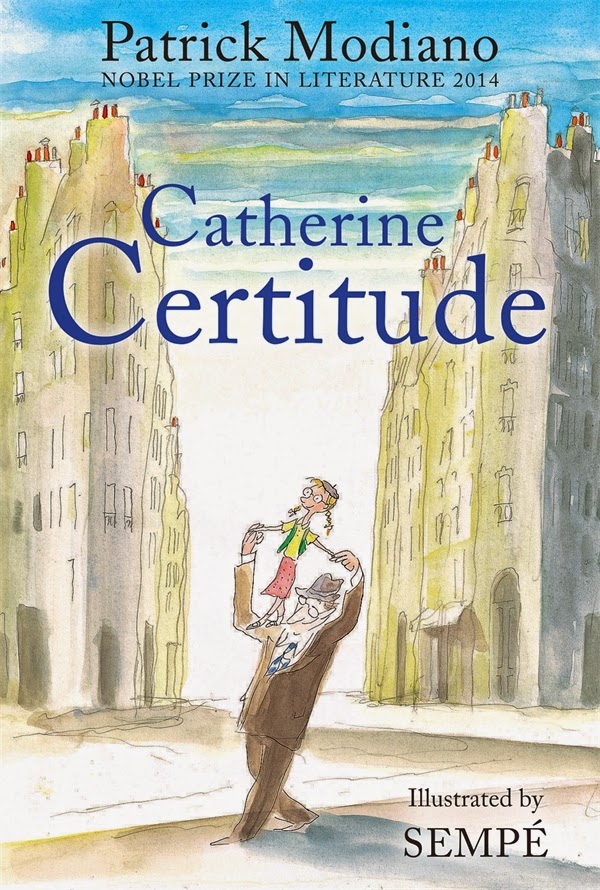
Catherine Certitude, by Patrick Modiano. Illustrated by Sempe.

Staff review by Chris Hubbard

This poignant yet humorous novella by the Nobel Prize winning author Patrick Modiano is being promoted as a book for children but just maybe adults will enjoy it even more.

First published in France in 1988 this short and lovely book describes the childhood memories of Catherine Certitude as she looks back to a life shared with her father. The adult Catherine is now living in New York and runs a dance studio.  While gazing upon her own daughter taking a dance class she is reminded of her time spent taking dancing lessons from Madame Dismailova. Catherine would remove her glasses when practicing and remembers that “without my glasses, the world lost its roughness and became as soft and downy as the big pillow I used to lean my cheek against before going to sleep.”

Catherine’s father runs an import business but details are sketchy as to what he is really up to.  Her mother, also a dancer,  has moved to New York.  Modiano has a remarkable ability to depict what it feels like to inhabit an actual childhood memory, albeit one brought to visual life by Sempe’s wonderful illustrations.  Like many fortunate children, Catherine’s childhood years abound with fond memories untarnished by the harsh realities that her parents may have been experiencing.  There is one funny sequence when Catherine and her father are invited to a fancy cocktail party and  have to keep up the pretence  of actually owning a car in order to appear socially acceptable.  Indeed, there is a touch of Jacques Tati’s Mon Oncle in Monbiot’s gentle and astute observations of human nature.  This is an absolute gem of a  book that will sit pleasantly in the memory long after its final page has been turned.


Catherine Certitude, by Patrick Modiano. Illustrated by Sempe. Published by Andersen Press. ISBN:9781783443024 RRP:$22.99

To sign up for our monthly newsletter, featuring new releases, book reviews and favourite articles from around the web, click here.

Wednesday, May 6, 2015

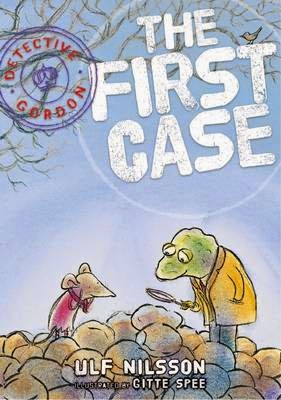
Detective Gordon: The First Case, by Ulf Nilsson. Illustrated by Gitte Spee


Staff Review by Chris Hubbard

Detective Gordon: The First Case marks the delightful debut of an ingenious toad and his quick-footed mouse companion.

Not all Scandinavian crime novels are written for adults. Detective Gordon – The First Case is a sweet and funny tale for very young readers.  When a squirrel called Vladimir discovers that 204 of his precious nuts have been stolen he turns to Detective Gordon for help.  Gordon is an old toad who has a smart and perceptive view on crimes committed within his animal neighbourhood.  He is in charge of a small one man police station and spends his days eating cupcakes, drinking tea and nodding off while writing important papers. His favourite part of the job however, is applying his massive official rubber-stamp onto documents.  The “Kla-dunk” sound it makes is most gratifying to his old ears.

Detective Gordon soon realises that he needs someone a bit more nimble than himself to assist in solving this crime. He enlists the aid of a young mouse called Buffy and the pair soon become good friends. Buffy desperately wants to have her turn at stamping notes but understands that she will have to earn that privilege by hatching a plan to catch the nut thief.

Ulf Nilson has written a gentle and funny book and the wonderful colour illustrations by Gitte Spee only add to this book’s charm. The special relationship between the younger and older characters is warmly depicted and Detective Gordon's thoughtful and philosophic views on crime and cupcakes makes for a lovely chapter-book perfect for early readers or reading aloud.

Detective Gordon: The First Case, by Ulf Nilsson.  Illustrated by Gitte Spee. Published by Gecko Press. ISBN: 9781927271506. RRP:$15.99.

To sign up for our monthly newsletter, featuring new releases, book reviews and favourite articles from around the web, click here.

Monday, February 16, 2015

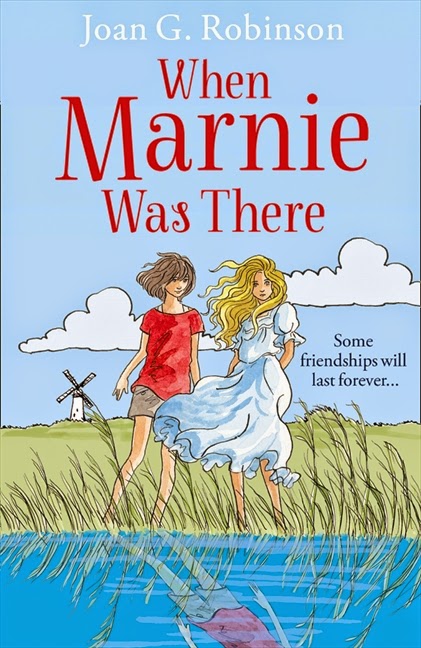
When Marnie Was There by Joan G. Robinson

Staff Review by Chris Hubbard

Joan G. Robinson’s haunting and dream-like novel for childen is finally back in print and ready to be discovered by a new generation of readers.

Anna is a young orphaned girl who lives a lonely solitary life with her Auntie. When doctors suggest she should move to the country to recuperate after an attack of asthma she is sent to Norfolk to live with the well meaning Mr and Mrs Pegg.  Anna’s overt shyness is mistaken for a difficult personality and she is forever chided for having an “ordinary face” and not making more of an effort to get along with people. While exploring  the marsh shores surrounding the village Anna meets the enigmatic Marnie and the two girls soon become friends. Anna is delighted to finally meet someone who not only wants to play and spend time with her but also completely understands her.  Marnie is best described as mysterious, living in what appears to be a large run-down house abandoned during the day but coming to life at night to reveal its occupants.

Anna soon finds all her time devoted to Marnie, for when the two girls are together they seem to share so much in common. But actually trying to locate Marnie is not always an easy task.  Marnie has a habit of not always turning up at pre-arranged times and sometimes a frustrated Anna finds herself falling asleep while waiting for her new friend to arrive. 

The joy and magic of this novel is wondering what is actually happening. Is Marnie real or imagined?  How much of what Anna sees is maybe a waking vision between dreams? Or is something more sinister about to occur?  Joan G. Robinson has created a wonderful, atmospheric classic that draws you in from the very first page. There is a  melancholic sadness to this book that springs forth from a remarkable depiction of time and childhood memory.

When Marnie Was There, by Joan G Robinson. Published by Harpercollins. ISBN:9780007591350 $14.99

To sign up for our monthly newsletter, featuring new releases, book reviews and favourite articles from around the web, click here.

Friday, October 24, 2014

Lucky Us, by Amy Bloom

Staff Review by Chris Hubbard

Amy Bloom’s wonderfully addictive and cinematic novel tells the story of two sisters’ lives set against 1940’s wartime America.

Lucky Us begins with the line “My father’s wife died. My Mother said we should drive down to his place and see what might be in it for us”  Upon delivering 12 year old Eva to her father’s other home, her mother swiftly abandons Eva to live with her precocious and selfish older half-sister Ida and Edgar her father, who is an expert conniver.

Ida has dreams of making it big in show business, so with Eva in tow she runs off to Hollywood. It’s not long before Ida finds work as an extra but the goal of more substantial acting work constantly eludes her. The girls’ father eventually tracks them down and the trio end up working for a wealthy Italian family where Edgar is employed as a butler and Ida as governess. It isn’t long before Ida falls head over heels in love with Reenie the family’s household cook and this is when the lives of the sisters takes a dramatic turn. Reenie has a husband called Gus who is of German background and the shocking moment when Ida reports him to the authorities in order to remove him from the romantic triangle sets off a series of unpredictable sequence of events.

Amy Bloom has written many short stories and her skill is evident in an astonishing ability to pack so much detail into a book just over 240 pages. While reading Lucky Us I found myself thinking back to the terrific pithy novels of James Cain and John O’Hara. Although neither noir or crime, Amy Bloom’s  enthralling and atmospheric book has a similar visceral punch as Double Indemnity or Butterfield 8 where fate conspires to entangle ordinary lives.

Lucky Us, by Amy Bloom. Published by Granta. ISBN: 9781847089397  RRP: $19.99

To sign up for our monthly newsletter, featuring new releases, book reviews and favourite articles from around the web, click here.  
Saturday, October 18, 2014

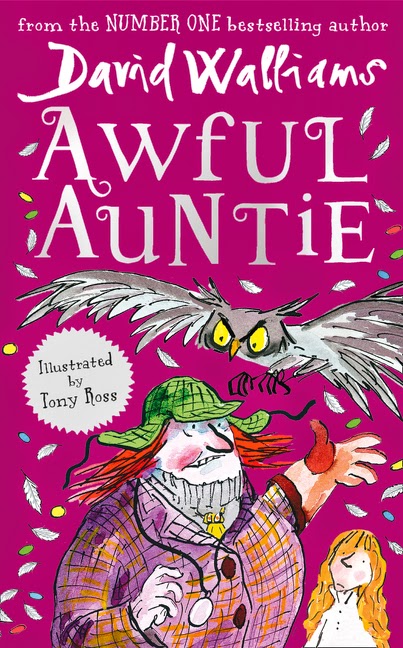
Awful Auntie, by David Walliams

Staff Review by Chris Hubbard

The wacky and wonderful David Walliams strikes again and this time he’s taking us on a frantic, funny and naughty adventure set in 1930’s Britain.

Twelve year old Stella Saxby is the sole heir to Saxby Hall after her parents die in mysterious circumstances. Her truly awful Auntie Alberta has her sights set on permanently removing Stella and taking possession of the family estate.  Alberta is assisted by her longtime owl companion called Wagner and it is their villainous deeds that keep this hilarious tale rollicking along.

David Walliams' books appeal to children and adults alike simply because they are delightfully absurd and funny. Awful Auntie is no exception. It may be over 400 pages but it speeds along like a dive bombing owlet and is ably supported by Tony Ross’s delightful and clever illustrations.  Much like Quentin Blake’s style, Ross’s sketchy and manic drawings are the perfect match for Walliams’ off-the-wall writing.  Indeed, I got the impression that Walliams' endless descriptions of eccentric activities were done not only to keep us laughing but to test his illustrator's ability to keep up with him. Tony Ross succeeds on all counts.

The character of Awful Auntie dominates the book’s proceedings with a wonderful sense of classic comedic timing  She reminded me of one of the Two Fat Ladies with her relentless upperclass British tenacity. Auntie Alberta's backstory is particularly funny for she was addicted to playing tiddlywinks and ended up losing all her money on this game.  She trains her owl Wagner to drop stink bombs over village fetes, steal ladies knickers from the washing line and duet with her on favourite German arias.   Not since Dastardly and Muttley, from the Hanna-Barbera cartoons, has there been such a hilarious and inept villainous duo. I loved the way in which Alberta’s dialogue is printed in capital letters that get bigger and bigger the more awful she gets. It reminded me of that email rule equating capitals with shouting.

Young readers will surely adore Awful Auntie and relish her wicked ways.  It's a Girl's Own pastiche that will appeal to both sexes.  Alberta's naughtiness is ultimately not rewarded but few will resist taking part in this hilarious panto-like romp.

Awful Auntie, by David Walliams.  Published by HarperCollins. ISBN: 9780007453610 RRP: $19.99

To sign up for our monthly newsletter, featuring new releases, book reviews and favourite articles from around the web, click here.
Tuesday, October 14, 2014

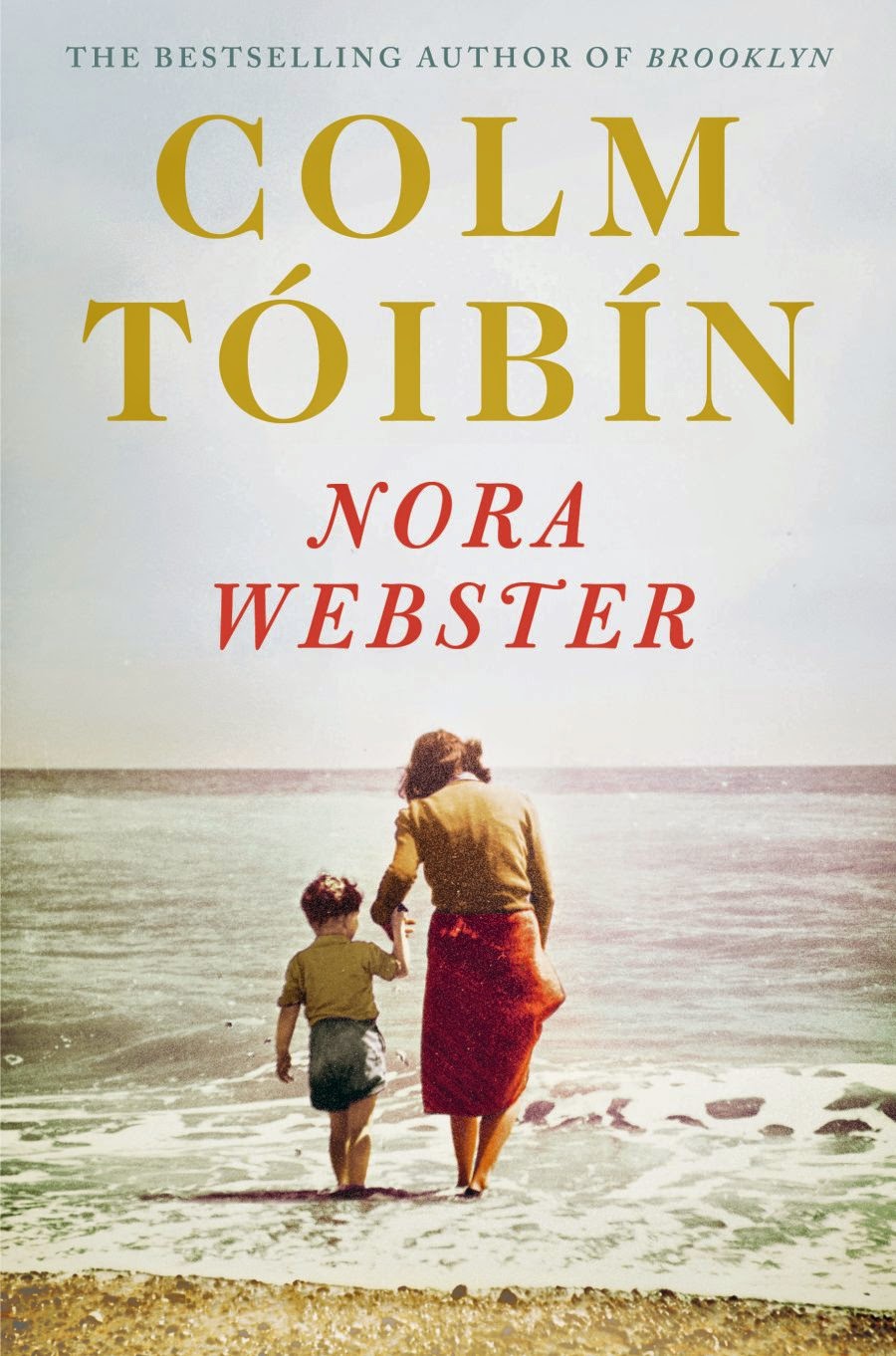
Nora Webster, by Colm Toibin

Staff Review by Chris Hubbard

Colm Toibin's latest novel, Nora Webster, tells of a woman's grief and stress at having to re-enter the world of work and society after losing her husband.

Set in late 1960’s Ireland, Nora Webster is the story of a woman coming to  terms with the death of her husband, Maurice Webster, a teacher in their small village. Nora took comfort in the fact that she could rely on him - a highly regarded pillar of the community - to negotiate the difficulties of social life, while she was content to stay at home and look after her four children.

After his death, Nora finds herself having to deal with well meaning but sometimes unwanted visits from friends and family, offering advice and assistance. The realisation that she has to get her life back on track sees Nora returning to work in an office she was happy to leave upon marriage. There is a sad humility in the scenes where Nora has to prove herself a competent employee to people she thought she would never have to meet again.  It is a work environment where petty office politics and gossip are the order of the day.

Colm Toibin is a master of subtlety and the quiet moment. So much of the emotional punch of Nora Webster is to be found in the very things left unsaid by characters unable to articulate their real thoughts and feelings. It is quite obvious that the stammer developed by one of Nora’s sons is a manifestation of pent up emotional stress. Nora’s emergence from her grief corresponds with her newfound assertiveness, which is often misunderstood for rudeness.

There is a point in the novel when Nora discovers the joy and wonder of classical music via the record collection of some new friends. This is a turning point in her life and proof of the restorative power that music can have.  Nora begins to take singing lessons, realising full well that her best days as a vocalist are behind her, but now understanding how she can draw on her love of music to maybe ease her grief and suffering.

Nora Webster is such an honest and truthful novel where the very ordinariness of people’s lives makes for the most remarkable reading. There is a wonderful scene where Nora is persuaded by an overbearing hairdresser to change her hair colour to add some spark to her life but the end result just causes more anxiety.  Perhaps the highest praise I can give this novel is that should Nora Webster ever go out of print it could re-emerge as a Persephone Classic – a publisher that champions books about women and the little battles they win in the midst of family and community life.

Nora Webster, by Colm Toibin. Published by Picador.  ISBN: 9781743533284  RRP: $19.99

To sign up for our monthly newsletter, featuring new releases, book reviews and favourite articles from around the web, click here.
Sunday, October 5, 2014

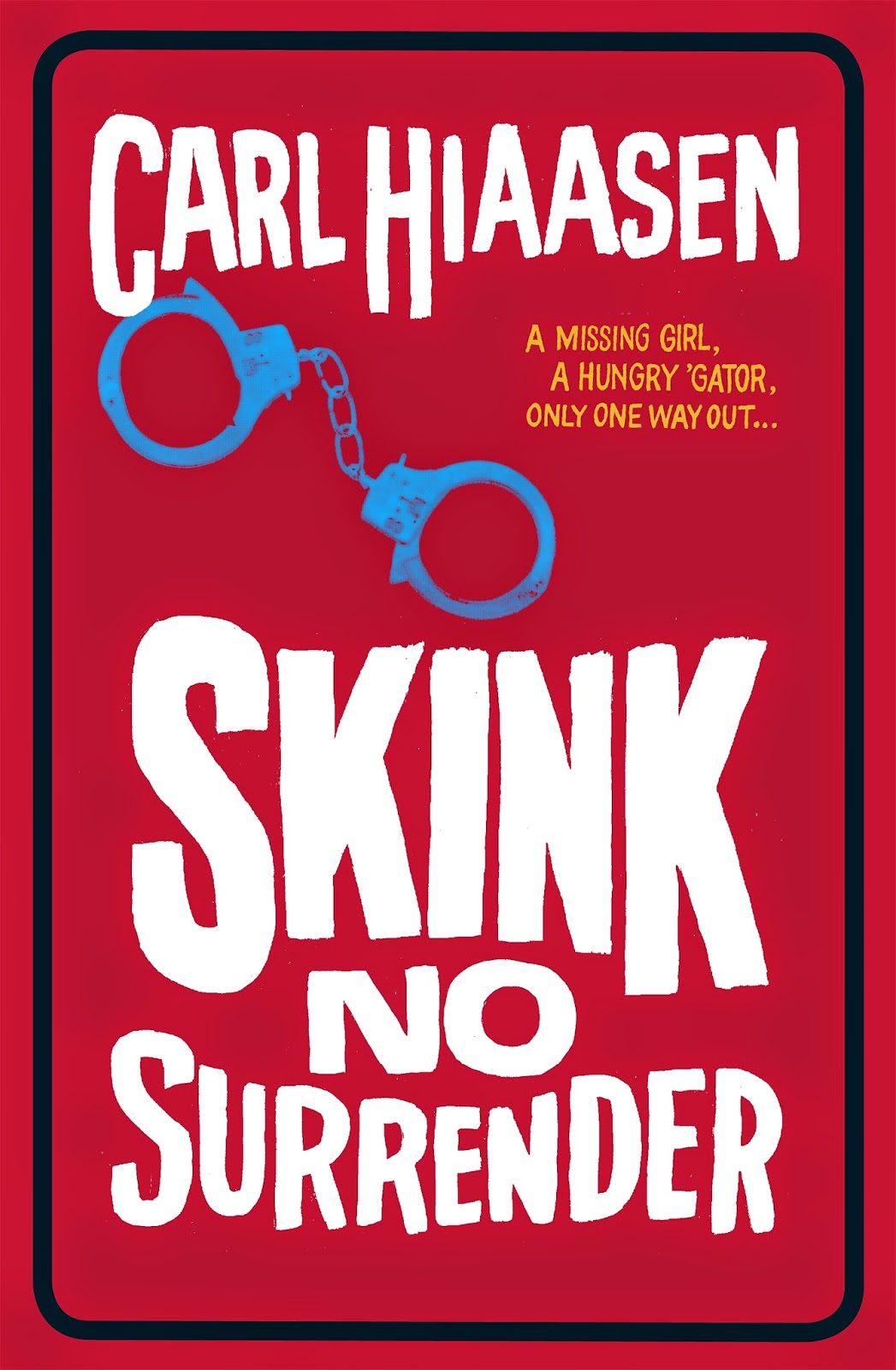
Skink No Surrender, by Carl Hiaasen

Staff  Review by Chris Hubbard 

Carl Hiaasen’s first book for teenagers is a fun white-knuckle ride of a novel that takes the reader on a perilous journey through the everglades of Florida. 

When 14-year-old Richard discovers that his cousin Malley has run away with a stranger she met via the internet, he is determined to bring her home. As fate would have it  Richard stumbles across a wild old man called Skink. We first meet Skink buried under beach sand, breathing through a drinking straw and on the lookout for turtle egg poachers.  Skink agrees to help Richard track down his cousin when it turns out that the disappearance is actually a kidnapping. When this very odd couple eventually track down Malley, who is being held captive aboard a houseboat, the action goes into overdrive. Gun toting baddies, feral pigs, elusive woodpeckers and a very hungry alligator all add to this book’s thrilling breakneck pace.

Skink No Surrender is full of classic Hiaasen characters but it is Skink with his dishevelled hippy appearance, one eye missing (shades of Long John Silver) and predilection for eating roadkill that makes for such a surprisingly appealing character. He is an ex-soldier, former governor who is now an eco-terrorist and hermit of the wilderness, handing out his own particular form of dude justice. Despite their initial differences, Skink and Richard soon bond, with Skink imparting a lot of funny yet insightful wisdom along the way. At one point Skink is hit by a truck when attempting to help a baby skunk across the road so he is forced to teach Richard to drive by sitting atop a hefty John Steinbeck novel. Skink is even able to persuade Richard, a budding birdwatcher, to read Rachel Carson’s Silent Spring.

Carl Hiaasen’s ability to combine environmental and family concerns with crazy characters and dangerous locations make his latest novel for teenage readers a real gem.  Highly recommended!

Skink No Surrender, by Carl Hiaasen. Published by Indigo. ISBN: 9781780622255  RRP: $19.99

To sign up for our monthly newsletter, featuring new releases, book reviews and favourite articles from around the web, click here.