
Showing posts with label Patricia Highsmith. Show all posts

Wednesday, May 4, 2016

Carol, by Patricia Highsmith

Staff review by Chris Saliba

Patricia Highsmith's 1950s million seller was the first gay novel with a happy ending.

It's incredible to think that Patricia Highsmith's second novel, Carol (originally published as The Price of Salt), sold close to a million copies in its day. Rejected by her publishers Harper and Bros., Carol received favourable reviews when it appeared in 1952 as a hardback under the pen name Claire Morgan. Sales really took off when it came out as a paperback.

In the 1989 afterward, Highsmith writes that Carol was the first gay novel to have a happy ending. Usually life ended pretty badly for gay fictional characters. In the fifties, when the novel was riding high, letters poured in every week from readers with personal stories.

The story itself was worked up from a brief encounter. Highsmith took on a Christmas job working at a New York department store late in 1948, where she was assigned to the doll counter. (It's amusing to imagine the misanthropic Highsmith selling toys.) One day a striking blonde woman in a fur coat came into the store, looking to buy a doll for her daughter. Struck by the woman's beauty, Highsmith later that night wrote an eight page treatment for the novel that would become Carol.

In the novel, the mysterious woman is reimagined as Carol Aird. She is in her early thirties, beautiful, blonde, well heeled, oozing confidence, yet also deeply troubled. Her marriage to her husband, Harge, is a complete mess, for the most part due to Carol's ambivalence and unresolved sexuality. All that's left of the relationship is the messy divorce process. The couple have a daughter, Rindy. One day when shopping at a New York department store, Carol meets the young saleswoman Therese Belivet. The two are taken with each other and start having a few innocent yet exploratory luncheon dates. The relationship slowly develops, with Therese visiting Carol's large, middle-class house. Therese also has a current relationship underway with a budding artist, Richard, although that is on shaky ground. Eventually Carol and Therese are having a full blown affair, yet there are all sorts of problems. Carol has a custody battle on her hands over her daughter, Rindy, and Therese must finally figure out what to do about her relationship with Richard (he claims to be madly in love with her.)

Like all of Patricia Highsmith's fiction, Carol is a real page turner. Even in this supposedly straight forward love story, there is plenty of suspense and tension as Carol and Therese navigate their way through a hostile world. Highsmith has the ability to mesmerise, always giving her story a perfect pacing, revealing details and action in just the right way. Another enjoyable aspect of her fiction is how she brings alive locations, textures and smells – New York restaurants, busy streets and regular, everyday people. There are also plenty of personal observations and experiences which are woven into her fiction. In Carol, you really feel like you've been transported back to 1950s America.

My only criticism is that the relationship between Carol and Therese seems weirdly disengaged, even odd. It's hard to figure out exactly why they love each other. Their attitude veers between passionate declarations of love to aloofness and an eerie distance. The tone is often quite blasé. Their dialogue is full of strange silences and pregnant pauses, of fits and starts, giving it an unfathomable, even cryptic air. If this love affair were expressed as music, it would be a jarring, experimental piece.

While I enjoyed Carol, the more I read of their relationship the more I waited for some kind of genuine intensity of feeling, but that never arrived.

Carol, by Patricia Highsmith. Published by Bloomsbury. ISBN:  9781408865675 $19.99

To sign up for our monthly newsletter, featuring new releases, book reviews and favourite articles from around the web, click here.

Wednesday, April 20, 2016

The Blunderer, by Patricia Highsmith

Staff review by Chris Saliba

The Queen of Suspense, Patricia Highsmith, doesn't disappoint with this Kafkaesque tale of suburban misery and murder. 

Patricia Highsmith’s third novel, The Blunderer (1954), opens with a gruesome murder scene. Helen Kimmel has been beaten and stabbed to death. We don't know who the murderer is, or the motive. The next chapter we are introduced to Walter Stackhouse, a young, dissatisfied lawyer hoping to open his own practice. He is married to Clara and the couple live your average American 1950s lifestyle. They are both pretty miserable. Clara is overly critical and finds nothing is ever good enough. She actually prefers the company of her pet dog. They have discussed divorce several times, but keep pulling back from the brink. Pretty soon into the novel Walter starts up a relationship with Ellie Briess, a young, pretty and sympathetic music teacher.

While Walter’s personal life is unravelling in horrible slow motion, he reads about the murder of Helen Kimmel. Her husband, Melchior Kimmel, a bookshop owner, has been suspected of the crime, but not convicted. Walter becomes fascinated with Kimmel, tracking him down and visiting him at his bookshop. He goes so far as to ask a few mildly probing questions about the death of his wife. It becomes clear to the reader that, subconsciously at least, Walter may harbour some wild, perverse fantasy of ending his problems with Clara in the same way. Whether he would do such a thing, of course, remains another matter.

Hence the two men start to mirror each other in strange and uncanny ways, the reader invited to look at them as slightly distorted images of each other. It’s almost like Dostoyevsky’s early novel, The Double, a story about two men who look alike, hold the same job and the same name, working as office clerks, with the one tormenting the other.

Further dramas unravel. Upon hearing bad news of her mother’s ill health, Clara decides to visit her. She catches a bus, and Walter follows her. At one of the stops Clara goes missing. She is later found dead, having fallen off a cliff. It’s pronounced suicide, but when police officer Lawrence Kirby investigates, he starts to see darker possibilities.

This is a compelling read, perhaps my favourite Patricia Highsmith so far. The novel strongly resembles something by Kafka, in that it continues unfolding endlessly like a nightmare, leaving the reader wondering where the whole mess will end up.There’s also a lot of Dostoyevsky’s Crime and Punishment in The Blunderer, especially in the character of officer Corby.

Brilliant, if scary, fun. Highsmith writes it as she sees it: the misery of 1950s America - the booze, the desire for money, sexual problems, unhappy marriages - working the whole mess into a rivetting psychological striptease.

The Blunderer, by Patricia Highsmith. Published by Virago Classics. ISBN: 9780349004525 RRP: $19.99

To sign up for our monthly newsletter, featuring new releases, book reviews and favourite articles from around the web, click here.
Wednesday, November 18, 2015

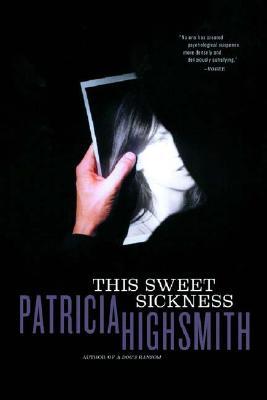
This Sweet Sickness, by Patricia Highsmith

Staff review by Chris Saliba

Patricia Highsmith’s 1961 psychological thriller, This Sweet Sickness, unfolds its dark tale with the fine precision of a Swiss watch.

David Kelsey is a smart young scientist. He works for a company that makes stain resistant fabrics. While his professional life is as decent and upstanding as you could imagine, his personal life is spiraling out of control. He’s literally a divided character. With echoes of The Importance of Being Earnest, David lives in a boarding house during the week, but on weekends retreats to his own house where he lives under the name of William Neumeister. It is in this secluded house that he entertains wild romantic fantasies, centred around an old love, Annabelle.

Annabelle married someone else while David was out of town for several months. The man she married, Gerald Delaney, David considers to be a dullard of the first order. What did she ever see in him? Refusing to see that his chance has irrevocably passed, David continues to pursue Annabelle, despite her increasing discomfort with his attentions. Understandably, Gerald Delaney, the husband, gets very fed up with David’s behaviour and tries to put an end to it. Then an unfortunate accident causes David to create a complicated, messy tangle of lies. He puts the blame for the accident on William Neumeister, his fake weekend identity, but that is a fabrication that is tricky to hold together. His life ends up becoming a desperate race to try and stop the truth from coming out. 

Books don’t come much more gripping than This Sweet Sickness. One has to admire Highsmith’s superb technical abilities. Each component of the story is so well put together, the events so exquisitely timed, the characters so realistically drawn, that from page to page you never know what’s going to happen next. Added to this is the book’s emotional truth. Highsmith taps into the dark, obsessive, self-deluding passions we are all capable of. It’s tempting to speculate how much David Kelsey is a self-portrait of Highsmith herself.

This Sweet Sickness, by Patricia Highsmith. Published by W.W. Norton and Company. ISBN: 9780393323672  $27.95

To sign up for our monthly newsletter, featuring new releases, book reviews and favourite articles from around the web, click here.

Thursday, August 6, 2015

Edith's Diary, by Patricia Highsmith

Staff review by Chris Hubbard

First published in 1977 this welcome reissue proves there was much more to Patricia Highsmith than her Ripley crime novels.

Edith’s Diary begins in the 1950s and tells the story of Edith Howland, her husband Brett and their young son Cliffie who have moved from New York City for a new life in a suburb of Pennsylvania . At first everything seems relatively normal until Cliffie starts to exhibit more than just the usual childhood habit of sullen bad behaviour.

Early on it is revealed that Edith has been given a diary which she keeps on a semi-regular basis. It soon becomes apparent that the diary is not an accurate account of her family life and that she has tried to create an ideal "picture perfect" family portrait. Things could not be further from the truth. Cliffie’s strange behaviour leads him to jumping off a bridge and into a freezing river for no apparent reason. Her husband has begun an affair with a co-worker and the arrival of elderly bed-ridden Uncle George adds further fuel to the domestic nightmare.  As Edith’s life becomes more unbearable her diary reveals the complete opposite. Cliffie is depicted as happily married, with children and a globe-trotting job to boot. The grim reality is that as an adult he is unemployed most of the time, drinks to excess and starts to display cruel and vindictive behaviour toward Uncle George.

Edith's Diary is a remarkable novel full of darkly brilliant observations of family life gone sour. It’s a book where each time you think you know where it’s heading Highsmith manages to effortlessly redirect your expectations and emotions.  Edith’s life is equal parts ordinariness and tragedy, which Highsmith creates in such a precise and sympathetic way.  Fans of novels such as Revolutionary Road and Mrs Bridge are sure to find Edith’s Diary a gripping and disturbing read.

Edith's Diary, by Patricia Highsmith. Published by Virago. ISBN: 9780349004556  RRP: $19.99

To sign up for our monthly newsletter, featuring new releases, book reviews and favourite articles from around the web, click here.