Another book that purports to be a Shakespearean biography, this time of Mrs Shakespeare. We know next to zilch about Shakespeare. Of his wife, Ann Hathaway, even less. The most shocking thing we do know about the relationship is that Shakespeare made no provision for his wife in his will. We shouldn’t get our knickers in too much a knot over this though: there may have been provisions made for Mrs Shakespeare outside of the will. Also, we don’t know what some of the customs of the time may have been for the provision of widows.
Germaine Greer I find a difficult writer. I can’t figure out if she’s a charlatan or a very clever woman. British novelist Angela Carter’s description of the Australian feminist has always stuck with me: a clever fool. Greer has a habit of marshalling a massive amount of material, and so we sit back and think, my, isn’t she erudite. But she throws all this colour at her canvas in a haphazard way and you stand back and look at it and think, what a mess. Or rather, yes, you’ve raised some interesting points there Germaine, but what does it mean?
I recently read an article Germaine Greer wrote on the role of Australia’s governor general. The writing leads on to a sort of climax, where you expect some type of revelation, but rather ends with a whimper, a sick joke about Dame Edna becoming the first female governor general.
I’m inclined to think of Greer as some sort of intellectual confidence woman, or trickster. A lot of her thoughts are like useless but fun toys. They amuse momentarily, but don’t sustain.
After that long preamble, let me say I quite enjoyed Shakespeare’s wife. Basically Greer sets out to ‘prove’ (of course we know she can’t do that, so maybe she wants us to rather believe) that Shakespeare did not loathe his wife, as is popularly thought, and may indeed have loved her very much.
Greer also wants us to entertain the possibility that Mrs. Shakespeare could read and write. (Scholars also like to think of Ann Hathaway as a uneducated drudge, good for nothing but bearing children and menial work.)
In many ways, I thought this a beautiful feminist project. As we know nothing about Mrs Shakespeare, the biography of an unknown Elizabethan woman must necessarily be a self portrait of Germaine Gree herself.
And so, the author takes us through the work, life and loves of Elizabethan women, their sufferings and their joys, elevating them out of obscurity and turning them into living and breathing beings.
Thinking about what it must have been like for Mr and Mrs Shakespeare in Elizabethan England is a job that requires imagination, it needs a novelist’s touch and empathy.
Even though Germaine Greer knows little of Ann Hathaway, it is moving how much affection she has for this unknown woman.
Showing posts with label Shakespeare. Show all posts
Showing posts with label Shakespeare. Show all posts
Saturday, February 23, 2008

Thursday, December 7, 2006
Macbeth, by William Shakespeare
The other day I re-read Shakespeare’s Macbeth for the umpteenth time. The introductory scene of the witches I once committed to memory. Let’s see how much I remember:
When shall we three meet again?
In thunder, lighting, or in rain?
When the hurley burley’s done,
When the battle’s lost and won.
Where the place?
Upon the heath.
There to meet with MacBeth.
Come Graymalkin,
Paddock calls anon.
Fair is foul and foul is fair,
Hover through the fog and filthy air.
I made a small boo-boo now that I check through my Penguin Shakespeare. Line eight should read, ‘I come, Graymalkin.’. A Graymalkin is a cat. Plus I forgot to put in first witch, second witch etc. Otherwise it’s pretty correct.
Macbeth is about eighty pages, and boy how quickly everything moves along. Macbeth’s valiant and noble performance as a soldier gains him a promotion. From Thane of Glamis he picks up the title Thane of Cawdor.
For anyone who knows the story, and what MacBeth ends up doing, you gasp when you realise that the previous Thane of Cawdor had lost his title, and his life, for treason. ‘There’s no art to find the mind’s construction in the face,’ the King laments after having pronounced a sentence of death on the man's head. (Interestingly, George Orwell thought your face was pretty well fixed by age 50.)
What a bad omen that Macbeth should have this honoured title bestowed on him, straight from such a ‘disloyal traitor’. ‘What he hath lost,’ King Duncan says, ‘noble Macbeth hath won.’
Are the odds stacked against Macbeth behaving properly from the beginning?
Like the Greek tragedies, Macbeth’s destiny appears pre-determined. The play begins by three witches tantalising Macbeth with a prophecy that he will be Thane of Cawdor, then King. Yet right off the bat these seemingly happy fortune tellings are mixed in with so much darkness. The three witches are hardly the types you’d like to get this news from – they represent foulness and filth, able to conjure up evil merely at the ‘pricking of my thumbs’.
They also give Macbeth a strange kind of consolement. They tell him that no man of woman born shall harm him. Hence he thinks himself utterly invincible.
His inability to think a little more subtly undoes him, for Macduff tells him,
‘Despair they charm,
And let the Angel whom thou still hast serv’d
Tell thee, Macduff was from his mother’s womb
Untimely ripped.’
D’oh! Then there’s the highly improbable Birnam Wood coming to Dunsinane. Macbeth rightly thinks this is impossible (‘That will never be’), but an inability for subtle thinking again undoes him. The soldiers cut off branches from Birnam wood to use as camoflaugue. Didn’t Oscar Wilde say something about the improbable always happening? How right he was.
Macbeth is given a false sense of security by this advice, allowing him to plunge headlong into some of his maddest exploits. Strange how it is women who spur on so much of the action – after all, it’s Lady Macbeth who eggs him onto the first murder which makes all the other murders possible. Then of course there are the witches.
Reading Macbeth you also marvel at how Shakespeare actually imagined Macbeth, imagined someone so deep and wide. It’s as though Skakespeare could completely, utterly and truly realise things he’d never experienced.
Then there's the language. Camille Paglia said that Shakeapeare wrote in a super tongue. I think he wrote in his own language entirely. I'm not one for sporting analogies, but Shakespeare took the English language and kicked it so far into the future that we'll never be able to catch up with his genius.
Indeed, open up the play at any of Macbeth’s major speeches and there you have the genius of the English language. And to think, he never bothered to get any of his great works published, but would have been content (or so one presumes) to let them slide into obscurity.
When shall we three meet again?
In thunder, lighting, or in rain?
When the hurley burley’s done,
When the battle’s lost and won.
Where the place?
Upon the heath.
There to meet with MacBeth.
Come Graymalkin,
Paddock calls anon.
Fair is foul and foul is fair,
Hover through the fog and filthy air.
I made a small boo-boo now that I check through my Penguin Shakespeare. Line eight should read, ‘I come, Graymalkin.’. A Graymalkin is a cat. Plus I forgot to put in first witch, second witch etc. Otherwise it’s pretty correct.
Macbeth is about eighty pages, and boy how quickly everything moves along. Macbeth’s valiant and noble performance as a soldier gains him a promotion. From Thane of Glamis he picks up the title Thane of Cawdor.
For anyone who knows the story, and what MacBeth ends up doing, you gasp when you realise that the previous Thane of Cawdor had lost his title, and his life, for treason. ‘There’s no art to find the mind’s construction in the face,’ the King laments after having pronounced a sentence of death on the man's head. (Interestingly, George Orwell thought your face was pretty well fixed by age 50.)
What a bad omen that Macbeth should have this honoured title bestowed on him, straight from such a ‘disloyal traitor’. ‘What he hath lost,’ King Duncan says, ‘noble Macbeth hath won.’
Are the odds stacked against Macbeth behaving properly from the beginning?
Like the Greek tragedies, Macbeth’s destiny appears pre-determined. The play begins by three witches tantalising Macbeth with a prophecy that he will be Thane of Cawdor, then King. Yet right off the bat these seemingly happy fortune tellings are mixed in with so much darkness. The three witches are hardly the types you’d like to get this news from – they represent foulness and filth, able to conjure up evil merely at the ‘pricking of my thumbs’.
They also give Macbeth a strange kind of consolement. They tell him that no man of woman born shall harm him. Hence he thinks himself utterly invincible.
His inability to think a little more subtly undoes him, for Macduff tells him,
‘Despair they charm,
And let the Angel whom thou still hast serv’d
Tell thee, Macduff was from his mother’s womb
Untimely ripped.’
D’oh! Then there’s the highly improbable Birnam Wood coming to Dunsinane. Macbeth rightly thinks this is impossible (‘That will never be’), but an inability for subtle thinking again undoes him. The soldiers cut off branches from Birnam wood to use as camoflaugue. Didn’t Oscar Wilde say something about the improbable always happening? How right he was.
Macbeth is given a false sense of security by this advice, allowing him to plunge headlong into some of his maddest exploits. Strange how it is women who spur on so much of the action – after all, it’s Lady Macbeth who eggs him onto the first murder which makes all the other murders possible. Then of course there are the witches.
Reading Macbeth you also marvel at how Shakespeare actually imagined Macbeth, imagined someone so deep and wide. It’s as though Skakespeare could completely, utterly and truly realise things he’d never experienced.
Then there's the language. Camille Paglia said that Shakeapeare wrote in a super tongue. I think he wrote in his own language entirely. I'm not one for sporting analogies, but Shakespeare took the English language and kicked it so far into the future that we'll never be able to catch up with his genius.
Indeed, open up the play at any of Macbeth’s major speeches and there you have the genius of the English language. And to think, he never bothered to get any of his great works published, but would have been content (or so one presumes) to let them slide into obscurity.
Saturday, March 25, 2006
Hamlet, by William Shakespeare
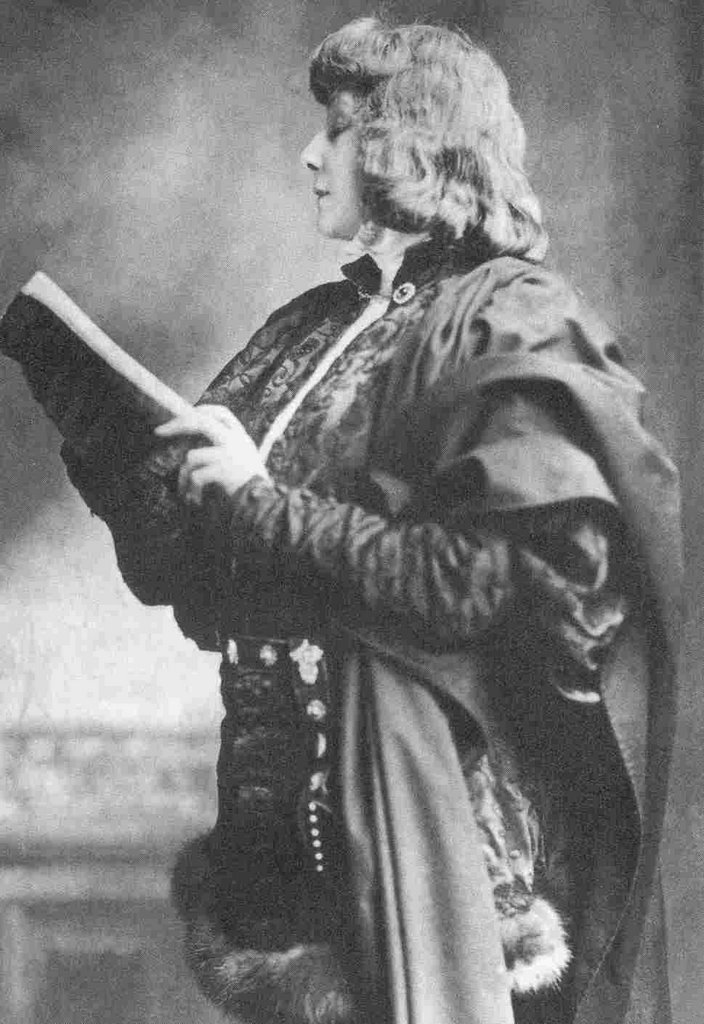 The introduction to my Dover edition of Shakespeare’s Hamlet (written between 1599-1601, when the poet was in his mid thirties) discusses what is thought to have been a prior version of Hamlet, known as the Ur-Hamlet, written some ten years previously. It is widely speculated that this original version was written by Thomas Kyd, who wrote the sensationalist, blockbuster style The Spanish Tragedy.
Anyone who has read Kyd’s The Spanish Tragedy will be immediately tempted to think this is so. The Spanish Tragedy has so many elements that appear in Hamlet and even Othello. Then there is another school of thought that thinks it was Shakespeare himself who wrote the original Ur-Hamlet, when he was in his mid fifties. Literary critic, Harold Bloom, in his Shakespeare, Invention of the Human, speculates on what that original Hamlet would have been like. I guess you could put it this way – Shakespeare’s first Hamlet would have been a mix of Kyd and Marlowe, minus the brilliant, ‘free agent of himself’ Hamlet of the 1601 version.
Poor Harold Bloom. So enamoured of the poet is he that he simply cannot bear to contemplate the possibility that Shakespeare might have pilfered a few ideas from that entertaining hack Thomas Kyd. It’s beyond me why we should really care. Surely great artists all the time are taking ideas from the popular culture as points of departure. Besides, the character of Hamlet, the personality I should rather say, is light years away from anything Kyd could ever hope to produce. Some philosopher, I forget which, said that the wise have more to learn from fools than fools have to learn from the wise. That’s my opinion when it comes to Shakespeare borrowing from Kyd.
Harold Bloom proposes that it was Shakespeare who wrote the original Ur-Hamlet, and that it was Kyd who later pilfered Shakespeare. That’s why The Spanish Tragedy is so redolent with Shakespearean tricks and gimmicks. Hmm. I’m not so sure about this. Doesn’t Heironomo in The Spanish Tragedy say exactly what Iago says at the end of Othello, after having caused so much mischief. ‘From this moment I’ll speak no more.’ Like Iago, he is to be dragged off to be tortured. Othello was written way after The Spanish Tragedy. Plus the fact that Harold Bloom describes Shakespeare’s own Titus Andronicus as a spoof on Kyd and Marlowe. Doesn’t this prove that The Spanish Tragedy, with its crassness, was an original invention, and not a copy from Shakespeare. It doesn’t make sense for Shakespeare to spoof his own ideas so savagely.
Enough of that though. I’ve read Hamlet at least half a dozen times and it forever amazes. Primarily of course there is the personality of Hamlet, the ‘freest agent of himself’, whose astonishing intelligence makes him hover above the action of the play. Then there is the absolute versatility of the text (some 4000 lines long, running to four hours of play time.) The peerless Australian author Christina Stead suggested it was the first novel ever written. I can’t help but agree: it does read like a novel. It seems impossible to think that the great speeches of the play could be absorbed aurally. Obviously they demand being read over and over.
This is in line with Harold Bloom’s other theory, that Shakepeare wrote Hamlet as a personal odyssey, and not necessarily for the stage. This makes complete sense too. It must have been a pet project. There is apparently little proof to support that it was ever acted in its entirety, and that if it was, it would have been only on a handful of occasions.
As Hamlet has come down to us, it is a play that can be read in any number of ways. It can be read for its psychological insights, for its poetry, its philosophy. It can be performed as a play, or its great speeches can be learned by heart. It is simply one of the most inexhaustable pieces of literature in the world.
The primary theme of course is one of action: to be or not to be. Should Hamlet act to avenge his father’s murder? What I love so much about Hamlet is how too much thinking and little action is seen to be an absolute sickness. Healthy people act but do not think. Unhealthy people think, but do not act. The young upstart Fortinbras ends triumphantly in the play, whereas deep-thinker Hamlet drags down all around him in death.
Indeed, there is so much disease in this play. When Hamlet’s mother, Queen Gertrude, cries that Hamlet has broken her heart in two, Hamlet responds, ‘Throw away the worser part of it’ – one assumes, the more diseased half.
Hamlet throws up all the questions we ask ourselves when we are in our more desperately contemplative moods, and gives no easy, or even complete, answers. Hamlet’s disease it too much thinking. No wonder it’s commonly thought that the best consolation for grief is work.
Last words to Harold Bloom. Discussing Hamlet he says:
‘Desire and destiny are contraries, and all thought thus must undo itself.’
No, last words to me. One wonders, is there any point then in thinking, reading and writing? Hamlet seems a border line case on this issue. When asked what he is reading he sighs, ‘words, words, words’.
(PS: Picture above is actress Sarah Bernhardt as Hamlet.)
Friday, March 3, 2006
Shakespeare: A Life, by Park Honan
Alas, this is quite a boring book. Apparently it is up to date with all the latest ‘new material’ that has come to light about Shakespeare. This biography takes you through a lot of the dull, day-to-day life of Elizabethan England – buying and selling of land, the work of councils, the willing of property.
As for ‘Shakespeare’ in all of this, you merely get his shadow. The life of his contemporaries is etched out in enough detail – we get glimpses of the theatres, taverns, shops and houses. Many of the controversies of the day are illuminated. Against this canvas we must stick our blank Shakespeare. In short, we know of the forces that must have shaped him – the politics, customs and religious beliefs. This goes a good way to letting us imagine what life for Shakespeare must have been like, but doesn’t much tell us about Shakespeare himself.
There are plenty of passages in this book where the author asserts Shakespeare must have been this, or this event would have shaped his mind thus. But this can only be sheer speculation. How can we ever know the mind who created characters like Iago and Macbeth? There is scant detail on what Shakespeare was really like as a person.
All that has come down to us are a few fleeting descriptions of him as a fairly easy going guy, of an open and honest character. If you really want to know Shakespeare, the only real way is through his poetry and plays.
I think the main problem with this book is that it goes into very academic detail about what we know of Shakespeare’s life – basically his business dealings that are on the public record. Then this is contrasted against his extraordinary work as a playwright. It’s this mixture of the banal and the extraordinary that make this book a somewhat disappointing read. Who cares about the minor details of Shakespeare’s life? And such speculations on how these events in his life impacted on his work are to be taken with a grain of salt.
If you want to read a terrific book on Shakespeare, read Harold Bloom’s Invention of the Human. Bloom does things the right way around, by writing a biography of Shakespeare’s plays.
This book is for dull academics who sit in dusty libraries poring over minutiae.
As for ‘Shakespeare’ in all of this, you merely get his shadow. The life of his contemporaries is etched out in enough detail – we get glimpses of the theatres, taverns, shops and houses. Many of the controversies of the day are illuminated. Against this canvas we must stick our blank Shakespeare. In short, we know of the forces that must have shaped him – the politics, customs and religious beliefs. This goes a good way to letting us imagine what life for Shakespeare must have been like, but doesn’t much tell us about Shakespeare himself.
There are plenty of passages in this book where the author asserts Shakespeare must have been this, or this event would have shaped his mind thus. But this can only be sheer speculation. How can we ever know the mind who created characters like Iago and Macbeth? There is scant detail on what Shakespeare was really like as a person.
All that has come down to us are a few fleeting descriptions of him as a fairly easy going guy, of an open and honest character. If you really want to know Shakespeare, the only real way is through his poetry and plays.
I think the main problem with this book is that it goes into very academic detail about what we know of Shakespeare’s life – basically his business dealings that are on the public record. Then this is contrasted against his extraordinary work as a playwright. It’s this mixture of the banal and the extraordinary that make this book a somewhat disappointing read. Who cares about the minor details of Shakespeare’s life? And such speculations on how these events in his life impacted on his work are to be taken with a grain of salt.
If you want to read a terrific book on Shakespeare, read Harold Bloom’s Invention of the Human. Bloom does things the right way around, by writing a biography of Shakespeare’s plays.
This book is for dull academics who sit in dusty libraries poring over minutiae.
Saturday, July 30, 2005
Othello
 After the London bombings, and the revelations that the criminals involved were British born, for some reason I thought, what character in literature would do the same thing? Shakespeare’s Othello immediately sprung to mind. Arch fiend Iago, who undoes Othello, must be the world’s greatest (if I can use that term) nihilist. He has an inward hate way beyond all reason. After I re-read the play I turned to Harold Bloom’s essay on the play, and was happy to see my sentiments echoed. Bloom lists Iago’s contemporary disciples, including international terrorists. (Although in the case of London, I guess you could almost argue that they were domestic terrorists.)
On page one of the play Iago gives his reason for hating Othello: he has passed him over for promotion. Later on he concocts other reasons, namely that Othello has cuckolded him. But who can believe that the straight up Othello could do such a thing?
Iago’s diabolical hate must have existed a priori though. So thoroughgoing in its destructiveness, so perversely theatrical, it can’t have happened purely because Iago was passed over by a man whom he had served faithfully for so long. Also Iago is a mere 28 years old! You expect him to be as old as time itself. Most 28 year olds would quickly ‘move on’, as we say today. It seems that Iago has always been deeply hateful, and was merely looking for a pretext to set his destructive theatre in motion.
Othello is the first play I read by Shakespeare that I immediately loved, and that reason was Iago. I thought he was the product of sheer genius, to create a character whose whole reason for being is hate. Plus some of those lines of his, they stay with you forever. I remember being especially impressed by ‘I am not what I am’. It reminds me of that line out of MacBeth where Duncan, after being betrayed by one of his generals says, ‘There’s no art to find the mind’s construction in the face’.
Frankly, I thought Iago had good reason to hate Othello. He’s too good to be true – in his idealised self I mean, not what he later performs. Plus the whole idea of honour beyond reproach I find too much. Othello is a ruthless killing machine, yet is lauded to the skies. So over the top are his ideas of honour, that when he comes to believe that Desdemona has betrayed him he kills her because he considers himself dishonoured. In other words, this is a literary honour killing.
Iago is a marvel of destruction. Hating Othello so much, and being a master psychologist, he knows his master’s major flaws, and goes about exploiting them ruthlessly. How much power his mere words have to wreak havoc! And then when he has done his worst and is caught out, he clams up. As readers of this play, we come to the point where we beg an explanation. Why Iago? Why did you do it? To this Iago replies, What you know, you know. From this point on I’ll not speak another word. Evil doesn’t give away its secrets.
The last Shakespeare play I wrote about was Measure for Measure, and I noted the darkness of the sexual mood. Well, the same goes here. As I was reading, I thought, has Shakespeare gone through some agonising sexual jealousy? Is this a weakness in his character, that he always feels an almost self destructive jealousy. For the plot of Othello is like Proust on steroids. Indeed, years ago when I was reading Proust I thought him the most Shakespearean of writers.
Look at what Othello’s jealously brings himself to. To quote Oscar Wilde, he kills the thing he loves. Did Shakespeare see this as the only way to expunge feelings of guilt, by killing the one you love or desire, who torments you so. Thank god he worked his problems out in words, not deeds.
And how does Iago relate to Shakespeare the playwright? Forgive me for reading so much biography into Shakepeare, but I can’t help it. Was he a real hater, like the prolific Marquis de Sade, who said he wanted to unhinge the universe and dismember nature? Did he absolutely loathe war and politics, to the point of wanting to undo it all, watch it go up in smoke?
Shakespeare’s plays spring from his genius, yet he must have used some of his own worst characteristics as material.
Wednesday, August 18, 2004
Shakespeare's Measure for Measure
I once thought this was my favourite play of Shakespeare's, but each time I read it I find it more and more depressing. I don't know how anyone can read it, with its relentless, macabre mix of sex and death, and not be filled with despair.
Ostensibly it's a comedy. Yes, there's plenty of loopy stuff that happens here, but it quickly jumps from blackest of the black comedy to outright nihilism. Every time you think one part of the plot is resolved, it opens a door onto something darker. And it's all done with such mad aplomb, like we're supposed to take this as a jolly comedy.
What was Shakespeare thinking? There is nothing I know of in literature that has such a relentlessly bleak sexual view. Literary critic Harold Bloom thinks the play may have been the result of an excess of sexual experience. It's impossible not to think the same - yet it's so all encompassing (the negative sexuality), that you have to look for other reasons. All in all, I'd have to say that Measure for Measure is the very opposite of romance, the starkest example I know of. In the draconian law that Shakespeare invents for his Vienna, sex outside of wedlock is punished with beheading. See what I mean? What brought him to this world view?
The plot runs thus: Duke Vincentio leaves Vienna and puts in place as his proxy Angelo. The Duke feels that the laws of the land are not being enforced with enough vigour, and hopes Angelo will make sure the laws are more firmly applied.
A young gentleman, Claudio, is busted for getting his betrothed, Juliet, with child. She's described as walking around Vienna in this very obvious state of pregnancy. Angelo prosecutes an old law that says, fornication will be punished with beheading. So you see already how dark this play is - sex that results in life will in turn be punished with death.
Angelo, who prosecutes the law so relentlessly, is a real sexual puritan. He reminds me somewhat of J Edgar Hoover, FBI chief and closet homosexual.
To try and save his own skin, Claudio sends his sister Isabella, a novice in a nunnery, to plead for clemency with Angelo. Angelo falls for Isabella and offers the tantalising virgin an offer: sleep with him and he will not have her brother, Claudio, beheaded.
Meanwhile, Duke Vincentio has been roaming Vienna disguised as a Friar. He manipulates events, as though everyone were his players in a personol, albeit sick, drama. One wonders, is this Shakespeare himself, disguised as the amoral Duke?
Disguised as a Friar he cooks up a plan. He knows of a woman, Mariana, whom Angelo jilted due to her losing her dowry. They organise to place Mariana in Isabella's place, so she keeps her virginity, and the Mariana can get her own back by sleeping with Angelo. The plan comes off successfully, but Angelo reneges on the deal. He still insists on having Claudio beheaded.
Finally, the Duke Vincentio manages to dupe Angelo by using the head of a recently deceased sailor as Claudio's head and sending it on to him as proof of the exectution- see how gruesome things get in this 'comedy'.
All comes crashing to a sudden end. Duke Vincentio reveals his true identity to all. A few unhappy marriages ensue. Angelo must marry Mariana. Another character, Lucio, is forced to marry a 'punk' - a prostitute. Claudio marries his Juliet, after a huge ordeal. And in a bizarre turn of events, Duke Vincentio proposes to marry Isabella, who accepts.
The play contains my favourite speech of all Shakespeare's - the advice from Duke Vincentio, disguised as a Friar, to Claudio, who is contemplating death.
'Be absolute for death; either death or life
Shall thereby be the sweeter.
Reason thus with life:If I do lose thee, I do lose a thing
That none but fools would keep: a breath thou art,
Servile to all the skyey influences,
That dost this habitation, where thou keep'st,
Hourly afflict: merely, thou art death's fool;
For him thou labour'st by thy flight to shun
And yet runn'st toward him still. Thou art not noble;
For all the accommodations that thou bear'st
Are nursed by baseness. Thou'rt by no means valiant;
For thou dost fear the soft and tender fork
Of a poor worm. Thy best of rest is sleep,
And that thou oft provokest; yet grossly fear'st
Thy death, which is no more. Thou art not thyself;
For thou exist'st on many a thousand grains
That issue out of dust. Happy thou art not;
For what thou hast not, still thou strivest to get,
And what thou hast, forget'st. Thou art not certain;
For thy complexion shifts to strange effects,
After the moon. If thou art rich, thou'rt poor;
For, like an ass whose back with ingots bows,
Thou bear's thy heavy riches but a journey,
And death unloads thee. Friend hast thou none;
For thine own bowels, which do call thee sire,
The mere effusion of thy proper loins,
Do curse the gout, serpigo, and the rheum,
For ending thee no sooner. Thou hast nor youth nor age,
But, as it were, an after-dinner's sleep,
Dreaming on both; for all thy blessed youth
Becomes as aged, and doth beg the alms
Of palsied eld; and when thou art old and rich,
Thou hast neither heat, affection, limb, nor beauty,
To make thy riches pleasant. What's yet in this
That bears the name of life? Yet in this life
Lie hid moe thousand deaths: yet death we fear,
That makes these odds all even.'
Ostensibly it's a comedy. Yes, there's plenty of loopy stuff that happens here, but it quickly jumps from blackest of the black comedy to outright nihilism. Every time you think one part of the plot is resolved, it opens a door onto something darker. And it's all done with such mad aplomb, like we're supposed to take this as a jolly comedy.
What was Shakespeare thinking? There is nothing I know of in literature that has such a relentlessly bleak sexual view. Literary critic Harold Bloom thinks the play may have been the result of an excess of sexual experience. It's impossible not to think the same - yet it's so all encompassing (the negative sexuality), that you have to look for other reasons. All in all, I'd have to say that Measure for Measure is the very opposite of romance, the starkest example I know of. In the draconian law that Shakespeare invents for his Vienna, sex outside of wedlock is punished with beheading. See what I mean? What brought him to this world view?
The plot runs thus: Duke Vincentio leaves Vienna and puts in place as his proxy Angelo. The Duke feels that the laws of the land are not being enforced with enough vigour, and hopes Angelo will make sure the laws are more firmly applied.
A young gentleman, Claudio, is busted for getting his betrothed, Juliet, with child. She's described as walking around Vienna in this very obvious state of pregnancy. Angelo prosecutes an old law that says, fornication will be punished with beheading. So you see already how dark this play is - sex that results in life will in turn be punished with death.
Angelo, who prosecutes the law so relentlessly, is a real sexual puritan. He reminds me somewhat of J Edgar Hoover, FBI chief and closet homosexual.
To try and save his own skin, Claudio sends his sister Isabella, a novice in a nunnery, to plead for clemency with Angelo. Angelo falls for Isabella and offers the tantalising virgin an offer: sleep with him and he will not have her brother, Claudio, beheaded.
Meanwhile, Duke Vincentio has been roaming Vienna disguised as a Friar. He manipulates events, as though everyone were his players in a personol, albeit sick, drama. One wonders, is this Shakespeare himself, disguised as the amoral Duke?
Disguised as a Friar he cooks up a plan. He knows of a woman, Mariana, whom Angelo jilted due to her losing her dowry. They organise to place Mariana in Isabella's place, so she keeps her virginity, and the Mariana can get her own back by sleeping with Angelo. The plan comes off successfully, but Angelo reneges on the deal. He still insists on having Claudio beheaded.
Finally, the Duke Vincentio manages to dupe Angelo by using the head of a recently deceased sailor as Claudio's head and sending it on to him as proof of the exectution- see how gruesome things get in this 'comedy'.
All comes crashing to a sudden end. Duke Vincentio reveals his true identity to all. A few unhappy marriages ensue. Angelo must marry Mariana. Another character, Lucio, is forced to marry a 'punk' - a prostitute. Claudio marries his Juliet, after a huge ordeal. And in a bizarre turn of events, Duke Vincentio proposes to marry Isabella, who accepts.
The play contains my favourite speech of all Shakespeare's - the advice from Duke Vincentio, disguised as a Friar, to Claudio, who is contemplating death.
'Be absolute for death; either death or life
Shall thereby be the sweeter.
Reason thus with life:If I do lose thee, I do lose a thing
That none but fools would keep: a breath thou art,
Servile to all the skyey influences,
That dost this habitation, where thou keep'st,
Hourly afflict: merely, thou art death's fool;
For him thou labour'st by thy flight to shun
And yet runn'st toward him still. Thou art not noble;
For all the accommodations that thou bear'st
Are nursed by baseness. Thou'rt by no means valiant;
For thou dost fear the soft and tender fork
Of a poor worm. Thy best of rest is sleep,
And that thou oft provokest; yet grossly fear'st
Thy death, which is no more. Thou art not thyself;
For thou exist'st on many a thousand grains
That issue out of dust. Happy thou art not;
For what thou hast not, still thou strivest to get,
And what thou hast, forget'st. Thou art not certain;
For thy complexion shifts to strange effects,
After the moon. If thou art rich, thou'rt poor;
For, like an ass whose back with ingots bows,
Thou bear's thy heavy riches but a journey,
And death unloads thee. Friend hast thou none;
For thine own bowels, which do call thee sire,
The mere effusion of thy proper loins,
Do curse the gout, serpigo, and the rheum,
For ending thee no sooner. Thou hast nor youth nor age,
But, as it were, an after-dinner's sleep,
Dreaming on both; for all thy blessed youth
Becomes as aged, and doth beg the alms
Of palsied eld; and when thou art old and rich,
Thou hast neither heat, affection, limb, nor beauty,
To make thy riches pleasant. What's yet in this
That bears the name of life? Yet in this life
Lie hid moe thousand deaths: yet death we fear,
That makes these odds all even.'
Subscribe to:
Posts (Atom)
