Showing posts with label Journalism. Show all posts

Thursday, June 23, 2016

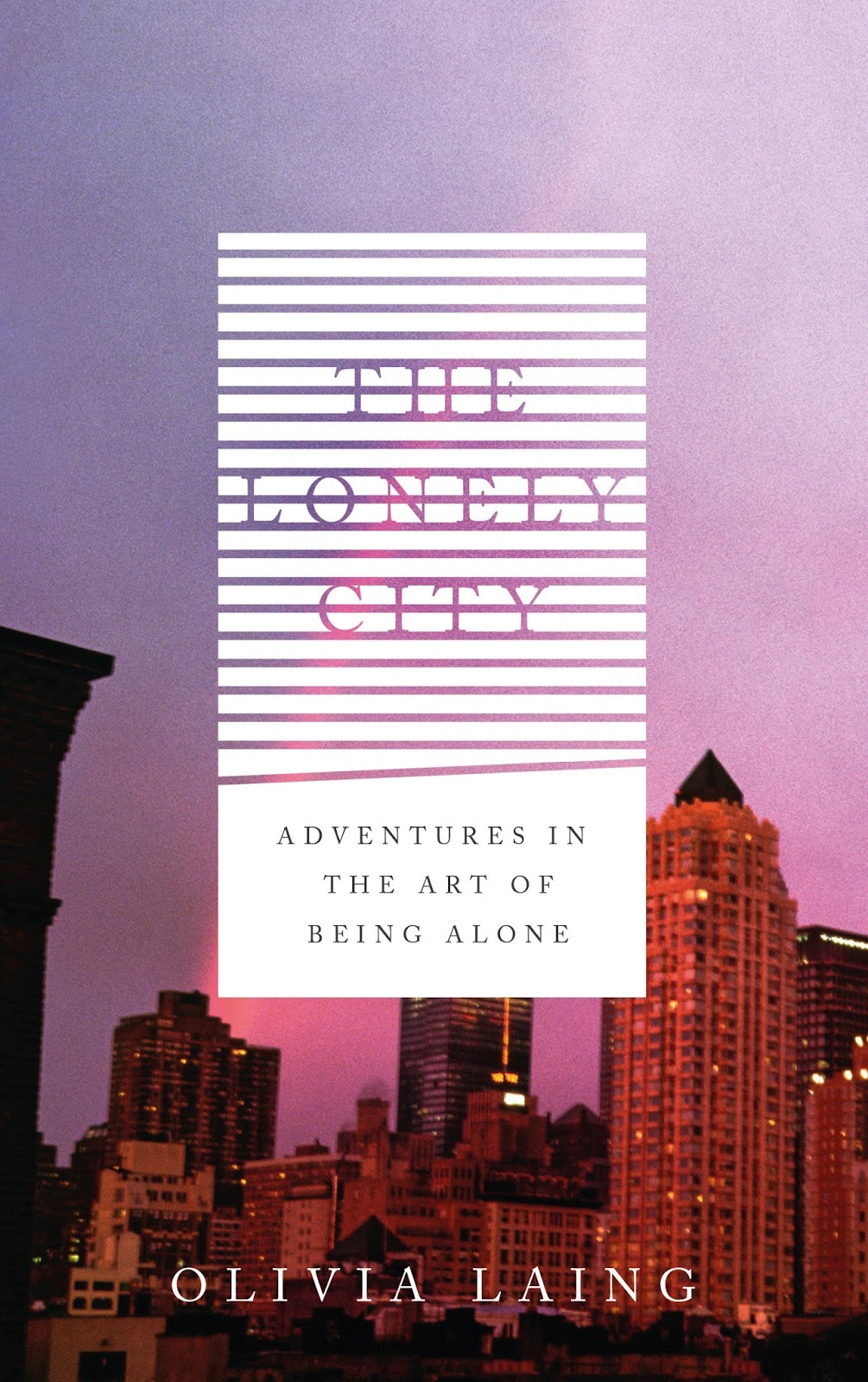
The Lonely City, by Olivia Laing

Staff review by Chris Saliba

Olivia Laing's consoling and sympathetic new book looks at how outsiders carve out a life for themselves in big cities.

When writer and critic Olivia Laing found herself living alone in a series of apartments in New York, she was plunged into a near despairing loneliness. To find consolation, she started looking at art and reading literature around the subject. The result is The Lonely City, eight poignant chapters looking at a range of outsider artists, writers and thinkers, most of them New Yorkers.

The book starts with the painter Edward Hopper, discussing his paintings of solitary figures in city settings. Laing also examines Hopper the man, his long and somewhat turbulent marriage, and finds a strangely lonely and isolated artist.

The next chapter dives into the Warhol scene of the 1960s. In Andy Warhol Laing finds a lonely man ahead of his time. Unable to sustain particularly deep relationships with others Warhol  distanced himself with the use of technology. He filmed and recorded everyone, but remained numbly uninvolved. Interestingly, Laing spends quite a bit of time building up a sympathetic portrait of Valerie Solanis, writer of the notorious SCUM Manifesto. She finds here a deeply isolated character, someone with a history of abuse. Clearly mentally ill, she famously shot Andy Warhol in 1968, almost killing him.

Laing is particularly fascinated with New York gay culture, especially the period during the AIDS crisis of the 1980s. This is perhaps the most affecting part of the book, where Laing describes the time in the early eighties when no one knew how the virus was spread. Shunned gay men  with the disease died in horribly lonely circumstances. Laing looks at this period a lot through the art of gay artist David Wojnarowicz and to a lesser extent singer Klaus Nomi. (Laing confesses herself to be a gay man trapped in a woman’s body.)

The last person to be profiled is early internet pioneer Josh Harris. This is a fascinating chapter, featuring some shrewd social analysis, looking at how the net is isolating people. In the late nineties, Josh Harris used his wealth to create somewhat bizarre communal living experiments, the most famous of which was called “Quiet: We Live in Public”. It was Orwellian surveillance gone mad (if that’s possible). Participants agreed to have every aspect of their lives filmed while living in an underground compound. Even the toilets had cameras. The results were fairly predictable, with everyone suffering near mental collapses. Laing says that Joshua Harris was ahead of his time because he could see social media coming and knew it would have deleterious psychological effects. Yearning connection, yet unable to deal with the unpredictable nature of our fellow humans, we seek a safe distance from them by hiding behind the Internet. This is now becoming the social norm, living our lives online, every aspect documented for public consumption and comment.

This is a fascinating and insightful book that deals not so much with loneliness, although that’s a big part of it, as with outsider personalities and damaged misfits. Laing’s approach is always humane and sympathetic, even when writing about clearly troublesome characters, such as Valerie Solanis. The Lonely City takes the reader into uncomfortable territory, but is well worth the journey.

The Lonely City: Adventures in the Art of Being Alone, by Olivia Laing. Published by Canongate. ISBN: 9781782111238 RRP: $34.99

To sign up for our monthly newsletter, featuring new releases, book reviews and favourite articles from around the web, click here.

Friday, May 13, 2016

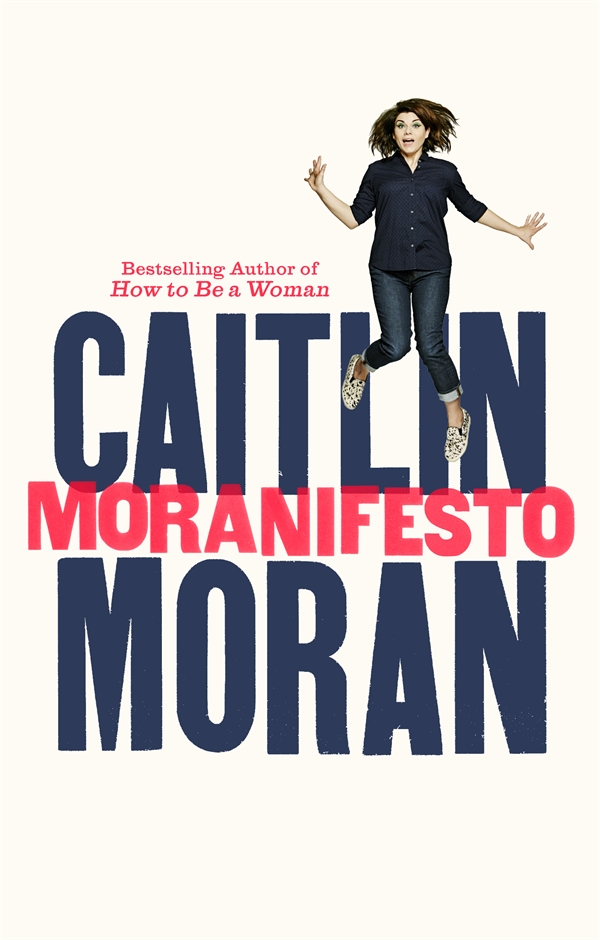
Moranifesto, by Caitlin Moran

Staff review by Chris Saliba

This new collection of columns from British feminist and humourist Caitlin Moran delivers the goods: funny, insightful and thought provoking.

Collected newspaper columns can make for dodgy, cash-in books. The writing usually seems stale and out-of-date, covering news events that have come and gone. Happily this is not the case with Caitlin Moran. Her writing is endlessly inspiring, funny, energetic, good-natured and thought provoking. No wonder she has such a hard core fan base.

While Moranifesto in the main consists of Moran's work as a columnist, with the odd feature thrown in, she has added some thought provoking new essays. Each column is also prefaced with a paragraph or two of additional comments, helping give the collection a more cohesive feel. The book is set out in three main parts, the first dealing with contemporary issues, the second feminism and the third, which is called “The Future”, being a mixed goody bag of topics.

So, what's in Moranfiesto exactly? Moran is one of those writers that can turn absolutely any experience into a column and make it entertaining to boot. My favourite was one about an unbelievably lousy bus tour of New York. “Generally, I'm a fan of the 'bad tour guide' genre,” Moran cheerfully writes, before going on to describe her bad tempered tour guide. When it starts pouring with rain he berates his travelling group, “Everybody, everybody – thanks very much for hauling me out here during a thunderstorm. I really appreciate it.” Another column is devoted to her obsession with the pop song, “Get Lucky”.

That's the light stuff. Down a bit from these fluffy meringue peaks are TV reviews (the one devoted to the Queen's Jubilee celebrations is a comic tour de force), gushing actor interviews and musings about fame. Then there is the more serious stuff, which makes up the bulk of Moranifesto: life on welfare, the Cameron Government, the blinkered vision of the rich, the importance of reading, terrorist attacks, global warming, women in power, sexist TV shows, Hillary Clinton, women and the Internet, motherhood. That's just a sample. The list goes on. Moran has an insatiable appetite and broad interests.

Caitlin Moran is a joy to read because she's so enthusiastic, life affirming, positive, vulnerable and honest. She's also hilarious – a great entertainer. Moran’s style reminds one of those great comic-philosophical lifeforce characters, Shakespeare's Falstaff and Chaucer's Wife of Bath. You could also throw in some Dickensian exuberance into the mix. Moran embraces life, looks for the upside in everything and is willing to make mistakes, to play the fool (one column, “My Muppet Face”, explains why she insists on pulling faces when photographed).

A wild, exhilarating ride of a book.

Moranifesto, by Caitlin Moran. Published by Ebury Press. ISBN: 9780091949051  RRP: $35

Tuesday, May 7, 2013

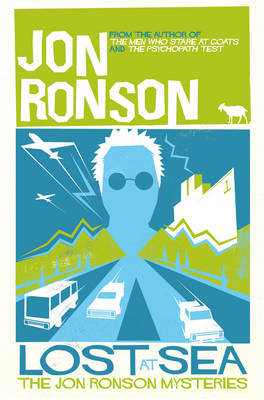
Lost at Sea, by John Ronson

Staff Review by Chris Saliba

In this entertaining and informative collection of Jon Ronson’s journalism from the last decade, the reader is taken on a wild ride through some of the zanier excesses of life in the early twenty-first century.

I don’t think I’ve met a Jon Ronson book that I didn’t like. This is my fourth, having started with The Men Who Stare at Goats and Them: Adventures with Extremists several years ago, then recently The Psychopath Test which was brilliant and now Lost At Sea, a bulging collection of Ronson’s journalism.

Ronson’s genius is to write like a comic novelist, with himself as the main character (is it any wonder that The Men Who Stare At Goats was made into a film?). Each page is filled with gripping dialogue that you can’t tear yourself away from. He also has the knack of sniffing out intriguing stories and homing in on an unusual detail where other journalists might go for a grander picture. He shows that truth and reality might just be found in the offbeat and eccentric. It could be argued that Ronson is manipulating the facts, or arranging them in such a way as to make his writing more interesting and well-paced, what Alfred Hitchcock gave as his prescription for drama: life with the dull bits left out. In the end, I think you just have to trust that Ronson is giving a balanced and honest description of all that he encounters in his journalistic encounters.

If Ronson’s work has a journalistic precursor it’s probably Charles Mackay’s 1841 classic Extraordinary Popular Delusions and the Madness of Crowds. Mackay chronicled a lot of similar subjects: economic bubbles, fortune telling, strange murder cases and other religious, political and popular follies. Mackay’s book is still in print and considered a classic. It’s tempting to think that Ronson’s books will have a similar longevity, due to their usefulness as vivid sketches of the times. On a deeper level, Ronson ‘s work could be seen as a Freudian excavation of the contemporary subconscious, riddled as it is with irrationality and magic thinking.

At 470 pages, this is a generous collection of Ronson’s journalism. There are plenty of longer pieces, and in general each article is around 20 pages in length. He covers everything form the trials of old pop stars for paedophilia, to cranky fortune tellers. There’s not a dull moment anywhere in the book.

The Psychopath Test has been my favourite so far in the Ronson oeuvre, but I think Lost at Sea must come in second. It’s a good, well rounded collection which highlights the mad underside of life in the early 21stCentury.

Lost at Sea, by Jon Ronson. Published by Picador. ISBN: 9781447223917 RRP: $19.99

Thursday, May 5, 2005

Hoo-Hahs and Passing Frenzies, by Francis Wheen

The title of this collection of journalism is a dig at Tony Blair, who described government and corporate scandals as nothing more than either ‘hoo-hahs’ or ‘passing fancies’. Cheesy spin at its best!

I find it hard to truly enjoy collections of essays, columns and features, harvested from various papers and magazines and packaged in one bumper book. Words written on a weekly basis for a paper column can fall flat when reprinted in book form a decade after the fact. It’s like drinking flat coke. Plus most of the stuff in this book is about British contemporary politics. A lot of the names I didn’t know, not that I really think it would have helped if I had known the people being written about. The fact is a newspaper column is written with a view to being quickly digested and done with – a bit like junk food. Whereas a book is more considered and permanent.

This is not to have a go at Franis Wheen. He surely is very witty and a sharp observer. I enjoyed reading his humorous dispatches on Tony Blair and his third way project.

But in future I must remember to steer clear of collections of journalism.