Showing posts with label Biography. Show all posts

Friday, July 17, 2026

Reminiscences of Tolstoy, Chekov and Andreyev by Maxim Gorky


Three Russian greats are seen up close and personal in this classic memoir, newly translated.

Maxim Gorky published his short, sketch-like memoir of Tolstoy in 1919, and the following year Virginia and Leonard Woolf’s Hogarth Press published an English translation. In 1934 the memoir was expanded to include two other greats of Russian literature, Anton Chekhov and Leonid Andreyev. Fitzcarraldo Editions has now published a new translation by Bryan Karetnyk, with a useful introduction by J. M. Coetzee.

Gorky writes in a luminous, magical prose that is a delight to read. All three memoirs - especially the Tolstoy one - are composed of short chapters, more like sketches or snapshots, designed to capture the essence of these great authors in casual moments. For example, one entry simply quotes Tolstoy saying, “Look after thyself first and foremost - for then there shall be more left for others.”

Maxim was friends with all three of his subjects, but they were complicated relationships. Tolstoy is prickly, brilliant, charismatic and sometimes full of arrant nonsense. After his death, Gorky reflects that he doesn’t know whether he loved or hated him. Chekhov is the least complicated of the trio, a warm and easygoing character, someone who is kind at heart. It’s with Leonid Andreyev that Gorky has the closest friendship. This is ironic, as the two were quite opposite characters. Gorky is consistently critical of Andreyev, his aesthetic choices and politics, while also proclaiming his deep affection.

Reminisces of Tolstoy, Chekhov and Andreyev is enjoyable on many levels. It examines complicated relationships, provides fascinating biographical sketches on some of world literature’s biggest figures, and finally, is written in a pleasurably immersive prose style, one that continually astonishes with its shrewd observations and inventive analogies. 

Fans of Russian literature will find this mandatory reading, but for those not particularly invested, 
Reminisces may spur a further interest in these greats of literature.

Reminiscences of Tolstoy, Chekov and Andreyev by Maxim Gorky. Translated by Bryan Karetnyk. Published by Fitzcarraldo. $32.99

MAR26

Thursday, July 16, 2026

Gough Whitlam: The Vista of the New, by Troy Bramston


 One of Australia’s most iconic prime ministers is given the thorough biographical treatment.


Gough Whitlam was beyond dispute one of Australia’s most significant political figures. He single handedly wrested the Australian Labor Party away from its traditional working class roots and old school socialist ideology, dragging it kicking and screaming into the modern world. In many ways, pre-Whitlam labor resembled today’s One Nation Party: racist and protectionist. Whitlam consigned those policies to the bin, and introduced a far more progressive platform.

​Labor under Whitlam (1972 - 1975) worked at breakneck speed, a government in a hurry to implement its progressive agenda. Labor ended conscription, withdrew from the Vietnam War, introduced medicare and free university education, recognised China, abolished the death penalty and made laws to advance women's rights. That's a snapshot of the Whitlam Government’s achievements - there were many more. 


Serious problems loomed, however. Firstly, Gough himself. A genius, certainly, but also a trainwreck. Vain and conceited, he was not a good reader of people. Hubris allowed him to sleepwalk into bad decisions. Most notably, he made a poor choice in appointing John Kerr as governor-general. Compounding the problem, he refused to acknowledge Kerr’s own unstable personality. Many around Whitlam were begging him to take heed. It was plain to insiders that Kerr’s vanity and insecurity meant he could possibly fire Whitlam. 

Cue the 1975 Senate crisis. The opposition under Liberal Malcolm Fraser used their majority numbers to block money bills (supply). The rationale seemed fair enough, the methods bloody. Fraser’s opposition had no faith that the Whitlam Government could make responsible economic policy. In fact, Labor operatives were involved in an extraordinarily dodgy scheme to raise money from Iraq to fund some of their programs. Whitlam himself had zero interest in economics and merely assumed a growing economy would pay for everything. When the Senate crisis hit, the Labor leader was fully confident that Kerr wouldn’t blink. But blink he did. The rest is history. 

Troy Bramston has written a detailed biography of Whitlam, based on over a hundred interviews. It is a blow by blow chronicle of Labor’s coming to power after twenty-three years in opposition and the “crash or crash through” government it produced. It’s a mixed legacy. Essential reforms that last until this day, but a shockingly incompetent government that was never popular. 

A fine, carefully balanced biography that shows a fatally flawed yet brilliant man.

Gough Whitlam: The Vista of the New, by Troy Bramston. Published by HarperCollins. $55

JAN26

Thursday, March 6, 2025

Lucky Loser: How Donald Trump Squandered his Fortune and Created the Illusion of Success, by Russ Buettner & Susanne Craig

Two award winning journalists follow Trump's topsy-turvy money trail. 

Russ Buettner and Susanne Craig are journalists at The New York Times. Since 2016, when Trump came to power, they have been closely investigating the former president’s finances. Both journalists won a Pulitzer Prize for their work on Trump’s income tax returns which were anonymously mailed to Susanne Craig. Lucky Loser is the result of their years of reporting, plus additional new interview material. 

There were perhaps two pivotal people that helped create Trump. Firstly and most importantly, his father Fred Trump, a property developer that used depression era government programs to access attractive financing deals. A lack of government oversight allowed Fred Trump to skim off extra profits by inflating building costs. Fred became a multi-millionaire. When his go-getter son wanted to enter the family business, Fred overlooked many of Donald’s faults, such as his impetuousness and failure to perform due diligence. Trump junior would rack up reckless debts, leaving a financial mess in his wake, only to have his father come in and mop things up. The mystery is why Fred, a mild mannered man who avoided the limelight, enabled his blowhard son, often referring to him as “the smartest person I know”. 

The second person instrumental in giving the world Donald Trump was British television producer, Mark Burnett, creator of 
The Apprentice. At a time when Trump's finances were in more disarray than usual, the flashy, media hungry businessman was seen as a logical host for the game show. Trump had a reputation among media insiders at the time, and some saw him as a bit of a joke. The show’s producers were shocked when they were shown the Trump Organisation offices at Trump Tower, where filming was to begin. The offices had an overpowering smell of mold, from the carpets, and a lot of the wooden furniture was chipped and in need of repair. It was soon obvious that a set would need to be built. There was spare office space on another floor, which would become home to The Apprentice. Trump had a habit of firing contestants that were good performers on the show, so the editors would have to go back and re-edit to make them look less competent and more worthy of being kicked off the show. In large part it was the show’s editors that made Trump look good.

There were many other enablers along the way, most notably financial journalists who should have called out Trump’s boasts and falsehoods much earlier. But Trump got free pass after free pass, until the illusion of Trump’s success became so big that no amount of truth telling could kill the lies. Even Bill and Hillary Clinton attended Trump’s marriage to Melania. Is it any wonder that so many Americans came to believe Trump really was their political saviour? 
Lucky Loser also shows consistent behavioural patterns - a recurring victim mentality, a penchant for impulsive decision making, a delusional self-belief - that highlights a character that has not changed one bit over the decades.   

An exhaustively researched book that will last as a damning document.

Lucky Loser: How Donald Trump Squandered his Fortune and Created the Illusion of Success, by Russ Buettner & Susanne Craig. Published by Jonathan Cape. $36.99

OCT 24

Friday, August 18, 2023

Follow the Rabbit-Proof Fence, by Nugi Garimara (Doris Pilkington)

The famous story of three girls who walked 1600 kilometres home.

The extraordinary story of three young girls' escape from an internment camp for mixed-race Indigenous children and their 1600 kilometre journey by foot Jigalong, in the Pilbara region of Western Australia, first appeared as Follow the Rabbit-Proof Fence

In 1931, three young girls escaped the Moore River Native Settlement, an internment camp for Indigenous children of mixed-race heritage and made the 1600 kilometre journey, all on foot, to their home in Jigalong. Traces of the story were on the official record, but by and large the girls' walk had been forgotten. It was only when author Doris Pilkington (Nugi Garimara) was told the story by her aunt Daisy, that she began to research it in earnest.

Pilkington's book is an interesting mix. Not quite a biography, and not quite a history, it pieces together the journey of fourteen -year-old Molly, her half sister, eight-year-old Daisy and 10-year-old cousin Gracie in a fragmentary manner, as one would expect. The book is a sort of palimpsest – layers of personal story, official records and truth-telling – neatly set down in Pilkington's clear prose to offer a humbling account of three children, members of the Stolen Generation.

The great tragedy is that Doris Pilkington was forcibly removed from her mother, Molly, when she was three-years-old and taken to Moore River Native Settlement. She didn't see her for another 21 years.  


Follow the Rabbit-Proof Fence, by Nugi Garimara (Doris Pilkington). Published by University of Queensland Press. ISBN: 9780702265976

Thursday, June 8, 2023

Confidence Man, by Maggie Haberman


Maggie Haberman's exhaustive biography of Donald Trump


It feels like we reached Trump saturation point many years ago. Who would want to read another book on the polarising president? Maggie Haberman is a journalist who has covered Trump for decades. Like Trump, she's a born and bred New Yorker. Unlike other memoirs and biographies that paint Trump as a cartoonish ogre, Haberman has drawn a nuanced, fully fleshed portrait. Confidence Man argues that if you want to understand the Trump of today, it's imperative to look at his past – his years as a 1980s property tycoon and his relationship with his father. We learn that Trump senior was controlling and brutal. As a property developer in a violent and corrupt 1980s New York, Trump was more bruiser than businessman, intimidating his way to success and using his father's money.

The second half of the book covers Trump's presidency, culminating in the January 6 insurrection. With superb research and detail, Haberman describes a slow motion train wreck. Trump's personality grew even more erratic and domineering with unchecked power. In the book's epilogue, Haberman neatly sums Trump up: “...a narcissistic drama-seeker who covered a fragile ego with a bullying impulse...”
A tour de force.  

Confidence Man: The Making of Donald Trump and the Breaking of America, by Maggie Haberman. Published by HarperCollins. $34.99

FEB23

Wednesday, February 8, 2023

Super-Infinite: The Transformations of John Donne, by Katherine Rundell

A highly enjoyable, witty biography of the great metaphysical poet, John Donne


John Donne (1572-1631) was many things in his time: a soldier (although not a particularly effective one), a parliamentary MP (he was parachuted into the role) and a cleric, achieving considerable fame under James I as the Dean of St Paul's Cathedral. He worked hard to curry favour with the royal court, efforts that paid off, although an ill chosen word in a sermon could bring on the king's wrath. Today we remember Donne for his poetry. Everyone knows the phrase, “No man is an island”. Beyond that, he also contributed hundreds of new words to the English language, many which we use today.

Donne spent a large part of his life trying to keep out of trouble. He was Catholic (later giving up his religion) at a time when Queen Elizabeth's spies were at work, capturing and torturing anyone suspected of plotting against the protestant queen. Donne's brother, Henry, would be thrown in jail for trying to hide a catholic, where he would die. Donne married Anne More, without her father's permission. An act of deceit that found him temporarily thrown into prison, a terrifying circumstance considering disease was rife. The marriage was a happy one, although perhaps not as happy for Anne. She bore him 12 children, many of them dying either still born or in childhood. Her last pregnancy literally killed her. She was only thirty-three years old. Money was often tight with so many children, but Donne would eventually come into money as a cleric for the Church of England.

While Super-Infinite is a biography of Donne, children's author Katherine Rundell also provides an appreciation of Donne's poetry. Rundell admits that Donne can be difficult, even baffling.

“The pleasure of reading a Donne poem is akin to that of cracking a locked safe, and he meant it to be so...The poetry stands to ask: why should everything be easy, rhythmical, pleasant?”

Rundell's analysis shows a poet and prose writer whose work crackles and pops with ideas, paradoxes and conundrums. He truly wrestled with life's great questions and mysteries, his dynamic mind never tiring for a minute. Donne marveled at our “super infinite” selves, the limitless bounds of human consciousness. He thought each human's inner life vaster, more overflowing, than the very globe we stood upon. Donne's intellectual and psychic energy propelled him like a rocket, his pen producing great satires, sermons and love poetry.

Katherine Rundell has written a biography that is delightfully light in tone but deep in its study. We come away from this portrait of Donne pleasantly discombobulated but also invigorated.

Super-Infinite: The Transformations of John Donne, by Katherine Rundell. Published by Faber. $34.99

NOV22

Thursday, May 5, 2022

Albanese: Telling it Straight, by Karen Middleton


Seasoned political journalist Karen Middleton takes on the Anthony Albanese story.


Albanese: Telling It Straight is a well fleshed out biography of Labor's current opposition leader, Anthony Albanese. First published in 2016, it tells of the personal and the political. Albanese was born in 1963 to Maryanne Ellery and Carlo Albanese. His parents' union was a brief one. They met on a cruise ship where Carlo was a steward, but their differing circumstances (Carlo was from Italy, Maryanne from the Western suburbs of Sydney) meant the relationship could not be pursued. When Maryanne found she was pregnant, her parents helped raise the child. To avoid unwanted questions and attention, Anthony's mother invented a story. She told everyone except a select few that she had married Carlo, but that he had tragically died in a car accident. Young Anthony would not learn the truth until he was aged fourteen, when his mother sat him down to explain. He would not meet his father until he was a  middle-aged man. (The detective work involved in finding Carlo makes for a dramatic final act of Middleton's biography, with the surprise help of former Howard government minister Amanda Vanstone.)

Growing up poor in a sole parent family, dependent on public housing, helped shape Anthony's progressive outlook. He fought his way up through the ranks of Labor politics, aligned with its hard left faction and eventually was preselected for the seat of Grayndler. His politics are pretty stock standard left wing fare: pro gay marriage (before many others were, it must be said); pro women; pro environment. True, that's an oversimplification, but the book concentrates more on factional infighting than policy development. Happily there's no scandals or skeletons in the Albanese closet. The worst that can be said of Albanese is he knows how to play politics hard and to win. Colleagues say he is direct and honest. When he promises to do something, he does it. There's also a basic decency to his character. He makes sure people feel respected and acknowledged.

Anthony Albanese doesn't leap off the page as a great character. He's a dogged political operator, doing the grunt work to get things done. One can't imagine eloquent speeches or fine turns of phrase from him. The portrait this biography paints is of someone stodgy but honest. No fancy bells or whistles, but someone who is at least reliable and true to their word.

A consummately researched biography of a tough political character with a heart stopping personal story that is genuinely moving.  

Albanese: Telling it Straight, by Karen Middleton. Published by Vintage. $24.99

MAR22

Saturday, December 11, 2021

The Accidental Prime Minister, by Annika Smethurst

Two time Walkley Award winning journalist Annika Smethurst turns out a fair and balanced biography of Australia's 30th prime minister, Scott Morrison.

There is much in this biography that the general public already knows about Scott Morrison: his Christianity, his background in marketing, his time as state director of the Liberal Party (New South Wales Division). In government, we have seen Morrison as a hard nosed Minister for Immigration and Treasurer under Malcolm Turnbull.

To flesh out the picture a bit further, Smethurst undertook extensive interviews with colleagues, friends and various associates. We learn that Morrison is hardworking, ruthless and not trusted by many. Men get along better with him, whereas a pattern emerges that women loathe him. Morrison likes it when things are going his way, and is ready to take credit, but when mistakes happen he's liable to sheet the blame home to others.

A fascinating quote appears on page 219 from a colleague who has known Morrison for two decades. It demonstrates how the current prime minister pursues power for its own sake.

“He is a highly political person who doesn't have any sort of strong values, but the one thing he always had a view on was gay marriage. He was vehemently opposed.”

Annika Smethurst has written an instructive and informative biography that pays attention as much to Morrison's flaws as to his strengths. A highly skilled politician, one with a high focus on research and polling, he's someone not to be written off, despite his bungling of several serious issues during his prime ministership (think the bushfires, Brittany Higgins, vaccine rollout etc.)

A well rounded biography that should please a broad audience.  

The Accidental Prime Minister, by Annika Smethurst. Hachette. $39.99

Wednesday, October 20, 2021

The Dead are Arising: The Life of Malcolm X, by Les Payne and Tamara Payne


From street hustler and jailbird to powerful Black leader, the story of Malcolm X has a lot to teach about race in America.


Born in 1925 in Omaha, Nebraska, Malcolm Little grew up rough. His mother, while pregnant with the future leader, would find herself harassed by the Ku Klux Klan, knocking on her door one night searching for her husband. It was an era where lynchings were almost routine and segregation was law. Malcolm's parents Earl and Louise were both supporters of the activist, Marcus Garvey, who promoted Black separatism and Pan Africanism. Earl Little would die relatively young, run over by a tram car, and Malcolm would forever maintain he was murdered by white supremacists. Louise Little, left without a husband and seven children to look after, couldn't cope and was institutionalised. Malcolm grew up hustling on the streets, got involved in petty crime and ended up in prison.

In prison, Malcolm became a voracious reader and autodidact. At this time his brothers introduced him to the Nation of Islam (NOI), nominally a Muslim organisation, but in reality a Black nationalist group that espoused Black separtism. With a changed name Malcolm was soon a prominent and charismatic leader, a much sought after speaker and interview subject. Despite this success, the contradictions of Nation of Islam chipped away at his conscience, especially its separatist stance. In 1961, Malcolm attended a secret meeting with members of the Ku Klux Klan. The two groups believed in keeping the races separate, a key point they agreed on, although for different reasons. The contradictions came brutally to the fore when the KKK members wanted information on Dr. Martin Luther King, so they could assassinate him. King being an integrationist made him an anathema to both parties. Malcolm X withdrew from the meeting, deeply shaken. It remained harder and harder to maintain ideological purity, faced with so many wild contradictions.

Malcolm X would leave Nation of Islam when it was proven without a doubt that its leader, Elijah Muhammad, was a fraud and hypocrite, siring half a dozen children with different women and using his position to accumulate obscene levels of wealth. The break with NOI would make Malcolm an enemy and target for assassination, from his own people.

Journalist Les Payne has conducted hundreds of interviews with friends, relatives and colleagues of Malcolm X, giving an extraordinarily well researched portrait of a complex, evolving figure. Against the background of a racist America, with white supremacist terror groups making daily life a nightmare for African-Americans, it is easy to see the appeal of a philosophically bankrupt group like NOI. What makes Malcolm X such a compelling character is how a man with little education and fewer prospects could transform himself into a thought provoking leader on the question of race, but also one who was willing to admit when he had got it wrong. He could remake himself. Unfortunately, that remaking resulted in his death, helped along by police and spy agencies turning a blind eye and not marshaling enough resources for his protection.

The Dead Are Arising helps explain so much, particularly to a white or non-American audience. The harrowing, detailed descriptions of the lynchings of Black men are a horror to read. The blood is soaked on the pages. Les Payne doesn't hold back on illustrating the many contradictions of Black politics and race – the prejudice within the community against darker skin, the bizarre fact that NOI was started by a white man named Wallace D. Fard, a convicted felon who posed as mixed race and mysteriously disappeared in 1934. 

An elegantly written book, one that strives for truth and moral clarity. 

The Dead are Arising: The Life of Malcolm X, by Les Payne and Tamara Payne. Published by Vintage. $65

Friday, August 6, 2021

Square Haunting: Five Women, Freedom and London Between the Wars, by Francesca Wade


Five biographies of pioneering women who pushed boundaries and changed the world forever.


The title of this book, Square Haunting, is a bit of a misnomer. Taken from Virginia Woolf's 1927 essay “Street Haunting”, about the ethereal pleasures of walking London's city streets, Francesca Wade's debut concentrates on pioneering women who broke boundaries. Mecklenburgh Square is the location where five extraordinary women – Hilda Doolittle, Dorothy L. Sayers, Jane Ellen Harrison, Eileen Power and Virginia Woolf – lived at one time or another. The five didn't work together in a concerted cultural effort, although there were informal links and much mutual admiration.

Mecklenburgh Square between the two world wars was an easy going place where the rent was cheap, perfect for society's fringe dwellers, intellectuals and artists. Landladies didn't ask too many probing questions and independently minded women could attain that most cherished “room of one's own”, rather than the typical destiny of marriage, children and putting husband first.

The five biographies that are the core of Square Haunting centre on the often soul destroying difficulties of trying to establish a career in a male dominated world. Well credentialed and talented women were passed over time and time again in favour of mediocre but well connected men. The anthropologist, Jane Ellen Harrison, is a good case in point. She was continually denied university roles based solely on her gender.

The poet Hilda Doolittle and crime writer Dorothy L. Sayers would both write about the importance of female independence and being equal partners in marriage. Historian Eileen Power wrote books that highlighted the important, but overlooked, roles women had played in the past. She was also a passionate pacifist. Virginia Woolf needs no introduction. Wade concentrates on Woolf's feminist writings and her final, tortured months at Mecklenburgh Square as Hitler's bombs devastated the city.

Francesca Wade has written an inspiring history of the decades between the wars, through the prism of five brilliant writers and activists. Inspiring because it shows how tenacity and courage, sometimes sacrifice, can bring forth change. Hilda Doolittle, Dorothy L. Sayers, Jane Ellen Harrison, Eileen Power and Virginia Woolf all laid the path for future generations and the freedoms we enjoy today. 

Square Haunting: Five Women, Freedom and London Between the Wars, by Francesca Wade. Published by Bloomsbury. $22.99

Saturday, November 7, 2020

Sontag: Her Life, by Benjamin Moser


A great biography of one the twentieth century's towering intellectual figures.

Susan Sontag is best known for her essays such as “Notes on Camp” and “Against Interpretation”, published in the late 1960s. Her 1977 book, On Photography, a collection of essays originally published in the New York Review of Books, is considered the seminal text on the subject. Sontag also wrote fiction, with mixed results. Early novels such as The Benefactor and Death Kit are considered opaque and difficult, while in the early 1990s Sontag had a best seller with The Volcano Lover.

In Sontag, by American writer and translator Benjamin Moser, the reader is treated to a first class biography. It mixes cultural and political history, philosophy, literary analysis and of course, the complex and divided character of Susan Sontag herself. She emerges as a troubled, difficult, cantankerous, hypocritical, generous and vulnerable woman. Determined to present herself in an idealised aspect – as a thinker, intellectual and cultural warrior – Sontag often hid her true self, keeping her 15 year relationship with Annie Leibovitz a secret, even from her sister. This friction between real self and self as brassy persona meant the writer was a “house divided”. Relationships – friends and lovers alike – were never stable, always subject to Susan's unreasonable and explosive personality.

Fascinating, absorbing and intellectually rigorous, Sontag provides a window on a key cultural figure of the last 50 years, summing up an age, its art and literature.

Sontag: Her Life, by Benjamin Moser. Allen Lane. $59.99

Review by Chris Saliba

First published November 2019 at northmelbournebooks.com.au

Monday, September 14, 2020

Maurice Blackburn: Champion of the People, by David Day

David Day brings to life an important figure in Australian history.

Maurice Blackburn (1880 – 1944) was an influential member of the Australian Labor Party and a barrister, specialising in cases defending socialist causes. He held seats at both the state and federal levels, was heavily involved in the divisive conscription debates during the First World War and could at times be a controversial figure, due mainly to his intellectual independence and dogged integrity. His relationship with the Labor Party was often strained as he differed on party policy and would not compromise his beliefs for political expediency. The Labor Party twice expelled him.

Esteemed historian David Day brings to life the rowdy and theatrical politics of the time: street meetings in Melbourne's inner suburbs; rousing speeches on the Yarra; and dodgy political and business characters, such as Prime Minister Billy Hughes and thuggish businessman John Wren. Against this backdrop Maurice Blackburn emerges as a rare beast, a politician and activist who was broadly esteemed for his integrity and consistency.

David Day writes a splendid history of Australia's nascent Labour movement and one of its major figures, distilling the complex social and economic issues of the time into a bracing narrative. Maurice Blackburn: Champion of the People will appeal to the general reader and history buff alike.

Maurice Blackburn: Champion of the People, published by Scribe. $49.99

This review first published at Books + Publishing. Click here.
 
First published October 2019 at northmelbournebooks.com.au 

Friday, April 12, 2019

Germaine: The Life of Germaine Greer, by Elizabeth Kleinhenz

Biographer Elizabeth Kleinhenz tells the fascinating and complex story of Germaine Greer.

In 2013, Germaine Greer sold her archives – some 500 boxes - to the University of Melbourne. Academic and educator Elizabeth Kleinhenz has spent several years going through this rich resource on Greer’s life to produce a new biography. This is the second book on Greer's life – a notoriously unwilling subject – following Christine Wallace’s 1997 Untamed Shrew.

Kleinhenz produces a fairly straight forward biography here, something most readers will find easily accessible. The book doesn’t examine in critical detail Greer’s literary and intellectual output, which is fair enough (all the major works are discussed, however). That is really the task for another book.

What the biographer concentrates on is Greer the brilliant, complex and often contradictory woman. We get a portrait of someone who is generous, prodigiously intelligent and blessed with a sharp sense of humour, but also quick to anger, difficult and sometimes downright mean. Greer appears in these pages as a strangely isolated figure, yet surrounded by plenty of people. One almost feels sorry for her inability to forge strong, lasting relationships. 

Writes Kleinhenz: 

“Her behaviour can be as puzzling as it is annoying. Despite her singular intelligence, she can be as inconsistent and irrational as she is insulting. Her apparent lack of emotional empathy is strangely at odds with her literary sensibility. It is amazing to see how a bruising clumsiness in personal relations sits beside the almost pitch-perfect refinement of the best of her writing. A complete contradiction.”

Or as Salman Rushdie noted, after her refusal to sign a petition defending him during The Satanic Verses controversy, “...her determination to be out of step leads her into batty positions.”

I very much enjoyed this fascinating biography, reading it in a couple of days. It goes a long way to explaining some of the more unexplainable aspects of Germaine Greer’s personality, while also lauding her role as a public intellectual and feminist of considerable stature. 

Germaine: The Life of Germaine Greer, by Elizabeth Kleinhenz. Vintage. RRP: $39.99

The Price of Fortune: The Untold Story of Being James Packer, by Damon Kitney

Financial journalist Damon Kitney has written a compelling biography of James Packer, a complex and troubled man haunted by his father’s legacy.

James Packer, one of Australia’s richest men, guards his privacy jealously. Surprisingly, after several requests from financial journalist Damon Kitney (The Australian Financial Review, The Australian), he decided to co-operate in the writing of this biography. What ensued was six months of interviews, conducted at various locations across the globe, plus plenty of additional email material from Packer himself. Kitney also interviewed a wide range of Packer’s friends, business associates and even ex-wives.

The result is a measured, almost sympathetic portrait of a deeply divided and troubled man. Kitney has some two decades experience covering business and he brings his knowledge and communication skills to the fore when outlining James Packer’s chequered business history. He chronicles the devastating failures (the One.Tel collapse; the failed US casino investments; the selling of cherished family assets to pay off debts) with clarity, avoiding complex jargon.

At the centre of the James Packer story, though, is his relationship with his father, Kerry. Kerry Packer’s toughness and brutality were legendary, qualities drummed into him by his own father, Sir Frank Packer. James was especially traumatised by the colossal failure of One.Tel, losing his father’s business some 300 million dollars. Packer senior humiliated his son over the matter. When James inherited the family business, he set himself a goal of trying to live up to his father’s business legacy. This meant achieving profits in the billions, a Herculean task. Such a high benchmark has meant a constant feeling of failure. It’s also led to poor decision making, trusting the wrong people, alcohol abuse and a dependence on prescription drugs. His life seems a misery, despite the lush homes, luxury boats and jet-set lifestyle.

One wonders: why not sell it all and simply live off the interest? But as the ghost of Kerry Packer looms, demanding that the family legacy be preserved, James continues to take on the enormous stress of big debts and big business gambles. He appears to be utterly trapped, unable to re-create his life in his own image. By his own admission, Packer has no real interest in the gaming industry. He simply sees it as a stable, dependable income stream. One friend in the book wisely suggests once James finds a business he’s really passionate about, then he’ll be successful. (To the author’s credit, he raises the question of the ethics of the casino industry with Packer.)

James Packer is often described by his friends and business associates as being an essentially soft, gentle, generous soul. His bad moods, volatility and rudeness are often put down to the pressure he constantly finds himself under, rather than an innate part of his personality. The business life he has chosen, or rather inherited, seems a bad fit.

It’s hard to feel sorry for a multi billionaire, yet Damon Kitney does a good job of trying to walk in someone else’s shoes. The reader does come some way to understanding the complex motivations Packer has due to his family legacy and fortune. It weighs like a ton of bricks on his shoulders. The simple fact that Packer has agreed to have his life laid bare like this shows how much he must be suffering an existential crisis. This is an exasperated and confused middle-aged man asking out loud what he should do.

The lesson we learn from The Price of Fortune is that wealth, what we all strive for, may be limited in the happiness it can provide. Business leaders, media talking heads and politicians fete James Packer as the apogee of success, a man to be emulated. Maybe they got their business model wrong.   

The Price of Fortune: The Untold Story of Being James Packer, by Damon Kitney. Published by HarperCollins RRP: $45.

Saturday, February 25, 2017

No Way But This: In Search of Paul Robeson, by Jeff Sparrow

Staff review by Chris Saliba

Melbourne journalist Jeff Sparrow's search for Paul Robeson cleverly mixes essay, journalism, history and biography to produce something quite original and insightful.

Paul Robeson is perhaps best known to Australian audiences as the African American singer and actor, made famous through his role in Show Boat. Robeson actually visited Australia in 1960, part of a two month tour. During his time in the country he performed at the construction site of the Sydney Opera House and met Indigenous activist, Faith Bandler, who told him of the poor condition of Australia’s Aborigines.

Robeson was politically active throughout his life, pursuing socialist causes such as the coal miners of Wales and the Spanish Civil War (his father had been a slave, no doubt spurring him to fight for causes of social justice). A commitment to Marxism and the Soviet Union, however, would bring him much grief. During America’s toxic McCarthy period he was denounced and blacklisted, making it almost impossible for him to work and earn a living. His passport was also revoked, meaning he was virtually under house arrest, unable to leave the country and pursue other work options. Robeson would also have a near mental breakdown when the full horrors of Stalin’s period of power were revealed. Having put so much faith in the Soviet Union as the way forward for a society devoted to justice and equity, then to discover its murderous secret history, caused Robeson a personal crisis that resulted in a suicide attempt.

Melbourne writer and academic Jeff Sparrow seems an unlikely author for this refreshingly loose and freewheeling biography of Paul Robeson. What could a white Australian have to write about the African American experience? To my surprise, No Way But This: In Search of Paul Robeson, turned out to be a thoroughly engaging read. The book cleverly mixes essay, journalism, history and biography to produce something quite original and insightful. Jeff Sparrow has done the hard yards, research wise. He travelled the world, visiting places key to Robeson’s political formation - Spain, Wales, America, Britain and Russia - interviewing historians, activists and friends. It is this on the ground field work that lifts the book out of what could have been a rather pedestrian affair into something that offers genuine insights into race and politics.

No Way But This: In Search of Paul Robeson takes a look at socialist politics of the twentieth century, its triumphs and terrible failures, through the prism of one passionate man, the son of a former slave. Highly recommended!

No Way But This: In Search of Paul Robeson, by Jeff Sparrow. Published by Scribe. ISBN: 9781925321852  RRP: $32.99

To sign up for our monthly newsletter, featuring new releases, book reviews and favourite articles from around the web, click here.


Tuesday, April 26, 2016

The Fighter: A True Story, by Arnold Zable

Staff review by Chris Saliba

In this very humane book, Arnold Zable gives us a story that begins on the streets of Melbourne and works its way back to the horrors of the Holocaust.

Arnold Zable is a well known Melbourne writer who has campaigned for the rights of refugees. In his latest book, The Fighter: A True Story, he has written a short biography of Henry Nissen, a former prize winning boxer. Nissen, who is now in his late sixties, works tirelessly with troubled youth in Melbourne’s inner city. He fronts up to courts, puts in a good word and manages to keep young offenders out of jail.

Henry Nissen is of Jewish heritage. He was actually born in Germany, after the war. His mother, Sonia, born in Odessa, fled the Nazis and spent years wandering around Russia. She never spoke much about what happened to her during the war, but it’s pretty clear that she saw and experienced some horrible things. Henry is adamant that she was raped. Sonia married a Polish man, had children, emigrated to Australia and ended bringing her family up in Melbourne’s inner city suburb of Carlton. Despite finding safety and security in Melbourne, Sonia continued to be haunted by all she had seen during the war. Her later years were tragically consumed by mental illness. She spend much time in and out of institutions.

In many ways it is Sonia’s story that forms the heart and soul of this moving book. Zable starts his story with a feisty old boxer and compassionate man, but slowly draws us into the darker world of the Holocaust. The sections that describe Melbourne’s Jewish post war community, their inner city enclave of Carlton, are brilliantly brought to life. For Melbourne readers, with the book’s description of many well known streets, it makes for an especially heart-warming read.

The Fighter’s lyrical style and evocative language means it reads more like a novel than anything else. Zable’s language is warm and sympathetic. A more human book you may not read this year.

The Fighter: A True Story, by Arnold Zable. Published by Text. ISBN:  9781925355062  RRP: $27.99

To sign up for our monthly newsletter, featuring new releases, book reviews and favourite articles from around the web, click here.

Friday, March 27, 2015

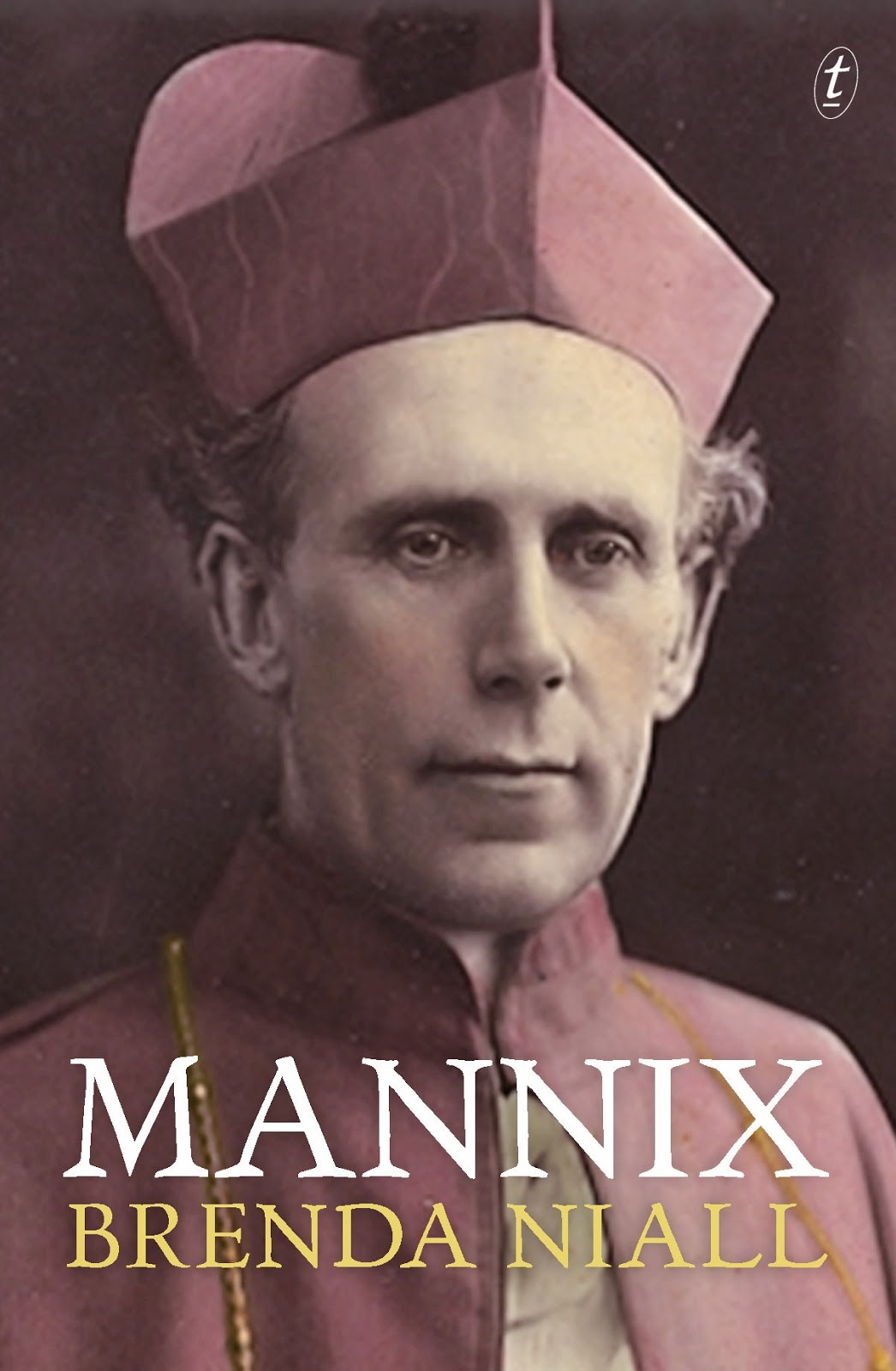
Mannix, by Brenda Niall

Staff Review by Chris Saliba

Brenda Niall has written an engaging and somewhat personal biography of Archbishop Daniel Mannix, a pivotal figure in Australia's political and cultural life during the first half of the 20th century. 

“A disruptive force in Australia, an anti-British agitator in the United States, and a nightmare to the British government...” writes biographer Brenda Niall of her subject, Archbishop Daniel Mannix. Born in Ireland in 1864, details of Mannix's first 50 years remain sketchy. The Catholic Church sent Mannix to Australia in 1912, at the age of forty-nine. He was soon involved in national issues, most notably the conscription referendum of 1916. Throughout his long career until his death at the age of ninety-nine, Mannix remained intellectually vigorous and active. His opinion had the power to shift votes and allegiances.

Although his style was reserved and his humour dry, his politics often veered towards the progressive. He denounced the use of the atomic bomb, argued against the White Australia Policy and was concerned about Aboriginal welfare.

Archbishop Mannix was a complex and elusive character. Brenda Niall works up an engaging and fascinating portrait, seen through his involvement in key political and religious controversies. Mannix, who kept his private self from view, seemed shy and lonely. For readers interested in the political and cultural life of Australia during the first half of the 20th century, Brenda Niall's highly readable biography will reward handsomely.

Mannix, by Brenda Niall. Published by Text. ISBN: 9781922182111 RRP: $50

This review was first published in Books + Publishing magazine.  

To sign up for our monthly newsletter, featuring new releases, book reviews and favourite articles from around the web, click here. 

Sunday, March 22, 2015

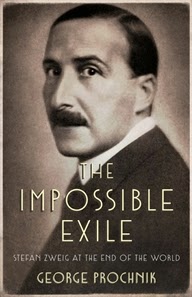
The Impossible Exile: Stefan Zweig at the End of the World, by George Prochnik

Staff Review by Chris Saliba

In this very humane book,  George Prochnik examines the terrible plight of the famous Austrian novelist Stefan Zweig.

Stefan Zweig, an Austrian novelist and biographer, was enormously popular in his day. At his height in the 1930s his books even sold well in the United States. His life should have been a happy one - literary success, fame and money were his. But as the Nazis marched to power, Zweig being Jewish found himself fleeing from country to country until it all became too much. He committed suicide with his second wife, Lotte Altmann, while seeking refuge in Brazil.

The Impossible Exile is not so much a biography of Zweig as a piece of psychoanalysis: what  finally pushed Zweig over the edge? Author George Prochnik is well placed to examine these questions. His father and grandfather fled Austria in the 1930s. Prochnik often returns to his family’s troubled history throughout the text.

This is a book that excels at contemplating the despair, hopelessness and suffering of Europe’s Jewish refugees. They were hounded from their own country because of political events that still mystify today. George Prochnik, in his poetic and illuminating prose, brings the reader to an understanding of why Zweig decided he could live no more, even though he was one of the lucky ones who escaped.

The Impossible Exile: Stefan Zweig at the End of the World, by George Prochnik. Published by Granta. ISBN: 9781783781140. RRP: $39.99

To sign up for our monthly newsletter, featuring new releases, book reviews and favourite articles from around the web, click here.


Sunday, November 16, 2014

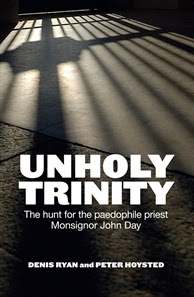
Unholy Trinity: The Hunt for the Paedophile Priest Monsignor John Day, by Denis Ryan and Peter Hoysted


Staff Review by Chris Saliba

In this deeply disturbing book, former police detective Denis Ryan tells of how he tried to bring paedophile priest John Day to justice. 

In the early 1960s, a young police detective named Denis Ryan moved his young family from the bayside suburb of Aspendale to Mildura. The reason was his son’s asthma. The cold weather was having an adverse effect on his health, and the family’s doctor suggested the child needed a warmer climate. Ryan got a transfer. When he arrived in Mildura, he knew he was going to have trouble with his superior, Detective Sergeant Jim Barritt. Barritt’s reputation preceded him. Nonetheless, Denis Ryan had his son's health to think of. The trouble with Barritt was just something he’d have to deal with.

Things turned out much worse than he could ever have imagined. Barritt was part of the "Catholic Mafia", happy to ignore the law to protect the clergy. The cleric in question was Monsignor John Day. Ryan had had a run in with John Day in the 1950s, in St Kilda, when he had found him in a compromising position with two prostitutes. When Day was posted to Mildura, Ryan came into contact with the monsignor for the second time. He now started to hear word that Day was molesting children. Then an official complaint was made by the parents of a young girl who had been one of Day’s victims. Being a diligent policeman, Ryan started investigating. Pretty soon he had overwhelming evidence against Day.

You would think that would be the end of it. What followed would cost Ryan his job and his sanity. The Catholic Mafia within the police force came down hard and stymied any investigation. If Day was charged, too many within the police force, not to mention the clergy, would be found culpable for covering up the monsignor’s practices for so long. It is believed Day abused hundreds of boys (and some girls) over many decades.   

Denis Ryan throughout all this time stayed within the Catholic faith. He is very mindful to say his book is not anti-Catholic. The book’s overall tone, though, is one of absolutely shocking corruption and cover up. You choke and gasp for breath as you read the horrors visited upon children entrusted to the church's care. It’s really hard to say who is the worse party, the police or the church. (Another character involved in the cover up was Mildura's clerk of courts, Joseph Kearney: hence the "unholy trinity" of church, police and court.) The police should have done their job, when the facts seemed so plain. Yet they actively smothered the investigation. The church’s leaders knew exactly what Day was up to, sexually abusing children, but continued to send him from parish to parish. It’s often hard to get your head around the depth of villainy and contempt for the safety of children.

For anyone seeking to find out how abuse within the Catholic Church went on for so long, how so many had their lives ruined, Unholy Trinity shows how unquestioned church power can lead to the worst of crimes.

Unholy Trinity: The Hunt for the Paedophile Priest Monsignor John Day, by Denis Ryan and Peter Hoysted. Published by Allen and Unwin. ISBN: 9781743314029 RRP: $29.99

To sign up for our monthly newsletter, featuring new releases, book reviews and favourite articles from around the web, click here.

Monday, October 27, 2014

Kerry Stokes: The Boy From Nowhere, by Andrew Rule

Staff Review by Chris Saliba

Andrew Rule's Kerry Stokes: The Boy From Nowhere is a lively portrait of a likable man. 

The cards were always stacked against Kerry Stokes. Born John Patrick Alford, his  mother had to give him up. His name was scratched out by a judge’s pen on his adoption papers and in its place written Kerry Matthew Stokes. His new parents, Matthew and Irene Stokes, showed him little love or regard. Stokes grew up in Melbourne working class neighbourhoods during the 1940s and 50s, Dickensian in their squalor, disease and poverty. 

As a young man Stokes moved to Perth. Energetic and sharp, Stokes was a natural at selling and developing property. When the opportunity came to start buying media businesses, he couldn’t resist the power that came with it.

Biographer Andrew Rule has balanced two key aspects of Stokes’s life - his extraordinary business acumen and inauspicious beginnings - to create a lively portrait of a likable man. Stokes is decent and civilised. His approach to business has been to exercise caution and limit risks.

Kerry Stokes: The Boy From Nowhere is an inspiring business story that is also a chronicle of Australia’s cultural and technological development in the second half of the twentieth century. Through Stokes we see how much the country has changed. Anyone interested in Australian business and high achievers will enjoy this accessible biography.

Kerry Stokes: The Boy From Nowhere, by Andrew Rule. Published by HarperCollins. ISBN: 9780732295981

This review was first published in Books + Publishing magazine.

To sign up for our monthly newsletter, featuring new releases, book reviews and favourite articles from around the web, click here.