Showing posts with label Current Affairs. Show all posts

Wednesday, May 20, 2026

Careless People: A Story of Where I Used to Work, by Sarah Wynn-Williams


The inside story of Facebook from a former employee.

​A former New Zealand diplomat with extensive experience in international affairs, Sarah Wynn-Williams early on saw that as Facebook expanded globally, it would find itself in moral and political trouble. She envisaged a role for herself in helping Facebook navigate these perilous waters and made a pitch to its leadership team. Her ideas and vision didn’t impress at first, but the times would soon suit her, and a position was eventually offered. 

Wynn-Williams started work at Facebook in 2011 and would eventually become the company’s global public policy director. The position would take her around the world to many important summits, hobnobbing with business leaders and prime ministers. 
Careless People, a memoir of her six years at Facebook, is notable for its coruscating portraits of former chief operating officer Sheryl Sandberg and CEO Mark Zuckerberg. She also claims that her supervisor, Joel Kaplan, sexually harassed her over many years. 

In the author’s telling, Facebook had an expand-at-all-costs culture that had little to no regard for the harm it caused, turning a blind eye to the help it indirectly gave authoritarian regimes. A gripping if stomach-turning read on corporate greed and how power deranges.

Careless People: A Story of Where I Used to Work, by Sarah Wynn-Williams. Published by MacMillan. $36.99

July 2025

Saturday, September 7, 2024

A Message from Ukraine, by Volodymyr Zelensky


A short collection of President Volodymyr Zelensky’s speeches.

A Message From Ukraine is a selection of President Volodymyr Zelensky’s speeches, from 2019 to 2023. The speeches were chosen by Zelensky himself and he also wrote the introduction. The book first appeared in 2022 and this new edition features an additional speech, from 2023. 

Having watched on our television screens the horrible destruction and humanitarian disaster of Russia’s invasion of Ukraine for the last two years, one might expect A Message From Ukraine to be full of grim stories from the front, unbearable tales of death and destruction. In fact, Zelensky’s speeches are warm and humane. While they may have been written to bolster morale and help Ukrainians endure the unendurable, their message has a universal appeal. Zelensky stresses that truth and dignity will be the victor in the end. There is a tone of deep empathy in Zelensky’s words - this is the voice of someone who has seen much suffering. 

A Message From Ukraine is more than a collection of political speeches of the day; it is a timeless book dealing with the deepest of existential themes. It shows that truth and honour can give untold strength, despite the confronting horror of war.  

A Message from Ukraine, by 
Volodymyr Zelensky. Published by Penguin. $19.99

MAY24

Friday, November 8, 2019

Biased: The New Science of Race and Inequality, by Jennifer Eberhardt


Social scientist and professor of psychology, Jennifer Eberhardt, examines how we hold racial biases.
​

The brain, it turns out, likes to categorise information, putting things into simple groupings, allowing us to navigate busy, complicated daily life. Instinctively, before we even think, we apply this to the faces we meet. Whole races get lumped together in our minds. Fascinatingly, the latest neuroscience reveals that from a very young age we are better equipped at differentiating the faces belonging to our own race. We can see the individual, whereas when asked to identify people of other races, we struggle. White people see black people as a vaguely homogenous group, all looking the same. Jennifer Eberhardt tells of her own struggle differentiating white faces when she first went to a majority white school, having grown up in a predominantly black community.

Bias is hardwired in us and must be managed. From this scientific launching pad Eberhardt takes the reader on a fascinating and disturbing history of racial bias in America. So much has been written on the topic, and one may be tempted to think they already know the subject inside and out, but 
Biased proves that to be wrong.

Racial biases against African-Americans work at just about every social and economic level, creating entrenched disadvantage. Eberhardt quotes one dispiriting study, where researchers sent off dummy job applications. One set of applications had typically African-American names, such as DeShawn and Shanice, while the other had typically white names. The white names got the bigger response. These results have been replicated in other studies.

Another study, this time examining bias against women, tested job applications for professional orchestra musicians. Applicants were asked to audition “blind”, behind a curtain. Carpet was even laid out to mask the sound of women's heels. The results showed that women were hired at a much greater rate if the examiner didn't know they were women. An ingrained bias exists that men are better musicians.


Is there a way out of bias? We can manage it better by slowing down our reactions. It's when we make lighting quick decisions that our biased, reptilian brain takes over. Employers, institutions, even websites, need to implement tools that help us think twice. Some online platforms are trying to weed out racial bias by making users read and agree to relevant terms and conditions. Research has found this has a positive effect.


Jennifer Eberhardt's Biased is a cracking good read, sure to completely change the way we think about bias. Its mixture of science, research, history and personal story makes it endlessly fascinating. A game-changing, enlightening book that will make you re-examine your own behaviour.

B
iased: The New Science of Race and Inequality, by Jennifer Eberhardt. Published by William Heinemann. RRP: $35

Winners Take All, by Anand Giridharadas

American journalist Anand Giridharadas pulls back the veil on the world's rich and powerful, exposing a class of anti-democratic, self-serving elites and the courtiers that serve them.

In 2011 writer and former business consultant Anand Giridharadas was made a Henry Crown Fellow at the Aspen Institute, a prominent think tank. Giridharadas was a bit mystified, as the Aspen Institute only takes on proven entrepreneurs successful in the business world and he was not an entrepreneur. Nonetheless, you don't knock back invitations to rub shoulders with the rich and powerful at Aspen, and so he went.

Giridharadas would participate in four one-week sessions over two years where prominent business leaders attempted to solve the world's most intractable problems. He found himself making friends with the rich and powerful, enjoying the jet setting lifestyle. But eventually cracks started to appear. Troubling inconsistencies presented themselves. The rich made money by exploiting the poor, harming the environment and many other greedy and selfish actions. The people who were responsible for so many of the world's problems believed only they could fix them.

The result of Giridharadas' conflicted conscience is Winners Take All, an intellectually rigorous critique of powerful elites and the prevailing orthodoxy that business is better at solving problems than grass roots activism and politics. It also presents stunning insights into the psychology of the rich and powerful. They feel themselves to be victims, unfairly under attack from critics, when all they are trying to do is save the world - and get rich in the process. This sensitivity to criticism means anyone lobbying for their support must temper their language: appeals must be framed positively, with no mention of the ill effects their industries produce. The result is a small, elite group living in an intellectual bubble, sealed off from the world. As Giridharadas explains, they are globalists, shifting their money and resources wherever it will make the best returns, while the rest of the population are locals, loyal to place and community. A convincing argument is made for the success of Trump and Brexit: people voted against globalism, sick of being told what to do by freewheeling elites, and in favour of  local values.

Winners Takes All is all the more compelling for being an insider's account. The book's main argument is that democratic politics – problem solving by the people, for the people – has been insidiously eroded by the growing power of a rich, distant, technocratic elite. Their power has been so complete that it has also changed our thinking. We now look at the world's problems and how to solve them through the prism of big business. Giridharadas explains this phenomenon – social, economic and political – in a language that is refreshingly direct and devoid of theory and jargon. It's probably the most important book you'll read this year.

Winners Take All: The Elite Charade of Changing the World
, by Anand Giridharadas.
Allen Lane $29.99

Saturday, September 8, 2018

Ten Arguments For Deleting Your Social Media Accounts Right Now, by Jaron Lanier

Staff review by Chris Saliba

A computer scientist brings a humanistic approach to the problem of social media.

Jaron Lanier is a computer scientist, musician and writer. He offers a unique perspective on issues to do with technology and society by way of his long history with the tech community. Both an insider and outsider, he has voiced concerns in books such as You Are Not a Gadget and Who Owns the Future about how the open internet culture of Facebook and Google has reduced human expression and potential, while taking our data and monetizing it for huge profits.

In the short and snappy Ten Arguments For Deleting Your Social Media Accounts Right Now, Lanier explains how social media is degrading language, spreading misinformation, exploiting cheap labour, alienating people from reality, distorting how they see the world and also making us angry, lonely and irritable.  Quite a list!

Social media is designed to be addictive. Lanier sees it as a form of hypnosis, but a dangerous one.

“Hypnosis might be therapeutic so long as you trust your hypnotist, but who would trust a hypnotist who is working for unknown third parties? Who? Apparently billions of people.”

Lanier coins an acronym to describe the algorithmic machines that track everything we do online in order to create customised feeds: “Behaviors of Users Modified, and Made into an Empire for Rent. BUMMER.” In humourous tones reminscent of science fiction writers Kurt Vonnegut and Stanislaw Lem, the reader is warned of how the BUMMER machine is undermining just about every aspect of our lives, from democracy and public discourse to how we see and think about ourselves. BUMMER technology is causing mass isolation. One of the most depressing points that the book raises is how hard it is to know other people now because we don’t know the customised feeds that individuals – billions of individuals – are exposed to. Once upon a time we were all roughly on the same page, but now no one is on the same page.

Ten Arguments is for the most part cheerful and optimistic, firm in its belief that we can keep the internet and smart phones, we simply need to get rid of the BUMMER machine. Beneath the jollity and jokes, Lanier is an erudite and philosophical writer with a gentle, poetic nature. He’s a rare, humanist voice on the subject of computer technology and its impact on us. The book’s final argument for deleting your social media accounts is one of self-knowledge and awareness. “Whatever a person might be,” writes Lanier, “if you want to be one, delete your accounts.”

If you want to gain insights into how invidious social media really is, read Ten Arguments For Deleting Your Social Media Accounts Right Now.

Ten Arguments For Deleting Your Social Media Accounts Right Now, by Jaron Lanier. Published by Jonathan Cape. ISBN: 9781847925398  RRP: $24.99

To sign up for our monthly newsletter, featuring new releases, book reviews and favourite articles from around the web, click here.

Monday, June 23, 2014

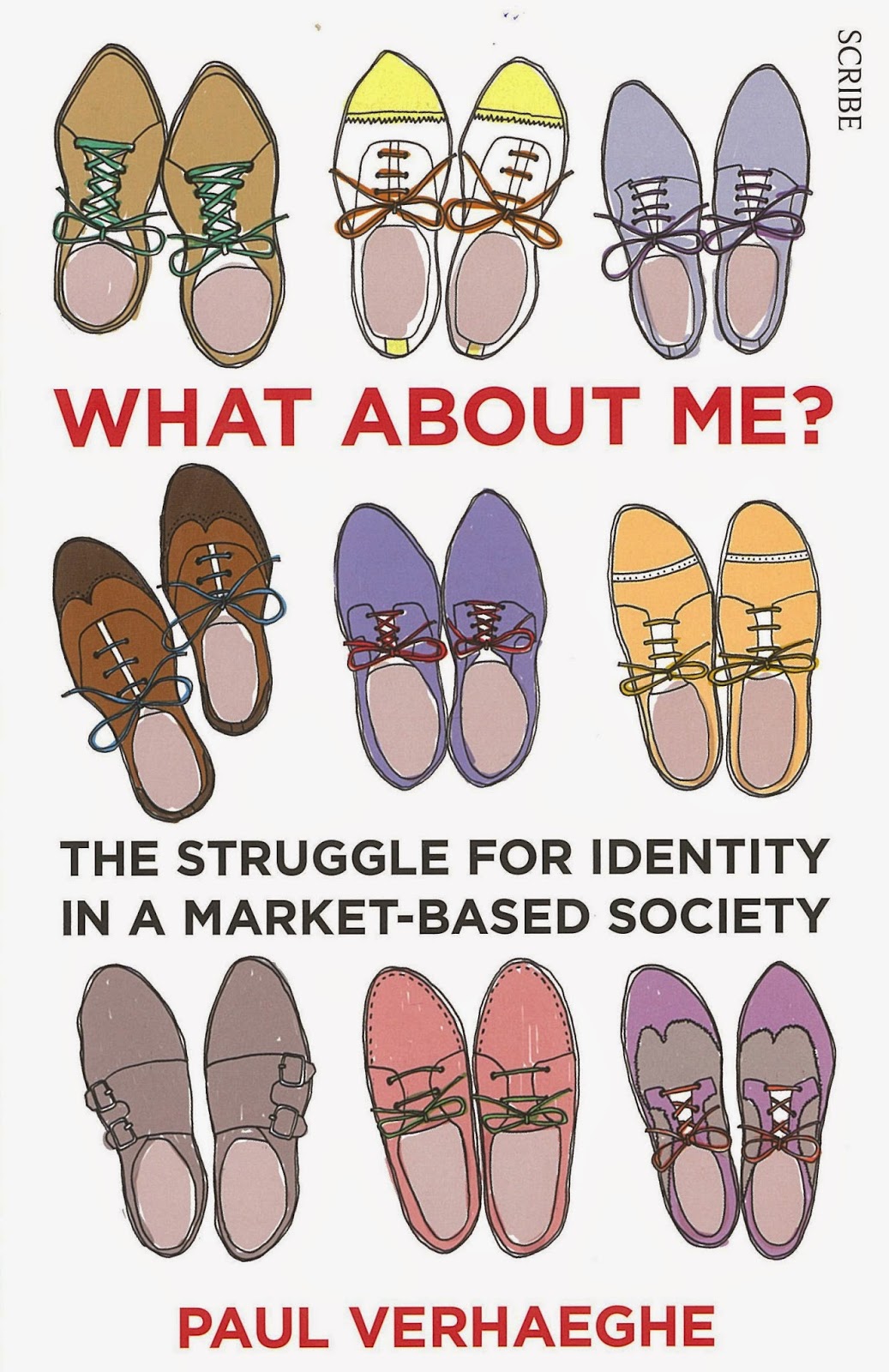
What About Me?: The Struggle for Identity in a Market Based Society, by Paul Verhaeghe


Staff Review by Chris Saliba

Clinical psychologist Paul Verhaeghe examines how the last 30 years of neo-liberal economic orthodoxy has had detrimental effects on the individual. This is an intelligent, accessible and deeply considered work. 

The subject matter of this book seems so obvious it’s a wonder someone hasn’t tackled it earlier. The author, Paul Verhaeghe, is a Belgian professor of clinical psychology and psychoanalysis, and so he comes to this subject very much from an academic perspective. The first hundred pages examines notions of self and identity. Is it nurture or nature that creates who we are? Verhaeghe prefers Freud’s thinking on the matter, and contends that we all have unlimited desires (or natural urges) that we somehow, subconsciously, know are bad for us. That is the reason we set up social limits to those desires.  Society, with its rules, codes, morals and laws, is our innate response to those desires, our attempt to nurture them in the right direction. To simplify the argument, nurture reins in our aggressive nature, to produce our identities.

Over the last 30 years, as the neoliberal economic model has become dominant, society’s rules and morals have changed. We are now more competitive, increasingly governed by statistics, analysed by computer algorithms and under constant evaluation by our employers. The pressure is on to become perfect, which can be achieved, so we are told, by proper engagement in the economy: submitting to its ruthless competition and buying all the products it sells us.

As Verhaeghe points out, there’s a fundamental contradiction in all this. We criticise and condone our ruthless economic system, yet continue to prop it up by literally buying into it. For example, we park our money in super funds that invest that money aggressively, putting pressure on businesses to cut costs and slash jobs. We like to see good returns on our super funds, but are dismayed when we see mass worker sackings or jobs being sent offshore to save money.

Our biggest current problem, according to Verhaeghe, is simply the inability to think our way out of this problem.

“We have become wearily pessimistic, taking the neo-liberal construction for an exclusive truth. The TINA syndrome (“There is no alternative”) shows that the current crisis is also, and perhaps predominantly, a crisis of the imagination, resulting in fatalistic pronouncements such as “That’s just how people are”, “We can ride it out” and “Let’s milk the system”.

What About Me? also shows that, as our societies have become more unequal, their citizens have become more physically unhealthy. Verhaeghe quotes work done by authors Richard G. Wilkinson and Kate Pickett, in their book The Spirit Level: Why More Equal Societies Almost Always Do Better, which establishes that anxiety and illness increase in wealthy, yet unequal societies. Low status workers without autonomy and meaning in their work have poorer health outcomes.

There is not that much science in this book, apart from the above quoted study from Wilkinson and Pickett. Verhaeghe really presents a long, well considered opinion piece, informed deeply by his work as a clinical psychologist. What About Me? doesn’t present a radical call to action, but does provide the reader with much food for thought and inspires the individual to look within and consider personal change and transformation.

 What About Me?: The Struggle for Identity in a Market Based Society, by Paul Verhaeghe. Published by Scribe. ISBN: 9781922070906  RRP: $29.99

To sign up for our monthly newsletter, featuring new releases, book reviews and favourite articles from around the web, click here.   

Thursday, June 12, 2014

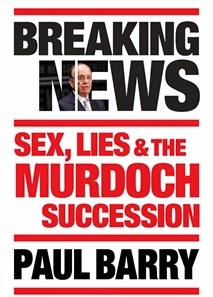
Breaking News: Sex, Lies and the Murdoch Succession, by Paul Barry

Staff Review by Chris Saliba

Paul Barry's brilliant Breaking News shows how the Murdoch media empire called the shots for a long time, installing prime ministers and taking down political foes, but reality and the truth eventually caught up with it. Essential reading for anyone interested in the power of media over democracy.

English born Paul Barry has made quite a career for himself as a journalist, author of books on key media figures and as presenter of ABC's Media Watch. His great skill is to distill a lot of information in an easily digestible and even entertaining fashion. He never seems to write a dull page. Breaking News is a perfect example of this: every page leaves you gobsmacked. There is so much scandal, abuse of power, illegality, irresponsibilty, arrogance and downright callousness within its pages that it leaves you reeling in disbelief.

Everyone knows about the News of the World hacking scandal and Rupert Murdoch's subsequent fronting at the Leverson inquiry to answer questions from British MPs. Breaking News establishes the story in a rather intriguing way. Firstly, it provides a speeded up history of Rupert Murdoch's business empire, with a biography of Rupert himself. The second part gives brief biographies of the three Murdoch children from Rupert's second marriage, Lachlan, Elizabeth and James. Lastly (and this forms the most substantial part of the book) the News of the World hacking scandal is chronicled in full.

The whole affair is, of course, a train wreck from start to finish, one that is still being played out in the courts. The amazing thing is the sheer arrogance of the journalists involved who thought nothing of breaking the law to get a good story and keep their masters happy. Barry does substantial primary research himself, and claims to have interviewed 100 people for the book. The culture that emerges within News Limited is one where it was assumed you could get yourself into all sorts of legal trouble and it didn't matter, because it was understood you'd be bailed out by the company. No one was under any illusion about what they were doing.

Perhaps worse than the horrible journalism, if you could call it that, were the close relationships built up between the tabloid editors, such as Rebekah Brooks and Andy Coulson, and British prime ministers. Apparently Rupert Murdoch thought that it was he who was running England, and he was perhaps in part right. The tales of Rebekah Brooks deciding to take it out on various British MPs with relentlessly aggressive media campaigns are sickening. As we all know, Andy Coulson went to work in Tony Blair's office after working for Murdoch. British political parties had to effectively govern jointly with Rupert Murdoch's News Limited. Get him offside and he'd use his newspapers to full effect to bring you down. As the book notes, The Sun had always picked election winners since the early seventies.

The epilogue of Breaking News looks at possible successors to Rupert Murdoch, if he should ever step down or even die: he claims to be intent on living to 100, at the very least. It's Elizabeth who appears the most capable, but because she is a woman, and Rupert is old fashioned in his views of women, she's not a favourite. Lachlan quit the business. (Wendi Deng's two daughters have been dealt out of any succession plan.) That leaves James, but insiders say he is not a patch on his father. He's constantly described as someone who thinks that he's smarter than he actually is.

Breaking News makes for important reading. It takes you inside the media sausage factory and of course its shocking to see what goes into the sausages. If you want to know how much of our politics and opinions are shaped by this race-to-the-bottom journalism, then this book is an absolute must. Highly recommended!

Breaking News: Sex, Lies and the Murdoch Succession, by Paul Barry. Published by Allen and Unwin. ISBN:  9781741759785  RRP: $39.99

To sign up for our monthly newsletter, featuring new releases, book reviews and favourite articles from around the web, click here. 

Wednesday, May 28, 2014

The Secret World of Oil, by Ken Silverstein


Staff Review by Chris Saliba

Investigative journalist Ken Silverstein uncovers the murky deals, collusion and money-grubbing that lies at the centre of the global oil industry.

It fuels the global economy, but do we really know much about how the oil business is run? How are the deals done, interests protected and most importantly, who are the characters making all the money? Ken Silverstein, a senior investigative reporter with First Look Media, travels to all corners of the globe to interview key figures and conduct research into the murkier side of the oil trade.

Silverstein concentrates on the fixers, lobbyists, PR agents and other players who work in an area where transactions are borderline legal and often morally questionable. Energy resources are often found in Third World countries, which means that dictators, crooks and gangsters are the powerful deal makers. Western democracies, ever eager to get access to oil and gas, are ready to hold their noses while schmoozing these unsavoury characters.

Tony Blair (“the human cash register”) is a case in point and gets a whole chapter devoted to his pecuniary interests. Since leaving parliament he has made a motza in consulting and speaking fees, with clients including several Caspian Sea oil companies.

Arguably the best chapter is the last one on Louisiana, a petroleum rich American state. Silverstein speaks to lobbyists, politicians, PR agents, lawyers and businessmen, drawing a depressing picture of environmental vandalism and an oil industry powerful enough to virtually set the legislative agenda. Silverstein shows that wherever there is oil in abundance, corruption, collusion and deal making are sure to follow.

The Secret World of Oil brims with top class investigative journalism. Ken Silverstein’s work shows careful research and a willingness to travel all lengths to get an interview and a story. His writing helps to pull back the veil and show the reader what happens behind the scenes in the all-powerful oil industry. It’s a scary story of greed, vandalism and corruption that’s not to be missed.

The Secret World of Oil
, by Ken Silverstein. Published by Verso Trade. ISBN: 9781781681374  RRP: $32.99

To sign up for our monthly newsletter, featuring new releases, book reviews and favourite articles from around the web, click here.  

Tuesday, April 22, 2014

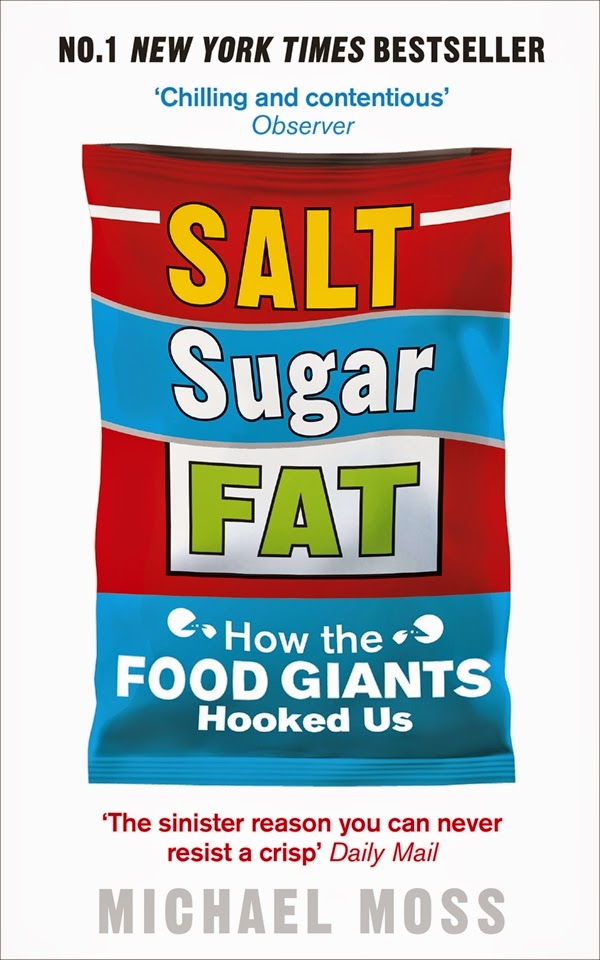
Salt Sugar Fat: How the Food Giants Hooked Us, by Michael Moss

Staff Review by Chris Saliba

Salt Sugar Fat is a shocking eye opener into the various ways that the food giants get us to eat their products. It will change the way you think about processed, convenience foods.

A customer recommended Salt Sugar Fat, and I'm glad I followed through. Michael Moss is a Pulitzer Prize winning investigative journalist. In this well rounded book Moss gives us an alarming picture of the business side of the food giants. We all have a vague idea of the food industry employing marketers to advertise foods that are perhaps not so good for us. Moss pulls back the veil to show what they really think and how they really operate. It's much, much worse than you could ever have imagined.

The first thing to note is the paradox that the processed food industry is not primarily in the business of nutrition. They are in the business of getting consumers hooked on salt, fat and sugar, the key ingredients that create that irresistible craving. Even more amazingly, the upper eschelons of these corporate behemoths are fully aware of the health implications of the foods they are pushing. The opening chapter of the book chronicles a secret meeting between all the big industry players, as they tried to nut out some sort of response to the obesity crisis.

The reader may wonder why key players in the food industry would get together over this issue. At the time of this 1999 meeting, Kraft was owned by tobacco company Philip Morris. Philip Morris knew all about litigation: they'd had to pay out billions in damages to state governments due to the havoc that had been wreaked on their hospital systems by tobacco related illnesses. The food industry saw the writing on the wall and wanted to avoid similar actions in the future.

There's plenty to amaze, stun and shock in Salt Sugar Fat. Merely the facts of the food and drink industry's composition is enough to do your head in. This is a business made up of scientists, technicians, lawyers, marketers, psychologists, researchers etc. etc. They even employ neuroscience to try and figure which parts of the brain light up when consuming salt, fat and sugar. This is a business so big that the stakes are necessarily high. Either sell in huge volumes or go under.

Another bonus feature of the book is that Moss has interviewed plenty of key figures from the industry who have left and now want to blow the whistle. Another irony Moss learnt from these interviews: many of the key figures driving the industry avoid the foods they sell to the public. They care too much about their own health.

Anyone who eats processed foods from these big companies will find much of interest in Salt Sugar Fat. 

Salt Sugar Fat: How the Food Giants Hooked Us, by Michael Moss. Published by WH Allen. ISBN: 9780753541470 RRP: $19.99

To sign up for our monthly newsletter, featuring new releases, book reviews and favourite articles from around the web, click here.   


Wednesday, February 26, 2014

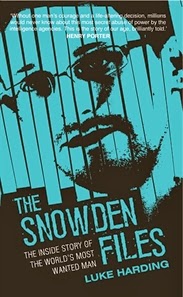
The Snowden Files: The Inside Story of the World's Most Wanted Man, by Luke Harding

Staff Review by Chris Saliba

This page turning piece of journalism from the Guardian's Luke Harding examines what the balance should be between government spying and the citizen's right to privacy. 

The whole Snowden affair is so big and complex that it's often hard to figure out what the actual ramifications of his actions are for the everyday citizen. Are we all at risk of being spied on by government and ending up in some type of Kafkaesque nightmare? This new book by Guardian journalist Luke Harding does a good job trying to answer some of those questions.

The Snowden Files is a joint publication between the Guardian and Faber and Faber, and so is delivered in a very pacey journalistic style. Large sections of the book give breathtaking detail on how the story was actually leaked, notably to Guardian journalist Glen Greenwald. There's plenty of cloak-and-dagger suspense and weird meeting places as the canny Snowden covers his tracks, trying to ensure he's not being followed.

The most compelling character in The Snowden Files is undoubtedly Snowden himself, perhaps because we so desperately want to know more about him but are given just the sketchiest of biographies. We know he was in his late twenties when he blew the whistle on his employer, the US government's National Security Agency (NSA). In his youth he appears to have been a bit of a tech savvy drifter with no formal qualifications. Once he managed to get himself an entry level position in the IT world, he went from strength to strength and finding work was never a problem. Politically, he was to the libertarian right of the spectrum. Luke Harding quotes at length some fascinating web chats of Snowden's, showing him to be highly critical of journalists who publish state security secrets. Nor was he (in his pre-whistleblower days, at least), a fan of Julian Assange. What happened?

The more he saw from the inside of the NSA, the more alarmed he became at what he considered to be the illegality of its operations. In essence, he thought the agency's activities were unconstitutional. His work at the NSA involved spying on individual citizens. In a larger sense, the ethical question was whether it was right for the NSA to be hoovering up billions of digital information pieces on citizens, not just of the US, but people the world over. (It should also be noted here that the NSA was working hand in glove with its British counterpart, the Government Communications Headquarters, or GCHQ.) This was what was happening, with the help of big tech companies such as Google, Yahoo, Facebook et all. The world of big data meant that extraordinary amounts of information could be swept up from data bases. The powerful record keeping of the internet means we are all of us living under a microscope, but don't really know it.

For Snowden, it was all too much, and he planned on disclosing what he knew, but without putting anyone's security at risk (unlike Julian Assange, who had published wholesale the Afghanistan war logs without editing sensitive names out of them). This is the interesting difference between Snowden and Assange: Snowden seems more thoughtful, smart and responsible. One co-worker described him as someone who cared and left small gifts for his colleagues.

The Snowden Files only really offers the bare bones of Snowden's personality. There are so many questions about him that remain unanswered. For example, how could he leave his girlfriend for possible exile or prison? It seems he didn't tell her anything but just left. What mental processes could bring him to accept the price of a possible prison sentence in order to tell the world all that he knew? I felt admiration for Snowden, but wanted to know so much more about his personality. It's early days on the whole Snowden affair, and no doubt we'll have to wait for more information.

This is an alarming book. When you type data into Google, send an email or post something on Facebook, all this information is being kept, archived and handed out to security agencies. In the age of big data, an extraordinary amount of information is collected. The power of today's data processing tools means that it doesn't take long to sift through the haystack of data to find the pin that is you.

The main question that the book raises is: what is the right balance between government spying and the citizen's right to privacy. The Snowden Files paints a picture of an Orwellian world enabled by powerful data collecting machines where we are all being watched, even followed, due to the ability to track everyone's mobile phone. Security agencies even know who we fraternise with, again due to everyone carrying a mobile phone.

This is an informative and compelling book about how the ubiquitous capture of digital data is transforming democracy quicker than we can keep up with. 

The Snowden Files: The Inside Story of the World's Most Wanted Man, by Luke Harding. Published by Guardian Books. ISBN: 9781783350353  RRP: $29.99

Sunday, January 26, 2014

I Am Malala, by Malala Yousafzai and Christina Lamb

Staff Review by Chris Saliba

Malala's story, one encompassing Middle Eastern politics and the first hand experience of terrorism, is utterly gripping, from the first page to the last.

The story of Malala Yousafzai is surely one of the most incredible of modern times. In October of 2012, a Taliban gunman shot her in the face while she was traveling to school. Her parents had bravely supported her outspoken views on education for girls. The Swat Valley in Pakistan at this time was a dangerous place to be so vocal, but Malala’s parents felt that the Taliban would never target a child. They did.

Almost a year to the date since that shocking event, Malala Yousafzai has written her story. I Am Malala presents a bracing mix of Pakistani history, the politics of terrorism and a young girl’s struggle to fulfill her aspirations: education and a career in politics.

Credit for this gripping book must also go to Malala’s father, Ziauddin Yousafzai, who supported his daughter in a culture that hinders rather than celebrates female achievement, and to Middle East Journalist Christina Lamb, for helping render Malala’s story accessible for a wider audience and providing a journalistic rigour to an important subject.

I Am Malala: The Girl Who Stood Up for Education and was Shot by the Taliban, by Malala Yousafzai. Published by W & N Non Fiction. ISBN: 9780297870920  RRP: $32.99

Wednesday, August 8, 2012

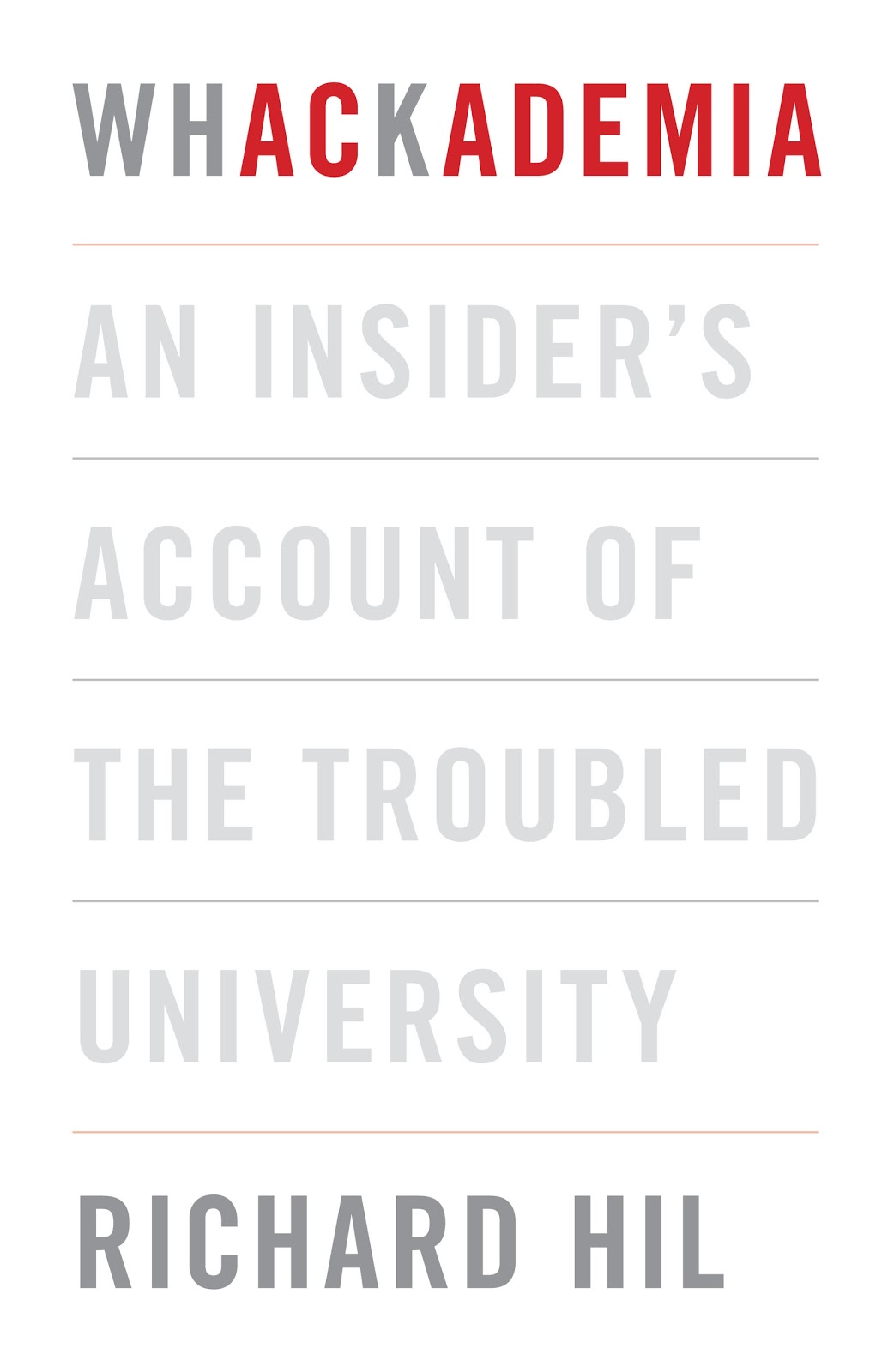
Whackademia: An insider's account of the troubled university, by Richard Hil


Staff Review by Chris Saliba

Higher education took a nose dive when former Labor Minister John Dawkins orientated universities toward a dry economic business model, according to Richard Hil’s insider account Whackademia. Since then an obsession with running universities like modern day corporations has taken over, pushing the core work of academics to the side. Whackademiaargues that it’s time to re-evaluate the purpose and value of our universities.

If you have ever entertained notions of pursuing an academic career then reading Richard Hil’s insider account Whackademia is sure to come as an unpleasant shock. Academic life is no longer taken up with research, writing and teaching but is rather consumed with administrative form filling, business metrics such ‘key performance indicators’ and the language of modern corporate spin. Teachers and academics struggle to find time and sanity to pursue their real vocation of education.

The higher education sector went corporate in 1987 when former Labor Minister for Employment, Education and Training John Dawkins started orientating universities toward a modern business model. The idea was that by embracing dry economics universities would be able to pay their way and not have to rely so much on government funding. Writes Hil:

‘This meant embracing ‘entrepreneurship’ and the practices of setting targets, developing market plans and introducing performance controls: the same organisational approach that had already been widely adopted across industrial sectors in a number of other Western countries.’

Embracing the business model ethos brought with it a push towards attracting as many full-fee paying foreign students as possible, to help bring more cash into the coffers. The deleterious effects of this approach have been twofold: larger class sizes (resulting in an unmanageable workload), and pressure not to fail students. Too many failing grades can result in the teacher being called in to explain themselves. Graduates now complete their higher education with poor writing and communication skills. They are often barely employable.   

Such an outcome seems extraordinary, but Hil backs up his argument by quoting industry and business groups who are dismayed by the poor skills of their new hires. Higher education is not creating graduates with the required aptitudes and competencies for the professional world. This is ironic, as the business model that John Dawkins introduced was supposed to create a factory line of perfectly equipped employees, yet business is saying these graduates are seriously lacking.

One of the biggest complaints Whackademia makes is the new overload of administrative tasks to be dealt with. Academics now drown under an ocean of forms filling duties, many of them exceedingly complicated and attended by umpteen pages of explanatory notes. The digital revolution has made matters only worse, shifting tasks once performed by admin staff to academics. Teachers now spend all their time performing these mind-numbing tasks, rather than on quality of education.

This sounds all very gloomy and frustrating, but Hil writes with much good humour and energy. His book is accessible to the non-specialist and all the arguments are set out lucidly. There’s also a useful bibliography at the back for further research.

Why write Whackademia and risk the opprobrium of university peers and superiors? After spending decades as an academic, and seeing the university’s culture shift from the laudable to the lamentable, Hil hopes to create discussion and make change by speaking out. While the book is critical of a lot of modern day university practices, he does admit that there is still a lot of good academic work being done.

Whackademia: An insider's account of the troubled university, by Richard Hil. Published by New South. ISBN: 9781742232911  RRP: 34.99