Showing posts with label World Current Affairs. Show all posts

Friday, September 4, 2026

A Message from Ukraine, by Volodymyr Zelensky


A short collection of President Volodymyr Zelensky’s speeches.

A Message From Ukraine is a selection of President Volodymyr Zelensky’s speeches, from 2019 to 2023. The speeches were chosen by Zelensky himself and he also wrote the introduction. The book first appeared in 2022 and this new edition features an additional speech, from 2023. 

Having watched on our television screens the horrible destruction and humanitarian disaster of Russia’s invasion of Ukraine for the last two years, one might expect A Message From Ukraine to be full of grim stories from the front, unbearable tales of death and destruction. In fact, Zelensky’s speeches are warm and humane. While they may have been written to bolster morale and help Ukrainians endure the unendurable, their message has a universal appeal. Zelensky stresses that truth and dignity will be the victor in the end. There is a tone of deep empathy in Zelensky’s words - this is the voice of someone who has seen much suffering. 

A Message From Ukraine is more than a collection of political speeches of the day; it is a timeless book dealing with the deepest of existential themes. It shows that truth and honour can give untold strength, despite the confronting horror of war.  

A Message from Ukraine, by 
Volodymyr Zelensky. Published by Penguin. $19.99

MAY 2026

Saturday, September 7, 2024

A Message from Ukraine, by Volodymyr Zelensky


A short collection of President Volodymyr Zelensky’s speeches.

A Message From Ukraine is a selection of President Volodymyr Zelensky’s speeches, from 2019 to 2023. The speeches were chosen by Zelensky himself and he also wrote the introduction. The book first appeared in 2022 and this new edition features an additional speech, from 2023. 

Having watched on our television screens the horrible destruction and humanitarian disaster of Russia’s invasion of Ukraine for the last two years, one might expect A Message From Ukraine to be full of grim stories from the front, unbearable tales of death and destruction. In fact, Zelensky’s speeches are warm and humane. While they may have been written to bolster morale and help Ukrainians endure the unendurable, their message has a universal appeal. Zelensky stresses that truth and dignity will be the victor in the end. There is a tone of deep empathy in Zelensky’s words - this is the voice of someone who has seen much suffering. 

A Message From Ukraine is more than a collection of political speeches of the day; it is a timeless book dealing with the deepest of existential themes. It shows that truth and honour can give untold strength, despite the confronting horror of war.  

A Message from Ukraine, by 
Volodymyr Zelensky. Published by Penguin. $19.99

MAY24

Friday, February 2, 2018

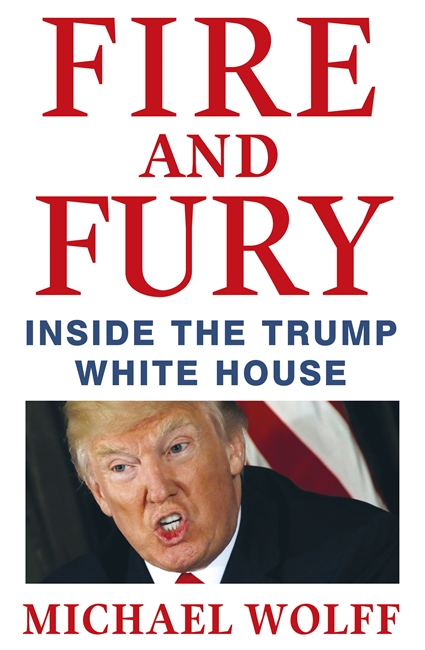
Fire and Fury, by Michael Wolff

Staff review by Chris Saliba

The hype around Michael Wolff’s shock expose of the Trump White House is well deserved. Fire and Fury is a wild, wild ride. 

The key drama at the centre of Fire and Fury is the struggle for influence in the White House. Trump is the central figure around which so many orbit, yet he has no political or philosophical centre. He simply bobs and spins around impulsively. Trump is bored by serious meetings, lacks concentration, won’t read important documents, acts without consultation, is child-like and basically uninterested in government. The quandary for senior staffers is to find some kind of narrative and direction despite the President's policy vacuum. Many staffers desperately tell themselves there must be some hidden master plan, somewhere. Yet none can be found.

Michael Wolff describes three main factions fighting for control of the Trump White House. Firstly there are the Bannonites, headed by Steve Bannon. He is someone who’s studied history and believes he’s created a radical new movement. Then there is Ivanka Trump and husband Jared Kushner (Bannon variously describes them as "Jarvanka", the "kids" or the "geniuses"). They run with a group of Goldman Sachs types, more left leaning in their politics. This group hope they can pull Trump towards a middle course. Lastly there is the establishment Republicans, led by Reince Priebus, now former White House Chief of Staff. His faction believes they can guide Trump to take a traditionally conservative course. These three factions are constantly trying to corral the President, but he doesn’t sit still long enough.

The access that Michael Wolff was granted to the White House is in itself highly symbolic of how incompetent and ridiculous the Trump administration is. Why let someone like Wolff in to roam around and sit in on meetings? The biggest mystery is why Bannon spent so much time speaking so candidly to Wolff. You can only surmise that Bannon is ultimately a nihilistic figure, only happy with failure and self-destruction. Fire and Fury is Bannon’s long suicide note.

Political junkies will eat this book up. It's dizzying, chaotic events and rogue gallery of careerists, buffoons and adventurers make it read like the mad, circuitous fiction of Dostoyevsky. Its pages describe so much bustle and jostling and movement, yet strangely, so much inertia. This is an administration that doesn't know where it's going or if it even wants to go anywhere. Wolff draws together his knowledge of politics, media and business to make a riveting narrative of power without sense or purpose.

Fire and Fury, by Michael Wolff. Published by Little, Brown Company. ISBN: 9781408711392  RRP: $32.99

To sign up for our monthly newsletter, featuring new releases, book reviews and favourite articles from around the web, click here.

Wednesday, July 5, 2017

No is Not Enough: Defeating the New Shock Politics, by Naomi Klein

Staff review by Chris Saliba


Naomi Klein persuasively argues that the election of Donald Trump is not an aberration. It is the culmination of years of neo-liberal influence on policy, politics and society. 


No is Not Enough was written in record time, unlike Naomi Klein's other books, which have taken years to research. Ostensibly this is an anti-Trump treatise. Klein shows how much the Trump administration is really just a kleptocracy. The collected wealth of Trump's key officials is in the billions of dollars. Their record on labor rights and the environment is appalling.

The main thesis of No is Not Enough is that the election of Donald Trump should not really surprise at all. It is something we have been slowly and blindly walking into. The neo-liberal philosophy that has been pushed for the last thirty years or so has strongly argued for smaller government, less regulation and ultimate faith in markets. The election of Donald Trump is the natural end game of neo-liberalism. The market has replaced government.

While many readers may groan at the thought of a book on Trump - afterall, don't we see and hear too much of him everyday? - there is plenty of smart analysis here. Klein does an excellent job following the money of everyone in the Trump camp,  right down to Ivanka and her husband, Jared Kushner. The sections that deal with Trump as a brand name provide a good reminder that Trump is not a creator of value, but a brilliant self-promoter. He rose from the ashes of financial ruin by becoming a reality television star and leasing out the Trump name for dodgy developer projects.

No is Not Enough ends on a positive note. Klein documents groundswell movements that are rising up and having some wins. Canada's Leap Manifesto, a political manifesto created by writers, artists, leaders and activists, and with which Klein was involved, garnered a lot of support and influenced Canadian election results. It called for a restructuring of the Canadian economy and an end to the use of fossil fuels.

This is a bracing, urgently argued call for change. 

No is Not Enough: Defeating the New Shock Politics, by Naomi Klein. Published by Allen Lane. ISBN: 9780241320884 RRP: $29.99

To sign up for our monthly newsletter, featuring new releases, book reviews and favourite articles from around the web, click here.

Tuesday, April 18, 2017

The Making of Donald Trump, by David Cay Johnston

Staff review by Chris Saliba

A forensic investigation of Donald Trump's many business dealings over the years.

David Cay Johnston is a Pulitzer Prize winning investigative journalist, specialising in economics and complex tax issues. He has been covering Trump for close to thirty years, having first met him in 1988 when working as a reporter for The Philadelphia Inquirer. Johnston's first impressions were that Trump was a P. T. Barnum-like character, the nineteenth century American politician and showman.

The Making of Donald Trump was written at breakneck speed, the author's aim to make the public aware of Trump's more slimy and underhanded business practices. The book is based on many years of reporting and research. In 24 short chapters mainly covering a range of Trump's business deals, it goes into forensic detail about the mogul's byzantine tax arrangements, dodgy debt structures, unethical labor hiring practices and other financial shenanigans. There are also chapters highlighting Trump's narcissistic personality, his methods for dealing with those he considers disloyal, his litigious nature and his poor attitude to women.

Perhaps the most shocking aspect of The Making of Donald Trump is how those in authority enabled him. So many times his empire came close to crashing down around his ears, whether it be through eye-watering levels of debt or breaking rules and regulations, especially with regards to his casinos. Yet time and time again regulators would give him a free pass. Often he was simply thought of as too big to fail. If the regulators had done their job properly, we wouldn't be hearing about Donald Trump today. He would have sunk as a petty businessman trying to game the system. Instead at each and every business crisis he has had powerful interests turn a blind eye or give him a leg up.

A depressing story of how the rich bend and break the rules, exploit the law, and always get what they want.

The Making of Donald Trump, by David Cay Johnston. Published by Hardie Grant Books. ISBN: 9781743792995 RRP: $29.99

To sign up for our monthly newsletter, featuring new releases, book reviews and favourite articles from around the web, click here.

Wednesday, April 5, 2017

The Return: Fathers, Sons and the Land In Between, by Hisham Matar

Staff review by Chris Saliba

Novelist Hisham Matar's memoir about his father, a political prisoner kidnapped in 1990 but presumed murdered, is harrowing yet courageously dignified.

Hisham Matar was born to Libyan parents. His father, Jaballa Matar, was a resistance member to Muammar Qaddafi's brutal dictatorship. The family lived in exile, but Jaballa was kidnapped in 1990 and imprisoned in Qaddafi's notorious Abu Salim prison. Hisham Matar never saw his father again.

The Return, a memoir, is part detective story and part agonising anatomy of one man's grief. Every page is full with sadness and suffering. The book really takes you under the writer's skin. It talks not only of one man's tragedy, the of the many who opposed Qaddafi and paid the terrible price. Hisham Matar had many family members, especially cousins, who were political prisoners, held in dire conditions for up to twenty years. For example, each prison cell had a loudspeaker that played political propaganda everyday, from 6am to 12pm, at an unbearably loud volume.

Hisham Matar has spent most of his life living in England, his adopted country, where he works as a writer and novelist. You would think England would offer a degree of safety, but Matar often felt unsafe, especially as the government of Tony Blair improved relations with Qaddafi's regime. Some of the book's strangest and almost unbelievable sections are when Matar makes contact with Qaddafi's son, Seif el-Islam, trying to get information on the fate of his father. (Seif el-Islam claims Tony Blair as a friend and has been hosted by the royal family at Buckingham Palace).

This is a deeply moving memoir about lives that are ruined forever by totalitarian politics.

The Return: Fathers, Sons and the Land In Between, by Hisham Matar. Published by Viking. ISBN 9780241966280 RRP: $24.99

To sign up for our monthly newsletter, featuring new releases, book reviews and favourite articles from around the web, click here.


Thursday, March 2, 2017

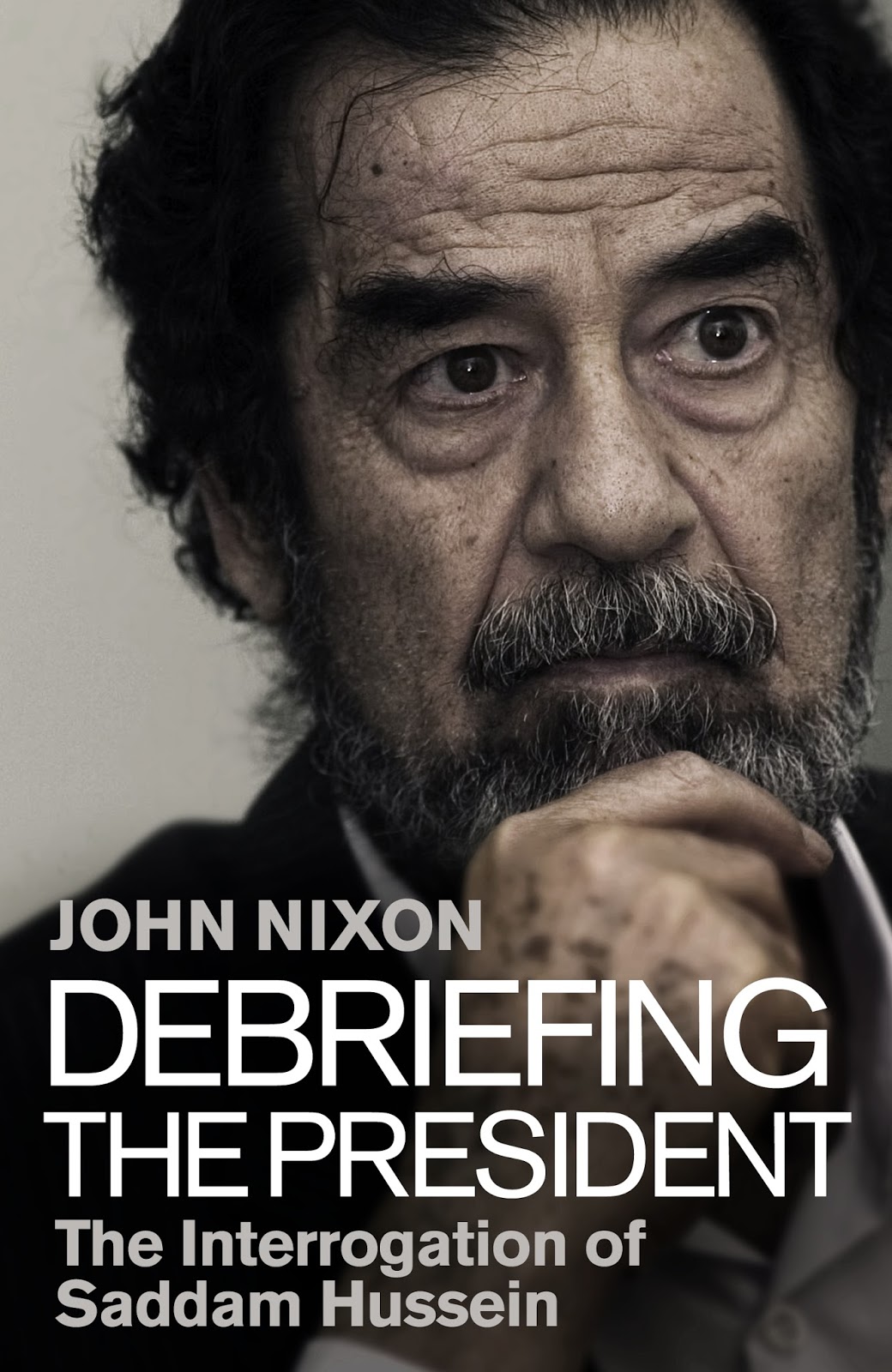
Debriefing the President: The Interrogation of Saddam Hussein, by John Dixon

Staff review by Chris Saliba

Former CIA agent John Nixon's Debriefing the President goes a long way to solving the riddle of Saddam Hussein.

It's amazing to think that Debriefing the President, a close up portrait of Saddam Hussein drawn from first-hand interview material after his capture in 2003, struggled to find a publisher. Having spent trillions deposing Saddam Hussein, a man often compared to Hitler, one would think there would be a huge appetite to discover what he was like in person.

Author John Dixon was a CIA analyst from 1998 to 2011. His area of expertise was Iraq and as a consequence he did several tours of the country. His in-depth knowledge of Iraq brought him a once in a lifetime opportunity: to interview Saddam Hussein after his capture. The extensive interviews, conducted with two analysts present, covered many topics of top interest to the Bush administration: weapons of mass destruction, links to terrorism and Iraq's human rights record. (The use of chemical weapons on the people of Halabja was frequently returned to, much to Saddam's ire.)

What do we learn from Debriefing the President? Quite a lot, but not what you would expect. In some ways, Saddam comes across as a quixotic character. The first thing Nixon was struck by was the ex-dictator's sense of humour, at times self-deprecatory. He appeared almost light-hearted, even though he knew his execution surely awaited.

While we in the West considered him the "butcher of Baghdad", Saddam thought of himself mainly as a writer. At the time of his capture he was working on a novel that was clearly very important to him. Throughout the interviews he became gruff at not being able to access pen and paper to continue on with his novel. As for the running of Iraq, Saddam claimed that in the final years of his rule he had basically delegated the running of the country to his subordinates. (He wanted to spend more time on his writing.) Many human rights abuses he professed to be ignorant about, indicating that his deputies may have authorised certain executions without his knowledge.

While Saddam was mostly agreeable during the interviews, he became angry and uncomfortable when questioned about human rights abuses. He insisted he was not personally responsible for the use of chemicals weapons on the people of Halabja - it must have been one of his lieutenants in the field, he suggested rather foggily. (Nixon believes him on this.)

As for weapons of mass destruction, Saddam admitted some responsibility for not making it clear enough to the west that he didn't have any. His attitude to terrorism is perhaps most surprising. Saddam felt that the 9/11 attacks would bring America and Iraq closer together. He felt the US would rely on him to fight Islamic extremists, as he was fighting them in his own country. Wahhabism, an ideological branch of Islam exported from Saudia Arabia, was a recurring menace to Iraq.

Interestingly enough, the final chapters of the book detail two briefings John Nixon gave to president George W. Bush. Nixon gave respectful yet honest answers to Bush's questions. Because the answers Nixon gave didn't fit in with Bush's preconceived ideas, they were most unwelcome. The tension in the room at the white house is palpable during these scenes as a cool anger erupts on Bush's face. The job of the CIA, it appears, was to confirm the president's biases. No one in the CIA hierarchy would talk to Nixon after this interview with Bush. (It should be noted here that Nixon felt Bush was smart at absorbing intelligence on Iraq and the region, but he just didn't know what to do with it.)

One of the most lamentable lessons of Debriefing the President is the way the CIA (and all those surrounding Bush) were there to maintain the president's confirmation bias. No important, contradictory information could get through. Everyone must laugh at the president's lame jokes, even when thousands of lives were in the balance.

The final analysis of Debriefing the President is that Saddam Hussein was never a threat to the West, was never involved in terrorism and should have been left in place. Nixon admits that Saddam was, during the interviews, a shrewd and manipulative character. The more he got to know him the less he liked him. Nevertheless, the price of removing him was far too high.

Debriefing the President: The Interrogation of Saddam Hussein, by John Dixon. Published by Bantam. ISBN: 9780593077771 RRP: $32.99

To sign up for our monthly newsletter, featuring new releases, book reviews and favourite articles from around the web, click here.

Thursday, September 15, 2016

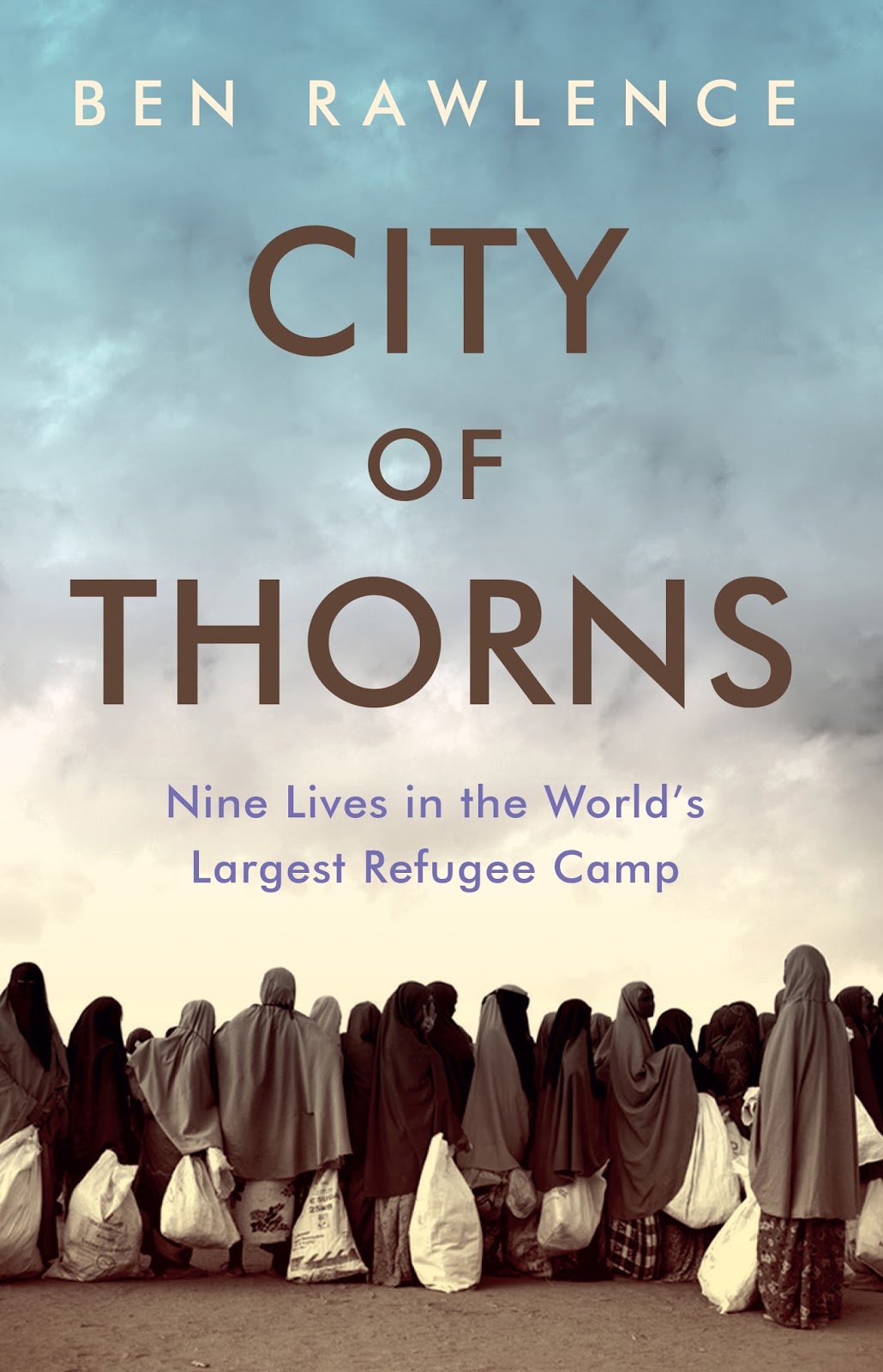
City of Thorns: Nine Lives in the World's Largest Refugee Camp, by Ben Rawlence

Staff review by Chris Saliba

Ben Rawlence paints a heartbreaking picture of nine lives in one of the world's largest refugee camps.

Ben Rawlence is a former researcher for Human Rights Watch’s Africa division. He first visited Dadaab, the semi-arid border town in Kenya which hosts the largest refugee camp in the world (the site is actually made up of five camps in all), in 2010. He returned in 2011. This would be the first of seven visits over the next four years. In total, Rawlence spent around five months in the camps, interviewing the refugees about their lives.

City of Thorns concentrates its narrative on the lives of nine refugees, many of them married couples trying to hold family life together. The book opens with Guled, an orphaned Somali teenager who is struggling to survive in Mogadishu. He fears being kidnapped by al-Shabaab, the East African Islamic terrorist group. One day his worst fears are realised. He’s kidnapped in  his classroom by five armed men and made to work as a boy soldier, patrolling the streets. When he sees two women being beaten by al-Shabaab soldiers because they are out shopping during prayer time, there is nothing he can do. One of the women is his sixteen-year-old wife whom he’d recently secretly married. Life is clearly impossible for Guled, so he takes the risky journey to Dadaab.

While for the main part City of Thorns is a chronicle of the personal stories of nine people living in some of the world’s worst conditions (rape, violence and hunger are endemic), Ben Rawlence skilfully interweaves a political history of the horn of Africa, explaining how the refugee crisis came into being. He examines many facets of the crisis: corrupt African political elites, Islamic terror, poor and disengaged Western policy towards Africa and finally, the well-meaning but often incompetent aid agencies, notably the UNHCR that runs the centre.

This is an exceptional book. It provides-clear eyed understanding of the crisis, strongly focusing on the unrelenting human misery that has been created for some half a million refugees. Rawlence’s close work with the refugees allows him to draw compelling psychological portraits of their inner states. Humans crave stability and an ability to imagine and plan for the future. Camp residents have none of this and so live in hopeless despair.

Mention should also be made of the quality of Rawlence’s writing and his skill at organising so much complex material. City of Thorns almost reads like a novel (I often thought of Steinbeck's The Grapes of Wrath), eliciting empathy, horror and desperate hope. The book ends on a somewhat happy note for the couple Monday and Muna and their family. Their case had simply been forgotten after the Australian federal 2013 election. An email inquiry fixed the problem. In June 2015 they boarded a plane for Melbourne, Australia. 

City of Thorns: Nine Lives in the World's Largest Refugee Camp, by Ben Rawlence. Published by Portobello Trade. ISBN: 9781846275876 RRP: $35

To sign up for our monthly newsletter, featuring new releases, book reviews and favourite articles from around the web, click here.

Thursday, April 9, 2015

The Rise of Islamic State: Isis and the New Sunni Revolution, by Patrick Cockburn

Staff Review by Chris Saliba

Irish journalist Patrick Cockburn has written an excellent primer on the rise of Islamic State. 

The rise of Islamic State (ISIS) has taken many, inside and outside Iraq, by surprise. Irish journalist Patrick Cockburn, who has extensive experience and contacts in the region, has written this short, sharp history of the group’s extraordinarily swift military victories in Iraq and Syria. Large chunks of both countries are now held by ISIS.

The main conflict, as Cockburn describes it, is between Sunni and Shia Muslims. In Iraq, under the prime ministership of Nouri al-Maliki, the persecution of Sunnis by Shias has been rife. This is why Sunni dominated areas have simply put up no resistance to ISIS. Coupled with this was a completely ineffectual Iraqi army which was hopeless in combating ISIS’s small army. Cockburn describes the rest of the Iraqi population, not under ISIS control, as being dazed and confused, not completely comprehending the full extent of what has happened to their country.

The book takes a critical look at Saudi Arabia and its funding of terrorist groups and regional promotion of Wahhabism, an austere and fundamentalist 18th century version of Sunni Islam. It’s pretty well accepted that Saudi Arabia is funnelling money to these groups, while bizarrely remaining a Western ally. Cockburn also examines Western policy towards Iraq and Syria, with its myriad of failings.

This is an excellent primer on a Middle Eastern conflict that is explosive and highly unpredictable. The stakes are high as ISIS controls so much of Iraq and Syria, and could have serious global ramifications.

The Rise of Islamic State: Isis and the New Sunni Revolution, by Patrick Cockburn. Published by Verso Trade. ISBN: 9781784780401  RRP: $21.99.

To sign up for our monthly newsletter, featuring new releases, book reviews and favourite articles from around the web, click here.

Friday, February 6, 2015

Exodus: Immigration and Multiculturalism in the 21st Century, by Paul Collier

Staff Review by Chris Saliba

Exodus marshals some very interesting research into migration and its economic effects, yet overall the book disappoints with its narrow focus and unwieldy language.

Paul Collier is Professor of Economics and Director of the Centre for the Study of African Economies at Oxford University. He’s also worked at the World Bank. Exodus, which examines global migration in the 21st century, aims to take a contentious issue and bring a calmly rational approach to it. Collier claims to look at the simple facts of migration and from that deduce the correct policy settings. Like so many others, Collier has an interesting personal migrant story to tell. His German grandfather, Karl Hellenschmidt, migrated from the poverty stricken town of Ernsbach, to one of the world’s most prosperous at that time, Bradford in England. Karl Hellenschmidt’s son, Karl Hellenschmidt Jr., would change his name to Collier. As the author tells us several times, his family chose to assimilate rather than retain their German identity.

The findings of Exodus, which uses much interesting, if incomplete, research, aren’t too radical. A bit of common sense would tell you the same things. Too much migration can cause strains on the host country. The larger the host country’s diaspora of a particular nationality, let’s say Bangladeshi, the easier it makes it for further Bangladeshis to migrate. Diasporas offers many advantages - financial, linguistic and cultural support among them. Nation states on the other hand, and a sense of patriotism, promote harmony, co-operation and mutual regard. Migrants to richer countries reap the higher productivity ( working with computers and more sophisticated machinery ) that those more evolved labor markets offer, resulting in dramatically higher wages. They get a “free lunch” by gaining employment in a more advanced economy, one that relies on trust and the rule of law.

That’s a snapshot of some of the major points Collier discusses. To simplify overall the book basically says host countries receive a modest financial gain and negligible social strain from migration. It’s all really much of a muchness. However, the danger is if migration were to be increased too much, then this could cause social unrest. The best way to avoid social unrest is to ditch the policies of multiculturalism and promote assimilation. This way the diaspora would be reduced and migration wouldn’t have such a high social cost.

This is a book that has several problems. Perhaps the main one is its very narrow economic focus. It feels like we’re being invited to view the Mona Lisa, but a magnifying glass is  continually held over her nose and we’re not allowed to look at anything else. The migrant experience, the differing reasons why people migrate or even a short history of migration isn’t given at all. The overall picture is one of migrants being rather benign, perhaps a little  parasitic, and yet potentially very dangerous. The question arises: if migration rewards host countries so poorly, why have so many countries pursued it at all?

Also problematic is the book’s language. Collier uses a lot of glib buzzwords common to economic theory, like ‘game theory’ and ‘zero-sum games’. The text is so heavily larded in this way that it’s hard to get a focus on what he’s saying. I had to repeatedly re-read sentences three or four times to try and figure out what was going on. Once translated into common English, you realise some great point wasn’t escaping you, and that plainer, more direct English could have been used (and Collier writes that this is a book for the lay reader!). It’s a case of someone obfuscating meaning in order to appear more lofty and intelligent. He also uses analogies and metaphors that don’t seem right. Because of this, it’s hard to trust his arguments. For example, when discussing potential rises in migration, he likens it to global warming. Not only that, he goes on to draw out the analogy for another page, not leaving it as a throwaway remark. My immediate impression was that he knew very little about global warming. Maybe his knowledge of migration was limited too?

There are plus sides to Exodus, otherwise I wouldn’t have made it to the end. Collier does use a lot of interesting research (again, much of this research is incomplete) and this aspect of the book provides food for thought. But this is more in the line of interesting facts and figures; the much bigger picture of migration the book doesn’t address, and for this reason many may find it disappointing.

Exodus: Immigration and Multiculturalism in the 21st Century, by Paul Collier. Published by Penguin. ISBN: 9780141042169. RRP: $22.99

To sign up for our monthly newsletter, featuring new releases, book reviews and favourite articles from around the web, click here. 

Wednesday, November 26, 2014

Little America: The War Within the War for Afghanistan, by Rajiv Chandrasekaran

Staff Review by Chris Saliba

The Washington Post journalist Rajiv Chandrasekaran shows how too much American bureaucracy stymied efforts to rid Afghanistan of the Taliban and politically stabilise the country.

Rajiv Chandrasekaran’s first book, Imperial Life in the Emerald City, chronicled the US war in Iraq. It was a devastating critique, highlighting the arrogance, ignorance and complacency of American intellectual and political elites. Little America: The War Within the War for Afghanistan could be considered its follow-up. Whereas the former book concentrated on the Bush administration’s approach to war, Little America examines President Barack Obama’s record. The war in Afghanistan was a war Obama inherited (although as a Senator he had supported it). After over a decade in Afghanistan, with billions of dollars spent and many lives sacrificed, there was still not much to show in the way of progress.

In 2009 President Obama announced a troop surge to try and deal with the Taliban insurgency. This counter insurgency strategy was called COIN. The whole idea was not so much to knock out the Taliban, as to make the towns and villages safe. Once security had been increased, the thinking was that the people would naturally support law and order. Young men would be less likely to be radicalised and join the Taliban. The problem was that, for the Americans at least, not everyone was on the same page. The President’s office, the State Department and the Military all seemed to have differing ideas on what would work. There was all this push and pull between key figures, arguing amongst themselves as to what was the best way forward. As Chandrasekaran writes, “The American bureaucracy had become America’s worst enemy.” Too many experts, not enough discussion, not enough first hand experience and common sense. Even the military, working on the ground in Afghanistan, never got out much to meet the locals and learn their customs and language. One State Department representative working in Afghanistan, Carter Malkasian, bucked this trend. He learnt to speak fluent Pashto and was respectful and mindful of the local culture. As a result he was surprisingly effective. If the US had deployed thousands of Carter Malkasians, then so much more would undoubtedly have been achieved, with far less loss of life.

Instead, negligible results were achieved. A 2010 CIA report concluded that Afghanistan was “trending to stalemate”. While there had been gains in some areas, other regions had gone backwards. Overall there had been no net progress.

Making things worse was the fact that Obama had put in a timeline for withdrawal. All thinking revolved around the idea of a deadline for success, rather than a long term investment. Many of the civilian employees working in Afghanistan didn’t like the place, performed the minimum required and couldn’t wait to leave and take up a cushy job somewhere else. Western style ideas of efficiency, technocratic expertise and problem solving were applied to an ancient, poor and illiterate civilisation.

Little America makes for very sorrowful reading. It highlights the folly of thinking that foreign wars can be easily managed, their outcomes assured by simply implementing the required policies. Rajiv Chandrasekaran brings to his subject an on-the-ground journalist’s account. He’s followed soldiers into battle, interviewed key bureaucrats and politicians, and wandered out into the streets of Afghanistan to talk to the locals. He mixes analysis with first hand experience to give a clear picture of what has gone wrong. His two books together, Imperial Life in the Emerald City and Little America, make essential reading for anyone wanting to understand the complexity and folly of the Iraq and Afghanistan wars.

Little America: The War Within the War for Afghanistan, by Rajiv Chandrasekaran. Published by Bloomsbury. ISBN: 9781408831809 RRP: $29.99

To sign up for our monthly newsletter, featuring new releases, book reviews and favourite articles from around the web, click here.

Thursday, November 6, 2014

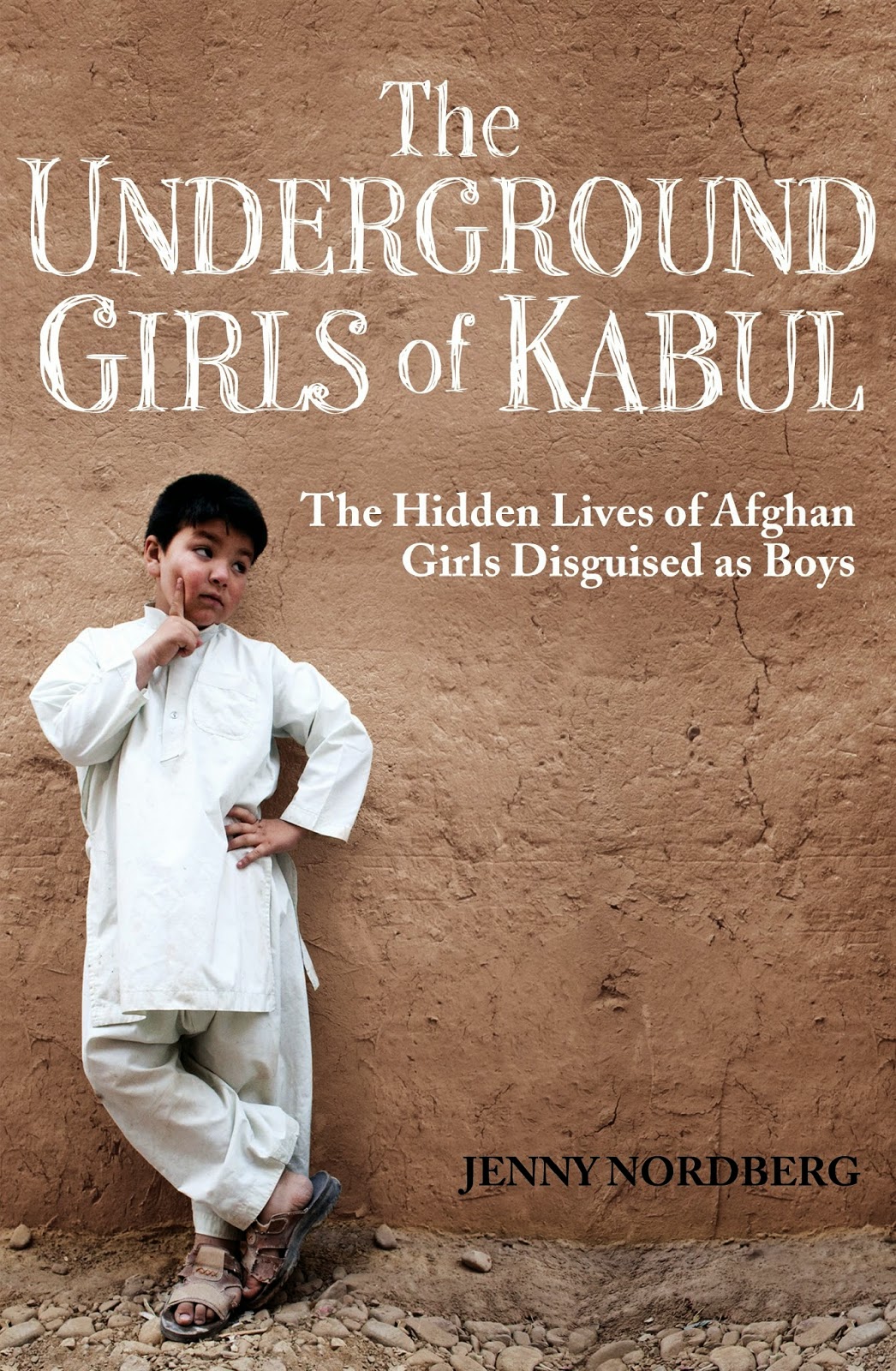
The Underground Girls Of Kabul: The Hidden Lives of Afghan Girls Disguised as Boys, by Jenny Nordberg

Staff Review by Chris Saliba

In this brilliant work of empathy and understanding, Swedish journalist Jenny Nordberg takes us inside the lives of Afghan women and their struggle for a better life.

Life for Afghan women is really no better than being a constant prisoner, with men holding the jail keys. Women must be covered up at all times lest they provoke the lust in men and they can’t travel without a man as an escort. Career wise, the only path is marriage. Marriages are arranged, brides literally sold off, and husbands must be obeyed. Once married, the first job for an Afghan wife is to produce a son. Having a son immediately raises a woman’s status, and that of her family. So desperate are women and their husbands to have boys that, after producing several girls in a row, a couple may decide to turn one of their girls into a boy.  Turning a girl into a boy is as simple as cutting her hair and putting on boys clothing.

What makes The Underground Girls of Kabul such an engaging book is Jenny Nordberg’s intimate reporting style. The book gives you a very real understanding of what it’s like to live as a woman in Afghanistan. But so much more than that, it shows how real people cope when living in such a society, in a country constantly suffering from war. You come to understand so many of the country’s problems through the lens of gender.

Another reason the book is so skilful at eliciting the reader’s empathy is that Nordberg throughout the text points out how we in the West have only very recently improved our laws to protect and emancipate women. We can’t hold the high moral ground.

If you really want to understand Afghanistan from the inside, what it’s like for its people, living with constant war, violence, poverty, yet still having hope of a better future, The Underground Girls of Kabul makes for essential reading.


The Underground Girls Of Kabul: The Hidden Lives of Afghan Girls Disguised as Boys, by Jenny Nordberg. Published by Virago. ISBN: 9781844087747  RRP: $29.99

To sign up for our monthly newsletter, featuring new releases, book reviews and favourite articles from around the web, click here.

Thursday, October 23, 2014

The Underground Girls of Kabul, by Jenny Nordberg

In this brilliant work of empathy and understanding, Swedish journalist Jenny Nordberg takes us inside the lives of Afghan women and their struggle for a better life.

There’s no other way to describe it: this is an exceptional book. So much that is written on Afghanistan comes from either a militaristic, political or academic angle. There are many important studies written by experts that give an abstract idea of the country, its wars, religion and history. Jenny Nordberg, a Swedish journalist based in New York, examines power,  gender and freedom in Afghan society through the cultural phenomenon of bacha posh: dressing up young girls as boys. By investigating a practice that is fairly common, accepted but not talked about, Nordberg paints a deeply human portrait of what it’s like to be a woman in Afghanistan.

Life for Afghan women is really no better than being a constant prisoner, with men holding the jail keys. Women must be covered up at all times lest they provoke the lust in men and they can’t travel without a man as an escort. Career wise, the only path is marriage. Marriages are arranged, brides literally sold off, and husbands must be obeyed. Domestic violence is treated as normal and acceptable. Once married, the first job for an Afghan wife is to produce a son. Having a son immediately raises a woman’s status, and that of her family. For a woman to have girl after girl and no boys lowers status. No one wants girls. So desperate are women and their husbands to have boys that, after producing several girls in a row, a couple may decide to turn one of their girls into a boy.  Turning a girl into a boy is as simple as cutting her hair and putting on boys clothing. There can be many reasons for this pre-pubescent gender bending.

There are practical imperatives to turn a girl into a boy. If a family runs a business and they need someone to help out, a daughter is prohibited from performing these sorts of duties. But sons are free. Thus turning a girl into a boy can provide a family with much needed economic help. Another popular reason that families may decide to turn a daughter into a boy is the widespread belief that this will bring good luck to subsequent pregnancies, promising the much prized boy. Jenny Nordberg interviews lots of Afghans who firmly believe they were able to conceive boys because they turned one of their girls into a bacha posh.

Mothers may wish to turn their daughters into boys because they were once bacha posh themselves and now want their girls to experience the freedoms that men enjoy, if only for a relatively short period of time.  Lastly there is the all pervading cultural demand to produce boys. A bacha posh, even though not a real boy, is seen as a definite step up from being a girl and a bit of a happy compromise. A bacha posh in the family will raise the family's status. Other families, even knowing the deception, will compliment the parents on such a wise decision.

Afghanistan being such a conservative country, you’d think that turning girls into boys would be frowned upon, perhaps lethally dangerous. Amazingly, it’s not. It’s much a case of “don’t ask, don’t tell”. Girls passing as boys will go to school, perform jobs, run the streets and everyone will know they’re really girls. No one minds or disapproves. There are limits to this type of cross dressing, however. Most bacha posh are turned back into girls once they approach puberty. It’s seen as inappropriate to have girls on the cusp of womanhood enjoying the freedoms of men. So with a flick of the switch, gender is restored to female.

Jenny Nordberg does interview women who continue to dress as men into adulthood and puberty. One teenage girl she meets resists her parents urges for her to turn back into a girl. You get the impression, however, that her days as a boy are numbered. A couple of grown women manage to pass as men and hold down jobs. The main subject of the book is a female parliamentarian, Azita, who has decided to dress her youngest girl as a boy, given the male name Mehran. Azita is in a constant struggle to improve her family’s lot. Winning a seat in parliament has moved the family forward. Having a “boy” in the family, even though most people know she is her youngest daughter, has lifted the family’s prestige a knot. Yet with the country on the brink of civil war and the Karzai government notorious for its corruption, Azita’s future is precarious. She’s under enormous pressure to maintain the momentum in her career; the chance of sliding back into the role of a traditional Afghan wife, with all the restrictions that would impose, remains a very real possibility. The stakes are high.

What makes The Underground Girls of Kabul such an engaging book is Jenny Nordberg’s intimate reporting style. She’s lived amongst the Afghan women she writes about and has become in many ways entwined in their personal dramas. The book gives you a very real understanding of what it’s like to live as a woman in Afghanistan. But so much more than that, it shows how real people cope when living in such a society, in a country constantly suffering from war. You come to understand so many of the country’s problems through the lens of gender. Nordberg, wanting to complete the circle, even interviews Azita’s father. His replies show that he thinks Afghanistan’s strict rules on gender are stupid and limiting, but it is how society is organised and change seems too hard. When he is asked how he feels about his daughter being physically abused by her husband, he is clearly distraught, but can’t do anything. The husband must always be respected.

Another reason the book is so skilful at eliciting the reader’s empathy is that Nordberg throughout the text points out how we in the West have only very recently improved our laws to protect and emancipate women. Current day Afghanistan’s treatment of women is mirrored in Western history. We can’t hold the high moral ground.

If you really want to understand Afghanistan from the inside, what it’s like for its people, living with constant war, violence, poverty, yet still having hope of a better future, The Underground Girls of Kabul makes for essential reading.

The Underground Girls Of Kabul: The Hidden Lives of Afghan Girls Disguised as Boys, by Jenny Nordberg. Published by Virago. ISBN: 9781844087747  RRP: $29.99

Tuesday, September 23, 2014

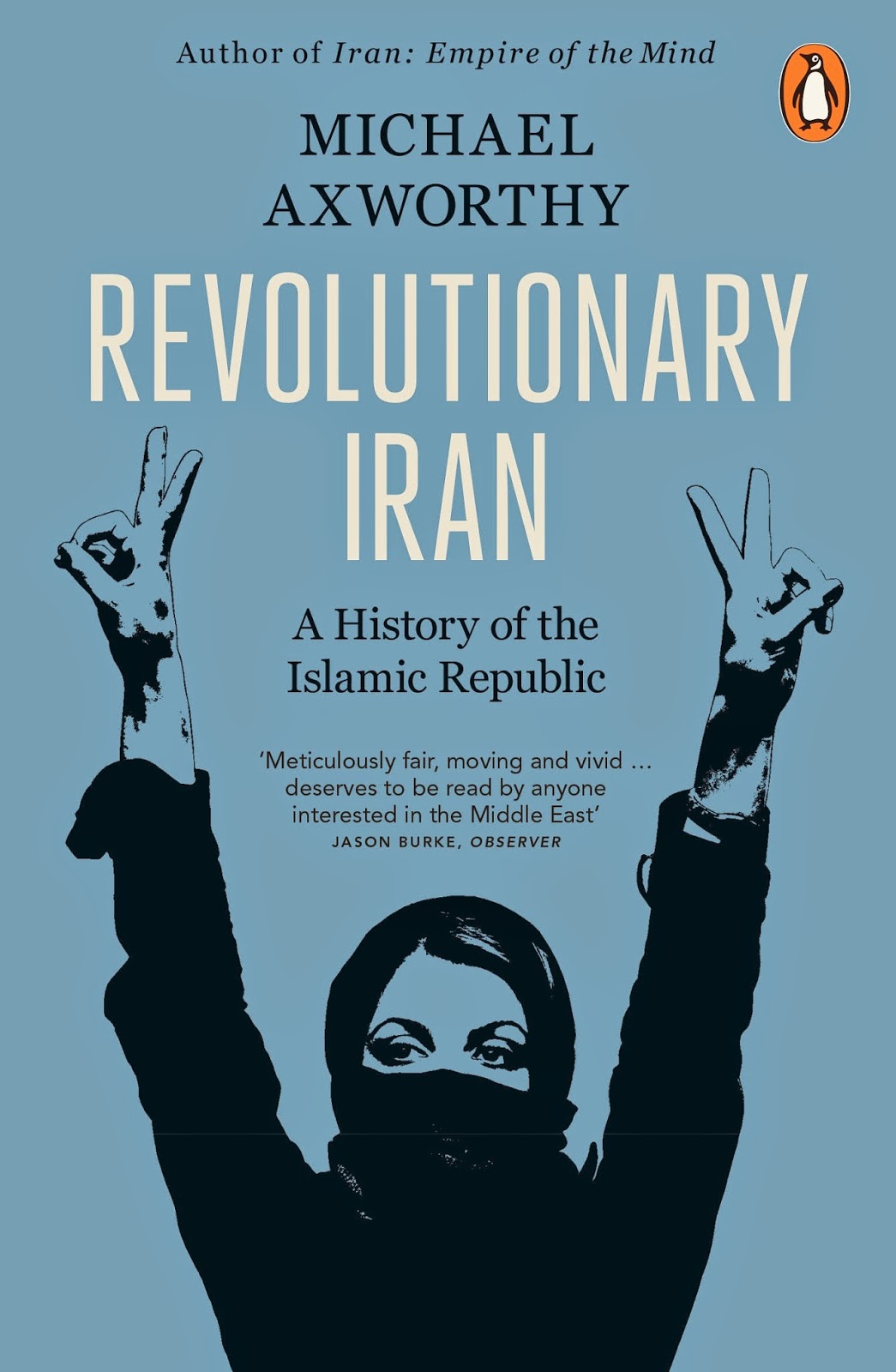
Revolutionary Iran: A History of the Islamic Republic, by Michael Axworthy

Staff Review by Chris Saliba

Middle East expert Michael Axworthy debunks many Western myths about Iran and its history, giving readers a more detailed and unbiased picture of the Islamic Republic. 

Michael Axworthy was head of the Iran section at the British Foreign and Commonwealth Office between 1998-2000. In addition to this he is an author, academic and commentator who has written for Prospect and The Independent. Revolutionary Iran: A History of the Islamic Republic provides a history of Iran since 1979.

For most of us in the West, Iranian politics is seen through the prism of our red hot media, where nuanced reporting must step aside for items sure to shock and outrage. The job Michael Axworthy gives himself is to try and show Iran through the eyes of its own people and to hence put the country’s politics in better perspective. He shows Iran more as it really is, rather than as we suspect it is.

In Iran, religion and politics worked together to create a new form of government, the Islamic Republic. (Axworthy provides a short classical history of Iran to put the events of 1979 in some sort of context.) As a point of comparison, the book often refers to the French and Russian revolutions, giving readers an idea of the momentousness of the Iranian Revolution. Axworthy also shows how Western meddling (notably the British and Americans) has had its pernicious influence. But Iranians managed to overcome this and are understandably proud of their political achievements and independence:

Before the revolution and the war, Iran’s history for centuries and decades had been a history of humiliation, powerlessness, foreign invasion, occupation; of foreign interference and foreign domination, and Iranian politicians and governments that had connived at foreign interference. It is difficult for non-Iranians fully to grasp the deep frustration and resentment at that.

Michael Axworthy has written a great primer on Iranian politics and culture that provides genuine help to the bewildered in trying to understand Iran, its history and deep religious roots. The book is balanced and points out major Western misconceptions and misunderstandings. For example, we like to misinterpret Iranian religious beliefs, but Axworthy sees a positive in the faith of its people:

...the deep religious principles of Shi’ism provided a moral rock on which to base resistance to political expediency and abuse of power - and thus a source of hope.

Axworthy also highlights how in rich countries citizens aren’t confronted with complex morally  decisions:

In many Western countries, for many of us, we have it easy and have become morally lazy, relativistic and cynical. In Iran, the essentials of right and wrong, freedom and repression have been everyday matters of discussion and choice.

This book will appeal to anyone seeking a clearer, more realistic picture of Iran. Highly recommended!

Revolutionary Iran: A History of the Islamic Republic. Published by Penguin. ISBN: 9780141046235  RRP: $22.99

To sign up for our monthly newsletter, featuring new releases, book reviews and favourite articles from around the web, click here.  

Monday, August 25, 2014

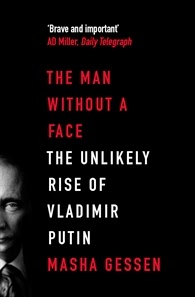
The Man Without a Face: The Unlikely Rise of Vladimir Putin, by Masha Gessen

Staff Review by Chris Saliba

Russian journalist Masha Gessen's The Man Without a Face is both chilling and frightening, farcical and surreal. It describes a world where murder and mayhem manifest as a matter of routine, yet explanations for such crimes often border on the absurd. The book provides a bracing history of Russia's faltering democracy.

Masha Gessen in a Russian journalist, activist and author. This 2012 book (with a fascinating new afterword, written for the 2013 edition) is not so much a biography of Vladimir Putin as a Russian history of the period 1990 to the present. Gessen has been there for all the key events, following them closely as a journalist and participating in protests. The Man Without a Face has a very urgent and up to the minute feel.

The basic premise of the book is that Putin's character and political outlook were formed by his time in the KGB, the main security agency of the Soviet Union, which employed him between 1975-1991. Gessen argues his whole thinking and psychological make-up was formed during this period. When the democracy movement started in the early nineties, this was a threat to Putin’s worldview. Putin’s current whittling away of democratic checks and balances is his attempt to restore authoritarian government.

There is enough subterfuge, mysterious killings, bullying, blowing up of public buildings and other mayhem in The Man Without a Face to permanently set your hair on end. Gessen marshals convincing evidence to point the finger for the Russian apartment bombings of the early 90s at the state’s secret service, the FSB (formerly the KGB). Putin blamed these outrages on terrorists.

When one of the bombings was foiled, it took several days for the FSB to come forward and claim responsibility. They concocted a bizarre story, claiming they had placed sacks of sugar, masquerading as explosives, in the bottom of an apartment stairwell as part of a training exercise to test that the public was remaining alert. The fact that an alert citizen reported suspicious looking bags with 'sugar' written on them proved security was in order! (Investigations make it appear likely that the 'sugar' sacks were indeed filled with explosives.)  

While The Man Without a Face is a chilling and frightening book, a lot of the events described (such as the FSB’s bizarre training exercise explanation) are absolutely farcical and surreal. The Russian public are asked to believe the most far fetched stories from their straight faced government officials.

Another chilling episode the book describes was the poisoning of Alexander Litvinenko with polonium-210, a substance which could only be manufactured at the highest levels of government. Litvinenko was a whistleblower and former FSB agent. It was he who suggested that the apartment bombings could have been done by the FSB. A British investigation (Litvinenko died in a British hospital) found that the most likely poisoner was Andrei Lugovoy - a former KGB bodyguard and current member of the Russian parliament. Russia has refused Britain’s requests to extradite him. Gessen suggests that it was Putin who ordered the killing.

Many who have read this book have noted Masha Gessen’s bravery. She chronicles the terrible fate of several journalists, mysteriously murdered. Reading The Man Without a Face you do fret over the author’s safety, not your typical experience when reading a book.

For Australian readers, it may make you appreciate our long history of democratic institutions. In Russia, trying to put together a democracy after so many years of totalitarian government is a process of two steps forward, one step backward. At the moment, however, Russia’s democratic future looks very grim.

The Man Without a Face: The Unlikely Rise of Vladimir Putin, by Masha Gessen. Published by Granta.  ISBN: 9781847084231 RRP: $24.99

To sign up for our monthly newsletter, featuring new releases, book reviews and favourite articles from around the web, click here.

Tuesday, January 17, 2006

The Third Try: Can the UN work?, by Alison Broinowski and James Wilkinson

It may surprise the reader to know that a majority of Americans support a stronger United Nations, believe in international co-operation, favour spending money to help out poorer nations and even support the International Criminal Court (ICC). All this despite the current Bush administration’s pronounced displeasure with the UN.
In an effort to undermine the legitimacy of the UN, US Congress has withheld UN dues, rejected multi-lateral treaties and under funded foreign-aid programs. To state the Bush administration’s case most clearly, there was the nomination of John (‘There is no such thing as the United Nations’) Bolton as US permanent representative to the UN, whose antipathy to the organisation is well known.

At home, the UN is in bad odour with the Australian Government. After receiving a bad report card on our treatment of migrants, Muslims, asylum-seekers, refugees and Aborigines, John Howard reminded all that ‘Australian laws are made by Australian parliaments elected by the Australian people, not by UN committees.’ Alexander Downer (http://www.abc.net.au/7.30/stories/s115193.htm) went one step further: ‘If a United Nations committee wants to play domestic politics here in Australia, then it will end up with a bloody nose.’

Alison Broinowski and James Wilkinson are both experienced diplomats, bringing their respective Australian and American perspectives to a broad and complex subject. The authors claim the UN has been through two ‘tries’, or stages, already.

The first try at a world order was the League of Nations, established after World War I in Geneva, Switzerland in 1920. The second was the United Nations, which was given birth on 24 October 1945, when the UN Charter was ratified by a majority of signatory nations. The third try, where we are now, the authors argue is the post-Cold War era. After September 11, can the UN work?

The Third Try doesn’t flinch when discussing the UN’s many failures, some of them horrific. On Rwanda, the authors write ‘There was no excuse for the council’s failure to intervene over a period of about three months while the killings continued apace.’

Then there was the scandals involving peacekeepers in the Democratic Republic of the Congo, including sexual abuse of people the UN was supposed to be protecting:

‘The secretary-general in November 2004 publicly acknowledged gross sexual misconduct by MONUC staff and vowed a ‘zero tolerance’ policy with punishment for all found guilty. Over 150 cases of alleged rape and exploitation, involving both military and civilian staff and including abuse of girls as young as 12, were under investigation at the end of 2004.’

Darfur is the latest example of the UN’s inability to respond adequately to an urgent crisis. By the end of 2005 some 1.7 million people were homeless and 70,000 people were estimated to have died from the conflict. The authors write:

‘The Security-Council’s inquiry on Darfur took three months and then delivered an ambivalent report, calling what was happening crimes against humanity and the equal of genocide, but not describing it as genocide in the narrow, post-World War II definition that required proof of intent to destroy a population or group.’

Despite the above, and other examples cited, the authors maintain the UN will continue on. Simply put, it does too much. There are the peacekeeping operations, work to reduce poverty, counter terrorism initiatives, bolstering of international law through the ICC, human rights advocacy, help for refugees and so on and so forth.

It is also worth remembering that, despite the Bush administration’s contempt for the UN, it did not stop them asking the organisation for help to rebuild post-war Iraq.

As the authors state:

‘No serious argument can be made for doing away with the UN entirely. As our review has shown, it serves too many purposes, practical as well as noble. The neo-cons’ black prince, Richard Perle, even while thanking God for the death of the UN, conceded that its ‘good works’ part will continue to endure.’

The problem then is how to improve it and make it work. Broinowski and Wilkinson devote some 40 pages to analysing problems in the UN machinery and bureaucracy, recommending repairs and reforms. At the top of the list is a need for the US to play a more supportive role, rather than that of a wrecking ball.

‘The perpetual disdain of American conservatives for the UN casts a dark shadow over all parts of the UN, and Washington’s aggressive disputation with the UN over policy, resources, and decision-making has become progressively more imperious since the 1980s.’

The Third Try is written for the lay reader and is set out in a clear, straightforward style. The book doesn’t cover everything that the UN does, but rather works as a digest of its key roles. Its accessible manner makes welcome reading when facing such a daunting subject.

For citizens interested in working towards an international system to solve world problems, The Third Try is an excellent primer on the UN. Bonus features include a forward by Morton Abramowitz, a former president of the Carnegie Endowment for International Peace, and an afterword by Gareth Evans, who now works as the president and chief executive officer of the Brussels-based global conflict prevention organisation International Crisis Group.