Staff Review by Chris Saliba
The Washington Post journalist Rajiv Chandrasekaran shows how too much American bureaucracy stymied efforts to rid Afghanistan of the Taliban and politically stabilise the country.
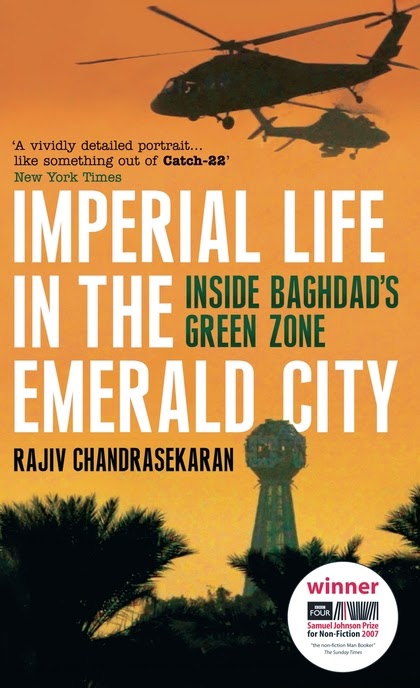
Rajiv Chandrasekaran’s first book, Imperial Life in the Emerald City, chronicled the US war in Iraq. It was a devastating critique, highlighting the arrogance, ignorance and complacency of American intellectual and political elites. Little America: The War Within the War for Afghanistan could be considered its follow-up. Whereas the former book concentrated on the Bush administration’s approach to war, Little America examines President Barack Obama’s record. The war in Afghanistan was a war Obama inherited (although as a Senator he had supported it). After over a decade in Afghanistan, with billions of dollars spent and many lives sacrificed, there was still not much to show in the way of progress.
In 2009 President Obama announced a troop surge to try and deal with the Taliban insurgency. This counter insurgency strategy was called COIN. The whole idea was not so much to knock out the Taliban, as to make the towns and villages safe. Once security had been increased, the thinking was that the people would naturally support law and order. Young men would be less likely to be radicalised and join the Taliban. The problem was that, for the Americans at least, not everyone was on the same page. The President’s office, the State Department and the Military all seemed to have differing ideas on what would work. There was all this push and pull between key figures, arguing amongst themselves as to what was the best way forward. As Chandrasekaran writes, “The American bureaucracy had become America’s worst enemy.” Too many experts, not enough discussion, not enough first hand experience and common sense. Even the military, working on the ground in Afghanistan, never got out much to meet the locals and learn their customs and language. One State Department representative working in Afghanistan, Carter Malkasian, bucked this trend. He learnt to speak fluent Pashto and was respectful and mindful of the local culture. As a result he was surprisingly effective. If the US had deployed thousands of Carter Malkasians, then so much more would undoubtedly have been achieved, with far less loss of life.
Instead, negligible results were achieved. A 2010 CIA report concluded that Afghanistan was “trending to stalemate”. While there had been gains in some areas, other regions had gone backwards. Overall there had been no net progress.
Making things worse was the fact that Obama had put in a timeline for withdrawal. All thinking revolved around the idea of a deadline for success, rather than a long term investment. Many of the civilian employees working in Afghanistan didn’t like the place, performed the minimum required and couldn’t wait to leave and take up a cushy job somewhere else. Western style ideas of efficiency, technocratic expertise and problem solving were applied to an ancient, poor and illiterate civilisation.
Little America makes for very sorrowful reading. It highlights the folly of thinking that foreign wars can be easily managed, their outcomes assured by simply implementing the required policies. Rajiv Chandrasekaran brings to his subject an on-the-ground journalist’s account. He’s followed soldiers into battle, interviewed key bureaucrats and politicians, and wandered out into the streets of Afghanistan to talk to the locals. He mixes analysis with first hand experience to give a clear picture of what has gone wrong. His two books together, Imperial Life in the Emerald City and Little America, make essential reading for anyone wanting to understand the complexity and folly of the Iraq and Afghanistan wars.
Little America: The War Within the War for Afghanistan, by Rajiv Chandrasekaran. Published by Bloomsbury. ISBN: 9781408831809 RRP: $29.99
To sign up for our monthly newsletter, featuring new releases, book reviews and favourite articles from around the web, click here.