Recently I read Jenny Hocking’s biography of Gough Whitlam and she started it off with this terrific quote from Cicero. It went something along the lines of, those who do not study history are condemned to always remain children. Hence I quickly borrowed whatever I could find from my local library on Cicero.
This Penguin edition of Cicero’s political speeches contains ten of the famous lawyer, writer and politician’s orations. It was the custom in those days (106-43 B.C) to publish written versions of speeches after they were given. The published speeches as a result could be a bit different here and there to the ones actually given.
These ten speeches are probably most interesting for the information they give us about Roman culture, money and politics in that day and age. Cicero is famed for his elegant writing, and on that count this volume doesn’t disappoint.
What does disappoint though is the fact that a lot of these speeches were given to push a particular political point or advantage. As a result you don’t get much of Cicero’s personal and philosophical views. This is more of an historian’s book (which I guess contradicts my intro to this post!).
I have read another book by Cicero, which dealt with his philosophical writings. This book I found very satisfactory. The political speeches included here I found interesting ( translator Michael Grant also provides an excellent introduction and notes), although not as compelling as Cicero’s other writings.
Showing posts with label Classics. Show all posts
Showing posts with label Classics. Show all posts
Friday, May 22, 2009

Saturday, March 25, 2006
Hamlet, by William Shakespeare
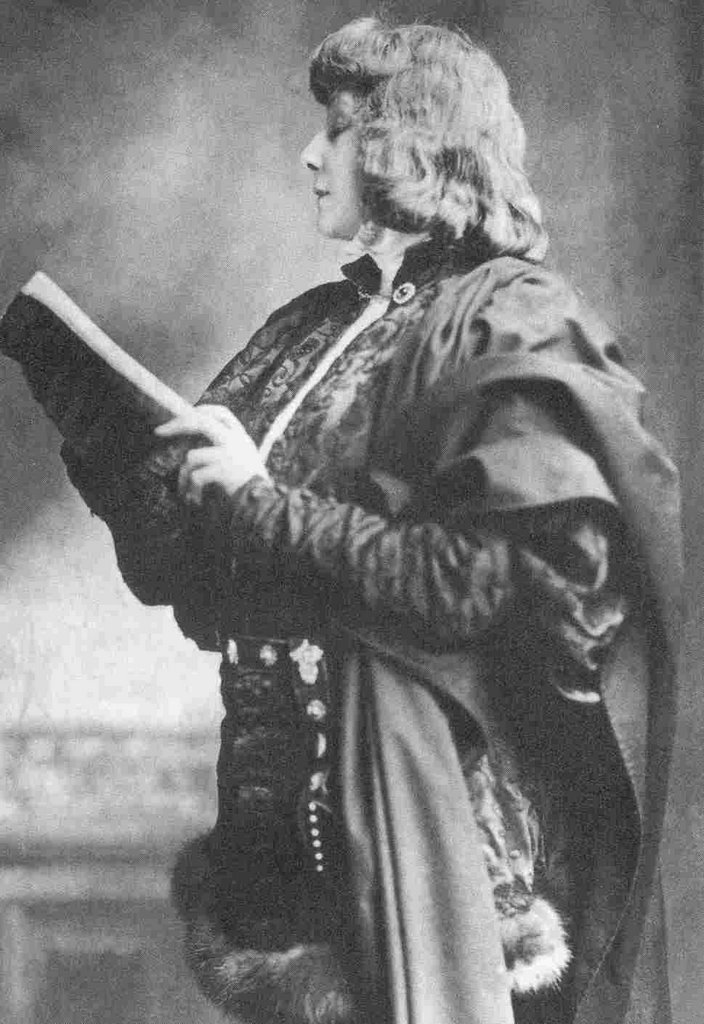 The introduction to my Dover edition of Shakespeare’s Hamlet (written between 1599-1601, when the poet was in his mid thirties) discusses what is thought to have been a prior version of Hamlet, known as the Ur-Hamlet, written some ten years previously. It is widely speculated that this original version was written by Thomas Kyd, who wrote the sensationalist, blockbuster style The Spanish Tragedy.
Anyone who has read Kyd’s The Spanish Tragedy will be immediately tempted to think this is so. The Spanish Tragedy has so many elements that appear in Hamlet and even Othello. Then there is another school of thought that thinks it was Shakespeare himself who wrote the original Ur-Hamlet, when he was in his mid fifties. Literary critic, Harold Bloom, in his Shakespeare, Invention of the Human, speculates on what that original Hamlet would have been like. I guess you could put it this way – Shakespeare’s first Hamlet would have been a mix of Kyd and Marlowe, minus the brilliant, ‘free agent of himself’ Hamlet of the 1601 version.
Poor Harold Bloom. So enamoured of the poet is he that he simply cannot bear to contemplate the possibility that Shakespeare might have pilfered a few ideas from that entertaining hack Thomas Kyd. It’s beyond me why we should really care. Surely great artists all the time are taking ideas from the popular culture as points of departure. Besides, the character of Hamlet, the personality I should rather say, is light years away from anything Kyd could ever hope to produce. Some philosopher, I forget which, said that the wise have more to learn from fools than fools have to learn from the wise. That’s my opinion when it comes to Shakespeare borrowing from Kyd.
Harold Bloom proposes that it was Shakespeare who wrote the original Ur-Hamlet, and that it was Kyd who later pilfered Shakespeare. That’s why The Spanish Tragedy is so redolent with Shakespearean tricks and gimmicks. Hmm. I’m not so sure about this. Doesn’t Heironomo in The Spanish Tragedy say exactly what Iago says at the end of Othello, after having caused so much mischief. ‘From this moment I’ll speak no more.’ Like Iago, he is to be dragged off to be tortured. Othello was written way after The Spanish Tragedy. Plus the fact that Harold Bloom describes Shakespeare’s own Titus Andronicus as a spoof on Kyd and Marlowe. Doesn’t this prove that The Spanish Tragedy, with its crassness, was an original invention, and not a copy from Shakespeare. It doesn’t make sense for Shakespeare to spoof his own ideas so savagely.
Enough of that though. I’ve read Hamlet at least half a dozen times and it forever amazes. Primarily of course there is the personality of Hamlet, the ‘freest agent of himself’, whose astonishing intelligence makes him hover above the action of the play. Then there is the absolute versatility of the text (some 4000 lines long, running to four hours of play time.) The peerless Australian author Christina Stead suggested it was the first novel ever written. I can’t help but agree: it does read like a novel. It seems impossible to think that the great speeches of the play could be absorbed aurally. Obviously they demand being read over and over.
This is in line with Harold Bloom’s other theory, that Shakepeare wrote Hamlet as a personal odyssey, and not necessarily for the stage. This makes complete sense too. It must have been a pet project. There is apparently little proof to support that it was ever acted in its entirety, and that if it was, it would have been only on a handful of occasions.
As Hamlet has come down to us, it is a play that can be read in any number of ways. It can be read for its psychological insights, for its poetry, its philosophy. It can be performed as a play, or its great speeches can be learned by heart. It is simply one of the most inexhaustable pieces of literature in the world.
The primary theme of course is one of action: to be or not to be. Should Hamlet act to avenge his father’s murder? What I love so much about Hamlet is how too much thinking and little action is seen to be an absolute sickness. Healthy people act but do not think. Unhealthy people think, but do not act. The young upstart Fortinbras ends triumphantly in the play, whereas deep-thinker Hamlet drags down all around him in death.
Indeed, there is so much disease in this play. When Hamlet’s mother, Queen Gertrude, cries that Hamlet has broken her heart in two, Hamlet responds, ‘Throw away the worser part of it’ – one assumes, the more diseased half.
Hamlet throws up all the questions we ask ourselves when we are in our more desperately contemplative moods, and gives no easy, or even complete, answers. Hamlet’s disease it too much thinking. No wonder it’s commonly thought that the best consolation for grief is work.
Last words to Harold Bloom. Discussing Hamlet he says:
‘Desire and destiny are contraries, and all thought thus must undo itself.’
No, last words to me. One wonders, is there any point then in thinking, reading and writing? Hamlet seems a border line case on this issue. When asked what he is reading he sighs, ‘words, words, words’.
(PS: Picture above is actress Sarah Bernhardt as Hamlet.)
Saturday, January 14, 2006
Volpone and The Alchemist, by Ben Jonson
Everyone of course knows that Ben Jonson was a contemporary of Shakespeare. Some have it that Shakespeare died after having gone on a drinking binge with Ben Jonson. Perhaps Jonson’s most famous words with regards to the bard are the following:
And though thou hadst small Latin and less Greek,
From thence to honour thee I would not seek
For names; but call forth thund’ring Aeschylus,
Euripidies, and Sophocles to us…
We also know that Jonson killed the actor Gabriel Spencer in a duel. He escaped the gallows (if memory serves me right) by ‘pleading the cloth’. What this meant was they could not hang you if you were of the clergy. Jonson was not of the clergy, but because he could read, he could claim the same, and did. It is also believed that he killed another man in a hand to hand fight whilst soldiering.
Despite his plays being often hailed as masterpieces, especially Volpone, for some reason or other we never come across his name that much. He comes across more as an aquired taste, someone often talked about but little read. In all the books I have read about literature where his name pops up, but he never seems to be discussed in any substantial way. I wonder why this is?
I read Volpone for the first time probably about 12 years ago. Reading it again it comes across as quite cold and calculating. While Shakespeare and Marlowe wrote lovable villians and rogues, Volpone seems a real misanthrope, someone who exhalts in how bad humanity is, and becomes corrupted himself in the process. I think what I’m trying to say here is that his plays are too moralistic. Too didactic. There’s not enough playfulness in them. Instead we get a litany of mean tricks and grasping money grubbers who all get their comeuppance.
In Marlowe’s great black comedy The Jew of Malta, you can’t help but love Barabas as he goes about outraging everyone. Despite yourself, you secretly identify with the wealthy Jew and exult in his destructiveness.
I found even less joy in The Alchemist. I enjoyed parts, then my concentration would switch off, and I’d come back to the play. It has the same type of rogue’s gallery, con men and a con woman trying to gull vain victims who only want to line their pockets or further themselves socially. Yet there’s something strangely inhuman about his characters, something decidedly one dimensional.
Maybe this is why he’s not as eagerly read as Shakespeare or Marlowe. That’s just my guess though.
I’m sure I’ll give Jonson’s plays another whirl in the future. Dickens loved Jonson after all, and went to lengths to get some of his favourite Jonson plays staged.
And though thou hadst small Latin and less Greek,
From thence to honour thee I would not seek
For names; but call forth thund’ring Aeschylus,
Euripidies, and Sophocles to us…
We also know that Jonson killed the actor Gabriel Spencer in a duel. He escaped the gallows (if memory serves me right) by ‘pleading the cloth’. What this meant was they could not hang you if you were of the clergy. Jonson was not of the clergy, but because he could read, he could claim the same, and did. It is also believed that he killed another man in a hand to hand fight whilst soldiering.
Despite his plays being often hailed as masterpieces, especially Volpone, for some reason or other we never come across his name that much. He comes across more as an aquired taste, someone often talked about but little read. In all the books I have read about literature where his name pops up, but he never seems to be discussed in any substantial way. I wonder why this is?
I read Volpone for the first time probably about 12 years ago. Reading it again it comes across as quite cold and calculating. While Shakespeare and Marlowe wrote lovable villians and rogues, Volpone seems a real misanthrope, someone who exhalts in how bad humanity is, and becomes corrupted himself in the process. I think what I’m trying to say here is that his plays are too moralistic. Too didactic. There’s not enough playfulness in them. Instead we get a litany of mean tricks and grasping money grubbers who all get their comeuppance.
In Marlowe’s great black comedy The Jew of Malta, you can’t help but love Barabas as he goes about outraging everyone. Despite yourself, you secretly identify with the wealthy Jew and exult in his destructiveness.
I found even less joy in The Alchemist. I enjoyed parts, then my concentration would switch off, and I’d come back to the play. It has the same type of rogue’s gallery, con men and a con woman trying to gull vain victims who only want to line their pockets or further themselves socially. Yet there’s something strangely inhuman about his characters, something decidedly one dimensional.
Maybe this is why he’s not as eagerly read as Shakespeare or Marlowe. That’s just my guess though.
I’m sure I’ll give Jonson’s plays another whirl in the future. Dickens loved Jonson after all, and went to lengths to get some of his favourite Jonson plays staged.
Thursday, June 23, 2005
The Plays of Euripides
 This volume contains four of Euripides plays, written in the later part of his career. He died in his eighties (I think), and wrote some 80 plays, possibly as many as 92. The four plays are Ion, Orestes, Phoenician Women and Suppliant women.
Reading these pre-Christian authors, two and a half thousand years old, you marvel at how fresh and accessible they are. It’s like having a clear headed person here today trying to sort out your problems.
In a previous book I read by Harold Bloom, he said how our cognitive make-up is Greek, while our spiritual composition is Hebrew. There plays prove just that, in how we sort out and resolve our human dilemmas. Indeed, the plays almost read like soap operas, with plots and characters continuing on in various plays.
As for the many gods and their shenanigans, they pretty much represent our totally irrational and cruel sides. They get away with murder, and seem like our dark, shadowy sides. And because there are so many of them, they are like constant companions, popping up all the time to resolve and explain things. Unlike the god of the old testament, that earth shattering, fist shaking tyrant. Get on the wrong side of him and you’re done for.
Here is one of my favourite quotes with regards to war, from Suppliant Women:
‘For when the people are to vote for or against war, no one takes into consideration the possibility that he himself may die, but diverts this misfortune on to someone else. If death were visible as votes were cast, Greece would never be destroyed by the madness of war.’
Subscribe to:
Posts (Atom)
