Damien Kingsbury is a senior lecturer in the School of Political and International Studies at Deakin University. For anyone who watches the news, or reads the papers, they will be aware of Australia’s diplomatic problems at the moment with regards to the granting of Temporary Protection Visas to 42 of the 43 West Papuans who recently reached Australia by boat. They pleaded that they were being persecuted by the Indonesian Army, and Australia has recognised their claims. Damien Kingsbury is actually part of a delegation that is trying to broker an autonomy deal with some international crisis group. (Not sure of the details, but I read an article on this.)
The Politics of Indonesia has run through three editions, the most recent published last year (2005) and updated with Susilo Bambang Yudhoyono’s presidency. Let me just plunge in at the outset and say I found this to be a fascinating and absorbing read. I couldn’t believe that in the acknowledgments the author apologised for his hackneyed English, when in fact it’s written in a marvellously clear and accessible style. For anyone wanting to learn about post war Indonesian politics, from Sukarno to Yudhoyono, then this is an excellent book.
The book covers a whole range of subjects, not just the political, but to do with the whole running of the still fledgling democratic state. For example, we learn about racism towards the Chinese, the corruption of the courts and army, Islamic terrorism, the cronyism of the Suharto years, plus his notorious business dealings. There are absorbing chapters on the Indonesian economy and the media. The sections on the key political players and their intrigues will keep people who, like me, prefer personalities to the minutiae of machine politics, happily turning the pages.
Chris heartily recommends this accessible and enjoyable overview of Indonesian culture, politics and society. For those who are interested in all of our current problems with Indonesia, this is a good place to start looking.
Showing posts with label Indonesian Politics. Show all posts
Showing posts with label Indonesian Politics. Show all posts
Saturday, April 22, 2006

Wednesday, March 22, 2006
A Modern History of Indonesia, by Adrian Vickers
A recent opinion piece by Adrian Vickers at The Age led me to this very nifty little book. Adrian Vickers is Professor of Asian Studies at the University of Wollongong; he’s also written a book on Bali. For those, like myself, who know very little of Indonesia’s history and culture, Adrian Vickers has provided an absorbing, thoughtful and (what seemed to me) balanced history. My knowledge of Indonesia (a word invented by an Englishman by the way) is limited to the Communist purges (half a million killed) of the sixties, the invasion of East Timor and the Suharto regime.
Mr Vickers describes the early days of colonialism under the Dutch, the Revolution for independence, the long dictatorship of President Suharto, the financial collapse of the eighties and the uncertain road to democracy. It is also worth noting that after the Revolution there was a fledgling democracy – that democracy would be put on hold for some thirty years with Suharto.
I also found fascinating the sections of the book that dealt with Indonesia’s arts, culture and religion. The author also discusses at length the work of Indonesia’s writers and novelists, most notably Pramoedya Ananta Toer.
It is shameful how little we as Australians know of Indonesia’s history and culture. Our country is a baby by comparison, yet Indonesians feel that we lord it over them (if the opinions of a group of Indonesian youth on a Sixty Minutes show of a few years ago are anything to go by.)
Any student of our region should have this book at the top of their reading list. The book comes with a detailed bibliography.
Mr Vickers describes the early days of colonialism under the Dutch, the Revolution for independence, the long dictatorship of President Suharto, the financial collapse of the eighties and the uncertain road to democracy. It is also worth noting that after the Revolution there was a fledgling democracy – that democracy would be put on hold for some thirty years with Suharto.
I also found fascinating the sections of the book that dealt with Indonesia’s arts, culture and religion. The author also discusses at length the work of Indonesia’s writers and novelists, most notably Pramoedya Ananta Toer.
It is shameful how little we as Australians know of Indonesia’s history and culture. Our country is a baby by comparison, yet Indonesians feel that we lord it over them (if the opinions of a group of Indonesian youth on a Sixty Minutes show of a few years ago are anything to go by.)
Any student of our region should have this book at the top of their reading list. The book comes with a detailed bibliography.
Friday, November 25, 2005
Paradise Betrayed, by John Martinkus
Paradise Betrayed is John Martinkus’ Quarterly Essay from 2002. Having recently read his powerful book on Aceh, I’m trying to catch up with some of his other work. This 80 page essay deals with West Papua’s struggle for independence from Indonesia.
Formerly a colony of the Dutch, West Papua was integrated into Indonesia under the dodgy Act of Free Choice. Writes Martinkus:
‘In 1969, the Act of Free Choice, a sham plebiscite that allowed only 1,026 representatives chosen by the Indonesians from an indigenous population of 814,000 to vote on whether to remain a part of Indonesia, had apparently consigned West Papua to permanent occupation.’
Australia and the US were happy to go along with this state of affairs, keen to placate Indonesia, thereby hoping to keep it out of Communist hands.
What has followed has been murder and mayhem, barely reported. For example, Papuan leader Theys Eluay was murdered in 2001 by the Indonesian military.
Then there is the Freeport mine, which brings in quite a bit of money, so obviously there are those financial interests that Indonesia is keen to protect.
Most worrying in our so called age of Islamic terror, is the importation into West Papua of the Islamic extremist group, Laskar Jihad, all backed by the Indonesian military.
John Martinkus must be pretty much a lone and lonely voice calling for more attention to this conflict. Ominously, he maintains that it is a problem that will only get worse and bloodier in the future. In the end, Australia will not be able to turn a blind eye, or put the problem in the too hard basket. One day we may be compelled to become more involved.
This is one Quarterly essay definitely worth reading.
Formerly a colony of the Dutch, West Papua was integrated into Indonesia under the dodgy Act of Free Choice. Writes Martinkus:
‘In 1969, the Act of Free Choice, a sham plebiscite that allowed only 1,026 representatives chosen by the Indonesians from an indigenous population of 814,000 to vote on whether to remain a part of Indonesia, had apparently consigned West Papua to permanent occupation.’
Australia and the US were happy to go along with this state of affairs, keen to placate Indonesia, thereby hoping to keep it out of Communist hands.
What has followed has been murder and mayhem, barely reported. For example, Papuan leader Theys Eluay was murdered in 2001 by the Indonesian military.
Then there is the Freeport mine, which brings in quite a bit of money, so obviously there are those financial interests that Indonesia is keen to protect.
Most worrying in our so called age of Islamic terror, is the importation into West Papua of the Islamic extremist group, Laskar Jihad, all backed by the Indonesian military.
John Martinkus must be pretty much a lone and lonely voice calling for more attention to this conflict. Ominously, he maintains that it is a problem that will only get worse and bloodier in the future. In the end, Australia will not be able to turn a blind eye, or put the problem in the too hard basket. One day we may be compelled to become more involved.
This is one Quarterly essay definitely worth reading.
Saturday, November 5, 2005
Indonesia's Secret War in Aceh, by John Martinkus
 As the title explains, this book is about a war that Indonesia would very much like to keep out of view. There has been a long history of the Acehnese wanting independence from Indonesia, which John Martinkus gives a brief over view of. Indeed, in Aceh they see Indonesia’s government as Javanese imperialist rule. Added to this is the difference in the religious observances of the Acehnese compared with the rest of Indonesia. Explains the author:
‘The strictness of fasting is one of the differences between the Muslims of Aceh and those of the rest of Indonesia. In Aceh, where Islam was introduced for the first time in the 12th century by Arab traders from the Middle East, the more permissive Islam of Indosnesia is looked down upon. The Acehnese see the Muslims of Java as following a hybrid version of their religion.’
The Free Aceh Movement (Gerakan Aceh Merdeka, or GAM), has been fighting to separate Aceh from Indonesia. After much killing, terror and misery for the people of Aceh, a pause in hostilities was negotiated in Geneva. Then the Indonesian military started created disturbances in Aceh, and blaming it on GAM, thereby enabling them to claim that they had broken the rules of the peace negotiated in Geneva.
The result of this was a terrible crackdown. In 2003, just as the world’s attention was focused on the war in Iraq, the Indonesian army invaded. Human rights abuses followed. To make matters worse, the Indonesia authorities did their very best (and succeeded) in making sure there was no one there to monitor what was going on. Journalists were not allowed into the war zone to report on what was going on. The usual tactics were used to scare the hell out of anyone trying to go into the area and monitor what was going on.
When you read John Martinkus’s account, it shocks you how this whole terrible war was organised and prosecuted at the highest levels of government, and the attitudes of those pushing the war along, people such as Megawati Sukarnoputri and Susilo Bambang Yudhoyono. Martinkus also documents the attitudes of Western governments to what was going on, basically to turn a blind eye and mumble that Indonesia had a right to put down GAM, that they were essentially trouble makers. You can’t help but be filled with disgust.
The Indonesian army has a well documented history of human rights abuses. Firstly, in 1965, when some half a million communists or supposed communists were slaughtered. Secondly, the mass murder of a third of the population of East Timor, between 1975 and 1999. Now it is happening all over again, with Western governments turning a blind eye. The list of human rights abuses that have occurred in Aceh in the past few years – rape of children, torture and murder – is sickening.
As I was reading this book I kept of thinking of the Australian’s Greg Sheridan, with his hard, brassy words, talking about the region like it were a grand game of chess. This book is the opposite of that triumphant, arm chair view. John Martinkus has travelled through the region he talks about. He’s met all the creepy military men, seen people get stabbed and beaten. Seen all the horrible photographs.
The book is written in a quiet, modest, serious tone. John Martinkus has seen first hand how the policies of politicians can lead to murder, rape and torture. He’s seen how Western politicians do their utmost not to cast judgement on the Indonesian government. To say this is a sobering read is an understatement.
This is journalism in the style of George Orwell. What a difference Martinkus’ experience makes from Greg Sheriden’s – what can you call it? – innocence.
Related Web Experience links:
Travel's in American Iraq
Tuesday, October 25, 2005
Indonesia's Struggle, by Greg Barton
This book comes as part of a series called ‘Briefings’ from the University of New South Wales Press on current affairs. The author, Greg Barton, is a senior lecturer in the School of Social and International Studies at Deakin University. He’s also written a bio on former Indonesian President, Abdurrahman Wahid. Indonesia's Struggle is only about 90 pages, so you can knock it off in an afternoon.
For Australians trying to get a grip on terrorism in our region, this is a good little primer. One of the author’s main concerns is the current tendency to reduce Islam to one simple, ideological template. Media portrayal of Muslims has certainly done a good job in conflating Islam and terrorism in the minds of its viewers. Barton goes further in saying that even a lot of commentators in the print media have an overly simplified understanding of Islam. It is crucial that this stop, Barton insists, and that we learn more deeply about the differences within Islam itself.
The book gives a short history of Islamic struggle in Indonesia post independence, and shows that radical, Isalmic groups, calling for the country to be run along the principles of Sharia law, are nothing new. The terrorist challenges we face are certainly not simple. Barton also argues that Indonesia might not be the ‘moderate’ Islamic country we all think it to be. He says it’s not impossible to imagine that a small group of radicals could take over the country and turn it into something like Pakistan.
This is a densely written, albeit brief, book that concentrates the mind wonderfully on possible future problems for Australian relations with Indonesia.
For Australians trying to get a grip on terrorism in our region, this is a good little primer. One of the author’s main concerns is the current tendency to reduce Islam to one simple, ideological template. Media portrayal of Muslims has certainly done a good job in conflating Islam and terrorism in the minds of its viewers. Barton goes further in saying that even a lot of commentators in the print media have an overly simplified understanding of Islam. It is crucial that this stop, Barton insists, and that we learn more deeply about the differences within Islam itself.
The book gives a short history of Islamic struggle in Indonesia post independence, and shows that radical, Isalmic groups, calling for the country to be run along the principles of Sharia law, are nothing new. The terrorist challenges we face are certainly not simple. Barton also argues that Indonesia might not be the ‘moderate’ Islamic country we all think it to be. He says it’s not impossible to imagine that a small group of radicals could take over the country and turn it into something like Pakistan.
This is a densely written, albeit brief, book that concentrates the mind wonderfully on possible future problems for Australian relations with Indonesia.
Wednesday, October 19, 2005
In The Shadow of Swords, by Sally Neighbour
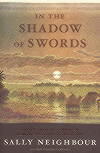 This is a must read, especially for Australians. Four Corners Journalist Sally Neighbour has done us all a favour with her balanced and superbly detailed study of terrorism and its roots.
In The Shadow of Swords for the most part concentrates on terror groups in Southeast Asia (this also includes operatives active in Australia), most notably Jemaah Islamiyah (the terms means Islamic Community).
For those confused by why Bali was targeted, and why the terrorists who carried out those attacked jumped for joy at the number of Westerners killed, Sally Neighbour provides an instructive history of Indonesian politics and religion.
Long a colony of the Dutch, Indonesia threw off its colonial shackles after the Second World War. One of the movements at this time was called Darul Islam, translated as Abode of Islam. This group was opposed to the secular Indonesia that emerged with independence, and wanted a more Islamic state.
Thus there has long been an anti-secular movement in Indonesia. Fast forward to today. Add Osama bin Laden’s narrative of oppressed and downtrodden Muslims the world over and you get Jemaah Isamiyah. Stir in a few absolutely crazy, murderous nutcases, with no scruples whatsoever, and you know the result: the Bali bombings.
Sally Neighbour doesn’t aim to provide readers with one simple, explain all reason for the actions of these terrorists. Wisely, she shows that what is driving Islamic terror is a disparate and unruly mix of ideology, history, religion, and downright murderous craziness.
Indeed, what can explain the actions of someone like Jack Roche, the only Australian put behind bars for attempting to stage an act of terror? He was an Englishman who migrated to Australia. Can there be anyone more unlikely to convert to Islam and commit to performing armed jihad? He was a former alcoholic with a couple of failed marriages behind him. Maybe some people are just so vulnerable they’ll look for absolutely anything to give their life meaning.
I’ve always felt that we have an extremely poor grasp of what is happening in the terrorist world. It’s like we’ve been suddenly woken from our slumbers, while these mad bomb makers have been busy all through the night. While terrorists seethe with anger at the perceived crimes of the West, we carry on with our daily lives cheerfully oblivious. When Western leaders say we should defy the terrorists by going on with our daily lives, it seems an entirely inappropriate response. We should all be switched on to what’s happening, what the mindset of these people is, what’s driving them.
A perfect example of how far behind the eight ball we are: three times Jack Roche called ASIO, trying to tip them off. The second time he told them he was off to Indonesia to have a meeting with Abu Bakar Bashir! The third time he left a message with ASIO. No one returned his call. You have to wonder, don’t you? It’s quite obvious that our agencies and politicians don’t really have a clue. Like, why did the fact that the London Bombings were carried out by British nationals come as such a shock?
And what of Australia’s famed close relationship with America. When the terrorist Jabarah was caught by the Americans, and confessed all in May 2002, none of the relevant information was relayed to Australian agencies. Some of the key information that would have been enormously helpful to Australians was the tip-off that Hambali was now planning to bomb nightclubs.
From the book:
‘This information would have been of enormous interest to Australian investigators, if only they had known. But not only was Australia refused access to Jabarah personally, it was also denied the benefit of the treasure trove of facts he had provided. Jabarah’s information was distributed widely throughout Southeast Asia in mid-2002 – but not to Australia.’
The FBI claimed the info in the report did not concern Australia, but Australian intelligence insiders said, ‘The FBI is the most hopeless organisation in the world when it comes to information management…They probably didn’t even know where Australia was.’
Sally Neighbour finishes up her book with a glum but realistic assessment. The notion of a war on terror is entirely inappropriate, because it’s not really a war in the conventional sense, and it is misleading the public by letting them think that it can be won. It can’t be won. We are stuck with it.
The bombings and killings will continue. When a ‘martyr’ bomber dies, they see it as a political, spiritual and religious win. How do we in the West win against this mindset? How committed to spreading democracy and freedom are we? Not very, I should say. How many people would be willing to go and fight in Iraq to spread Western democracy? You know the answer.
We will continue to be inward looking and solipsistic. When the next bomb goes off, there will be big words about beating terrorists, but we will still be impotent and confused.
Unfortunately, terror, indiscriminate murder, is something we have to live with. But reaching out for understanding about why this is happening is a step in the right direction.
Sally Neighbour’s book is an indispensable guide for Australians trying to learn more.
Friday, July 30, 2004
Appeasing Jakarta, by John Birmingham
This was the second Quarterly Essay, published in 2001. I think I've read most of the Quarterly Essays. Some are okay, but most I find pretty tepid. It's more a left / small 'l' liberal thing than anything else. A lot of the writing can be precious and too careful. Plus I think there's a lot of padding, or overwriting.
Robert Manne's essay I found too bitchy. Guy Rundle's on John Howard just so-so, nothing earth shattering. Amanda Lohrey's on the Green's too airy-fairy, with little real substance. Don Watson on our relationship with the USA was his usual effete self. Novelist David Malouf's essay was just plain boring. Germaine Greer's was okay, but she lets her loopiness get in the way of some interesting ideas. Who else can I remember? Political journalist Mango McCallum - about the Tampa 'crisis'. That was a pretty good essay. Tim Flannery's on the environment was very good, nicely written. Plus Gideon Haigh's essay on CEO's - I probably enjoyed that one the best. He's funny and clever, without seeming forced. Labor man John Button's essay wasn't bad, but nothing earth shattering. Paul McGeough (from the Sydney Morning Herald) is next, about the war in Iraq. That should be interesting, seeing he's been reporting from there since the war began.
I didn't realise until I read the introduction that this John Birmingham was the same one who wrote He Died with a Falafel in his hand. Much has been written on East Timor, by people far more engaged in the subject that J. Birmingham. You can have your criticisms of John Pilger, but at least he writes with real anger and urgency on the subject.
Mr Birmingham's essay was okay. I found it a bit too carefully written - a bit too self concious. He uses expressions like 'dysfunctional paradigm' etc. etc. As I said, much has already been written on the subject, and I don't think the author added anything really new.
I found the part on the Indonesian military interesting. He said their military is no match for ours, that's it's only good for terrorising Timorese peasants. I remember reading Kenneth Davidson in the Age writing the same thing.
Pretty much a forgettable essay. Read John Pilger or Noam Chomsky instead.
Robert Manne's essay I found too bitchy. Guy Rundle's on John Howard just so-so, nothing earth shattering. Amanda Lohrey's on the Green's too airy-fairy, with little real substance. Don Watson on our relationship with the USA was his usual effete self. Novelist David Malouf's essay was just plain boring. Germaine Greer's was okay, but she lets her loopiness get in the way of some interesting ideas. Who else can I remember? Political journalist Mango McCallum - about the Tampa 'crisis'. That was a pretty good essay. Tim Flannery's on the environment was very good, nicely written. Plus Gideon Haigh's essay on CEO's - I probably enjoyed that one the best. He's funny and clever, without seeming forced. Labor man John Button's essay wasn't bad, but nothing earth shattering. Paul McGeough (from the Sydney Morning Herald) is next, about the war in Iraq. That should be interesting, seeing he's been reporting from there since the war began.
I didn't realise until I read the introduction that this John Birmingham was the same one who wrote He Died with a Falafel in his hand. Much has been written on East Timor, by people far more engaged in the subject that J. Birmingham. You can have your criticisms of John Pilger, but at least he writes with real anger and urgency on the subject.
Mr Birmingham's essay was okay. I found it a bit too carefully written - a bit too self concious. He uses expressions like 'dysfunctional paradigm' etc. etc. As I said, much has already been written on the subject, and I don't think the author added anything really new.
I found the part on the Indonesian military interesting. He said their military is no match for ours, that's it's only good for terrorising Timorese peasants. I remember reading Kenneth Davidson in the Age writing the same thing.
Pretty much a forgettable essay. Read John Pilger or Noam Chomsky instead.
Subscribe to:
Posts (Atom)
