Showing posts with label Charles Bukowski. Show all posts

Wednesday, May 11, 2016

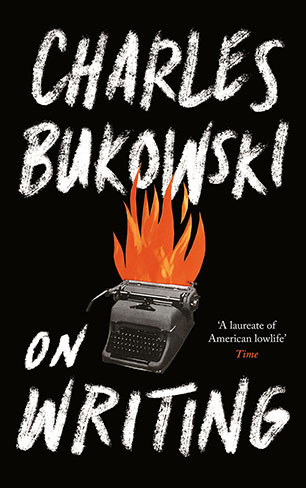
On Writing, Charles Bukowski

Staff review by Chris Saliba

This collection of Bukowski’s letters on the subject of writing crackle with fire, rage and wit.

The title is a slight misnomer. On Writing is not really a book of Bukowski’s musings on the art of writing. In fact, he would have scorned the idea (he knocked back a job teaching creative writing). What you get here is a jagged collection of Bukowski’s letters to friends, writers and editors in which he rants and raves about how bad the state of literature is. The letters aren’t reproduced in total, only the sections that deal with books, writers and literature. Hence the rather rough and gritty feel of the book. To my mind this doesn’t work so bad, considering Bukowski’s style.

Bukowski’s main gripe is about the inauthenticity of much contemporary writing. He complains that it is mannered and artificial, too concerned with style and perfect sentence structure. Writers are in it more for the fame than anything else, Bukowski accuses. They are careerists. The main problem with modern writers is that they don’t have anything to actually write about. They haven’t lived, haven’t experienced the dark side of life, whereas Bukowski spent decades working low paid jobs, hung out with lowlifes and drank too much. Contemporary successful writers, he says, lead lives that are too cosy.

There is no denying Bukowski’s passion on this subject in On Writing. His letters crackle with fire and anger. He made a point of keeping himself distant from other writers and genuinely hated literary cliques. His constant banging on about the importance of getting down on the page life’s painful, ugly experiences, shows how vitally important the truth was to him. As he writes, “Writing is only the result of what we have become day by day over the years.” While there’s a lot of anger and range in On Writing, Bukowski can also be very funny, in his typically coarse way.

This is a brutal, tough collection of letters that should be read by any aspiring writer. There is much to disagree and wrestle with, but Bukowski’s key lesson that truth and purpose makes books live is one that sometimes gets forgotten.

On Writing, by Charles Bukowski. Published by Canongate. ISBN: 9781782117223 RRP: $32.99

To sign up for our monthly newsletter, featuring new releases, book reviews and favourite articles from around the web, click here. 

Friday, March 1, 2013

Ham On Rye, by Charles Bukowski

Staff Review by Chris Saliba

Ham on Rye continues Bukowski's existential themes of alienation within American society and the self stripped back to its barest essence. 

Ham On Rye (1982) is Charles Bukowski’s fourth novel, and could be described as a ‘coming of age’ story. The central character, Henry Chinaski, is the same autobiographical anti-hero who also appears in the previous three novels, Post Office (1971), Factotum (1975) and Women (1978). Unlike those first three novels that concern themselves with a dead end world of sex, work, drinking and gambling, Ham On Rye chronicles Henry Chinaski’s progress from childhood to young adulthood. The novel ends with the Japanese bombing of Pearl Harbour, and Henry Chinaski responding to this drama by shrugging his shoulders indifferently, a thoroughly disenfranchised American youth.

Bukowski’s novels don’t appear to have any particular themes or points of view. If anything, his work strongly resists meaning. His writings are almost anti-meaning. Bukowski eschews ideology, preferring to present the world as he finds it, without setting it within a cosy narrative form. Stuff just happens in a haphazard fashion, and it’s either funny, ugly, stupid or any other number of things. What holds your attention is Bukowski’s plain, honest style and simple determination to get his own truth out there.

His own truth, indeed, is a fascinating and compelling one. The America of the 1920s and 1930s, if you were on the bottom rung of society, was no picnic. Bukowski, through his alter ego, Henry Chinaski, describes a horrible childhood, brought up in tough and unforgiving neigbourhoods, by careless parents he did not and could not love. Bukowski / Chinaski describes the complete flip side of the sunny American dream. In poor depression era America, people are crude, stupid, superstitious and just plain ignorant. If this novel reminded me of anything, it was Australian writer Ruth Park’s tale of the slums, The Harp in the South (1948). Except Ham On Rye is more deeply personal and direct.

Many consider Ham On Rye to be Bukowski’s best novel. It’s been my favourite so far. Its popularity remains no doubt due to its honesty and humour. It also has a deeper appeal due to its unconscious existential quality. Henry Chinaski, a young man who feels strangely alienated from his country, in the end says that America is not really worth fighting for. Patriotism is for the rich, who own the country. The poor are not patriotic, because they have nothing to lose.

Henry Chinaski doesn’t believe in much. The only thing he can truly believe in is himself, alone, apart from family and society, and with no enduring friendships. Henry Chinaski is a modern persona stripped right back to its barest essence. People searching for meaning in a complex consumer society and finding none, no doubt find Bukowski’s deeply ambivalent writings a comfort. 

Ham on Rye, by Charles Bukowski. Published by Canongate. ISBN: 9780857861764   RRP: $22.99
   

Monday, February 25, 2013

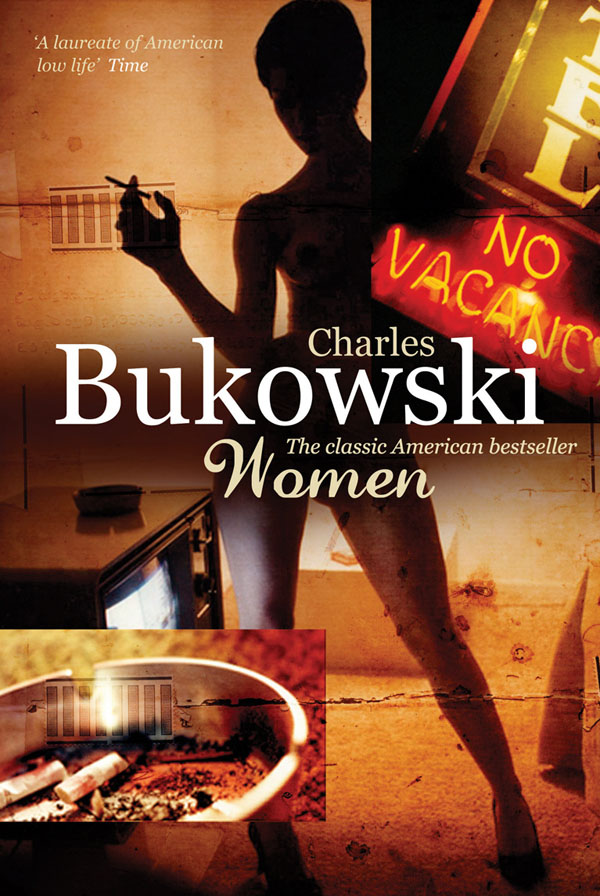
Women, by Charles Bukowski

Staff Review by Chris Saliba

Charles Bukowski's third novel is a sexual banquet of over indulgence and fleeting gratification. Women is also a deeply existential novel.

The starkly titled Women is Charles Bukowski’s third novel, published in 1978. It’s pretty much identical in format and style to its predecessors Post Office (1971) and Factotum (1975). The main differences are that it’s twice as long and even grittier in tone than the first two. Post Office, Factotum and Women can almost be read as a single continuous work, all featuring the same anti-hero, Henry Chinaski, transparently Charles Bukowski himself.

As the title suggests, most of the novel is about Bukowski’s relationships with women, some quickies, some more enduring, but all sure to end one way or another. That’s a polite explanation. Perhaps more accurately it’s a psycho-sexual extravaganza, a marathon sexual confession. There is a lot of sex in Women, an almost grotesque feast of excess.

Bukowski is self-effacing enough to call himself a down market Marquis de Sade. He’s not really trying to be Sade, however. The Marquis de Sade wrote outrageous comedies about sex. He was like Mae West, who also liked to poke fun at sex. Bukoswki is rather an existential writer, in the manner of Sartre’s Nausea, Dostoyevsky’s Notes From The Underground and Knut Hamsun’s Hunger. The existential crisis at the centre of Women is perhaps Henry Chinaski’s inability to find any solace, comfort or even enduring relationship with a woman. Henry Chinaski has a lot of sex in Women, but it doesn’t seem to make him very happy or fulfilled. As in Sade, an excess of sexual gratification turns into its opposite, boredom and, if not outright abuse, then shabby treatment of partners.

Having read and enjoyed these first three novels, I’ve been trying to put my finger on his enormous appeal. I’ve come to the conclusion that it is the deeply existential aspect of his writing. Henry Chinaski seems to live in a  permanent existential funk. He just wants to avoid people and be left alone to type away at his stories. Everything in the world is meaningless and time wasting. In one passage in Women he talks about how life is all about waiting:

“You waited and you waited – for the hospital, the doctor, the plumber, the madhouse, the jail, papa death himself. First the signal was red, then the signal was green. The citizens of the world ate food and watched t.v. and worried about their jobs or their lack of the same, while they waited.”

In his treatment of women, Henry Chinaski certainly lacks gallantry, to put it mildly.  But if he treats women poorly, he is also willing to confess all these faults to the reader. In many passages he makes a point of showing himself as weak and cowardly. There seems to be a moralising strategy behind all of these confessions. It’s like Bukowski is saying: look at how terrible and pathetic I am, no one knows it more than I do, please forgive me.

In a final plead that he’s a nice guy, the novel ends with Henry Chinaski feeding a stray cat and noting that animals can instinctively pick out who is a ‘good guy’. Henry Chinaski cheerfully makes clear that he is at heart a good man, despite his misanthropy, appalling relationships, drinking problems and general irascibility. And despite all that Chinaski has told us about himself, you can’t help but agree.

Women, by Charles Bukowski. Published by Virgin Books. ISBN: 9780753518144  RRP: $19.95

Thursday, February 14, 2013

Factotum, by Charles Bukowski

Staff Review by Chris Saliba

Factotum exhibits Bukowski’s trademark Rabelaisian humour and brutal honesty.

Factotum follows on from Charles Bukowski’s debut novel Post Office (1971), and features the same protagonist, Henry Chinaski, a thinly veiled self-portrait or alter ego of the author. In style the novel is a bit looser (if that’s possible) and more episodic than Post Office. There are many short chapters, as Henry Chinaski skips through a dizzying number of menial jobs.

The novel is set in America during the Second World War as Chinaski / Bukowski travels the country’s underbelly in search of work, love and sex. Bukowski describes in extraordinary detail the flip side of the sunny American lifestyle promoted on breakfast cereal boxes and the like. Quite often you find yourself shocked and amazed at the scenes Henry Chinaski relates: Did such bizarre things really happen during the 1940s? I guess they did.

How would I describe the essence of Bukowski’s writing, as evidenced in Post Office and Factotum? I’d say he has a Rabelaisian humour and sense of humanity. He is grotesque, funny, humane and truthful. His writing has a great sense of irony. Here is someone to tell you the world is not as it was promised to us, and why we’re all going mad because of it. 

Factotum, by Charles Bukowski. Published by Virgin Books. ISBN: 9780753518151  RRP: $19.95

Tuesday, January 29, 2013

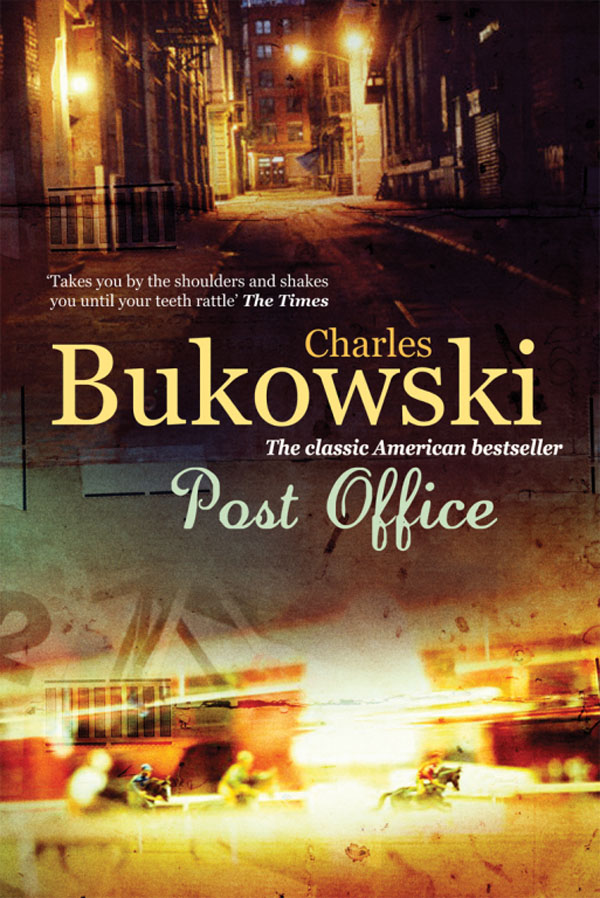
Post Office, by Charles Bukowski

Staff Review by Chris Saliba

Post Office chronicles 12 years of the poet’s life – the booze, the women, the gambling and his job as a postal worker. There is a cartoonish humour and Rabelaisian spirit in this short novel that makes every page irresistible. 

Charles Bukowski is one of those writers whose reputation precedes him. This is not a good thing for writers, as it can put potential readers off who may think they already know what the books are about. I’m guilty of this with regards to Bukowski.

Post Office was Bukowski’s first novel, published when the author was in his early fifties. The title pretty much explains all. Bukowski was an employee of the United States postal service for 12 years. He uses those experiences as the basis of Post Office. Other autobiographical details are thrown in – women, gambling and plenty of drink.

Bukowski first published as a poet, and this sensibility comes through in the text. Post Office gives a 12 year personal history, with all the boring bits taken out. There is no plot, characters come and go, but the one mainstay is Henry Chinaski (quite transparently the author himself). We eagerly read on to see what happens to him in his life, how his relationships pan out and the dramas he goes through on the job.

The most wonderful thing about Post Office is Bukowski’s blunt, pared back style and punchy humour. If the artist Robert Crumb or film maker Russ Meyer had written novels, they would probably read like this. Bukowski is a master comedy writer. His timing is absolutely awesome. He knows what to leave in, what to take out and how to arrange it to ensure his dialogue goes off like a series of firecrackers. There were many sections in the book where I laughed out loud and thought ‘brilliant!’ Like this piece of dialogue. In it, Henry Chinaski has stupidly burnt his hand. He goes to visit the workplace nurse, and a sexual frisson builds up:

“How did it happen, Henry?”
“Cigar. I was standing next to a truck of the 4th class. Ash must have gotten in there. Flames came up.”
The breast was up against me again.
‘Hold your hands still, please!”
Then she laid her whole flank against me as she spread some ointment on my hands. I was sitting on a stool.
“What’s the matter, Henry. You seem nervous.”
“Well…you know how it is, Martha.”
“My name is not Martha. It’s Helen.”
“Let’s get married, Helen.”
“What?”
“I mean, how soon will I be able to use my hands?’
“You can use them right now if you feel like it.”
‘What?’
“I mean on the work floor.”

As you can gather, the novel doesn’t really aim to do anything else beyond speaking the truth as its author sees it. Bukowski is so funny and engaging and human that it’s impossible not to enjoy every page that he writes. He’s like a cartoon character, and as with so many cartoons, he hits on the truth in a pithy and immediately recognisable way.

Post Office, by Charles Bukowski. Published by Virgin. ISBN:  9780753518168  RRP: $19.95