Showing posts with label Emile Zola. Show all posts

Friday, March 23, 2018

Money, by Emile Zola

Staff review by Chris Saliba

Emile Zola's passionate and consummately researched denunciation of the excesses of financial speculation.

Aristide Saccard is a bankrupt financier looking to deal himself back into the finance game. He dreams big, of conquering the world. When he discovers that his upstairs neighbour, Georges Hamelin, a devout Christian, has plans to run development projects in the Middle East - rail lines, ports and roads, infrastructure to move commercial goods - it sparks an idea. Why not set up a bank to fund these plans? Saccard calls his bank the World Bank and starts issuing shares. From day one, however, Saccard is intent on manipulating share prices by all sorts of back door chicanery. Principally, the bank buys its own stock and hides the proceeds in dummy accounts.

The stock goes from strength to strength, if it could be called that, realising ridiculously high values. It's all unsustainable, of course. The demise of the bank is also helped along by the seasoned Jewish financier Gundermann, who is also a major focus of Saccard's rampant anti-semitism. As the bank crashes, many "mum and dad" investors get ruined along the way, as do the greedy and the naive. Chief among these victims is Caroline Hamelin, brother of Georges. She invests in the bank and also becomes Saccard's mistress. Intelligent and principled, she nonetheless sleepwalks into the looming disaster, lulled by the promise of easy money.

Money (L'argent in French) is the 18th novel in Zola's twenty novel Rougon-Macquart cycle. It's a story that he drives at full speed, with a dizzying array of characters. Zola uses his journalistic skills (he researched the finance industry intensively) and acute intelligence to produce a passionate denunciation of the evils of speculation, with special attention paid to the psychological effects money has on people. In short, money is like a dangerous drug, causing life threatening addiction. Money also seriously warps judgement, causing its victims to make irrational choices.

If there's a criticism that can be leveled at Money, it's that it feels like it was written quickly and with a lot of zeal. Some of the writing can seem a little repetitive and hastily thrown together. On the positive side, Money is amazingly modern in the problems it diagnoses and its core concerns (the finance industry; the psychology of the greedy and the gullible) make it almost a mirror on today's problems. Nothing much has changed in the 120 years since it was written.

Money, by Emile Zola. Published by Alma Classics. ISBN: 9781847495792 RRP: $19.99

To sign up for our monthly newsletter, featuring new releases, book reviews and favourite articles from around the web, click here.
 

Friday, March 15, 2013

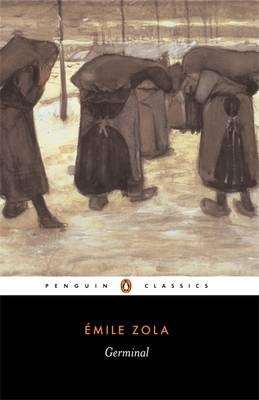
Germinal, by Emile Zola

Staff Review by Chris Saliba

Emile Zola’s Germinal is a bustling, sprawling piece of social realism written in the service of justice, but without compromising its status as great art. Zola shows all sides of a terrible  struggle, without making any moral judgements. 

Recently my grandmother gave me a tattered old Penguin edition of Emile Zola’s Germinal. She said she’d read it several times over the years and nominated it as one of her favourites. My first Zola experience was with Nana (1880), which was not successful. I lasted about 100 pages, but was in my early twenties and may not have been ready for it. Twenty years later in my early forties I read Au Bonheur des Dames (1883), or The Ladies Delight. I really enjoyed this clever dissection of consumerist society. It seemed so ahead of its time, this gripping novel about the goings on in a big department store.

Germinal
(1885) is considered Zola’s masterpiece, and it’s hard to disagree. The novel covers a miner’s strike in Northern France in the 1860s, in the mining town of Montsou. Etienne Lantier arrives in town after being sacked from a previous job, meets the old miner Bonnemort, finds work himself in the mine, and ends up staying with the Maheu family. Much of Germinal’s political discourse hangs on the shoulders of this character, who quickly embraces socialism and reads a lot of working class literature. Etienne Lantier eventually finds himself leader of a miner’s strike. Once the strike is underway, things soon descend into chaos, vandalism, murder and other crimes. The revolt is finally squashed by the military, after many families have lost their members to violence and starvation. Even though the miners lose out at the end, Zola finishes with a surprisingly positive final note: monumental struggles of this nature germinate in the first stages of revolt, and this defeat for the miners is simply the seed from which ultimate victory will eventually grow.

The brilliance of Germinal is its ability to contain so much chaos, bustle and disorder within the novel’s parameters. Zola doesn’t simplify this great miner’s revolt by creating good guys and bad guys, or by making some motives pure and others venal or corrupt. The capitalists are shown their good and bad side, as are the labourers. Zola shows every single shade of psychological complexity as his characters are put through extreme events. There are no heroes or villians in Germinal, just messy lives struggling to improve their lot.

Closing the last page of Germinal I was filled with a deep admiration for Zola’s commitment to making his art serve the cause of justice, without compromising either.

Germinal, by Emile Zola.  Published by Penguin. ISBN: 9780140447422  RRP: $9.95