Showing posts with label Jarett Kobek. Show all posts

Saturday, April 7, 2018

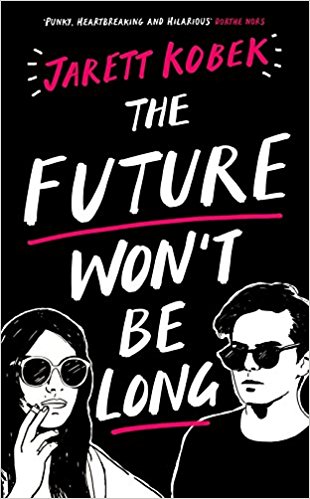
The Future Won't Be Long, by Jarett Kobek

Staff review by Chris Saliba

A dizzying trip through New York's underground scene of the 1980s and 90s.

It's 1986. A gay eighteen-year-old farmboy leaves his Wisconsin home after his parents die in strange circumstances. He renames himself Baby, moves to New York and on his first night meets the flamboyant Adeline. She is only slightly older than him and talks like a campy Hollywood actress of the silver screen era. Soon the two are inseparable and will take their friendship on a rollercoaster ride through the following decade.

Jarett Kobek's The Future Won't Be Long works almost as a prequel to his previous novel, I Hate the Internet. The story is alternatively narrated by Baby, who will eventually become a science fiction writer (among other things) and Adeline, who makes a name for herself as a comic book artist. A dizzying glitterball of a book, one that seems to spin faster and faster, Kobek brings to life the drugs, sex, nightclubs, artists, writers, drag queens and oddballs that made up New York's underground scene of the 1980s and 90s. In between the parties and name dropping (with appearances from Quentin Crisp, Norman Mailer, David Wojnarowicz, Brett Easton Ellis etc.) there is plenty of biting commentary on the many ills of American society.

Brilliant and genre-busting, The Future Won't Be Long is like nothing you've read before.

The Future Won't Be Long, by Jarett Kobek. Published by Serpent's Tail. ISBN: 9781781258552  RRP: $32.99

To sign up for our monthly newsletter, featuring new releases, book reviews and favourite articles from around the web, click here.

Monday, February 27, 2017

North Melbourne Books March Newsletter - featuring Jarett Kobek

In the March edition of the North Melbourne Books newsletter we talk to Turkish-American novelist Jarett Kobek about his novel, I Hate the Internet. It's a savage satire on technology, media, celebrity, big business, politics and just about everything.

Don't miss this incendiary bomb of a book, a genuine rarity today. You may not agree with everything in it, but it's a book that will challenge your every assumption. (You can read our staff review here.)

To view the latest North Melbourne Books newsletter, click here. To sign up for our monthly newsletter, click here.


North Melbourne Books talks to Jarett Kobek


North Melbourne Books: I Hate the Internet centres around Adeline, a forty-five-year-old comic book creator. Her main claim to fame is a comic called Trill, published in the 1990s, which made her somewhat famous. Fast forward twenty years and things go awry when she gives a talk and in a sudden flight of fancy goes off on a rant. Someone in the audience records the outburst, uploads it onto the Internet and before Adeline knows it, she's involved in Twitter wars with the fans of Beyonce and Rhianna. The story is told in a rather fragmented, almost cubist or dadaist fashion, interspersed with a lot of freewheeling commentary on just about everything - politics, poverty, economics, the social status of minorities, technology. The style is the very opposite of your regular literary novel. How did you come up with the book's design?

Jarett Kobek: I wish that I could say that this was an entirely conscious approach, but it wasn’t. My time in San Francisco gave me a little bit of a nervous breakdown—both in terms of what seemed to be my inability to make good as a writer and in terms of having to deal with the endless bullshit of that one industry town—and so when I started writing I Hate the Internet, it came out in the hyperfragmented style that you mention.

Very shortly thereafter, I realized that this approach worked really well in addressing the Internet, as it mirrors the way that the Internet presents itself. So I ran with it and commodified my temporary mental illness into a reasonably lucrative cultural artifact. If you must go nuts, you should probably try and make it pay.

NMB: I Hate the Internet has a lot to say about the patriarchy and how women are treated as second class citizens. At one stage in the book there are calls for women to turn their back on the Internet and create their own version of it. In some parts the novel reads like a feminist treatise. How did you come to have such strong views on the status of women in society?

JK: I personally don’t apply the term feminist for two reasons: (1) every time I hear a man call himself a feminist, it’s the sound of someone trying to get laid, and (2) feminism at its heart is an argument about establishing the total equality of the two sexes, which is something that I reject because I believe that women are better than men.

I don’t know how anyone could get past a certain age—say 25, 30 tops—and not be just achingly aware of how incredibly unfair and full of shit the world is when it comes to its treatment of women, both on a macro economic and micro interpersonal scale. Heterosexuality is a millennia-long con job. The alternates are a bit better, but only just.

The irony here is that the positive reception of I Hate the Internet has been inherently predicated on the sexism it purports to critique. There’s no way that a woman who wrote the same book, word for word, would have been taken as seriously. She would have opened herself up to a world of unfathomable abuse and summarily dismissed.

NMB: There are a few digs taken at science fiction novels and writers in your novel, yet clearly you know your stuff on the subject. The influence of Kurt Vonnegut seems to be strongest on I Hate the Internet. How much of an influence has science fiction been on your work?

JK: Like every American teenaged boy of a certain age and specific levels of sexual frustration and intelligence, I had a Science Fiction phase. Mine was a little weird because I read, primarily, the authors of the so-called New Wave, which was a brief bloom of drug use and weird sex in the ‘60s and early ‘70s. People like Thomas M. Disch and Philip K. Dick and Harlan Ellison. This convinced me that Science Fiction was a radical literature—which is the exact opposite of the truth. There is no more conservative literature than Science Fiction. There came a long period of disabusement when I branched out into the putative Masters of the Genre.

These days, I think the only real influence other than Vonnegut (though he would have rejected the label as a writer of Science Fiction) is Philip K. Dick. There’s a chapter in IHTI which is so indebted to him that it’s crazy.

NMB: There's a wonderful scene at the end of I Hate the Internet where the character J. Karacehennem gives an extraordinary speech to a group of tourists. Amongst other things he declares, “Book people are the only people who have a half-way interesting argument to make against the Internet!” and “...no technology can overwhelm Charlotte Bronte!” For many years we were told that the information age would make libraries and books redundant, but (thankfully) that hasn't happened. Why do you think books survived the Internet?

JK: The arguments you mention tend to originate either from the people who have a vested economic interest in destroying books or an economic worry that publishing will be destroyed. So propaganda or fear.

All the arguments rest on the assumption that there’s a difference between new tech and the book. But the book itself is just technology, a piece of hardware that’s been developed over 1500 years by countless numbers of individuals. It’s not going to be erased by something developed over five months in a Palo Alto garage.

The real threat to the book is not smartphones or the Internet—the real threat is bad governance by malefactors who hate the idea of a literate poor.

NMB: What books are you enjoying reading at the moment?

JK: The Kardashian Dynasty by Ian Halpern.

I Hate the Internet is published by Serpent's Tail. RRP $27.99

Tuesday, January 10, 2017

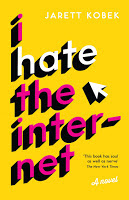
I Hate the Internet, by Jarett Kobek

Staff review by Chris Saliba

Jarett Kobek's I Hate the Internet is a savage satire on technology, media, celebrity, big business, politics and just about everything.

I Hate the Internet sounds like a gimmick, a clever bit of marketing to get suckers to buy a book. Surely the contents couldn't live up to the title? Happily Turkish-American Jarett Kobek's self-published novel (now picked up by mainstream publishers) is a refreshing and brilliant surprise.

Set mainly in the San Francisco Bay Area, the story centres around Adeline, a forty-five-year-old comic book creator. Her style is rather flamboyant in a Diana Vreeland like way, her language peppered with expressions such as darling and mad. Her main claim to fame is a comic called Trill, published in the 1990s, which made her somewhat famous. Fast forward twenty years and things go awry at a talk she gives to a group of students. In a sudden flight of fancy she goes on a rant about why the world is going down the toilet. Technology, the Internet, social media all share the blame. Someone in the audience records the outburst, uploads it onto the Internet and before Adeline knows it, she's involved in Twitter wars with the fans of Beyonce and Rhianna.

This is a novel filled with smart dialogue, enough quotable lines to rival Oscar Wilde and a running commentary on just about everything. It describes the world in the past tense, as though some future narrator is sifting through the detritus of a past civilisation. Places, current politicians, tech behemoths like Twitter and Facebook, even irony itself, are all described as things that happened in the past. There's little plot, but rather a broad cast of characters that pop up periodically, all with interesting and quirky backstories. One moment we're at a restaurant or a party, the dialogue crisp and witty, then suddenly we jump to someone's apartment. The novel hops from scene to scene. Kobek's characters are not so much employed to drive a plot but rather describe a social and cultural milieu: the misfits and freaks who created the vibrant San Francisco culture before the city was chewed up and spat out by the big tech companies. The tech companies pushed up rents and in the process pushed the original creative people out.

The driving brilliance of I Hate the Internet is its bitingly fierce, often funny satire. Kobek has something to say on just about every big question there is today: misogyny, racism, white power structures, politics etc. Kobek also likes to riff on literature, art, cinema and pop culture, from science fiction and comics to Ayn Rand and Beyonce. It's a wild, wild trip, something of a mix between Margaret Atwood (The Heart Goes Last comes readily to mind), anarchist activist and writer David Graeber and Kurt Vonnegut. For example:

"Wars were giant parties for the ruling elites, who sometimes thought it might be great fun to make the poor kill each other."

"Most apps were developed on the principle of the lowest common denominator, working off the general assumption that stupidity was the baseline of the human experience."

On Twitter and Facebook activism:

"They were typing morality lectures into devices built by slaves on platforms of expression owned by the Patriarchy, and they were making money for the Patriarchy. Somehow this was destroying the Patriarchy."

It's hard to think of a more original novel you'll read this year. Kobek writes like he doesn't need to please a panel of literary judges, only himself. He's worked out his own unique economic and political theory on why the world is going to hell in a handbasket and is willing to put it out there. In essence Kobek thinks the Internet is not a tool for enlightenment and liberation, but is rather entrenching white male power. You may feel you are free tweeting, but the device you hold in your hands was made by slave labour in China, while every tweet, every Facebook post, every Google search helps make money for a small group of white men.

Don't miss this incendiary bomb of a book, a genuine rarity today. You may not agree with everything in it, but it's a book that will challenge your every assumption. 

I Hate the Internet, by Jarett Kobek. Published by Serpent's Tail. ISBN: 9781781257616  RRP: $27.99

To sign up for our monthly newsletter, featuring new releases, book reviews and favourite articles from around the web, click here.