Showing posts with label Lindsay Tanner. Show all posts

Thursday, June 30, 2016

North Melbourne Books July Newsletter - featuring Lindsay Tanner

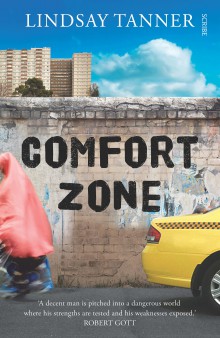
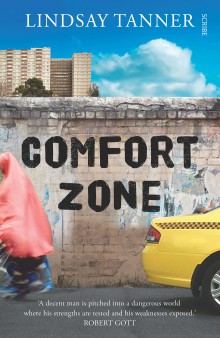
In the July edition of the North Melbourne Books newsletter we talk to former Finance Minister Lindsay Tanner about his debut novel, Comfort Zone.

Lindsay Tanner's debut is an entertaining crime novel set in Carlton, full of local colour. While it's essentially a crime yarn, Comfort Zone is also a sympathetic portrait of a middle-aged man that society has left behind, but who manages to find his better self through acts of kindness.

You can read our staff review of Comfort Zone here.

To view the July edition of the North Melbourne Books newsletter, click here. To sign up to our newsletter, click here.

North Melbourne Books talks to Lindsay Tanner



North Melbourne Books: While Comfort Zone is primarily a crime novel exploring the gritty underbelly of Carlton and the complicated world of Somali politics, at its heart is a story about a middle-aged cab driver that society has left behind. Jack Van Duyn is resentful and self-pitying, yet he finds his better self through acts of kindness. How did the idea for the story come to you?

Lindsay Tanner: To be honest I am not really sure. Jack somehow wandered into my consciousness a few years ago, and I started to wonder what would happen if his hum-drum existence was disrupted by a few curve-balls. So I dreamed up the playground incident, and everything kind of flowed from that. All the way through I was driving the narrative by asking myself "how will he respond to that?" or "what happens next?"

NMB: The portrait of Jack Van Duyn is a very sympathetic one. Single and childless, living in a cramped flat, he sees himself as a bit of a loser. This is a world very far from your previous life as a politician and finance minister. How did you get into Jack’s world?

LT: Both as a politician and in previous "lives" I have been exposed to an amazingly broad and diverse range of people, particularly in inner Melbourne. Jack isn't modeled on anyone, but I have known a fair few Jacks over the years. They are mostly people who aren't particularly motivated, and have settled into a pretty dull, difficult existence at the bottom end of the socio-economic spectrum partly because they can't be bothered doing much else. They often have unusual characteristics and undeveloped talents.

NMB: What made you want to turn to fiction writing after a career in politics? Were there things that were difficult to say as a politician that are easier said in fiction?

LT: I have published seven non-fiction books over the years, and countless essays and articles, so I wanted to find out what writing fiction was like and whether I could do it. I didn't intend it to be a means of political expression, but it turned out that way a bit. And it did enable me to make a point that would have been much harder to make if I didn't have Jack helping me.

NMB: At the end of Comfort Zone Jack’s romantic prospects seem to be looking up. The reader is left hoping something might work out for Jack and his new friend Emily. Are there any plans for a follow-up novel?


LT : I am working on a sequel now. It is quite a different challenge, and there is no guarantee it will ever see the light of day. I will only proceed with it if I am convinced I have produced something worthwhile. Writing a sequel entails a number of dilemmas that you don't have to deal with when you are creating the original novel.

NMB: What books are you enjoying reading at the moment.

LT :I always read about four or five books at once. I have almost finished Peggy Frew's Hope Farm, which is brilliant. I am ploughing through Alan Ryan's On Politics, and am about a third of the way through Volker Ullrich's Hitler. I am also reading Malcolm Fraser's autobiography co-authored by Margaret Simons, and have just finished Peter Nixon's excellent autobiography and the most recent book from my favourite novelist William Boyd, Sweet Caress.

Comfort Zone, by Lindsay Tanner. Published by Scribe. ISBN: 9781925321029  RRP: $29.99

Sunday, June 26, 2016

Comfort Zone, by Lindsay Tanner

Staff review by Chris Saliba

Former Labor Member for Melbourne and Finance Minister, Lindsay Tanner, makes his fiction debut with Comfort Zone, a gritty inner-city crime novel with heart.

Jack Van Duyn is a middle-aged cab driver. Single and childless, with few if any real friends, he lives alone in his crusty flat and tries to blame his misery on others: refugees and the unmerited rich. Life has left Jack behind and he thinks himself a loser. However, things are about to change. One day he picks up a young hotshot banker, Matthew Richards. The two witness two Somali kids getting attacked. Jack and Matt intervene to help. The mother, Farhia, is close by and Jack finds himself mesmerised by her beauty. As Jack tries to help Farhia out, he gets drawn into the complicated world of Somali politics. Meanwhile, he faces trouble on another front: Matt, the young banker, drags him into the gritty underworld of drug dealers.

Lindsay Tanner's debut is an entertaining crime novel set in Carlton, full of local colour. While it's essentially a crime yarn, Comfort Zone is also a sympathetic portrait of a middle-aged man that society has left behind, but who manages to find his better self through acts of kindness.

Comfort Zone, by Lindsay Tanner. Published by Scribe. ISBN: 9781925321029  RRP: $29.99
To sign up for our monthly newsletter, featuring new releases, book reviews and favourite articles from around the web, click here.

Sunday, June 12, 2011

Sideshow: Dumbing Down Democracy, by Lindsay Tanner

Rather than write a gossipy, tell-all book about the inside workings of the Rudd Government, former Finance Minister Lindsay Tanner has opted to perform a piece of community service. Sideshow is a vigorously critical book of our circus like media, with the blame laid in equal measure on all segments of society – voters, politicians and media practitioners themselves.

Lindsay Tanner was the Labor member for the Federal seat of Melbourne between 1993 and 2010. He quit in 2010 for personal reasons, needing to spend time with his young family, and was succeeded by Adam Bandt of the Greens. While Tanner stated his reasons for quitting politics were personal, reading Sideshow makes it clear that he was also prompted by an increasingly frivolous media environment, making a serious political career increasingly difficult.

Tanner never styled himself a chest beating intellectual, but he did have policy ideas and was engaged in a number of issues, which he wrote about in a books like Open Australia (1999) and Crowded Lives (2003). Temperamentally, Tanner was never an egomaniac or show pony politician. While many of the politicians of his time significantly lowered the intellectual tone on important debates, and generally involved themselves in petty party-political skirmishes, Tanner was pretty much the straight shooter. He could fight his battles using his serious minded intellect without descending into clever, circuitous arguments devoid of substance. As a politician Lindsay Tanner was a pretty substantial fellow, someone who entered politics with a genuine eye to the public good.

After spending three years as Minister for Finance and Deregulation in the Rudd Government, it would be natural to expect a fairly tantalising peek into the workings of that government, especially since Tanner was part of the so-called ‘gang of four’. Instead what Tanner has written is a book that is principally critical of the modern media, but also catches in its net the politicians who depend on that media, and the population that consumes it. Sideshow is entirely free of any kind of rancour or meting out of blame for the circus we now have for a media. Nor does Tanner try to show himself above the phenomenon he describes. This makes Sideshow read as a mature investigation of the media’s role in shaping our society and politics, written from someone who was in the belly of the beast for 18 years.

Only the Dumbest Survive

The way Lindsay Tanner writes it, no one is to blame for what the media has become: a frivolous, sensation driven carnival of gossip and scandal. Rather, the media has grown almost organically into its current state. If anything, the Internet, particularly Twitter and Facebook, has driven the media to be more superficial and lacking in depth. Commercial pressures also mean that media organisations are forced to put up stories that they known will attract readers and viewers, otherwise they go out of business. This is where the populace is to blame. By continuing to be attracted to these superficial stories, the media must keep on its race to the bottom. Tanner sites many a TV producer who says they try to keep political stories to a minimum, as viewers start dropping off in large numbers once a politician comes on the screen. Increasing apathy and complacency on the part of voters, Tanner speculates, may be due to Australia’s long run of economic prosperity.

All these elements mixed together – increasing economic imperatives to appeal to the lowest common denominator, the advent of super fast and constant access to information via the Internet, and the need for politicians to get access to this media so they can communicate their ideas and policies – has created an environment where only the dumbest can survive. From this it follows that the quality of our national conversation on a range of serious and pressing issues is hopelessly diminished. No one is paying attention, unless it is some cheap stunt that does not demand too much intellectual effort.

Hence the reason why so many politicians must now act like clowns simply to get the media to take notice. Tanner lists some of the high jinks and sideshow-like behaviour that politicians have descended to simply to get media access (Tanner doesn’t leave himself out, citing some examples of his own sideshow media frolics.)

More Focused Public Attention Will Improve Media

The shortest way to improve the nation’s media is for the public to start paying more attention and simply taking an interest in the politics and topics that directly affect them. Commercial media outlets would then have to respond to the demand for more involved and deeply penetrating work from journalists.

The other options that Tanner considers for improving the media is for more government money to be directed to supporting quality journalism. Overall, Sideshow is a rather realistic (or pessimistic, depending on your outlook) book. Tanner doesn’t really see much hope for positive change in the near future, and thinks that the current media environment may indeed be the new normal. Nor does he share the confidence that some place on the Internet as a new force for the broad dissemination of quality journalism. It may, but it’s simply too early to tell.

While Sideshow may make depressing reading, it is never dull. Tanner has been bottling these ideas up for many years, and they spill out in the text with a sense of urgency. Tanner also backs up his arguments with a lot of fascinating research and quotes from key media and political players.

Sideshow is very much the truth as its politician-author has come to know it, which makes its candid conclusions all the more worrisome. For voters Sideshow is essential reading, as it gives an insider’s account of what it’s like trying to live as a serious politician in a media circus.

Sideshow: Dumbing Down Democracy, by Linday Tanner. Published by Scribe. ISBN: 978-1-921844-06-5