Showing posts with label Music. Show all posts

Friday, January 19, 2024

Le Freak, by Nile Rodgers


The prolific American hit maker tells his story.

Legendary musician, songwriter and producer Nile Rodgers - famous in equal measure for all three skills - tells about his unusual upbringing, drug use and various famous names he has produced. Rodgers' hardscrabble upbringing wouldn't have marked him out for success. When his career did take off, beginning with a string of hits with his band Chic, followed by writing and producing mega hit albums for Diana Ross and Sister Sledge, his addiction issues threatened to derail his career at any minute. Near death experiences didn't get him off addictive substances, but rather the humiliating experience of having a fellow musician tape a performance when Rodgers was totally stoned. When he saw the footage, he knew it was time to get off the drugs. 

Fans of Rodgers' biggest hits will find much to enjoy in this candid autobiography. A lot of time is spent on Madonna's Like a Virgin album, and David Bowie's Let's Dance, with guest appearances from a host of other big names. As a B52s fan, I would have liked to have read something about Cosmic Thing and Good Stuff, two albums he produced in the late 80s and early 90s. But you can't have it all.

Monday, April 1, 2013

How Music Works by David Byrne

Staff Review by Chris Saliba

David Byrne distils a lifetime of experience and reading on the subject of music into a far reaching meditation. The result is a book that is both aesthetically satisfying and intellectually stimulating. A must read for all music fans!

How Music Works
defies simple categorisation. This may make it sound complex and unwieldy, but it’s anything but. David Byrne’s meditative and engaging voice unifies its numerous themes into a very solid and coherent whole. The book is perhaps best described as a mix of autobiography, philosophy, history, science and even self-help.

Fans will be well aware of David Byrne’s time as singer / songwriter with the band Talking Heads, plus his catalogue of solo albums and collaborations. While How Music Works almost reads as academic in some parts, it is Byrne’s long experience as a practitioner that makes the book also quite inspirational. A long chapter titled “Amateurs!” urges a return to a time when everyone made music themselves. As technology has advanced, making music more ubiquitous in our lives, our hands-on ability to make music has diminished. There are more listeners than players.

Byrne discusses technology and its impact a lot. While not declaring for or against new technologies, he highlights the pros and cons that new technologies bring. For example, computers ensure music is easier to make, but tends to homogenize it. Digital music makes it more accessible, but lacks quality and fidelity when compared with analogue recordings.

Surprisingly, the chapter ‘Business and Finances’ has some really interesting insights. Byrne candidly lays out the balance sheets for a couple of his albums, breaking down the costs for recording, advertising, distribution, paying musicians etc. You’d be amazed at how little money is made on some of these recordings.

The genius of this book is that, even reading about the miserly remuneration for musicians and artists, it still makes the prospect of creating music exciting. Byrne’s endless fascination with the creative process, his happy immersion in all things musical, makes it clear that art making is very much its own reward. How Music Works is both a practical and an inspiring book.

David Byrne’s How Music Works can be read on a number of levels. It can assist as a guide for those wanting to embark on a career as a musician, or as an appreciation for those who enjoy listening to music. It addresses many serious intellectual questions, but in an accessible way by someone who wants to include the reader in his musical journey. The book penetrates deeply into music’s mystery, showing us that there is so much more than what appears on the surface, and guiding us to our place in that sonic universe.

How Music Works, by David Byrne. Published by Canongate. ISBN: 9780857862501 RRP: $39.99

Thursday, February 28, 2013

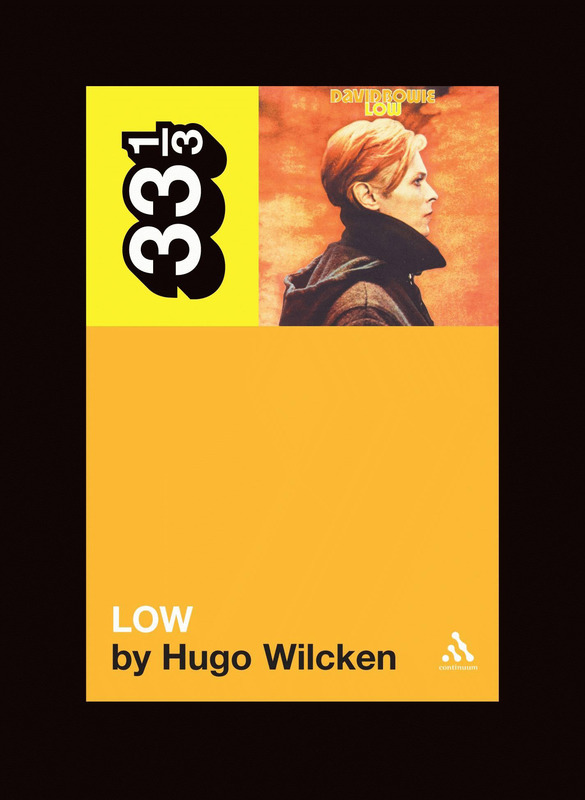
David Bowie Low (33 1/3), by Hugo Wilcken

Staff Review by Chris Saliba

David Bowie Bowie’s classic album Low gets a fascinating treatment in this short book of pop scholarship.

David Bowie’s moody and introspective 1977 album Low has long been one of my favourites in the Bowie canon. Recently this short book was recommended to me. It’s part of a series that covers various influential albums. Another reason I’m very fond of Low is because it is the first collaboration between Brian Eno (creator of wonderful ambient records and an innovative producer) and David Bowie. They wrote together the very moving instrumental that opens side two, “Warsawa”.

Enough of me. What about David Bowie Low? Books about a particular film or album (or even book, for that matter) are a mixture of fan rave, criticism and contemporary history. As a fan, you get to soak up every little detail of trivia about your favourite album, enabling you to piece together musical influences and the gestation of new musical styles.

Hugo Wilcken has written for the most part a history of Bowie’s drug drenched and paranoid late 70s period, interspersed with some perceptive commentary and musical appreciation.  We get lots of fascinating info on Bowie’s reading habits and obsessions of the time, his friendships and collaborators. Wilcken tries to get close to the mystery of musical genius, and does a pretty good job by describing the musical influences swirling around Bowie at the time (most notably the German electronic music scene) and his responsiveness to it. The miracle is that Bowie managed to create such extraordinary music while on the verge of nervous collapse.

This is a thoroughly enjoyable little book that accomplishes its brief with intelligence and sensitivity. The book is not too academic, nor is it dumbed down. Perhaps you could describe this type of writing as pop scholarship. Bowie fans should find much to enjoy in David Bowie Low.

David Bowie Low (33 1/3), by Hugo Wilcken. Published by Continuum Trade. ISBN: 9780826416841  RRP: $19.99

Monday, June 11, 2007

On Michael Jackson, by Margo Jefferson

This book is more an impressionistic portrait of Michael Jackson, using broad brush strokes of cultural analysis. It’s all written in an overly thoughtful, literary way. So don’t expect hard hitting journalism , poring over Jackson in a forensic fashion. Rather the book suggests different ways of looking at Jackson, citing Jackson’s own musical and cultural influences, and how they may have influenced him in turn. It’s pretty tame stuff.

Overall, the this essay is perhaps a bit too light and airy. It’s great that Margo Jefferson has had the smarts to write a book taking Jackson seriously. But I wish the book was more substantial, more opinionated. Someone like Jackson should surely provoke a much more passionate book. At some points I wondered if Jefferson had the intellectual depth to pull off what she’d proposed. Her use of source material seems lazy: Michael and LaToya’s autobiographies! Plus some of the Amazon.com reviewers have pointed out several mistakes. I hate that sort of sloppiness.

In the end, this book doesn’t reveal anything new about Michael Jackson. Nor does Margo Jefferson have any new thinking to add to her subject. You leave the book mildly disappointed.
This is not to say don’t read it. It does have its moments. But you might find the big, tabloid biographies more stimulating. Or indeed, read Michael’s own autobiography, which is surprising good – well, that’s what I thought anyway.

Saturday, February 3, 2007

Sweet Soul Music, by Peter Guralnick

This book is a biography of soul music, concentrating pretty narrowly on the Memphis and Muscle shoals music areas, and the birth of seminal soul labels Stax and Atlantic. It’s all pretty exhaustively researched, with lots of fabulous interview material from the key players. Author Peter Guralnick seems intent on quoting at length, with all the syntactical idiosyncrasies of the soul legends he interviews left intact. Happily, the author takes a step right back to let the inventors of soul speak for themselves.

Seeing the book concentrates on southern soul, readers who love Motown and artists like Donny Hathaway and Stevie Wonder may find the book a bit lacking.

Guralnick really digs up and sifts through lots of poor, uneducated and very talented people. You marvel how some of these amazing sounds came out of provincial little places like Muscle Shoals.

Another thing I didn’t realize about this strand of soul music is how much of it is a fusion of white musicians and entrepreneurs, mixed with raw black talent. Jerry Wexler knew nothing about actually making music, but divined that Aretha Franklin was a huge talent. His job seemed to be amassing all the right people and sticking them in a recording studio together.

Alas, the murder of Martin Luther King changed all of that, increasing racial tensions, most notably to whites working in the music industry. After making so much groovy music together, what a bummer.

There’s a great chapter on Aretha Franklin, and the making of her first Atlantic album. Aretha would pick songs that the musicians thought were nothing spectacular, and work them into these great soul classics. Compare the original Otis Redding version of Respect, then listen to Aretha’s. As Otis said after hearing Aretha’s version, ‘That girl stole my song.’ On this subject of stealing songs, Ray Charles said that interpreting and writing a song are the same thing, and I tend to agree. Listening to both versions of respect you’d barely connect them as the same song.

The author was also smart enough to go into Aretha’s often kitsch taste in music. He describes going to see Aretha perform just as she had come into her new found Atlantic fame, and was shocked that half the program was made up of her middle-of-the-road Columbia fare. Aretha can be a real mix of trash and treasure. When she throws down, boy can she throw down. But when she misses, you think, why’d she bother in the first place?

The second half of the book I didn’t find as engaging as the first half, as it went into a lot of the business side and politics of the music scene, and the sad decline of Stax records.

To write books like this you’ve got to be a fan of the music, with the critical smarts to separate the wheat from the chaff. Guralnick manages to keep his critical perspective while discussing music he grew up with and clearly loves.

You’ll walk away from this book looking up lots of albums, and no doubt will become enamored of a swag of new performers. Sweet Soul Music has a fragmentary, half finished feel, with the author working as a kind of musical archeologist, dusting off musical legends and trying to piece together what really happened when all that great music was made with little more than sheer inspiration.

Friday, September 29, 2006

Turn The Beat Around, by Peter Shapiro

Words written about great music are never as good as the experience of actually listening. Peter Shapiro does a terrific job of describing Donna Summer’s I Feel Love, still, writing about great music has a strangely disembodied feel about it. Nothing beats the throbbing thrill of listening to the music itself.

This book tries to create a coherent history out of the unruly and tangled skeins of underground club scenes etc. that spawned disco. One of the things I liked most about the book was how it gave you the original meanings and provenances of various pop culture phenomena. For example, I didn’t realize that a discoteque means record library.

On the negative side I found that Shapiro tended to intellectualise a bit too much, weaving his commentary about the socio-economic conditions that created disco. It’s hard to tell, for me anyway, if the bad economic conditions of the late 60’s helped to create an artistic environment that could produce Gloria Gaynor’s I Will Survive.

That aside, this is the kind of book that any admirer of 70s dance music will gobble up. There is so much obscure music that is described that I'm truly surprised the book isn't accompanied by a CD.

Tuesday, August 16, 2005

Miles Davis, The Autobiography

This is not for the light hearted. The blurb on the jacket says that Miles Davis tells it like it is, pulling no punches. That’s for sure. Every page seemed to have either the words shit, fuck or motherf…..written on it. The book almost reminded me of the original edition of Joan Collins’ autobiography – at the height of her The Bitch and The Stud fame – where she peppered her prose with lots of blue language. (She edited out all the bad language on the following editions I believe, when she became famous for Dynasty.) Having said that, I think I got used to, or inured to, all the shits and fucks and mothers in Miles’ autobiography by the end.

You read the autobiographies of great artists at your own peril. They don’t give any clue as to how the music is made (the reason I picked up Miles autobiography is because recently I’ve really become obsessed with his 1970 double album Bitches Brew). And frequently, I find, artists don’t paint very flattering self-portraits. Part of the problem might be that (in the case of musicians at least) they are not writers. Writers can lie more easily about themselves, as they have all those literary tools there. But musicians tend to give too much ugly reality.

Miles Davis finds himself in the same boat. Describing his early days playing with Charlie "Bird" Parker, he admits to not really liking the man at all. There’s quite a few other musicians that Davis is not fond of either, even finding time to have a go at Louis Armstrong for his pandering to white audiences (uncle tomming).

Feminists and others concerned about the status of women will also be unimpressed by Miles’ treatment of women. He freely admits to slapping and beating many of his wives and lovers over the years. He’s not exactly into fidelity either.

All in all he comes across as a pretty scary, angry man, who’d tell you exactly what he thought of you. A lot of his anger comes from the way black people are treated in America. There is a lot of criticism in this book of whites, especially of how when white people take up jazz, they get lauded to the skies, yet the blacks who invented Jazz never get any credit. Miles says he gets more respect when he travels to Europe or Asia than he does in his own country.

Another reason I read this book was because I knew there were parts about Prince. I was not disappointed. I’d always presumed (call me a starry eyed fan) than Prince would be a nice person. He has written too many songs with genuine humanitarian concerns. Happily Miles described him as ‘very nice, a shy kind of person.’ I also loved Miles’ description of Prince’s music:

" He’s got that church thing up in what he does. He plays guitar and piano and he plays them very well. But it’s the church thing that I hear in his music that makes him special, and that organ thing. It’s a black thing and not a white thing. Prince is like the church to gay guys. He’s the music of the people who go out after ten or eleven at night"

This is not an entirely enjoyable read, but somehow essential for music and jazz lovers. He knew and worked with so many important people, created so much amazing music (especially the extraordinary, seminal Bitches Brew). Alas, the people behind the great music tend to be a bit disappointing. But I guess that’s more the fan’s problem, not allowing their idols to be human.

I should also end here by thanking Miles Davis for all the music he has left us - otherwise his ghost might come to haunt me.

Friday, July 15, 2005

James Brown: I Feel Good

One wonders how great musical artists like James Brown and Aretha Franklin can write such lacklustre autobiographies. If you’re looking for any type of insight into how James Brown makes music, you won’t find it here. Indeed, he even says that lyrically he has absolutely no idea what Papa’s Got a Brand New Bag means!

Then there are the flagrant contradictions. At the end of one chapter he dramatically describes the emergence of a new musical style that represented everything he was opposed to. The last sentence mournfully announces, ‘that music was disco’. Lo and behold, you turn the page and the first paragraph of the following chapter has Mr Brown claiming that he invented disco! He does this again and again. He has ambivalent feelings about rap, then talks about he is the originator of that style, at least musically. Then he goes off the rails and claims that bad rap is government plot to make African-Americans look bad. You feel a tinge of embarrassment, and wish he hadn’t written it.

Artists and politics do not mix the best. James Brown has mixed with and met all or most of the American presidents of the last 30 years or so, and says he likes them all. You can’t help but think he is extraordinarily naïve. He even supported Richard Nixon.

The one thing this book does demonstrate is the devastating effects of racism, of how low coloured people were (and are) treated and regarded in America. The book has tales aplenty of segregation, verbal and physical abuse etc. Indeed, the whole tone of the book has a real sadness about it. He describes himself as a patriot, then goes and describes how bad America is to the Black man, showing up a critical contradiction at the core of the United States. So many Americans seem to believe, in theory at least, in the eminence of their enterprise culture. But then there are patriots like James Brown who – almost unwittingly undermining everything they believe good and right about America – claiming that the system unfairly rips off underdogs, and that it should all be regulated so everyone gets a fair chance.

Most tellingly, when Brown was arrested and taken away by the police in handcuffs, he was asked to describe America. He held up his shackles and said, ‘this is America’.

How can this be? How can the greatest and freest country in the world be nothing more than an unfair jailor of its people? Yet this attitude comes through again and again. Brown constantly finds himself saying, Don’t get me wrong, I love America, I’m the greatest patriot, but…

After reading I Feel Good, I believe James Brown is a man of basic good will. His philanthropic work, trying to get African-American children to stay in school and better themselves, is a very large part of who he is. He wants to help. He wants to see everyone (especially his people) getting a fair go. He wants everyone to be having a good time. Even a record I have of his at home on the back has a blurb about staying in school.

The book is not interesting as an insight into the working life of an artist. Disappointingly, it tells us nothing. All music comes from God, and that explains everything. Fair enough. I won’t argue with that. Aretha Franklin, the greatest vocalist ever, says the same. But as a self portrait of an elderly Black man, looking back on his life, and the changes in America over the past 50 years, it makes for an interesting read.

I felt sad for James Brown. His exuberant records are at such odds with his troubled life.

Wednesday, May 4, 2005

A Change Is Gonna Come, by Craig Werner

Craig Werner is professor of Afro-American Studies at the university of Winconsin. A Change Is Gonna Come aims to tie up American politics, race and the musical movements of the last fifty years or so in one narrative. It’s a pretty daunting task that the author has set himself which in the end I think he pulls off.

Of course you’re not going to agree with everything he writes. Music is so subjective. At first I was resistant to the book. It seems audacious to make so many pronouncements on music – something so essentially emotional – telling us what it all means. But by the end I felt he had a created a very convincing narrative. The book left me thinking.

Basically the book tracks mostly black music from Mahalia Jackson right up to the Spice Girls. He sees gospel music as one of the major musical impulses throughout the history of pop music, to which all music returns. Weaved in through this are all the other various musical styles and innovations – jazz, blues, soul, funk, disco, house, hip-hop, rap. Thrown into this mix are the various political backdrops – the black panthers, Malcolm X, the civil rights movement, the Reagan years, the Clinton years. The work of black women behind the scenes is also discussed.
This is a big, exhaustive study. If you want to think about music, this a good place to start.

One last note. I was happy to read Werner on Mariah Carey (he bemoans the woeful pop material she does; remember the book was published in 1998):

‘There is no reason Mariah shouldn’t be making gospel soul in the tradition of Curtis Mayfield and Aretha Franklin.’

Just what she is doing with her new album, The Emancipation of Mimi.