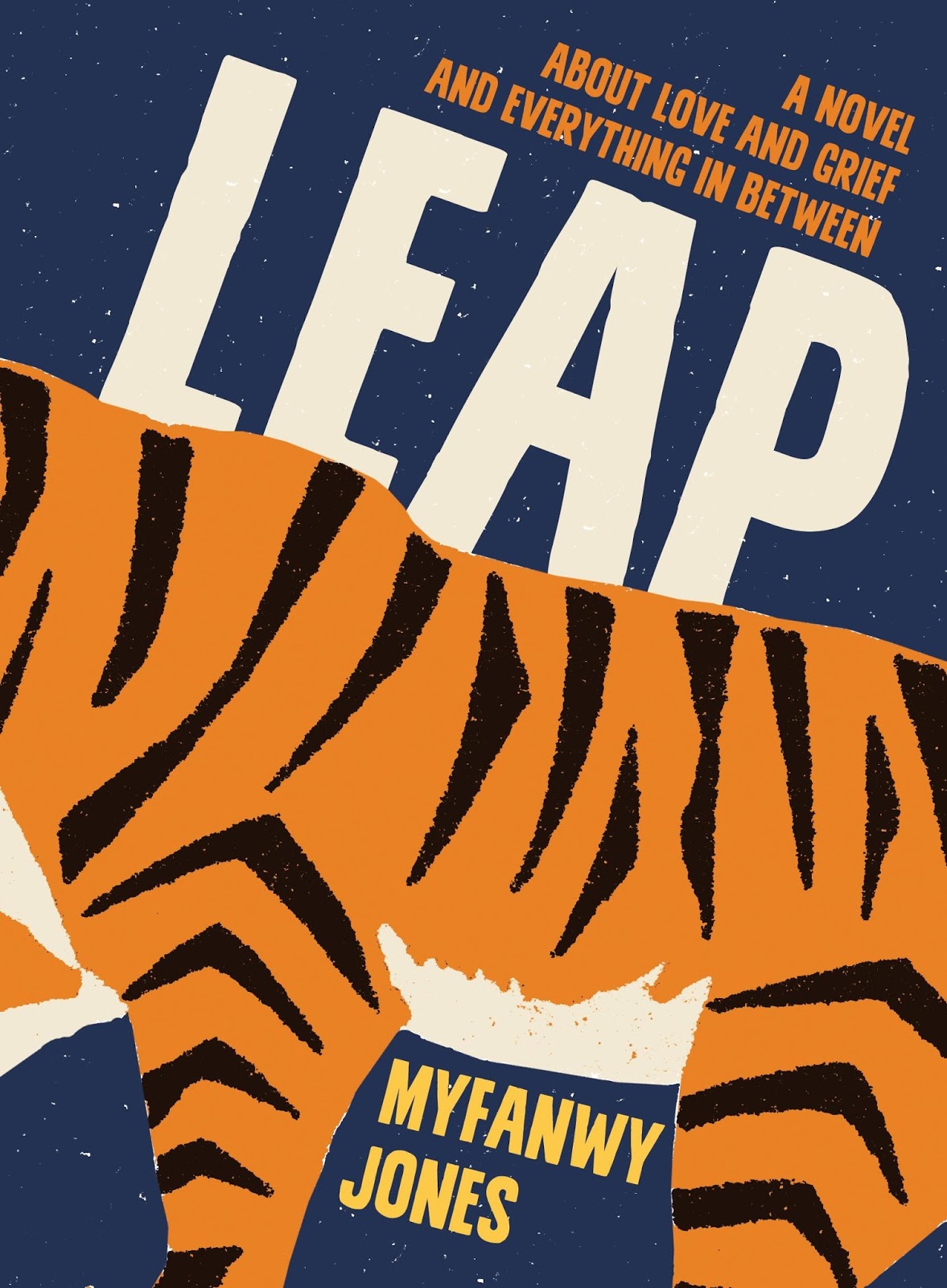
In the August edition of the North Melbourne Books newsletter we talk to Myfanwy Jones about her superb new novel, Leap. It's a quick paced story that pulses with life and energy, yet deals primarily with grief. This is a wonderfully intimate book that you won't want to let go.
To view our latest August newsletter, featuring new releases and book reviews, click here.
Or to subscribe to our newsletter, click here.
North Melbourne Books talks to Myfanwy Jones

North Melbourne Books: Leap is an energetic and breathlessly paced novel about grief. A young man, Joe, has lost his girlfriend. In a separate narrative, a middle aged woman, Elise, has lost her child. Joe tries to lose himself in parkour – running, jumping and leaping off urban buildings. He's always quite frenetic and on the move. Meanwhile, Elise paints tigers at the Melbourne zoo. How did you come to use such a fast paced style to explore the novel's central theme of grief and loss?
Myfanwy Jones: Great question. When we first meet Joe and Elise they are lost in the woods of grief, both grappling with a death wish that would have them mauled by a tiger or falling from a height so that they might be reunited with their loved one. But huge loss can also ignite the life force – the part that wants to heal and keep living – and I think the novel is powered by this inherent tension, and the conundrum of how one can move on without leaving the loved one behind. For Joe, solving this problem requires almost superhuman strength and speed. For Elise, it is a quieter journey out of the woods, but certainly Leap is about urgent movement, transformation, and this is reflected in the way the words hit the page.
NMB: A large part of the novel deals with male relationships, especially between the three young men who share a dwelling behind an inner city laundromat. The dynamics and interactions of the young men are particularly well drawn and convincing. How did you get the tone so right?
MJ: I have two adolescent sons so I’m frequently within hearing of clutches of man-boys. And being around these young men reminds me of the boys I grew up with; it awakens those cellular memories. I never consciously listen in or take notes, and I never sat down to wonder what Sanjay would say next (this novel arrived without conscious effort or planning), but humans ape. For the period of writing Leap I think I almost became a twenty- something young man. And it was a fun demographic to spend time with, as a writer – the awkwardness, the beauty and bravado, and the wise humour.
NMB: The scenes that describe Joe practicing parkour are quite dizzying. There's lots of climbing, bouncing off walls, vertical steps and dangling from window ledges. Imagining this onto the page must have been quite daunting. Were these scenes difficult to write?
MJ: Like Joe, I watched a lot of Youtube. These scenes also benefited from the generosity of Melbourne stuntman and traceur Harley Durst who opened up his parkour heart to me and came along to the bridge to help me create a sequence of moves. The parkour scenes were not difficult to write when I was possessing Joe (or he was possessing me) because I felt very safe in his hands. Oddly, they became daunting on the reread, when I’d slipped out of character and could see more clearly how he was dicing with death. One of the (many) things that compelled me about parkour from the outset was how it looks like people trying to turn themselves into animals, or revert to some earlier state of being human.
NMB: Reading Leap it has a wonderfully sad and elegiac quality, as it mixes descriptions of inner city grittiness with personal trauma. What does the novel mean to you?
MJ: Another great question. What does Leap mean to me? I am grateful to it – I’ve enjoyed being with it – I care about these characters. I lost ten friends to sudden deaths and we were inner city kids. There is not a great deal of meaning to be made from this other than the need to honour the dead and observe that life is glorious and quick. I don’t know what Leap will mean to others but for me it is about love, our animal nature, and the ingenuity of grief.
NMB: What are the books you're enjoying reading at the moment.
MJ: I recently read The Life of Houses by Lisa Gorton – it’s brilliant. I’ve been reading the latest Paris Review which is always a rich dessert and this one includes the much-anticipated interview with Elena Ferrante. I’ve been making my way, belatedly, deliciously, through Armistead Maupin’s Tales of the City. And H is for Hawk – can anyone read this and not be totally blown away?
Photo credit: Miriam Rosenbloom