Showing posts with label William Trevor. Show all posts

Wednesday, February 17, 2016

Mrs Eckdorf in O'Neill's Hotel, by William Trevor

Staff review by Chris Saliba

William Trevor's black comedy about a group of misfits at a run down hotel, and the domineering Mrs Eckdorf who turns their lives upside down, proves to be another exemplary work from an author who never puts a foot wrong.

Mrs Ivy Eckdorf is a professional photographer of some note. Her work concentrates on the human condition, her philosophy being that we are connected and have a responsibility to discover each other. She’s had several acclaimed coffee table books of her photographs published. Her personal life, however, has not been so successful. She has two failed marriages behind her, to German men, and memories of a fraught childhood. When Mrs Eckdorf hears from a barman on a cruise ship that there’s a run down hotel in Dublin called O’Neill’s, she knows she has to go there.

The reason is the hotel’s inhabitants. The owner is the ninety-one-year-old Mrs Sinnott. She’s deaf and does not speak, communicating to the people in her circle through a pile of exercise books. Each exercise book contains conversations with a different person. Mrs Sinnott is quite a sympathetic person, and she allows all sorts of misfits to stay or work at the hotel. Most notoriously the local pimp, Morrissey, brings his women to the hotel for assignations with clients. These part-time prostitutes constitute a darkly humourous cast in themselves, especially the ribald Mrs Dargan, who contemplates whether she should go back to her original job as a chicken plucker.

Mrs Sinnott has two children of her own. Both have troubled lives. Enid is married to an insurance executive who is completely ignorant of her deep unhappiness. To try and bring her husband closer, Enid takes a particular interest in cooking and cataloguing recipes. In several comic scenes she is seen pressing unwanted recipes upon her visitors and offering bland tasting macaroons. Of course Enid’s husband takes no interest in her culinary efforts. Mrs Sinnott’s other child is Eugene. He works at the hotel, but is mainly a drunk and a gambler.

Into this mess of human misery and depravity steps the domineering and supremely confident Mrs Eckdorf. With great relish and gusto she throws herself into the O’Neill Hotel’s milieu. Nor is she at all reticent about sticking her nose into everyone’s business, firing off questions like a forensic investigator. This soon starts to rattle everyone and Mrs Eckdorf is brought into sharp conflict with several of the hotel’s key personalities. Yet Mrs Eckdorf’s domineering manner and confidence could be a façade hiding deeper problems, as it begins to emerge that she is clearly going quite mad.

It’s a wonder where William Trevor came up with the idea to create Mrs Ivy Eckdorf. Eerily enough, the recently discovered photographer Vivian Maier comes to mind. The parallels are quite extraordinary. Both photographers, fictional and real, can be considered rude and imperious crackpots who roamed in search of human interest stories, but end their lives somewhat deranged. Of course Vivian Maier and her extraordinary catalogue of work didn’t become known until 2008, while Mrs Eckdorf in O’Neill’s Hotel was published in 1969. Another character with similarities to Mrs Eckdorf is Shakespeare’s Lady MacBeth. Both characters are confident women of action, yet both go mad.

Mrs Eckdorf is contrasted against a cast of William Trevor’s usual misfits. Each of these characters is described in great detail and with fully developed back stories. They  are all so down and out, some like Morrissey you wouldn’t trust as far as you could throw, but in the end they turn out to be the most normal people of the whole book. Trevor also seems to love describing dinginess and decay. The picture he paints of the depressing streets of Dublin and O’Neill’s spectacular fall into disrepair are done with a perverse relish. Mrs Eckdorf especially enjoys criticising all she sees around her in Dublin, gleefully ticking off in her mind the many crimes against good taste. 

Mrs Eckdorf in O’Neill’s Hotel is a black comedy but also a mysteriously human book. William Trevor likes to drag the reader down to the level of his down and outs, forcing us to suspend judgement and asking we be a little more forgiving of those who fail miserably at life. A minor tour de force, a revelatory novel about the human condition. 

Mrs Eckdorf in O’Neill’s Hotel, by William Trevor. Published by Penguin. ISBN: 9780241969311 RRP: $22.99

To sign up for our monthly newsletter, featuring new releases, book reviews and favourite articles from around the web, click here.

Tuesday, March 10, 2015

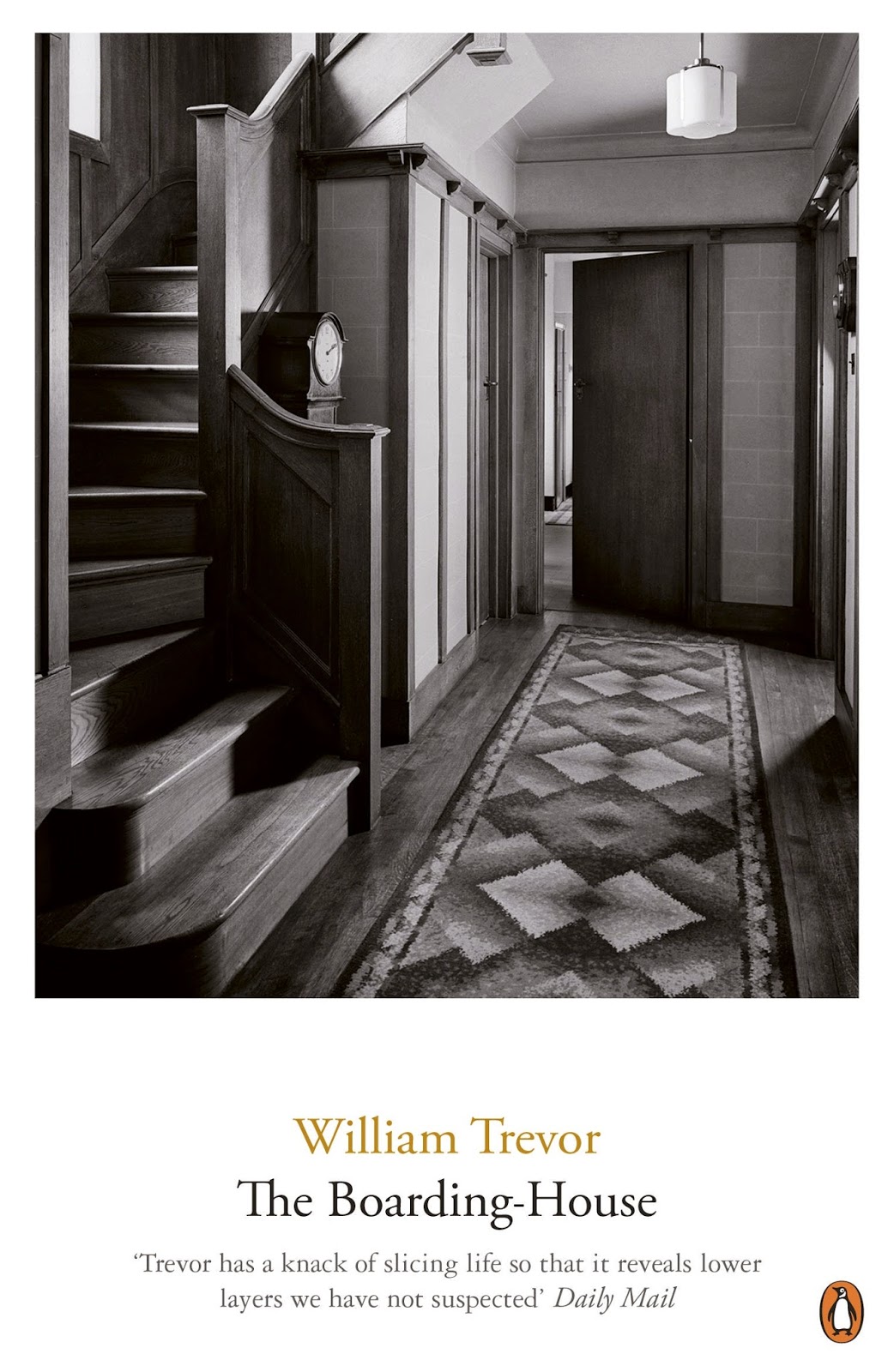
The Boarding House, by William Trevor

Staff Review by Chris Saliba 

William Trevor’s 1965 gem skillfully describes a boarding house full of eccentrics and desperate cases. It is a story of damaged people who can barely cope with life.

Boarding houses often turn up as pivotal locations for British fiction - think of Patrick Hamilton’s The Slaves of Solitude (1947) and Brian Moore’s The Lonely Passion of Judith Hearne (1955), to name but a few. In this 1965 novel, Irish novelist and short story writer William Trevor uses the boarding house as a location for the lonely, the odd and the pathetically mercenary. The Boarding House is a story that is very dark, with a sly humour that can pass you by if you’re not careful.

William Wagner Bird, as the novel opens, is on his deathbed. He is the owner of the boarding house at 2 Jubilee Road. He has hand picked all the residents himself, all of whom have their own particular foibles and peculiarities. As the novel unfolds, each individual resident’s backstory is teased out in great detail. These individual histories are full of shame, disappointment and self-delusion.

It is Nurse Clock, one of the long term residents, that tends at Mr Bird’s deathbed. She is both manipulative and ridiculous (early on we learn that she enrolled in a charm school run by two unrepentant frauds, the hilariously named Sir James and Lady Lord-Blood.)  When the will is finally read out, Nurse Clock and her enemy, fellow long time resident Studdy, inherit the boarding house. There is one stipulation in Mr Bird’s will: all the residents must be allowed to stay on. Of course this request from the grave looks to be on shaky ground. Not only is Nurse Clock keen to exploit the boarding house for her own ends, her enemy and business partner, Studdy, is just as unscrupulous. (Amongst Studdy’s hobbies are blackmail and anonymous letter writing.) Once Mr Bird is gone, the centre cannot hold and things quickly start to fall apart.

William Trevor is a superbly skillful storyteller. The miracle of this novel is that Trevor juggles a large cast of so many different characters, weaving their stories in and out of the narrative, yet making each one nuanced and psychologically compelling. His writing draws you into a  dark world of damaged people who can barely cope with life. There is much sympathy in this gallery of bizarre human portraits, but just the right distance too so they don’t become mawkish and somewhat sentimental. This really is masterful writing.   

The Boarding House, by William Trevor. Published by Penguin. ISBN: 9780241969274 RRP: $22.99

To sign up for our monthly newsletter, featuring new releases, book reviews and favourite articles from around the web, click here. 
The Children of Dynmouth, by William Trevor

Staff Review by Chris Saliba

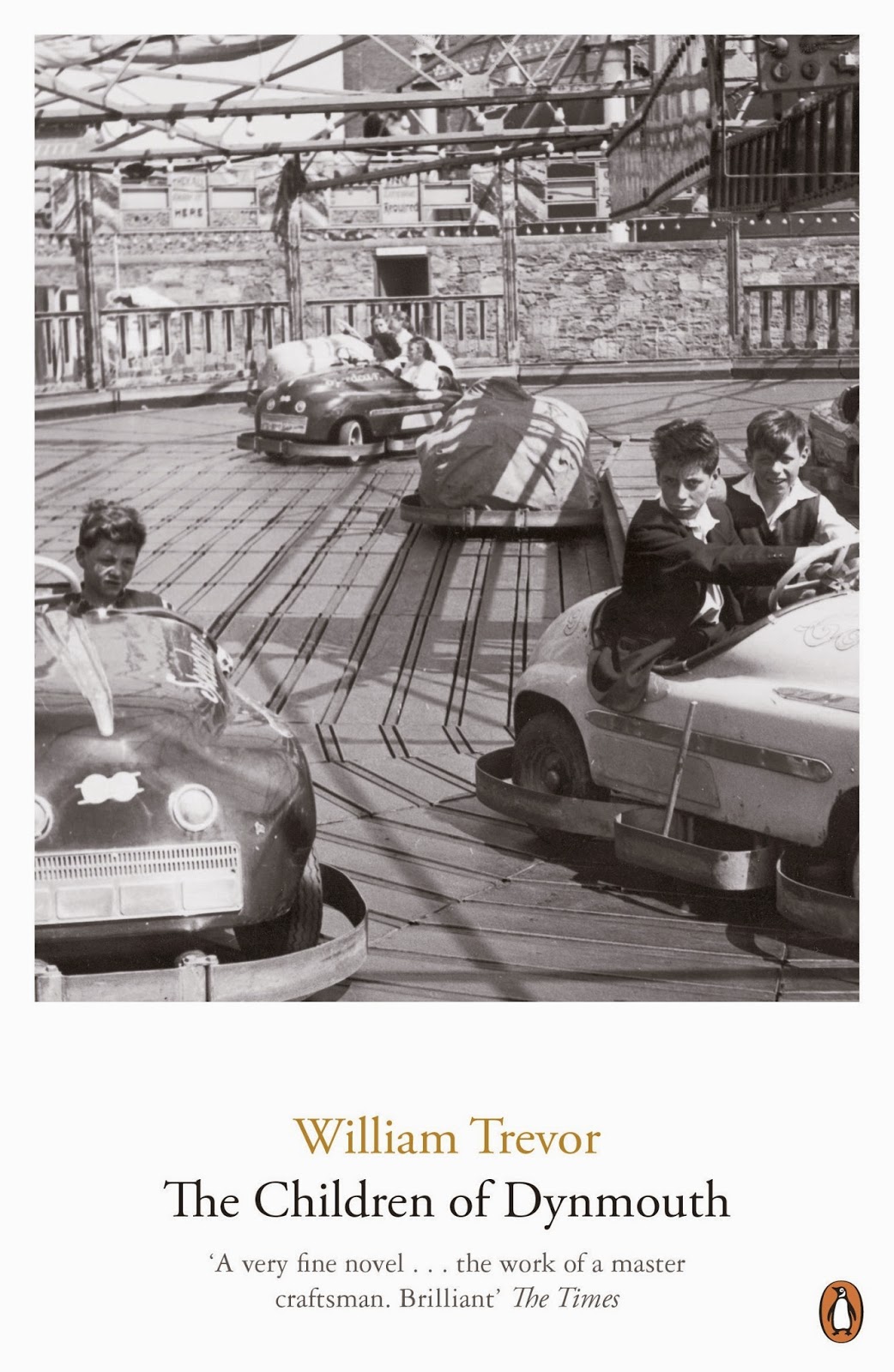
William Trevor’s 1976 novel paints a squalid picture of contemporary British life.

Dynmouth is a quaint seaside town featuring lace windowed tea shops, community fetes, a  church and a local cinema. On the surface its a pretty place where the residents derive a certain amount of contentment from their uneventful yet sturdy lives. Underneath, however, its a hotbed of barely contained scandal, misery and sexual repression. If Freud had visited the town he would have been kept busy with at least a dozen case studies. There are unhappy marriages, wives driven mad, secretly gay husbands, adultery, you name it. Added to this the populace of Dynmouth stew in a rancid media environment of trashy films, TV game shows and newspaper reports featuring horrid and perverted murders. The atmosphere is so fetid that the foul fumes almost rise off the page.

The character who personifies all that is wrong with Dynmouth, a character almost spewed up by the town, is 15-year-old Timothy Gedge. He spends his days roaming Dynmouth spying on its residents. He knows everyone’s deepest, darkest secrets and doesn’t mind telling what he knows with a breezy, almost cruel, nonchalance, often upsetting marriages and relationships with his tactless disclosures. Timothy Gedge is a creepy character, one who almost revels in what he knows. His sole ambition, besides getting a job at the local sandpaper factory, is to put on a pantomime at the town’s talent contest, to be held at its annual fete. In a macabre presentation he has planned, he intends to show his side of the town.

Timothy may be a dark character, but at times he can be funny and ironic as he taunts the townspeople with their hypocrisies. He’s like a mixture of Holden Caulfield from The Catcher in the Rye (1951) and the child killer Rhoda Penmark in William March’s 1954 novel, The Bad Seed. His lack of empathy is almost psychopathic. Even though Timothy is not a killer, he enjoys going to funerals and thinks the best place for the residents of Dynmouth is “in a coffin”. He leaves a chilly feeling in the reader that in another ten years he could be found guilty of any number of heinous crimes.

The Children of Dynmouth is a disturbing and unsettling portrait of contemporary suburban life, quite similar in theme to David Lynch’s 1986 film Blue Velvet. The book shows middle class strivings for respectability and convention to hide a festering wound of perversion, repression and misery.

The Children of Dynmouth, by William Trevor. Published by Penguin. ISBN: 9780241971833 RRP: $22.99

To sign up for our monthly newsletter, featuring new releases, book reviews and favourite articles from around the web, click here.